The Boeing 777, often called the “Triple Seven,” is one of the most influential widebody aircraft ever built. Designed for long-haul efficiency, high passenger capacity, and exceptional reliability, the aircraft has become the backbone of global intercontinental aviation. Since its introduction in the mid-1990s, airlines have ordered more than 2,400 units, with over 1,700 aircraft delivered across dozens of carriers worldwide.
This massive fleet means the Boeing 777 appears constantly at major international hubs. From Asia to the Middle East and Europe, the aircraft connects continents, moves millions of passengers, and transports enormous volumes of cargo. Some airports have become particularly synonymous with the jet, hosting tens of thousands of departures every year.
Flight analytics from Cirium reveal a clear hierarchy among these global hubs. The data covering 777-200, 777-200ER, and 777-300ER departures scheduled for 2026 shows a concentration of activity in large intercontinental hubs—particularly those located in Asia and the Middle East.
Understanding where the Boeing 777 operates most frequently provides insight into global airline strategy, international travel demand, and the structure of modern long-haul networks.
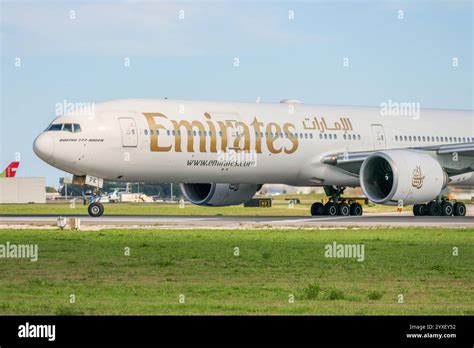
Dubai International Airport: The Global Capital of Boeing 777 Operations
At the top of the rankings sits Dubai International Airport (DXB), and it does so by a dramatic margin. No other airport in the world comes close to matching its Boeing 777 activity.
Cirium data shows that in 2026 Dubai will host approximately 49,923 Boeing 777 departures, representing nearly twice the number of flights seen at the second-place airport. Those departures translate into enormous passenger and capacity figures:
- 17.8 million available seats
- Over 51 billion available seat miles (ASMs)
This dominance is not accidental. Dubai’s aviation ecosystem is built around Emirates Airline, one of the world’s largest long-haul carriers and the single most influential Boeing 777 operator.
The airline’s hub-and-spoke network uses Dubai as a global transfer point linking Europe, Asia, Africa, Oceania, and the Americas. Passengers traveling between almost any two continents often connect through DXB, making it one of the busiest long-haul transfer hubs on Earth.
The Boeing 777 fits this strategy perfectly. With its long range, large capacity, and strong cargo capability, the aircraft allows Emirates to operate both ultra-long flights and high-frequency trunk routes from the same hub.
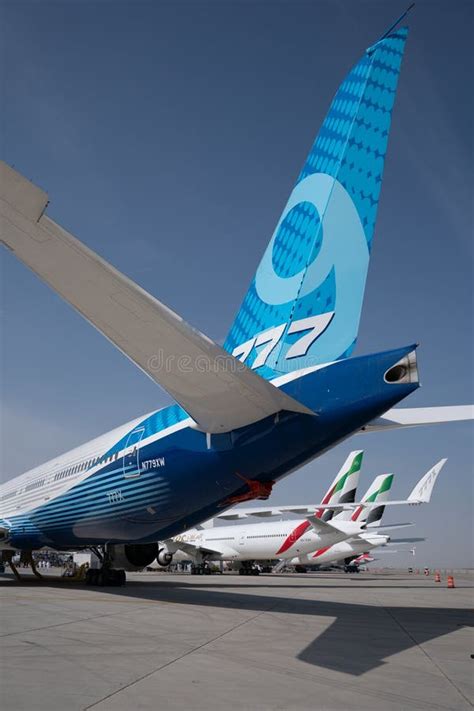
Emirates’ Massive Boeing 777 Fleet
The scale of Emirates’ Boeing 777 fleet explains why Dubai dominates global 777 traffic. The airline currently operates one of the largest widebody fleets in the world, and the Triple Seven forms its operational backbone.
Within Emirates’ fleet:
- 119 Boeing 777-300ER aircraft
- 10 Boeing 777-200LR aircraft
- 270 Boeing 777-9 aircraft on order
Out of a fleet of roughly 261 widebody aircraft, nearly half are active Boeing 777 variants.
The airline uses the aircraft in two major roles. First, it serves ultra-long-haul routes, connecting Dubai to distant cities across North America, Europe, and Asia. Second, it supports high-frequency regional trunk routes, where demand is strong but airport infrastructure may not support the larger Airbus A380.
Examples of some of the longest Emirates 777 routes highlight the jet’s global reach. The Dubai to Dallas/Fort Worth route, spanning more than 8,000 miles, ranks among the longest scheduled services flown by the aircraft. Other major long-range flights include Dubai to Miami and Dubai to Orlando, both exceeding 7,700 miles.
These ultra-long routes demonstrate why the Boeing 777 remains essential for global airlines: it balances range, capacity, and cargo capability in a way few aircraft can match.
London Heathrow: Europe’s Leading Boeing 777 Hub
Across the world in the United Kingdom, London Heathrow Airport (LHR) ranks as the second-busiest airport for Boeing 777 departures.
In 2026, Heathrow is projected to handle 28,824 Boeing 777 departures, supporting more than 8.1 million seats and 35 billion available seat miles. As Europe’s busiest international airport, Heathrow functions as a critical gateway between Europe and long-haul destinations across the globe.
Much of Heathrow’s 777 traffic comes from British Airways, which operates a substantial fleet of the aircraft for long-distance routes. In addition, numerous international airlines deploy the jet to serve London, including carriers from Asia, the Middle East, and North America.
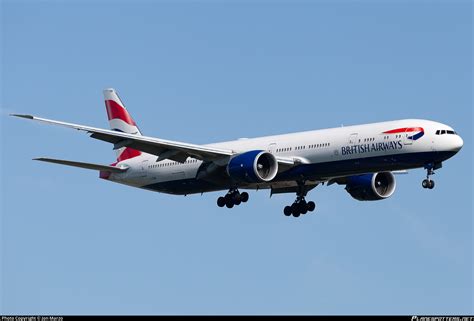
One of the most significant routes for the aircraft connects London Heathrow and Singapore Changi Airport. Singapore Airlines operates frequent Boeing 777-300ER flights on the route, covering 6,764 miles with a flight time of approximately 13 hours and 15 minutes.
This connection is more than just a long flight—it represents a crucial air bridge linking two major global financial centers. The route also plays a major role in tourism flows, particularly for travelers heading from Europe to Southeast Asia and Australia.
Another key 777 route departing Heathrow is the London to Hong Kong service operated by Cathay Pacific. The airline averages nearly three flights per day, each lasting roughly 12 hours and 40 minutes. Because only two airlines operate this route—Cathay Pacific and British Airways—the Hong Kong carrier dominates the 777 traffic on this corridor.
Heathrow also sees Boeing 777 flights to destinations such as Cape Town, where British Airways deploys both the 777-300ER and 777-200ER on flights lasting nearly 12 hours.
Paris Charles de Gaulle: Air France’s 777 Stronghold
Europe’s other major Boeing 777 hub is Paris Charles de Gaulle Airport (CDG). In 2026, the airport is expected to record 21,703 Boeing 777 departures, making it the third-busiest 777 airport globally.
The primary reason is Air France, whose widebody strategy relies heavily on the aircraft.
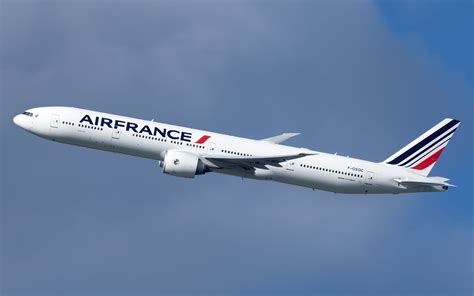
Air France operates 63 Boeing 777 aircraft, making it the largest widebody type in the airline’s fleet. Out of 122 widebody aircraft total, the 777 accounts for more than half.
This dominance means that aviation enthusiasts spotting aircraft at Charles de Gaulle frequently encounter Air France’s distinctive white and blue Triple Sevens.
The airline deploys these aircraft in several configurations, ranging from 296 seats to an enormous 472 seats. The highest-capacity layout is particularly notable. Designed primarily for leisure routes, the aircraft includes:
- 14 business class seats
- 28 premium economy seats
- 430 economy seats
This configuration dedicates over 90% of the aircraft to economy class, maximizing capacity for high-demand tourist destinations.
One route where these aircraft are used extensively is Paris to Phuket, a popular travel corridor for European vacationers heading to Thailand. Approximately 2.5 million passengers travel annually from Europe to Phuket, creating strong demand for high-capacity aircraft.
The Top 10 Airports With the Most Boeing 777 Flights
Beyond the three leading hubs, the Boeing 777 appears frequently at several other major international airports. Most of them are located in Asia or the Middle East, reflecting where long-haul network carriers dominate.
The top airports by Boeing 777 departures in 2026 include:
- Dubai International Airport – 49,923 flights
- London Heathrow Airport – 28,824 flights
- Paris Charles de Gaulle Airport – 21,703 flights
- Hamad International Airport (Doha) – 19,780 flights
- Tokyo Haneda Airport – 15,595 flights
- Taiwan Taoyuan Airport – 14,410 flights
- San Francisco International Airport – 13,954 flights
- Bangkok Suvarnabhumi Airport – 13,392 flights
- New York JFK Airport – 12,483 flights
- Seoul Incheon Airport – 12,046 flights
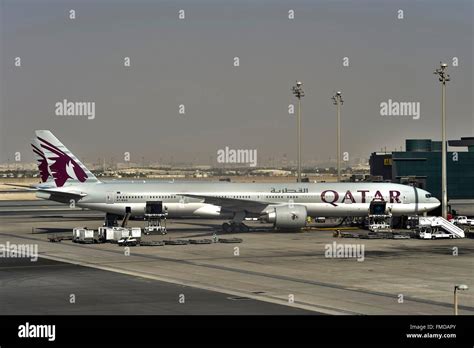
A clear geographic pattern emerges from this list. Seven of the ten airports are located in Asia or the Middle East, regions where airlines operate extensive long-haul networks and rely heavily on large widebody aircraft.
Interestingly, only one United States airport appears in the top ten: New York’s JFK Airport. This reflects the unique structure of the American airline market.
Why the Boeing 777 Is Less Dominant in the United States
While the Boeing 777 remains widely used by US airlines, it does not dominate the network in the same way it does in the Middle East or Asia.
The reason lies in how American aviation operates. The US market focuses heavily on point-to-point routes using midsize aircraft, rather than funneling large numbers of passengers through mega-hubs using very large planes.
As a result, US airlines have increasingly prioritized aircraft like:
- Boeing 787 Dreamliner
- Airbus A350
- Narrowbody jets such as the Boeing 737 MAX
These aircraft allow airlines to operate more routes with smaller capacity, reducing financial risk while maintaining long-range capability.
The trend is visible in aircraft orders as well. No major US airline has ordered the upcoming Boeing 777X, a striking contrast with airlines in the Gulf and Europe.
Could the Boeing 777X Reshape Global Airport Rankings?
The next chapter in the Triple Seven story will arrive with the Boeing 777X, a new generation of the aircraft designed to replace aging Boeing 747s and Airbus A380s.
The 777X introduces several significant upgrades:
- New GE9X engines for improved fuel efficiency
- Composite folding wings for increased aerodynamic performance
- Higher passenger capacity than previous 777 variants
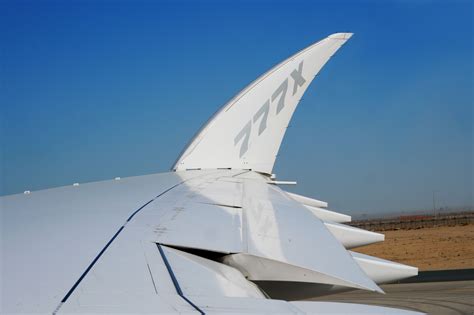
The aircraft’s range is expected to enable extremely long nonstop routes, including theoretical flights such as:
- Sydney to New York
- Chicago to Singapore
- São Paulo to Mumbai
If airlines begin operating such routes regularly, airports capable of handling these ultra-long-haul services could see dramatic increases in 777 traffic.
The biggest beneficiary will likely remain Dubai, because Emirates has ordered 270 Boeing 777-9 aircraft, making it by far the largest customer for the program.
Meanwhile, International Airlines Group, the parent company of British Airways, has ordered 24 Boeing 777X aircraft, suggesting that London Heathrow will continue to rank among the world’s busiest 777 airports well into the next decade.
The Boeing 777’s Enduring Role in Global Aviation
Nearly three decades after entering service, the Boeing 777 remains one of the most important aircraft in commercial aviation. Its ability to carry hundreds of passengers across oceans with remarkable efficiency has made it indispensable for airlines operating global networks.
Airports like Dubai, London Heathrow, and Paris Charles de Gaulle illustrate how deeply integrated the aircraft has become within international air travel. Each day, hundreds of these jets depart from these hubs, connecting continents and sustaining global mobility.
With the arrival of the Boeing 777X, the aircraft’s story is far from finished. Instead, it appears poised to evolve once again—flying farther, carrying more passengers, and reshaping the world’s busiest long-haul airports in the process.