Global aviation demand has returned with force, and many of the planet’s busiest airports are confronting the same hard reality: they were built for yesterday’s traffic levels, not tomorrow’s growth. Passenger numbers are rising, airlines want more slots, cargo volumes continue to expand, and premium long-haul travel remains highly valuable. Yet in many major cities, terminals can be enlarged far more easily than runways can. Gates can be added. Lounges can be redesigned. Retail can be relocated. But when an airport runs out of runway capacity, the entire system begins to strain.
That is why a new wave of runway expansion projects matters so much. These are not cosmetic upgrades. They are strategic infrastructure moves that will influence tourism, business connectivity, airline competition, cargo logistics, and even housing development around major metropolitan regions. A new runway can unlock thousands of additional annual flights, reduce delays, create room for new airlines, and strengthen a city’s position in the global economy.
From London to Hong Kong and from Dublin to Charlotte, several airports are now investing billions to overcome capacity limits that once looked permanent. The result will be a reshaped map of global air travel in the coming decade.
Dublin Airport’s New Runway Turns a Growing Hub Into a Serious Transatlantic Player
Dublin Airport has quietly evolved into one of Europe’s most interesting aviation success stories. For years, it benefited from geography, English-language convenience, and strong links between Ireland, North America, and mainland Europe. But its runway infrastructure lagged behind its ambitions.
Previously, Dublin relied heavily on a main runway measuring 8,652 feet, while its secondary strip was much shorter and less useful for demanding operations. That limited scheduling flexibility and constrained long-haul growth during busy periods. As Aer Lingus expanded its connecting model between Europe and the United States, pressure on capacity became harder to ignore.
The opening of Runway 10L/28R, stretching 10,203 feet, changed that equation. Longer pavement means better performance for widebody aircraft and greater flexibility for long-range narrowbodies such as the Airbus A321LR and A321XLR. Those aircraft are especially important because they allow airlines to profitably connect smaller North American cities with Europe.
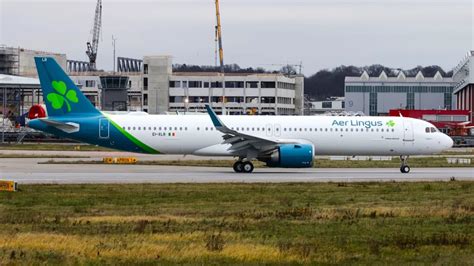
The runway is more than concrete—it is a growth engine. Dublin can now pursue more nonstop routes, smoother peak-hour operations, and stronger hub connectivity. Plans for expanded aircraft stands, larger U.S. preclearance facilities, and a possible new western terminal suggest that Dublin sees itself not as a secondary gateway, but as a rising major hub.
If passenger caps are relaxed, Dublin could become one of Europe’s most efficient mid-sized transfer airports. That would be a major shift for a facility once viewed mainly as a national gateway.
Hong Kong International Airport’s Third Runway Reinforces a Global Cargo Giant
Few airports symbolize strategic aviation infrastructure like Hong Kong International Airport. Built on reclaimed land and designed for scale, it has long been one of the world’s elite hubs for both passengers and freight. But even elite hubs hit limits.
Hong Kong’s answer was bold: a three-runway system under its long-term master plan. The North Runway, opened in 2022, measures 12,467 feet and is capable of handling the largest aircraft in commercial service. After related upgrades and the reopening of the Centre Runway, Hong Kong now operates three full-length parallel runways.
That transforms capacity. The airport can support roughly 620,000 annual flights, or more than 100 aircraft movements per hour in ideal operating conditions. In practical terms, this gives airlines room to expand schedules, reduces congestion pressure, and strengthens resilience during disruptions.
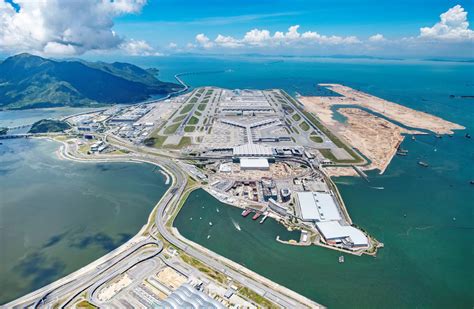
For Hong Kong, this is about more than passenger growth. It is one of the world’s leading air cargo centers, serving electronics, pharmaceuticals, luxury goods, and time-sensitive shipments throughout Asia and beyond. Cargo operators value frequency, speed, and predictable slot access. Extra runway capacity delivers all three.
The expansion of Terminal Two and the addition of dozens of aircraft parking stands will further enhance flow across the airfield. In a region where airports such as Singapore, Seoul, and Guangzhou compete aggressively, Hong Kong’s runway investment is a clear declaration: it intends to remain indispensable.
Charlotte Douglas Adds a Fourth Runway to Supercharge an American Airlines Fortress Hub
Charlotte Douglas International Airport may not generate the glamour headlines of New York, Los Angeles, or Miami, but within the airline industry it is enormously important. It is one of American Airlines’ most productive hubs, combining strong domestic connectivity, manageable weather, and relatively efficient costs.
That success created its own challenge. Heavy connecting traffic means banks of arrivals and departures crowd the same time windows. Delays can ripple quickly. A fourth runway offers a powerful remedy.
Charlotte’s new runway, expected later this decade, will sit between existing parallels and extend roughly 10,000 feet. Once completed, the airport will be capable of quadruple parallel operations, something only a limited number of U.S. airports can achieve.
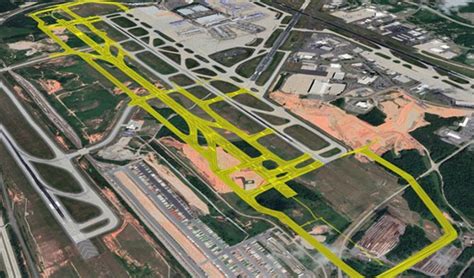
That matters because hub economics depend on timing. If arriving aircraft can land closer together and departures can launch more efficiently, connection windows improve. That means airlines can sell tighter itineraries, use aircraft more productively, and recover faster from disruptions.
Additional taxiway projects are equally significant. Aircraft waiting to cross active runways waste time and fuel. Routing traffic around the movement area may add distance but often saves minutes. In aviation, minutes are money—and missed connections are expensive headaches nobody enjoys.
Charlotte’s expansion may not look dramatic from a passenger seat, but operationally it could be one of the most valuable runway projects in North America.
Gatwick’s Runway Shift Creates a True Two-Runway London Alternative
London Gatwick has long carried one of aviation’s strangest labels: an airport with two runways that effectively functions as one. Its secondary runway sits too close to the main strip for normal simultaneous use, making it largely a backup or taxiway.
That limitation has capped growth for years despite strong demand from leisure travelers, low-cost carriers, and long-haul operators. London remains one of the world’s strongest air travel markets, and every usable slot is precious.
The solution is surprisingly modest in engineering terms but huge in strategic effect: move the secondary runway north by 39 feet. That tiny distance unlocks routine dual-runway operations under regulatory approval.
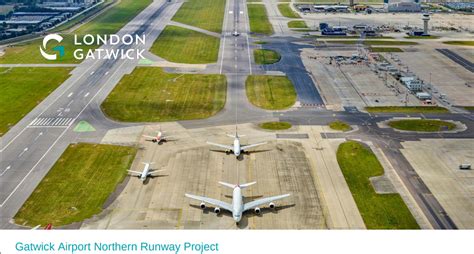
The budget runs into billions because supporting works—taxiways, terminals, aprons, environmental mitigation, and transport links—matter as much as the runway shift itself. But the reward is substantial. Gatwick aims for around 80 million annual passengers in the longer term, nearly doubling current throughput.
For airlines, more Gatwick capacity means additional London access without paying Heathrow-level slot values. For travelers, it means more competition and route choice. For South London and surrounding regions, it means stronger economic pull.
Sometimes the most transformative projects are not the biggest. They are the smartest.
Heathrow’s Third Runway Could Redefine European Aviation Capacity
No airport better represents scarcity than London Heathrow. It is one of the world’s most valuable hubs, yet it operates with only two runways while demand consistently exceeds supply. Slots have become prized commercial assets worth extraordinary sums.
That scarcity shapes airline behavior. New entrants struggle to gain presence. Existing carriers guard slots fiercely. Route networks optimize around limited timings. Premium business travel remains dominant because when capacity is tight, high-yield traffic usually wins.
A third runway would change everything.
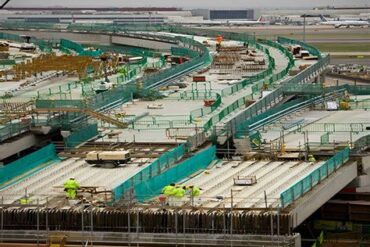
Planned for the northwest side of the airport, the proposed strip would stretch around 11,500 feet and be supported by major taxiway redesigns, terminal changes, and even highway realignment involving the M25. This is not just runway construction—it is a full reengineering of Britain’s primary gateway.
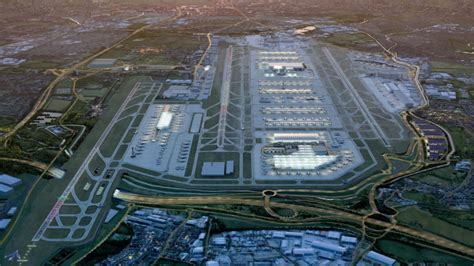
If delivered, Heathrow could handle dramatically more annual flights and eventually around 150 million passengers. That would create room for domestic links, long-haul entrants, cargo growth, and more competitive pricing pressure on certain routes.
The project remains politically sensitive because of noise, emissions, land use, and local disruption. Yet from a pure connectivity standpoint, Heathrow expansion would be one of the most consequential airport developments anywhere in the world.
Why Runway Expansion Matters More Than Terminal Glamour
Travelers often notice shiny terminals, designer lounges, and upgraded duty-free stores. Those features matter, but they do not solve the deepest bottleneck. Runways determine how many aircraft can actually arrive and depart.
Without runway capacity:
- Delays rise during peak periods
- Airlines struggle to launch new routes
- Competition weakens when slots are scarce
- Cargo schedules become less flexible
- Economic growth linked to aviation slows
A spectacular terminal attached to a constrained runway system is a bit like installing luxury seats in a traffic jam.
The Next Decade of Aviation Will Be Built on Concrete
These expansion projects signal a larger truth about modern aviation: connectivity remains economically powerful. Cities still compete for headquarters, tourism, conventions, trade, and talent. Airports are central to that contest, and runway capacity often determines who can grow.
Dublin is positioning for transatlantic relevance. Hong Kong is reinforcing global logistics leadership. Charlotte is optimizing hub dominance. Gatwick is unlocking London overflow demand. Heathrow is debating whether to remain constrained or scale for the future.
Runways are expensive, controversial, and slow to build. They also change everything once opened. In the next decade, many of the world’s busiest airports will not be transformed by new lounges or prettier terminals—they will be transformed by the strips of pavement where every journey truly begins.