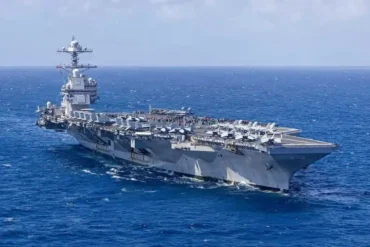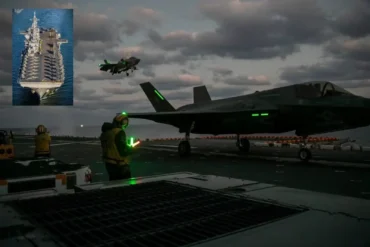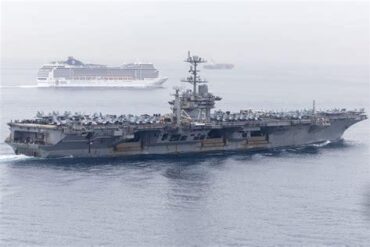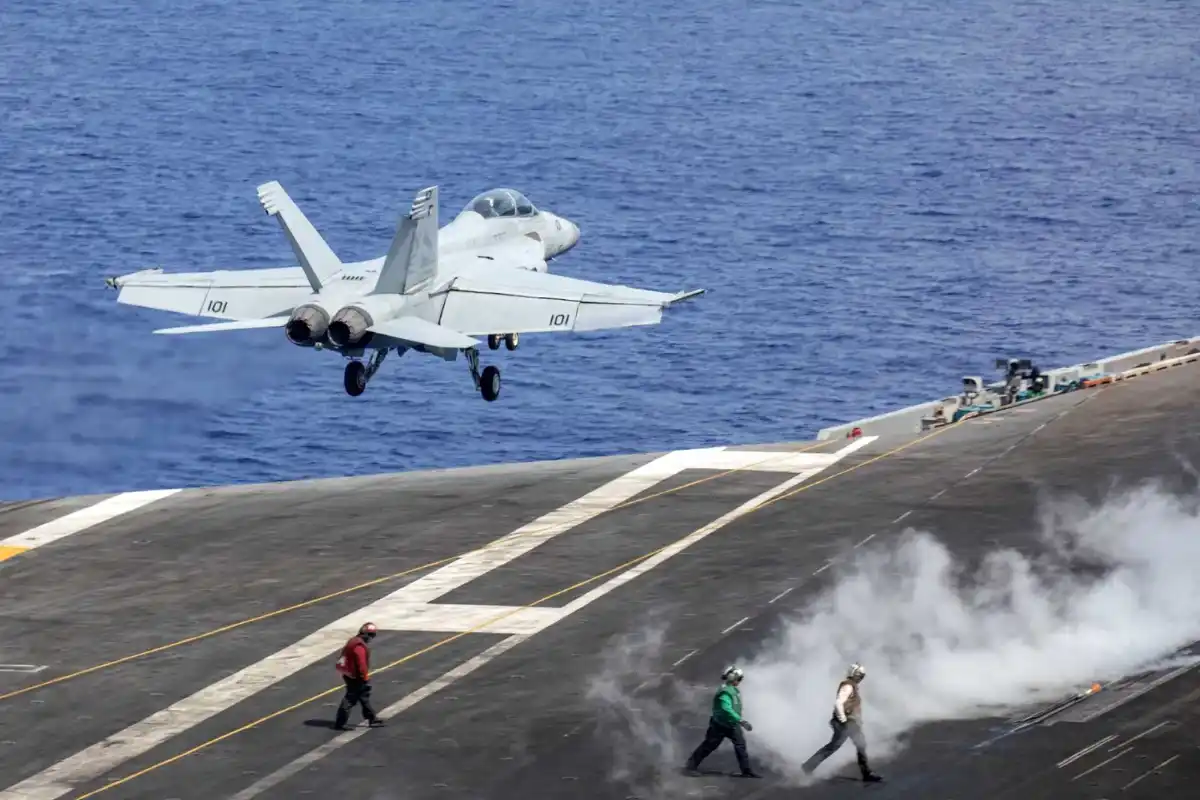
On July 22, 2025, the U.S. Navy’s Nimitz-class aircraft carrier USS Carl Vinson (CVN 70) conducted high-tempo flight operations in the Philippine Sea, showcasing America’s ongoing commitment to regional security and operational readiness in the Indo-Pacific. As the flagship of Carrier Strike Group ONE (CSG-1), the Carl Vinson is executing routine, yet strategically vital operations under the command of the U.S. 7th Fleet.
Strategic Significance of the Philippine Sea Deployment
The Philippine Sea, a critical nexus of global commerce and strategic maritime boundaries, has emerged as a flashpoint amid rising regional tensions and contested territorial claims. The USS Carl Vinson’s presence in these waters signals the U.S. Navy’s unwavering dedication to preserving a free and open Indo-Pacific, ensuring freedom of navigation and reinforcing international law.
This deployment sends a clear message: the U.S. will maintain a credible and combat-ready forward presence to deter aggression and bolster regional stability in partnership with allies such as Japan, South Korea, and the Philippines.
Integrated Air Wing Composition and Capabilities
Aboard the USS Carl Vinson is Carrier Air Wing 2 (CVW-2), a composite of some of the most advanced naval aviation platforms in service. This air wing includes:
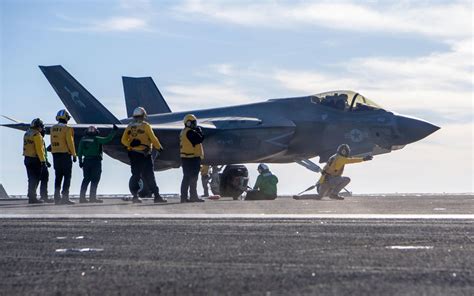
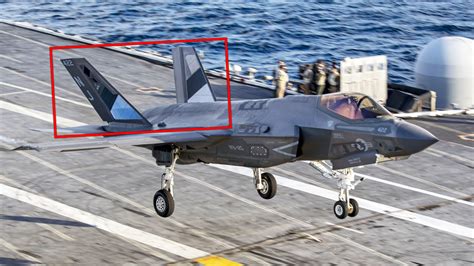
- F-35C Lightning II from VFA-147, capable of stealth-enabled strike and deep battlespace penetration
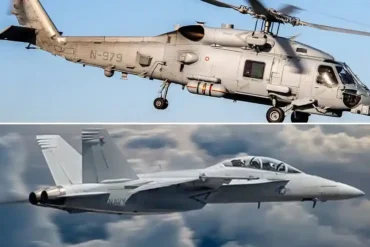
- F/A-18F Super Hornets, versatile multirole fighters that remain the backbone of U.S. naval strike capability
- EA-18G Growlers specializing in electronic warfare and suppression of enemy air defenses
- E-2D Advanced Hawkeyes, providing airborne command and control, early warning, and airspace management
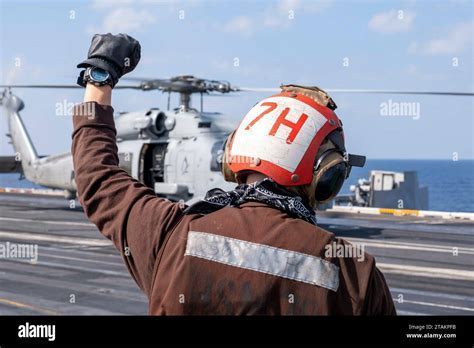
- MH-60R/S Seahawks, performing anti-submarine warfare (ASW), surface warfare (SUW), and logistics
These platforms collectively enable CVW-2 to execute distributed maritime operations (DMO), maximizing agility and survivability while ensuring offensive and defensive combat readiness.
Flight Operations: Precision and Persistence at Sea
The July 22 flight exercises featured coordinated launches and recoveries of both legacy and fifth-generation aircraft under variable sea and weather conditions. This operational tempo ensures that both aircrews and flight deck personnel maintain critical skills necessary for surge deployments, combat sorties, and long-duration maritime patrols.
Launch and recovery drills, carrier qualifications, and combat mission simulations were conducted to test deck cycle efficiency, improve sortie generation rates, and sustain interoperability between aircraft. These activities are indispensable for maintaining mission assurance in any potential conflict scenario.
The Role of Carrier Strike Group ONE in Regional Deterrence
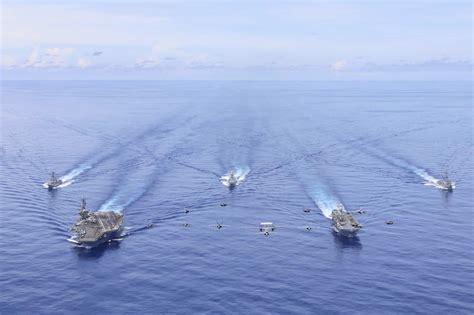
Carrier Strike Group ONE is not just an aircraft carrier with embarked jets; it is a mobile, multi-domain battle force. Typically composed of:
- The aircraft carrier USS Carl Vinson (CVN 70)
- A Ticonderoga-class guided-missile cruiser
- Arleigh Burke-class guided-missile destroyers
- A fast combat support ship
This combined force supports a full spectrum of operations, including precision strike, anti-submarine warfare, missile defense, and sea control. Through synchronized operations between air, surface, and logistics components, CSG-1 achieves persistent maritime dominance in contested zones.
Advanced Aircraft Integration: F-35C and Super Hornet Synergy
The integration of F-35C Lightning II and F/A-18F Super Hornet platforms is a key element of the Navy’s evolving force posture. The F-35C’s stealth, sensor fusion, and extended range complement the Super Hornet’s multirole flexibility and proven durability. Operating in tandem, these aircraft enable:
- Enhanced battlespace awareness through shared data links and real-time surveillance
- Precision long-range strikes with standoff munitions
- Electronic warfare and SEAD (Suppression of Enemy Air Defenses) support
- Agile response to both symmetric and asymmetric threats
Command and Control through E-2D and Advanced Networking
The E-2D Advanced Hawkeye, often referred to as the “digital quarterback” of the air wing, plays a pivotal role in orchestrating joint and allied operations. Equipped with advanced radar and communications systems, it provides:
- Early warning of aerial and maritime threats
- Airspace coordination for both manned and unmanned assets
- Battle management across multiple domains
In tandem with the Naval Integrated Fire Control-Counter Air (NIFC-CA) network, this enables the strike group to conduct network-centric warfare, linking destroyers, cruisers, aircraft, and joint force partners.
Interoperability and Joint-Force Readiness
These operations are also an essential platform for joint training with allied forces, increasing the level of tactical and operational interoperability. Carrier Strike Group ONE frequently conducts combined exercises with naval assets from Australia, Japan, and South Korea, refining cross-national coordination in areas such as:
- Air defense and surveillance
- Anti-submarine patrols
- Electronic warfare drills
- Multilateral communication protocols
By incorporating regional partners into live-force exercises, the U.S. Navy fosters a coalition-ready environment, critical for joint operations in crisis or conflict.
Operational Readiness Amid Great Power Competition
As the Indo-Pacific continues to serve as the primary theater of great power competition, sustained U.S. naval operations like those conducted by the Carl Vinson are critical to shaping the strategic environment. The deployment counters:
- China’s aggressive maritime claims in the South China Sea
- The militarization of disputed territories
- Threats to the rules-based international order
The Carl Vinson’s airpower, command capabilities, and fleet support functions act as both a deterrent and stabilizing force, reinforcing the credibility of U.S. commitments under mutual defense treaties.
Logistics and Sustainment in Extended Operations
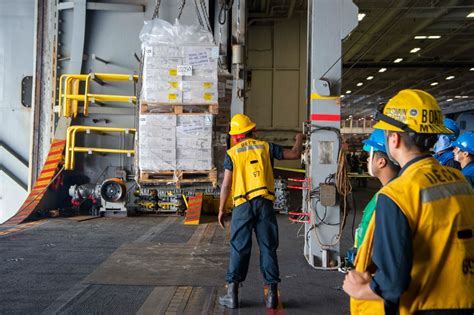
Operating forward in the Indo-Pacific also demands robust logistical support, ensuring fuel, munitions, spare parts, and food supplies are sustained throughout the deployment. The strike group relies on:
- Underway replenishments (UNREP) via fast combat support ships
- Carrier onboard delivery (COD) aircraft for personnel and urgent cargo
- Maintenance cycles and diagnostic assessments to keep systems combat-ready
These supply chains, managed under dynamic maritime conditions, form the backbone of prolonged presence and operational endurance.
Reassurance to Allies, Deterrence to Adversaries
The strategic visibility of a U.S. carrier strike group in the Philippine Sea not only reinforces operational presence but also communicates strategic resolve. For allies and partners, it is a reassurance of defense commitments. For potential adversaries, it underscores the U.S. Navy’s capacity to deploy, deter, and, if required, dominate.
In an era where gray-zone tactics, cyber disruptions, and maritime coercion are on the rise, these visible, capable forces serve as force multipliers for peace and stability.
Conclusion: Persistent Power Projection in the Indo-Pacific
The July 22, 2025, flight operations by USS Carl Vinson (CVN 70) exemplify the U.S. Navy’s high readiness, advanced capabilities, and enduring commitment to preserving peace and security in the Indo-Pacific. As regional dynamics evolve, the ability to project credible, survivable airpower from the sea remains a cornerstone of U.S. maritime strategy.
With its sophisticated carrier air wing, integrated strike group, and commitment to joint operations, the Carl Vinson remains at the forefront of 21st-century naval warfare, continuously adapting to deter threats and support allies across the vast expanse of the Pacific Ocean.