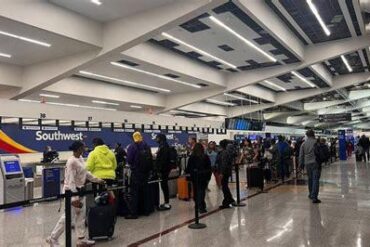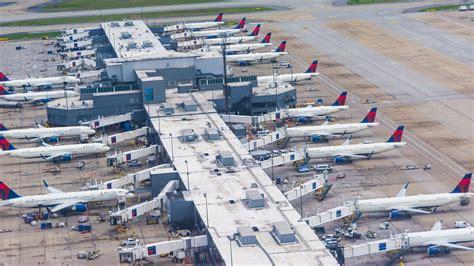
The relentless pace of operations at Hartsfield-Jackson Atlanta International Airport (ATL) has long earned it the distinction of being the world’s busiest airport by passenger traffic. While Delta Air Lines naturally dominates the domestic and transcontinental scene as its hometown hero, a growing cadre of non-US airlines is carving out notable ground within ATL’s tightly orchestrated airspace. With 1,478 flights scheduled by foreign carriers in December 2025 alone, this expanding international footprint underscores both the strategic value of Atlanta as a global hub and the dynamic evolution of long-haul and regional connectivity.
Aeromexico: Leading the Charge with Regional Precision
The Mexican flag carrier Aeromexico, through its subsidiary Aeromexico Connect, has established itself as the top non-US airline at ATL. In December 2025, Aeromexico is slated to operate 232 flights, translating to 22,968 seats, all served by its efficient Embraer E190 fleet. These aircraft, equipped with 11 business and 88 economy seats, form the backbone of the airline’s regional operations across key Mexican cities.
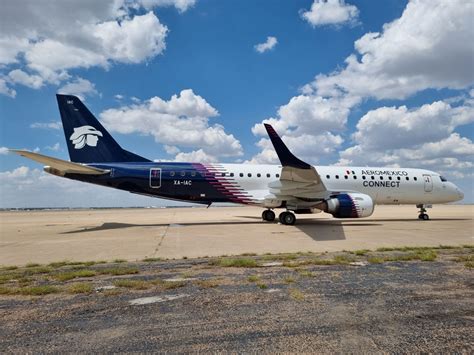
Aeromexico’s Atlanta network focuses on four strategically selected destinations: Bajio (BJX), Queretaro (QRO), San Luis Potosi (SLP), and Monterrey (MTY). Notably, three of these routes maintain a daily round trip schedule throughout the month, with Monterrey flights tapering after December 23. The newest entrant—San Luis Potosi—joined the lineup in June 2025, cementing Aeromexico’s ambition to deepen US-Mexico ties under its Joint Collaboration Agreement with Delta.
This partnership spans 57 routes, creating a transborder bridge that enables more than 90 joint daily flights, reinforcing ATL’s role as a key trans-Mexican transfer point for both business and leisure travelers.
Canadian Powerhouses: WestJet and Air Canada Battle for Market Share
Just as Mexico provides a vital source of cross-border traffic, Canada’s presence at ATL remains formidable, anchored by two of its leading carriers: WestJet and Air Canada. Together, they account for over 362 flights in December, catering to both business travelers and diaspora communities seeking connectivity between key Canadian provinces and the southeastern United States.
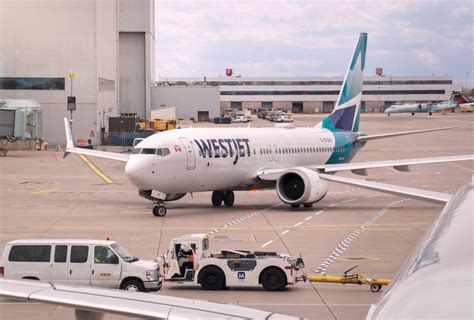
WestJet, the more prominent of the two, operates 184 flights with a remarkable 27,510 seat count, deploying a mix of Boeing 737-700, 737-800, and the fuel-efficient 737 MAX 8. Its Atlanta presence centers on Calgary (YYC), which commands more than a daily frequency, reaching 11 flights weekly in both directions. This outpaces the carrier’s other Canadian connections: Edmonton (YEG) with four weekly flights, and Vancouver (YVR) and Winnipeg (YWG), each clocking in at three weekly services.
On the other hand, Air Canada leans on its regional partner Jazz Aviation to fly 178 services using Embraer E175s, which offer a smaller, more agile cabin suited for short-to-medium haul sectors. These operate under the Air Canada Express banner, primarily serving Toronto (YYZ) and Montreal (YUL). The twice-daily frequency to Toronto and daily service to Montreal demonstrate a commitment to maintaining steady business corridor access. Interestingly, Air Canada and WestJet avoid overlapping routes, strategically spreading their influence without direct competition.
Transatlantic Reach: Europe’s Flag Carriers Thrive at ATL
Beyond North America, Europe’s legacy airlines have found solid footing at Hartsfield-Jackson, feeding into the airport’s robust transatlantic corridor. At the forefront is KLM Royal Dutch Airlines, which leads all European carriers with 124 scheduled flights this month. KLM’s daily Amsterdam (AMS) service benefits from its SkyTeam alliance with Delta, operating long-haul Boeing 777 and 787 Dreamliner aircraft to ensure comfort and capacity.

Following closely are Air France and Virgin Atlantic, contributing 116 and 108 flights respectively from their hubs at Paris Charles de Gaulle (CDG) and London Heathrow (LHR). These routes offer vital links for both corporate and leisure travelers, enhancing Atlanta’s accessibility to major European financial and cultural capitals.
Another standout player is Turkish Airlines, whose 40 round-trip flights from Istanbul (IST) represent an assertive transcontinental play. Their daily service taps into the burgeoning East-West flow of business and diaspora traffic, connecting Atlanta to the crossroads of Europe and Asia.
The Global Connectors: Daily Flights from the Gulf, Africa, and Latin America
While North American and European carriers form the backbone of ATL’s international web, other global airlines are amplifying their presence through consistent daily operations. These include:
- British Airways, maintaining a daily Heathrow-Atlanta service, bolstering the route’s frequency beyond Virgin Atlantic’s offering.
- Etihad Airways, offering access to Abu Dhabi and the broader Gulf region.
- Qatar Airways, operating one of the most prestigious long-haul services via Doha, typically using state-of-the-art Airbus A350 aircraft for unmatched onboard luxury.
- Kenya Airways, which plays a niche but vital role in connecting Africa with the American southeast.
- LATAM Airlines, representing South America with critical links via Lima and São Paulo.
Each of these airlines complements Delta’s extensive reach, leveraging alliances or independent strategies to funnel traffic into Atlanta’s multimodal transport ecosystem.
Why Atlanta? Strategic Geography and SkyTeam Synergy
The attraction of Atlanta for non-US airlines lies not just in its status as a massive domestic hub but also in its geographical centrality within the US Southeast, a region experiencing sustained economic and population growth. Additionally, Delta’s SkyTeam partnerships incentivize carriers such as Aeromexico, KLM, Air France, and Virgin Atlantic to optimize scheduling, share codes, and co-locate operations, creating a seamless experience for connecting passengers.
This synergy translates to higher load factors, better scheduling efficiency, and an ever-expanding web of international connections that few airports globally can rival. As the global aviation landscape continues to shift, Hartsfield-Jackson remains not just a Delta fortress, but a launchpad for non-US airlines expanding into the heart of America.