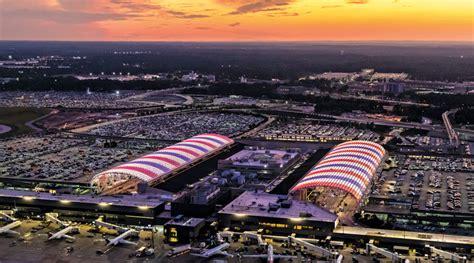
Hartsfield–Jackson Atlanta International Airport: The Undisputed Passenger King
Hartsfield–Jackson Atlanta International Airport (ATL) continues to dominate the aviation landscape as North America’s busiest airport by total passengers, a title it has held with remarkable consistency. In 2025 alone, the airport processed over 106 million passengers, reaffirming its status not just as a regional leader, but as a global aviation powerhouse. While fluctuations in air travel demand have affected airports worldwide, Atlanta’s resilience underscores a structural advantage that competitors struggle to replicate.
The scale of ATL’s operations is staggering when viewed through a daily lens. Nearly 300,000 passengers move through the airport every single day, forming a constant flow of travelers that reflects both its domestic dominance and its growing international footprint. Even with a slight year-over-year decline of 1.6%, Atlanta maintains a comfortable lead over rivals, illustrating that its position is not a fleeting achievement but the result of deeply rooted operational strengths.
This dominance becomes even more striking when compared globally. The passenger gap between Atlanta and other leading international hubs remains significant, highlighting the airport’s ability to sustain unmatched throughput despite rising competition from fast-growing airports in the Middle East and Asia. Atlanta is not just busy—it is structurally built to handle extraordinary volumes with precision.
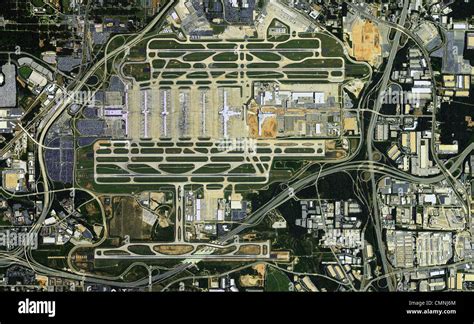
A Strategic Geographic Advantage That Powers Connectivity
Atlanta’s location is not merely convenient—it is strategically perfect for aviation connectivity. Positioned in the southeastern United States, the airport sits within a two-hour flight radius of nearly 80% of the U.S. population, making it an ideal transfer hub for domestic travel. This geographic advantage transforms Atlanta into a natural crossroads where passengers from different regions converge before continuing to their final destinations.
The airport’s proximity to key regions such as the Caribbean, Central America, and major U.S. metropolitan areas further enhances its role as a gateway for short- and medium-haul flights. Travelers flying from the East Coast to the South, or from smaller cities to international destinations, frequently pass through Atlanta due to its unmatched network efficiency.
What truly distinguishes ATL is its role as a connection-first airport. Unlike airports that primarily serve as origin or destination points, Atlanta thrives on transit passengers. This model amplifies passenger counts significantly, as a single traveler may pass through the airport multiple times during a round-trip journey. The result is a system optimized not just for volume, but for seamless movement.
Operational Efficiency That Sets Global Standards
Efficiency is where Hartsfield–Jackson Atlanta International Airport transforms from impressive to extraordinary. The airport has been recognized repeatedly as one of the most efficient airports in the world, a distinction backed by decades of operational excellence and infrastructure planning.
The physical layout of ATL is engineered for flow. With five parallel runways, the airport can handle simultaneous takeoffs and landings, drastically reducing delays and maximizing throughput. This capability is further supported by seven concourses connected via an underground automated train system, which transports over 200,000 passengers daily with remarkable speed and reliability.
Passengers experience this efficiency firsthand. Short connection times, intuitive terminal layouts, and synchronized flight schedules create an environment where even tight layovers are manageable. Behind the scenes, optimized taxiways and gate configurations ensure aircraft spend minimal time on the ground, increasing overall capacity without requiring excessive expansion.

Delta Air Lines: The Engine Behind Atlanta’s Massive Traffic
No discussion of Atlanta’s dominance is complete without examining the pivotal role of Delta Air Lines. As the airport’s largest carrier, Delta operates a mega-hub at ATL that drives a substantial portion of its passenger traffic. In 2025, the airline accounted for over 73% of all flights, an extraordinary concentration that reinforces Atlanta’s position as a central node in global aviation.
Delta’s hub strategy is built around wave scheduling, where flights arrive and depart in coordinated clusters. This system allows passengers to transfer efficiently between flights, minimizing wait times while maximizing aircraft utilization. The result is a tightly synchronized network that funnels millions of travelers through Atlanta each year.
Another critical factor is fleet composition. Delta frequently deploys larger aircraft such as Boeing 737s and Airbus A320 family jets, enabling the airline to carry more passengers per flight. This approach contrasts with airports that rely heavily on smaller regional jets, allowing Atlanta to achieve higher passenger volumes without significantly increasing flight operations.
The synergy between Delta and ATL creates a self-reinforcing ecosystem. More flights attract more passengers, which in turn justify expanded routes and increased frequency. This virtuous cycle ensures that Atlanta remains not just busy, but strategically indispensable.

Domestic Dominance: The Core of Atlanta’s Passenger Volume
While Atlanta boasts an impressive international presence, its true strength lies in domestic travel. In 2025, approximately 86% of passengers were domestic travelers, reflecting the airport’s role as the backbone of U.S. air connectivity. This overwhelming domestic focus is a defining characteristic that sets ATL apart from many global hubs.
The sheer breadth of destinations served from Atlanta contributes to this dominance. With connections to over 150 destinations across six continents, the airport offers unparalleled access to cities large and small. For many regional airports, Atlanta serves as the primary gateway to the broader world, further amplifying its passenger numbers.
Domestic traffic also provides stability. Unlike international travel, which can be influenced by geopolitical factors and economic shifts, domestic travel tends to be more consistent. This stability allows Atlanta to maintain high passenger volumes even during periods of global uncertainty.
Chicago O’Hare: A Strong Rival With a Different Strength
Chicago O’Hare International Airport (ORD) often enters the conversation as a rival to Atlanta, but the comparison reveals a nuanced distinction. While Atlanta leads in total passenger volume, O’Hare frequently tops the charts in aircraft movements, recording over 857,000 operations in 2025.
This difference highlights two distinct models of airport activity. O’Hare’s higher number of flights is partly due to its reliance on smaller regional aircraft, which increase the total number of takeoffs and landings. Atlanta, by contrast, emphasizes higher-capacity aircraft, enabling it to transport more passengers with fewer flights.
Passenger numbers ultimately tell a different story. In 2025, O’Hare handled approximately 84.8 million passengers, significantly fewer than Atlanta’s total. This gap underscores the effectiveness of ATL’s strategy, where efficiency and capacity combine to maximize throughput.
Infrastructure Designed for Scale and Growth
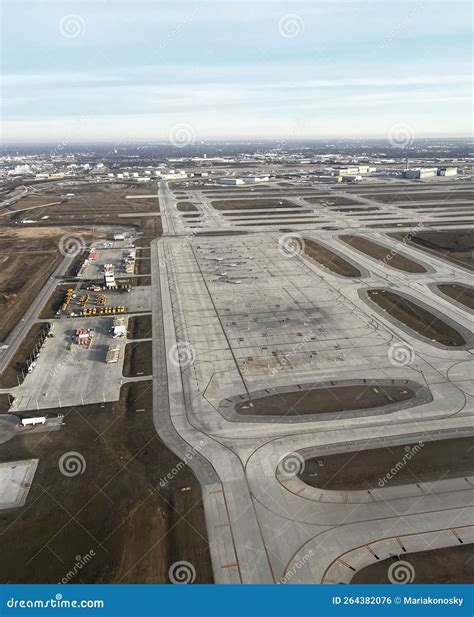
Atlanta’s infrastructure is not static—it is continuously evolving to meet future demand. Ongoing investments in terminal upgrades and concourse expansions aim to enhance both capacity and passenger experience. These improvements are carefully planned to maintain the airport’s hallmark efficiency while accommodating growth.
The design philosophy behind ATL emphasizes scalability. Each addition integrates seamlessly with existing systems, ensuring that expansions do not disrupt operations. This approach allows the airport to grow organically without sacrificing performance.
Meanwhile, competing airports are investing heavily to close the gap. Chicago O’Hare’s multi-billion-dollar expansion projects, including new terminals and concourses, signal a determined effort to challenge Atlanta’s dominance. Other major hubs such as Dallas/Fort Worth and Denver are also expanding rapidly, intensifying competition across the U.S. aviation landscape.
The Future of North America’s Busiest Airports
Looking ahead, the battle for the title of North America’s busiest airport is far from over. Rising passenger demand, evolving airline strategies, and significant infrastructure investments will shape the competitive landscape in the coming years. Yet Atlanta’s advantages—geographic positioning, airline concentration, and operational efficiency—provide a formidable foundation.
The airport’s ability to handle massive passenger volumes with consistency and precision ensures that it remains a benchmark for global aviation. Even as competitors expand and innovate, Atlanta’s integrated system of connectivity and efficiency continues to set it apart.
Ultimately, Hartsfield–Jackson Atlanta International Airport is more than just the busiest—it is a masterclass in how strategic design, airline partnerships, and geographic advantage can converge to create an unparalleled aviation hub. As long as these fundamentals remain intact, Atlanta’s crown appears secure, firmly anchored in a system built for scale, speed, and sustained dominance.