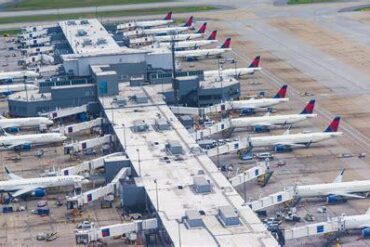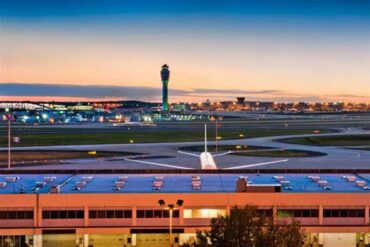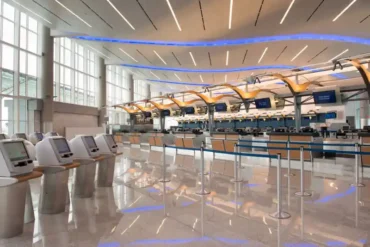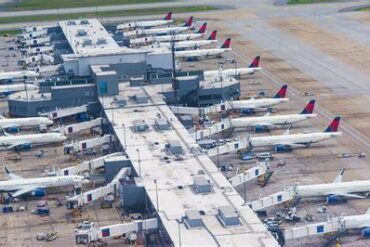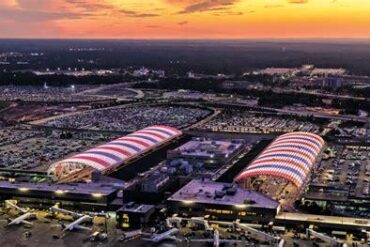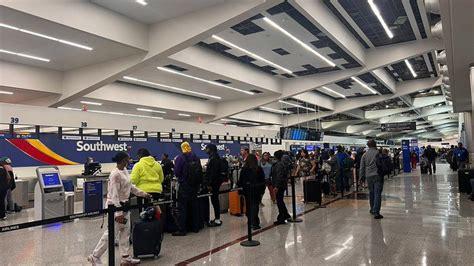
As millions of Americans took to the skies this holiday season, Hartsfield-Jackson Atlanta International Airport (ATL)—long known as the busiest airport in the world—emerged as a model of operational excellence. With a staggering 350,000 passengers passing through its terminals on Friday, December 26th alone, the airport demonstrated an exceptional ability to handle peak travel volumes with minimal disruption and maximum efficiency.
This performance challenges common perceptions about large airports being synonymous with chaos. Far from being overwhelmed, ATL managed to maintain calm, order, and an impressive level of passenger satisfaction, thanks to its strategic infrastructure, intelligent planning, and data-driven traffic flow management.
Behind the Smooth Operation: Smart Planning and Tactical Execution
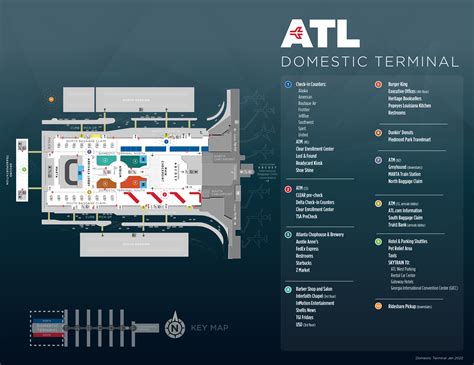
At the core of ATL’s holiday success lies its proactive approach to passenger flow management. Well before the peak travel period, the airport collaborated with airlines, the Transportation Security Administration (TSA), and ground staff to align resources and anticipate potential pressure points. Special operational task forces were mobilized to monitor real-time terminal activity, helping to reroute flows and deploy personnel as needed. This precision logistics system turned potential chokepoints into moments of smooth transition.
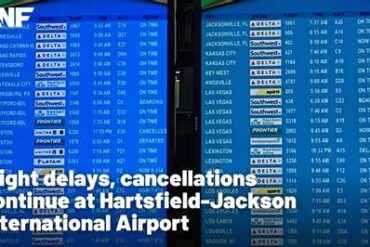
Crucially, ATL’s leadership avoided reactive decision-making. Instead, the airport executed a preemptive cancellation strategy, with over 100 flights grounded in advance to account for the East Coast winter storm. This foresight prevented cascading delays and ensured passengers could rely on predictable scheduling, a stark contrast to the widespread disruption seen at JFK, Newark, and LaGuardia.
Remarkably Low Complaint Rate Despite Peak Volume
Perhaps the most compelling testament to ATL’s holiday triumph is its industry-leading customer satisfaction record. According to TSA data compiled between 2015 and 2024, ATL boasts one of the lowest complaint rates in the country—only 4.53 complaints per 100,000 passengers, or 0.0045%. This figure is not only remarkable for any airport but particularly astonishing when considering ATL served over 460 million passengers during this 10-year period.
This means ATL’s operations are not just surviving under pressure—they’re thriving. By delivering such a high level of consistency, ATL has cultivated traveler loyalty, with passengers confidently returning for domestic and international journeys, knowing they’ll likely experience streamlined security, efficient boarding, and clear communications.
Traveler Reactions Validate ATL’s Reputation
On the ground, passenger sentiment during the holiday rush supported the data. Reports from Fox5 Atlanta captured the voices of travelers expecting airport chaos, only to be met with surprisingly short lines, smooth check-ins, and organized boarding procedures. As one traveler succinctly put it: “We expected a little bit more chaos here at the airport, but it’s not too bad.”
In an era when travel delays and long queues are the norm, this understated praise reflects exceptional operational performance. The seamless experience ATL delivered under such immense volume is more than a fluke—it’s the result of methodical planning, rigorous execution, and a customer-first philosophy embedded at every level of the airport’s ecosystem.

Scale, Connectivity, and Strategic Capacity Management
ATL’s ability to maintain this level of service while being the second-busiest airport in the world in December speaks volumes. According to OAG, Atlanta had over 5.2 million seats scheduled across domestic and international routes, second only to Dubai International Airport (DXB). This figure marked a 1.76% increase from November, highlighting growing demand and an airport infrastructure capable of absorbing it.
To put ATL’s dominance into perspective:
- Dallas/Fort Worth (DFW) scheduled 4.29 million seats, which is just 82.3% of ATL’s capacity.
- Chicago O’Hare (ORD) scheduled 4.12 million seats, or 79% of ATL’s.
This reinforces ATL’s pivotal role as a critical hub in U.S. and global aviation, handling both domestic connections and international gateway traffic with seamless integration.
Lessons from ATL: A Blueprint for Scalable Airport Management
What makes ATL’s success during the holiday rush particularly significant is not just the volume it managed but the scalable blueprint it provides for other global airports. By leveraging technology, predictive data analysis, and adaptive human resource deployment, ATL created an environment of flexibility and control even under heavy pressure.
The following components stood out as drivers of its success:
- Data-Driven Forecasting: Real-time monitoring of traveler movements and predictive modeling of bottlenecks enabled fast decision-making.
- Collaborative Coordination: Tight coordination between airlines, TSA, and airport authorities ensured synchronized operations.
- Customer-Centric Design: Signage, digital wayfinding, and accessible services reduced friction points for passengers.
- Advanced Infrastructure: Investments in high-capacity runways, modernized terminals, and automated systems prepared ATL for surge periods.

Outlook: ATL’s Role in Shaping the Future of Air Travel
As air travel continues to rebound and grow, Atlanta’s model of high-capacity, low-disruption operations is likely to influence global airport design and management. With major international events like the 2026 FIFA World Cup on the horizon—and ATL’s sister airport, Fulton County Airport, preparing for its own international influx—the region is setting a new standard for resilience and scalability in aviation.
Technological innovation will further reinforce this momentum. From biometric security checkpoints to AI-powered crowd management, ATL appears poised to continue leading the industry in smart airport evolution.
In conclusion, the holiday success at ATL wasn’t an accident—it was the result of years of experience, disciplined planning, and an unwavering focus on the passenger. As airports around the world seek to adapt to higher demand with better service, Hartsfield-Jackson Atlanta International Airport stands not only as a hub of connectivity but also as a global benchmark of operational excellence.