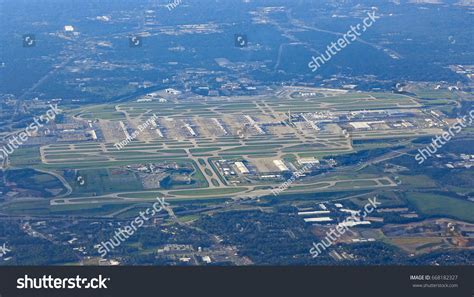
Hartsfield–Jackson Atlanta International Airport (ATL) is not merely an air transit facility—it is an essential artery of global aviation and an engineering triumph. Located approximately 10 miles south of downtown Atlanta, this dynamic mega-hub is owned by the City of Atlanta Department of Aviation and operates within both Clayton and Fulton counties. Since its inception in 1926, ATL has grown into a landmark of international travel, commerce, and infrastructure development.
Serving as the primary hub for Delta Air Lines—one of the world’s largest carriers—and a vital operating base for Southwest, Spirit, and Frontier Airlines, the airport is not only the busiest in the United States but also a dominant force on the global stage. In 2024 alone, the airport handled a staggering 108,067,766 passengers, 796,224 aircraft operations, and 645,834 metric tons of cargo, retaining its long-standing title as the world’s busiest airport by both passenger volume and aircraft movements, a distinction it has held since 1998 (excluding 2020).
A Storied Legacy: From Candler Field to Aviation Royalty
Hartsfield–Jackson’s origins date back to 1925, when the city of Atlanta leased 287 acres from the site of the defunct Atlanta Speedway, transforming it into what became known as Candler Field. On September 15, 1926, a mail plane operated by Florida Airways made the airport’s inaugural flight, marking the beginning of a rich aviation history.
By 1930, Delta Air Service had initiated passenger service at the field, with Pitcairn Aviation also establishing operations. The first air traffic control tower was added in 1939, significantly enhancing operational safety. During World War II, the airport became a military airfield, at times handling up to 1,700 operations in a single day—an extraordinary figure for the era.
Post-war years saw rapid civilian expansion. In 1942, the field was renamed Atlanta Municipal Airport, and by 1948, it had served over one million passengers annually. The arrival of jet aircraft in the late 1950s, including Delta’s DC‑8s, ushered in a new era of high-speed commercial air travel.
Terminal Evolution: From Functional to Futuristic
The launch of the Original Jet Terminal in 1961 represented a bold leap forward. Designed with six concourses radiating from a central hub, it was capable of handling 9.5 million passengers in its first year. Ten years later, the facility was renamed William B. Hartsfield Atlanta International Airport, honoring the city’s long-serving mayor and aviation advocate.
But it was the 1980 debut of the Midfield Terminal Complex, under Mayor Maynard H. Jackson, that redefined the airport’s capability and prestige. Built at a cost of $500 million, the complex introduced North and South Terminals along with Concourses A through D, and part of Concourse T. This project was among the most ambitious airport expansions in U.S. history at the time.
Subsequent additions—a 9,000-foot and an 11,889-foot runway (1984–85), Concourse expansions for the 1996 Atlanta Olympics, and the 2001–2006 construction of the fifth runway crossing over Interstate 285—further elevated ATL’s capacity and operational agility. The Maynard H. Jackson Jr. International Terminal (Concourse F) opened in 2012, symbolizing a new frontier in the airport’s global reach.
Infrastructure and Facilities: The Engine Behind the Efficiency
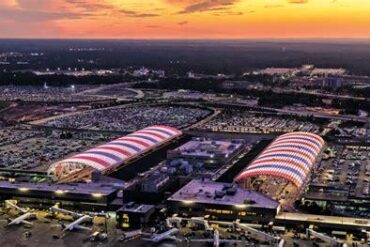
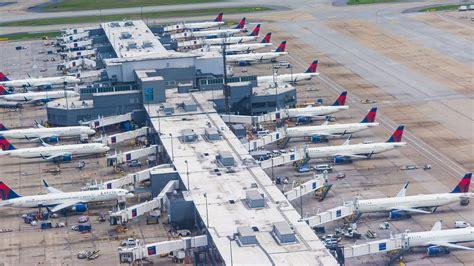
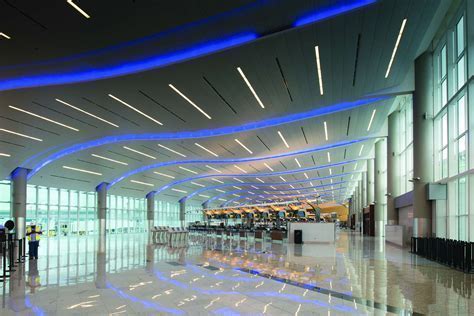
Today, ATL boasts an intricate design of two terminals and seven concourses (T, A–F) interconnected by the Plane Train—a high-speed automated people mover—as well as pedestrian walkways. It operates 192 gates, with Concourse F specially equipped to accommodate the colossal Airbus A380.
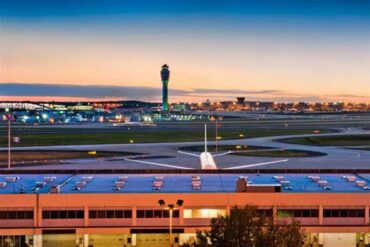
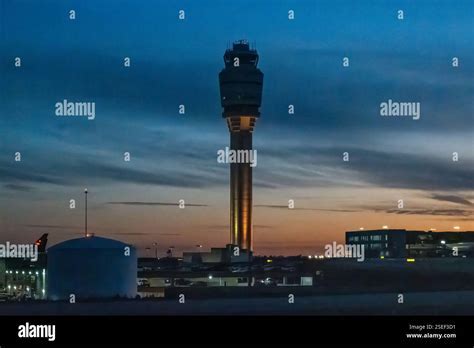
The airport’s fifth runway (10/28)—completed in 2006—enables triple simultaneous landings, a rare capability that positions ATL among a select few airports globally that can execute such high-capacity operations. A new, towering 398-foot control tower provides advanced air traffic management capabilities.
Notably, the airport also excels in sustainability measures. Innovations such as the 2007 Taxiway Victor project and water-use reduction programs underscore its commitment to environmental stewardship amid expansive growth.
Airlines and Global Connectivity: A World in Motion
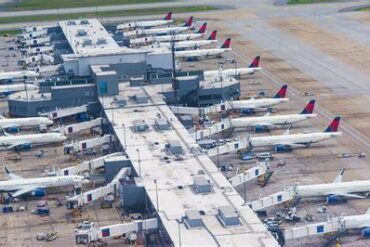
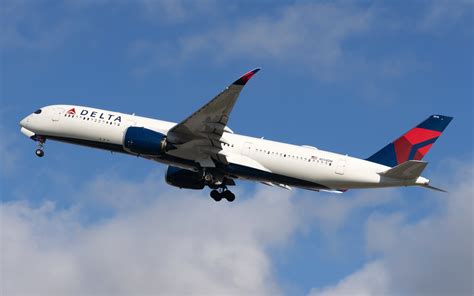
Delta Air Lines, headquartered in Atlanta, remains the airport’s dominant tenant, operating over 1,000 flights daily to more than 225 destinations worldwide. ATL serves as Delta’s most vital hub, not only for passenger operations but also for technical services via its massive Technical Operations Center.
Other notable carriers include:
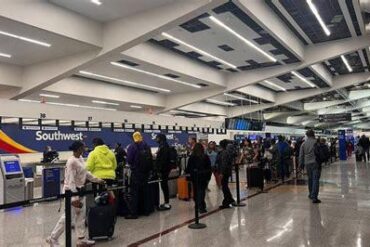
- Southwest Airlines, operating primarily from Concourse C south
- Frontier Airlines, based in Concourse E north
- Spirit Airlines, utilizing multiple concourses
The airport’s international reach continues to expand, with new services launching across Latin America, Europe, and the Middle East. Of particular note is Etihad Airways’ new nonstop service to Abu Dhabi, set to commence on July 2, 2025—a significant enhancement to ATL’s Middle Eastern connectivity.
Ground Transportation: Seamless Regional Integration
ATL is strategically integrated into the metropolitan transport grid. It has direct freeway access via Interstates 85 and 75, and the MARTA Red and Gold lines offer efficient train service to the Domestic Terminal. The ATL SkyTrain connects passengers to the Rental Car Center, which opened in December 2009 and offers 9,900 parking spaces, alongside shared-ride shuttle services.
This seamless connection between air and ground transit not only facilitates quick movement for passengers but also contributes to ATL’s reputation as one of the most accessible major airports in the U.S.
Specialized Facilities: Supporting Diverse Operations
Beyond its commercial terminals, ATL also supports a wide range of operations. One notable facility is the 990 Toffie Terrace hangar, formerly the headquarters of ExpressJet/ASA, now repurposed as a base for the Atlanta Police Helicopter Unit. These ancillary facilities reflect ATL’s role as a multi-purpose aviation complex, supporting both civil and governmental activities.
Statistical Excellence: Performance By the Numbers
The growth trajectory of Hartsfield–Jackson is nothing short of meteoric. Passenger traffic increased from 78 million in 2000 to over 108 million in 2024. Although cargo tonnage peaked at 935,892 metric tons in 2000, the airport still maintained robust freight handling with 645,834 metric tons in 2024.
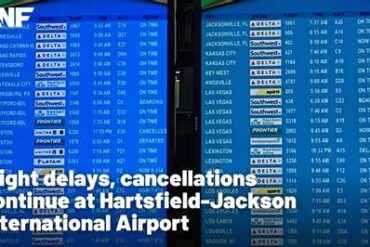
Operational efficiency remains a priority. In 2024, on-time departures reached 79%, with an average delay of 64.73 minutes, a competitive figure considering the airport’s unparalleled traffic volume. ATL’s capacity to manage such a massive throughput is a reflection of its robust design and relentless modernization.
Incidents and Safety Records: Learning and Evolving
While ATL has enjoyed a relatively safe operational record, it has not been without incident:
- May 23, 1960: Delta Flight 1903 crashed on takeoff, resulting in the loss of four crew members.
- February 25, 1969: Eastern Flight 955 was hijacked and diverted to Cuba; the incident ended without casualties.
- April 4, 1977: Southern Airways Flight 24 was involved in an accident.
Each of these incidents has informed enhanced safety measures, resulting in stronger protocols and better equipment. ATL’s current airside operations are governed by stringent FAA standards and benefit from real-time analytics and proactive risk mitigation.
Conclusion: A Blueprint for Global Aviation Hubs
Hartsfield–Jackson Atlanta International Airport is more than an airport—it is an icon of connectivity, innovation, and operational mastery. Through nearly a century of evolution, it has transformed from a repurposed racetrack into a global nexus for passenger and cargo movement.
Whether judged by its passenger numbers, infrastructure, sustainability efforts, or international influence, ATL consistently sets benchmarks that others aspire to. As global air travel continues to expand, ATL’s role as an anchor of international aviation will only deepen, reinforcing its status as the world’s gateway through the heart of Georgia.