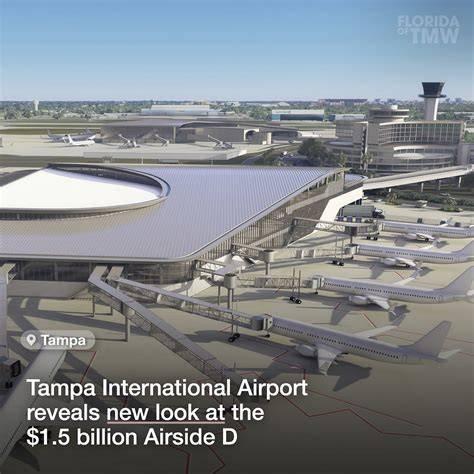
Tampa International Airport is doing something no mid-size Florida airport has attempted in two decades. It is pouring $1.528 billion into an entirely new airside terminal while simultaneously handing the keys to a large share of it to a single airline on a uniquely long lease. The project, known as Airside D, is a 600,000-square-foot facility with 16 gates, a dedicated Federal Inspection Services (FIS) area for international arrivals, an eight-lane security checkpoint, and a new checked baggage inspection system wired into the main terminal. Its stated goal is to lift the airport’s annual passenger capacity from roughly 25 million today to 35 million by 2037. The airline on the other end of that handshake is Delta Air Lines, which has signed a 20-year anchor tenant lease covering at least six of those gates, including a purpose-built mezzanine-level Delta Sky Club. Taken together, the terminal and the lease describe a different role for Tampa than the one it has played for the past generation: not simply a sun-and-beach leisure airport, but a prospective widebody international gateway with the customs capacity, the gate real estate, and the airline commitment to make long-haul flying viable.
Tampa International’s Airside D Design, Cost, and Construction Timeline
The Hillsborough County Aviation Authority Board approved the 100% final design for Airside D on February 5, clearing the project for full construction after years of planning and phased procurement. The cost figure includes a $902 million supplemental contract approved in late 2025, which pushed the total to $1.528 billion and locked in the full scope of the build rather than the trimmed alternative the authority had been weighing. Airside D will be TPA’s first new airside terminal in nearly 20 years, a fact that underscores how long the airport has operated inside the envelope designed for an earlier era of traffic.
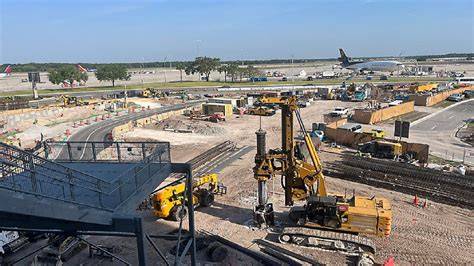
Construction is no longer theoretical. A 300-ton crane is rising over the site to erect a structural steel framework composed of 6,200 tons of steel across more than 7,300 individual pieces, joined by 96,000 bolts and 212,000 inches of welding. Roughly 200 workers are on site daily, and that headcount is expected to climb sharply as the project moves from steel and structure into mechanical, electrical, and interior fit-out. The architecture and engineering work carries a familiar signature: HNTB designed Airside D, the same firm responsible for TPA’s existing main terminal and its automated people mover, continuity that matters when the new concourse must plug into an existing landside-to-airside transfer system without breaking it.
From Final Design Approval to a 2029 Opening
The schedule now runs toward completion in late 2028 with a public opening in 2029. That window is significant because it sits just ahead of the period when TPA’s traffic growth would otherwise collide with infrastructure limits. The airport handled approximately 24 million passengers in 2024 and 24.5 million in fiscal year 2025, which means it is already brushing against the 25 million ceiling that the aviation authority itself identified as the trigger for building Airside D.
The 16 gates will serve both domestic and international flights, and the integrated design is the point. Rather than segregating international operations into a separate facility with its own throughput constraints, Airside D will allow widebody international arrivals and domestic departures to be processed simultaneously on the same concourse. That flexibility is what turns a gate count into a route development tool, because an airline can schedule a transatlantic arrival and a domestic bank of departures without fighting for scarce processing capacity.
Delta’s 20-Year Anchor Lease and the Purpose-Built Sky Club
Delta’s agreement with the aviation authority is the longest and most substantial terminal commitment the carrier has made at any mid-size Florida airport. The lease runs for 20 years, giving Delta a dedicated presence in Airside D through approximately 2049, and covers at least six of the 16 gates. The facility includes a mezzanine-level Delta Sky Club, the airline’s first purpose-built lounge at TPA. The remaining ten gates stay with the airport authority, which retains flexibility to assign them based on demand and carrier interest, a structure that prevents the terminal from becoming a single-airline monopoly while still anchoring its financial foundation.
The Sky Club detail is arguably more telling than the gate count. Delta reserves dedicated lounge construction for airports where it expects durable premium demand, because a purpose-built club carries meaningful capital cost and permanent operating expense. Building one at Tampa signals an expectation that Airside D will host enough high-yield traffic, including long-haul international passengers, to justify the investment for the life of the lease. The lease term itself mirrors the terminal’s useful life, meaning Delta is committing to Tampa for as long as the building stands.
Delta’s Tampa Footprint and the Case for a Focus-City Upgrade
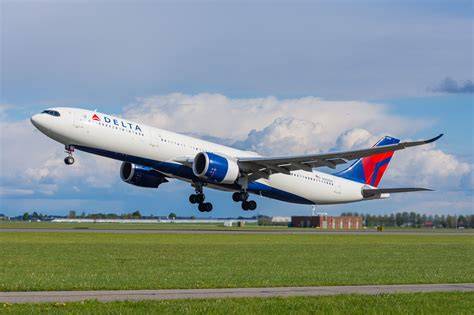
Delta currently operates approximately 45 daily departures from Tampa, linking the airport to Atlanta, Detroit, Minneapolis-St. Paul, Salt Lake City, New York-JFK, Boston, and Amsterdam. The Amsterdam route, flown on the Airbus A330-900neo, is Delta’s first year-round widebody international service from TPA and functions as a live test of whether Tampa can sustain European flying at scale.
The airline’s broader network is built around hubs at Hartsfield-Jackson Atlanta, Detroit Metropolitan Wayne County, Minneapolis-St. Paul, Salt Lake City, Seattle-Tacoma, New York-JFK, Boston Logan, and Los Angeles International, with Atlanta handling over 1,000 daily Delta departures as the primary connecting engine. Its Florida presence is substantial but diffuse, spread across Orlando, Fort Lauderdale-Hollywood, Miami, Jacksonville, and Tampa without a dominant hub at any one of them.
The anchor lease does not convert Tampa into a hub, and the distinction is worth stating plainly. Delta is not planning an Atlanta-style connecting operation at TPA. What the lease creates is a long-term focus city with dedicated infrastructure, a premium lounge, and the physical capacity to grow well beyond 45 daily departures. A focus city holding a 20-year lease and its own Sky Club receives scheduling priority and capital investment that a station operating from shared gates on short-term agreements simply does not.
Why Airside D’s Federal Inspection Services Area Changes Tampa’s International Role
Tampa is not starting international service from scratch. Edelweiss serves Zurich, avianca recently launched daily service to Bogota, Delta added year-round Amsterdam, and Caribbean and Canadian routes to San Juan, Toronto, Montreal, Cancun, and Santo Domingo already operate from the existing terminal. What the airport lacks is throughput. The current Federal Inspection Services facility caps how much international traffic TPA can process, and that cap constrains route development more than demand does.
Airside D’s dedicated FIS area, with its own Customs and Border Protection processing capability, removes that constraint. Delta’s six gates sit inside a terminal where international arrivals can be handled without competing for processing capacity in the airport’s existing arrivals hall, which is precisely the operational condition required for routes to London, Paris, or additional European destinations that demand a full international arrivals facility. A widebody landing at a gate without adequate customs processing behind it is a scheduling problem; a widebody landing at Airside D is a route.
The route development math makes the urgency clear. Approximately 50% of Tampa’s international origin-and-destination traffic currently leaks to other Florida airports, primarily Miami, Orlando, and Fort Lauderdale. Tampa Bay residents drive south or east for nonstop international options that TPA cannot currently offer. Airside D’s FIS capacity, combined with Delta’s anchor presence and widebody-capable gates, is designed to recapture that leakage by giving the local market the routes it already demonstrates demand for.
Tampa Bay’s Growth Curve and the Fleet Timing Behind the 2029 Opening
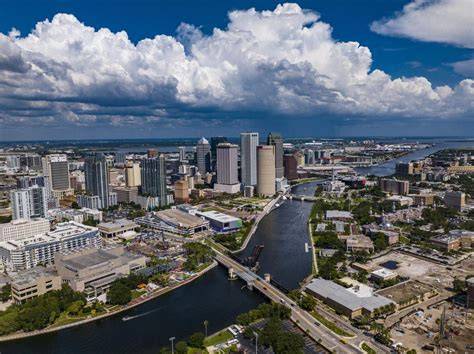
The Tampa Bay metropolitan area is among the fastest-growing regions in the country. The four-county metro of Hillsborough, Pinellas, Pasco, and Hernando has added more than 400,000 residents since 2010 and now exceeds 3.3 million people. Its economy has diversified well beyond tourism and military basing, with finance, healthcare, technology, and logistics now driving corporate travel demand alongside the leisure traffic that has historically defined Florida aviation.
The 2029 opening also aligns with Delta’s fleet planning. Deliveries of the Airbus A350-1000 begin in late 2026, which will free A330-900neos and A350-900s for redeployment onto international routes from secondary hubs and focus cities. Tampa, with a FIS-equipped terminal and an anchor lease, becomes an obvious candidate for that freed widebody capacity. If the Amsterdam route performs well through 2027 and 2028, additional European destinations from Airside D’s gates become a natural extension rather than a speculative leap.
What Airside D Means for Tampa’s Competitive Position in Florida Aviation
Florida’s international air traffic has long concentrated at Miami, Orlando, and Fort Lauderdale, and Tampa’s leakage rate is the clearest evidence of what that concentration costs the region. Airside D changes the terms of that competition by giving TPA something its rivals already possess: dedicated international processing capacity paired with gates an anchor carrier controls on a long horizon. The 16-gate concourse, the eight-lane checkpoint, and the new baggage inspection system collectively raise the airport’s ceiling from 25 million to 35 million annual passengers by 2037, headroom that accommodates growth without the crowding that suppresses airline expansion.
For Delta, the calculus is equally defined. A 20-year lease through roughly 2049, a purpose-built Sky Club, and international-capable gates at a fast-growing metro represent a low-risk path into a market currently served largely by competitors and connecting itineraries. For Tampa Bay travelers, the payoff is measured in nonstop options to Europe and beyond that no longer require a drive to another airport. The structural steel now rising over the airfield is the physical beginning of that shift, and the 2029 opening will determine whether Tampa’s $1.528 billion bet converts a leakage statistic into a gateway.