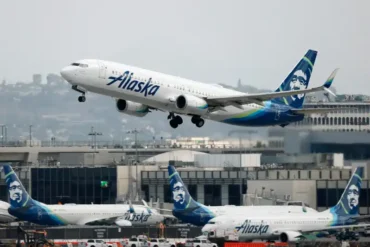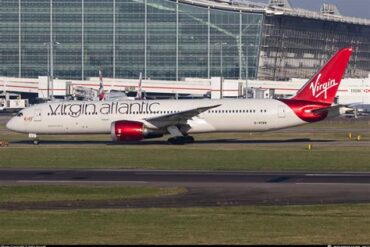
Delta Air Lines CEO Ed Bastian has launched a blunt public attack on Heathrow Airport’s decision to relocate the carrier to Terminal 4 in 2028, labelling the ruling “short-sighted” and “bad for airline consumers.” His intervention escalates a once-in-a-decade terminal review into a full-blown transatlantic dispute, with Delta promising to “pursue all available remedies” and Virgin Atlantic, in which the US carrier holds a 49% stake, weighing its own legal options. At stake is more than a gate and a departure lounge: it is a decade of jointly built connectivity, shared premium ground products, and a carefully assembled competitive counterweight to British Airways at Europe’s busiest international hub.
Heathrow’s Once-a-Decade Review Forces Delta Out of Terminal 3
Heathrow Airport Limited’s capacity review, conducted roughly every ten years, concluded that five airlines must shift terminals in 2028. Delta is the most conspicuous casualty. The airline has shared Terminal 3 with Virgin Atlantic for more than a decade, a co-location arrangement the two carriers describe as central to their joint venture. Heathrow argues the reshuffle will release available capacity and ease congestion at one of the world’s most aggressively slot-controlled airports, where runway movements are capped and every square metre of terminal space is contested. For the airport, the logic is operational arithmetic; for Delta, it is the dismantling of a strategically designed partnership hub.
The decision lands hardest because Terminal 3 was never an accident of history. It was engineered. Co-locating the two carriers allowed seamless same-terminal connections, shared premium amenities, and coordinated ground handling, effectively presenting transatlantic travellers with a single, integrated product spanning two long-haul networks. Heathrow’s ruling severs that architecture with a single administrative stroke.
Ed Bastian’s Statement: “Short-Sighted, Deeply Disappointing and Bad for Airline Consumers”
Bastian did not soften his language. In a lengthy statement released on Monday, he framed the relocation as a policy failure that privileges airport logistics over passenger experience. The Delta chief argued that separating the two airlines undermines years of investment and disregards the tightly integrated customer benefits offered in the co-located terminal. His wording was deliberate: “bad for airline consumers” reframes a slot-management decision as a consumer-protection issue, a framing designed to carry weight with regulators and competition authorities rather than merely with airport executives.

Behind the rhetoric sits a concrete operational complaint. If Delta moves to Terminal 4 while Virgin Atlantic remains at Terminal 3, connecting passengers transferring between the two airlines would have to cross the airfield by bus transport rather than walk between adjacent gates. Minimum connection times would lengthen, tight itineraries would fail, and the frictionless transfer that made the joint venture attractive would erode. For premium travellers, the change also means losing access to the Virgin Atlantic Clubhouse and the Virgin Revivals Lounge, two of Heathrow’s most recognisable ground products.
Shared Terminal 3 Facilities Underpin the Delta-Virgin Atlantic Joint Venture
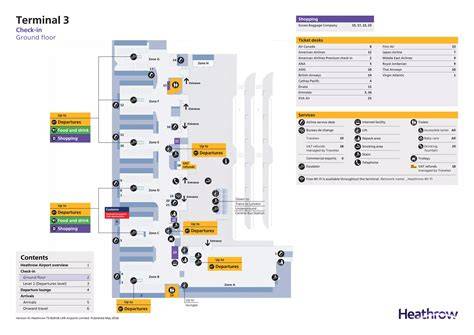
The partnership’s value is embedded in shared infrastructure. In Terminal 3, Delta and Virgin Atlantic share the Clubhouse, the arrivals lounge, check-in areas, ground labour and transfer coordination. Those arrangements are not cosmetic. Shared ground staff mean bags and passengers move under a single operating rhythm; shared check-in reduces duplication; transfer coordination keeps misconnected passengers moving. Splitting the operation forces each carrier to rebuild duplicated infrastructure at separate terminals, an expensive and disruptive process that no amount of airport reassurance fully offsets.
Delta’s Heathrow network concentrates on seven year-round US gateways: Atlanta, Boston, Detroit, Minneapolis/Saint Paul, New York-JFK, Salt Lake City and Seattle/Tacoma. Virgin Atlantic’s US roster is broader, covering ten year-round destinations including Atlanta, Boston, Las Vegas, Los Angeles, Miami, New York-JFK, Orlando, San Francisco, Tampa and Washington-Dulles, plus a seasonal Seattle service. Virgin’s wider international network reaches Antigua, Barbados, Bengaluru, Cancún, Cape Town, Delhi, Dubai, Grenada, Johannesburg, Lagos, Malé, Montego Bay, Mumbai, Seoul, St. Vincent, Toronto and Phuket. The overlap in Atlanta, Boston, New York and Seattle is precisely where connections matter most, and it is those flows that Heathrow’s bus transfer would degrade.
Competitive Fallout for SkyTeam and Transatlantic Rivals
Delta is tied with United Airlines for second place among US carriers at Heathrow by destinations served, both with seven year-round gateways. American Airlines leads with nine year-round airports plus a seasonal service. SkyTeam, of which both Delta and Virgin Atlantic are members, has argued that the move would disadvantage its airlines relative to competitors sharing terminals, raising the prospect of an alliance-level challenge alongside Virgin’s legal review. The competitive argument is straightforward: terminal adjacency is a form of product quality, and Heathrow’s allocation tilts it.
What Happens Next in the Heathrow Terminal 4 Fight
Delta’s vow to pursue every available remedy signals a multi-front campaign: direct lobbying of Heathrow Airport Limited to reconsider, possible legal challenge, regulatory pressure framed around consumer harm, and alliance-level advocacy through SkyTeam. Virgin Atlantic’s decision to examine its legal options adds weight, given that it is the UK-based partner most directly exposed to the operational fallout. Heathrow, meanwhile, holds the operational mandate and a capacity rationale it believes justifies the disruption.
The 2028 deadline gives both sides room to manoeuvre, but not unlimited time. Terminal construction, baggage system integration, lounge fit-out and staffing all require lead times measured in years. If Delta is to be reprieved, the reversal must come early enough to be operationally feasible; if it is not, the airline must begin designing a Terminal 4 presence it insists it should never need. Either way, Bastian has ensured the dispute will be judged publicly on whether Heathrow has traded passenger convenience for slot arithmetic.