Every day, thousands of aircraft rise and descend through the crowded skies above Atlanta and Chicago with choreography so precise that passengers rarely stop to consider the invisible system guiding it all. Hartsfield-Jackson Atlanta International Airport moves more than 100 million passengers annually, while Chicago O’Hare International Airport handles more takeoffs and landings than any other airport in the United States. Together, they represent the beating heart of American aviation.
Yet behind the radar scopes, flight sequencing systems, and digital maps lies a surprising reality: parts of the software infrastructure managing this enormous volume of traffic were originally designed before the first iPhone was even announced.
That fact sounds shocking in an era where smartphones become obsolete every few years and airlines advertise biometric boarding, AI-powered customer service, and satellite-connected cabins. But the continued reliance on legacy air traffic control software is not evidence of neglect or technological incompetence. Instead, it reflects the extraordinary complexity of the American aviation system, where reliability matters far more than novelty.
The Federal Aviation Administration oversees one of the most demanding transportation networks on Earth. On an average day, the FAA manages more than 44,000 flights carrying over three million passengers through nearly 20,000 airports across the country. In that environment, replacing core software systems is less like updating a phone operating system and more like replacing the nervous system of a living organism while it continues functioning in real time.
The result is a patchwork of modern upgrades layered onto decades-old foundations, creating an aviation ecosystem where cutting-edge satellite navigation coexists with paper flight strips, copper wiring, and software architectures born in the 1990s.
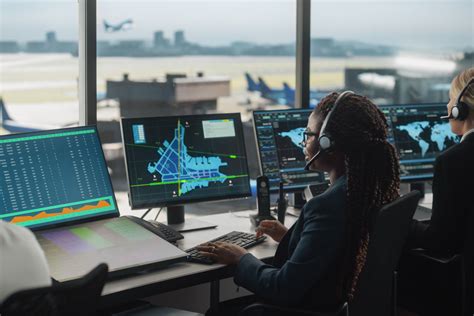
Why Legacy Air Traffic Control Systems Refuse To Disappear
Outside aviation, old software often survives because replacing it is expensive. In air traffic control, the stakes are dramatically higher. A software bug in a banking app might inconvenience customers for a few hours. A software defect inside the National Airspace System could create false radar targets, corrupt flight data, disrupt communications between controllers, or trigger cascading delays across the country.
That is why aviation technology evolves differently from consumer electronics.
Air traffic control systems are designed around one primary principle: predictable reliability. Controllers depend on familiar screen layouts, keyboard shortcuts, alert sounds, and workflows developed through years of training. Even seemingly minor interface changes can increase workload during high-pressure situations.
Modernization therefore becomes an incredibly slow process. Every change must pass rigorous safety certification requirements from the FAA. New systems must integrate seamlessly with older infrastructure still operating nationwide. Unlike most industries, aviation cannot simply shut down operations over a weekend to install new software.
This cautious approach explains why some technologies remain operational decades after their introduction. The aviation sector values continuity because consistency reduces risk.
Ironically, older systems sometimes offer unexpected advantages. Highly isolated legacy platforms can be more resistant to modern cyberattacks precisely because they were never designed for internet connectivity. The same principle once kept portions of America’s nuclear command systems running on 8-inch floppy disks long after the technology disappeared from public life.
Air traffic control inherited a similar philosophy: if a system is stable, trusted, and safe, replacing it becomes extraordinarily difficult to justify unless the benefits are overwhelming.
The Software Powering America’s Busiest Airports
The reality behind the “pre-iPhone software” headline is more nuanced than it first appears. America’s busiest airports are not literally operating on untouched 1990s computers frozen in time. Instead, they use systems whose original architectures were developed decades ago but continuously upgraded over the years.
One of the FAA’s central systems is the Standard Terminal Automation Replacement System, better known as STARS. This platform handles approach and departure control at major airports, helping controllers manage aircraft sequencing, radar tracking, arrivals, departures, and spacing around busy terminal airspace.
STARS was originally designed during the 1990s and entered deployment during the early 2000s, years before smartphones transformed consumer technology. But the system seen in control facilities today is the product of countless updates, patches, interface improvements, and hardware replacements.
The FAA also relies heavily on another platform known as ERAM, or En Route Automation Modernization. ERAM manages high-altitude en route traffic across major Air Route Traffic Control Centers responsible for aircraft traveling between cities. Compared with some legacy systems it replaced, ERAM is relatively modern and represented a major leap forward when introduced.
Still, remnants of older infrastructure remain throughout the system. Some facilities continue using analog voice switching technology, paper-based procedures, legacy telecommunications networks, and aging display hardware. Smaller airports often rely on older local equipment longer than major hubs such as Atlanta or O’Hare, where modernization efforts receive greater priority.
The key distinction is that aviation software ages differently from consumer technology. A smartphone released in 2014 feels ancient today because consumer expectations evolve rapidly. But a Boeing 787 delivered in 2014 is still considered technologically advanced within commercial aviation. Air traffic control systems follow a similar timeline measured in decades rather than annual upgrade cycles.
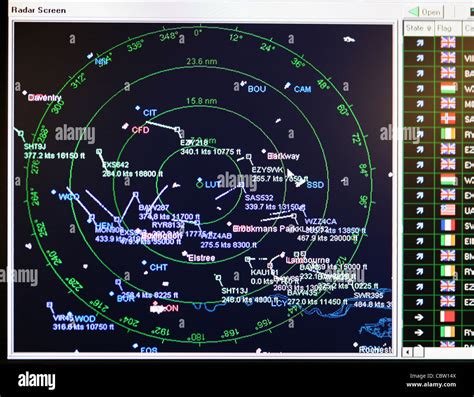
Why Modernizing Air Traffic Control Is So Difficult
Replacing an air traffic control system is one of the most complicated technological challenges in transportation.
The difficulty begins with interoperability. America’s aviation network contains thousands of interconnected systems responsible for radar surveillance, communications, weather integration, flight planning, navigation, military coordination, and airline operations. Every new platform must function flawlessly alongside every existing component.
Then comes certification. Aviation regulators demand exhaustive testing because software failures inside ATC systems carry potentially catastrophic consequences. Even minor updates can require years of evaluation before approval.
Human factors make the challenge even harder. Controllers train extensively using specific interfaces and procedures. Changing display layouts or interaction methods can temporarily reduce efficiency as workers adapt. In one of the world’s highest-pressure professions, even small disruptions matter.
This creates a paradox. Modern systems promise improved efficiency and automation, but transitioning to them can initially increase workload and training requirements.
There is also the issue of continuity. Airports cannot pause operations during upgrades. Hartsfield-Jackson Atlanta handles more than 2,700 flights daily. O’Hare frequently exceeds that during peak travel periods. The aviation system must remain active every minute of every day while modernization occurs in the background.
As a result, upgrades happen incrementally rather than through dramatic overnight transformations. New capabilities are layered onto existing foundations. Legacy systems remain operational while replacement technologies undergo years of parallel testing.
The process resembles renovating a skyscraper while thousands of people continue working inside.
The NextGen Program And The Future Of American Aviation
To move beyond aging infrastructure, the FAA launched the Next Generation Air Transportation System, commonly known as NextGen. This multi-billion-dollar modernization initiative aims to fundamentally reshape how American airspace operates.
Instead of relying primarily on ground-based radar and voice communications, NextGen shifts aviation toward satellite navigation, digital data sharing, automation, and predictive traffic management.
The transformation is enormous in scope. NextGen includes technologies such as Automatic Dependent Surveillance-Broadcast (ADS-B), advanced digital communications, performance-based navigation routes, and trajectory-based operations that allow more precise management of aircraft movement.
According to FAA figures, NextGen initiatives delivered more than $10 billion in operational benefits between 2010 and 2023 through improved efficiency, reduced delays, lower fuel consumption, and enhanced traffic flow.
The long-term goal is not merely replacing old computers. It is redesigning the entire philosophy of air traffic management.
Traditional ATC often operates reactively, with controllers responding dynamically to changing traffic conditions. NextGen aims for a more strategic approach where aircraft trajectories are coordinated and optimized in advance using shared real-time data across airlines, controllers, and airports.
This matters because American airspace is under increasing pressure. Passenger volumes continue climbing, cargo operations are expanding rapidly, and new aviation sectors such as drones and advanced air mobility aircraft are approaching commercial integration.
Without modernization, the system risks becoming increasingly strained under future demand.
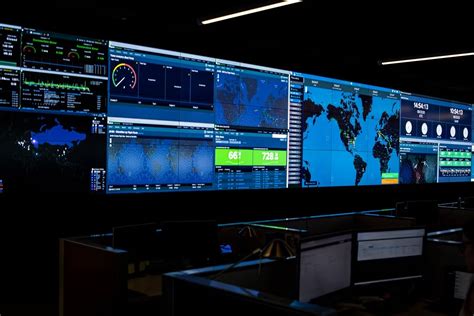
Why Atlanta And O’Hare Are Critical Stress Tests
America’s busiest airports provide the clearest illustration of why modernization matters.
Atlanta’s Hartsfield-Jackson International Airport remains the world leader in passenger traffic, processing more than 106 million travelers annually. Chicago O’Hare, meanwhile, handles the highest number of aircraft movements in the country, exceeding 857,000 takeoffs and landings in a single year.
Those numbers create extraordinary operational pressure.
Controllers at these airports manage tightly compressed arrival streams where aircraft may be separated by only a few miles while approaching parallel runways in poor weather conditions. Delays at one major hub can ripple across the national aviation network within hours.
Older systems were not originally designed for the density and complexity of today’s traffic volumes. While upgrades have expanded their capabilities, the limitations become more visible as congestion grows.
Modernization efforts at large hubs therefore focus heavily on improving sequencing efficiency, digital coordination, predictive traffic management, and communication reliability.
Advanced systems can help controllers identify potential conflicts earlier, reduce unnecessary holding patterns, and optimize runway usage more effectively. Even small efficiency gains matter enormously when applied across thousands of daily operations.
At airports like O’Hare and Atlanta, shaving a minute off average taxi or approach times can save airlines millions of dollars annually in fuel and scheduling costs.
The Staffing Crisis Pushing Technology Forward
Infrastructure is not the FAA’s only challenge. The agency is also struggling with a persistent shortage of certified air traffic controllers.
The United States currently employs roughly 11,000 certified controllers, significantly below historical staffing targets. Retirement waves, pandemic disruptions, demanding training pipelines, and burnout have intensified the problem.
Modernization is increasingly viewed as part of the solution.
The FAA’s workforce planning strategy now explicitly connects technology upgrades with staffing efficiency. Improved automation tools, smarter scheduling systems, digital coordination platforms, and machine learning-assisted traffic management could help reduce controller workload while improving operational resilience.
But automation will not eliminate the need for human expertise.
Controllers remain essential for handling emergencies, severe weather disruptions, equipment failures, and unexpected traffic conflicts. Aviation still depends heavily on human judgment, particularly during high-stress scenarios where adaptability matters more than algorithms.
In fact, modernization can temporarily worsen staffing pressure. Experienced controllers sometimes retire rather than retrain on unfamiliar systems, while younger staff require additional instruction to master new technologies.
This creates a difficult balancing act. The FAA must modernize quickly enough to improve efficiency without overwhelming the workforce responsible for maintaining daily operations.
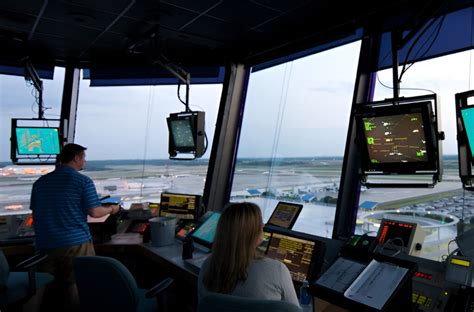
Why Old Software Does Not Necessarily Mean Unsafe
Public discussions about “ancient software” often create the impression that America’s air traffic system is dangerously outdated. The reality is more complicated.
Aviation remains one of the safest forms of transportation ever created. The FAA’s layered approach to modernization prioritizes stability precisely because the consequences of rushed implementation could be severe.
Legacy systems persist not because aviation ignores technology, but because the industry treats change cautiously.
Many older platforms have undergone decades of refinement under real operational conditions. Engineers understand their behavior thoroughly. Controllers trust them. Maintenance procedures are deeply established. Replacing them introduces uncertainty that aviation culture naturally resists.
At the same time, modernization cannot be delayed indefinitely. Growing traffic volumes, cybersecurity concerns, workforce shortages, and rising operational complexity all push the FAA toward faster technological evolution.
The challenge is finding the balance between innovation and reliability.
That balance explains why America’s busiest airports simultaneously represent the future and the past of aviation technology. Beneath the sophisticated digital systems guiding modern aircraft lies infrastructure whose origins stretch back long before smartphones, social media, or cloud computing transformed everyday life.
Passengers flying through Atlanta or Chicago may never notice the aging architecture behind the scenes. Flights still depart. Arrivals still land safely. Controllers still orchestrate one of the world’s most complicated transportation systems with remarkable precision.
But over the next decade, the gradual transition toward NextGen will reshape how American skies function. The transformation will not happen with the dramatic unveiling of a single revolutionary system. Instead, it will continue through careful, incremental upgrades designed to preserve the one quality aviation values above everything else: trust.