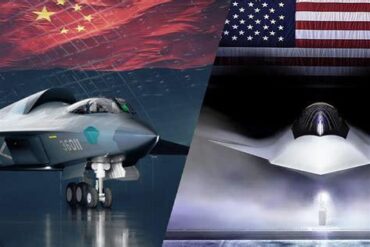
The race for air superiority is increasingly being framed as a contest between the United States and China. Headlines frequently suggest that China is overtaking America in advanced fighter technology, while dramatic images of futuristic Chinese aircraft fuel speculation that the balance of air power is shifting rapidly eastward. Yet beneath the striking photographs, political narratives, and viral social media posts lies a far more complex reality.
China has unquestionably narrowed the gap. Its aerospace industry has expanded at remarkable speed, its fighter production rates are among the highest in the world, and its military modernization effort has transformed the People’s Liberation Army Air Force into a force that bears little resemblance to the one that existed twenty years ago. However, narrowing a gap and surpassing a competitor are fundamentally different achievements.
The country that introduced the world’s first operational fifth-generation fighter remains positioned to maintain a technological advantage well into the future. Despite growing concerns about Chinese advances, there are compelling reasons why the United States may continue leading the most critical aspects of fighter aircraft development for decades to come.
The debate often focuses on what can be seen. The reality of air dominance is increasingly determined by what cannot.
The Revolutionary Impact Of The F-22 Raptor
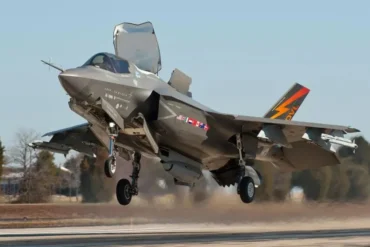
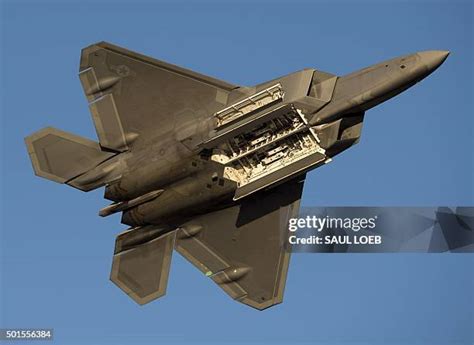
When the Lockheed Martin F-22 Raptor entered service in 2005, it fundamentally changed military aviation. No aircraft before it combined stealth, supercruise capability, advanced sensor integration, high maneuverability, and sophisticated avionics into a single operational platform.
The F-22 was designed during the closing years of the Cold War, when American planners anticipated facing advanced Soviet fighters such as the Su-27 and MiG-29. Rather than creating a modest improvement over existing aircraft, the United States pursued an entirely new generation of air combat technology.
The result was a fighter that represented a genuine leap forward rather than an evolutionary upgrade.
Unlike previous aircraft generations, the F-22 integrated multiple systems into a unified combat architecture. Pilots no longer needed to process information from separate sensors independently. Instead, the aircraft fused data from numerous sources and presented a coherent tactical picture.
This concept, known as sensor fusion, would become one of the defining characteristics of modern air warfare.
While many observers focus on stealth shaping and radar cross-section reductions, the F-22’s greatest achievement may have been the invisible software architecture operating beneath its skin.
The aircraft effectively transformed the pilot into a battlefield manager rather than merely a fighter operator.
Why Fighter Generations Can Be Misleading
Military aviation enthusiasts often categorize aircraft into neat labels such as fourth-generation, fifth-generation, and sixth-generation fighters. These classifications provide useful shorthand, but they frequently oversimplify reality.
Aircraft capabilities do not evolve in clean, universally agreed stages.
A modernized fourth-generation aircraft can outperform a fifth-generation fighter in certain areas. Likewise, a newer aircraft may possess advanced stealth characteristics while lacking advantages in networking, electronic warfare, or mission integration.
The problem becomes particularly apparent when comparing aircraft from different countries.
There is no international authority that certifies what qualifies as a fifth-generation fighter. Manufacturers, governments, defense analysts, and military organizations often apply different standards.
Consequently, public discussions can become distorted by labels rather than capabilities.
An aircraft’s effectiveness depends on a vast ecosystem that includes:
- Radar systems
- Electronic warfare networks
- Satellites
- Airborne warning aircraft
- Pilot training
- Logistics support
- Maintenance quality
- Weapons integration
- Data-sharing architecture
A fighter is not an isolated machine. It is a node within a larger combat network.
Judging military power based solely on aircraft appearance is similar to evaluating a smartphone solely by its exterior design while ignoring the processor, operating system, software, and connectivity that determine its actual performance.
China’s Rapid Rise Cannot Be Ignored
China’s progress remains extraordinary by any historical standard.
Over the past two decades, Beijing has transformed from a nation largely dependent on foreign aerospace technology into one capable of producing advanced indigenous fighter aircraft in significant numbers.
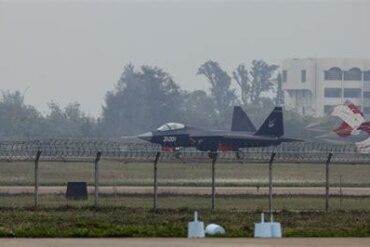
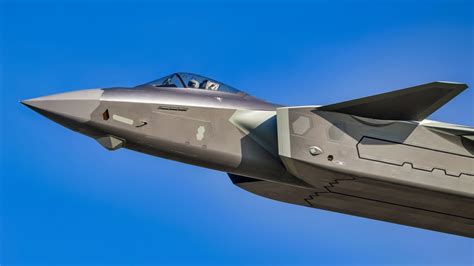
The emergence of the J-20 Mighty Dragon marked a major milestone in that transformation.
Unlike earlier Chinese fighters that relied heavily on foreign influences, the J-20 represented a more ambitious effort to develop a genuine fifth-generation platform capable of challenging advanced Western aircraft.
China has also demonstrated an impressive ability to scale production.
Today, Chinese aerospace manufacturers produce fighter aircraft at rates approaching those of the United States. Together, the two nations account for the overwhelming majority of global fighter production.
This industrial capacity matters enormously.
Military strength is not measured solely by technological sophistication. Quantity also influences strategic calculations, particularly in a prolonged conflict where replacement rates become critical.
China’s ability to manufacture large numbers of modern aircraft gives it a substantial advantage over many nations that possess advanced designs but limited production capacity.
The Information Gap Distorts Global Perceptions
One of the most overlooked factors in discussions about Chinese military aviation is transparency.
The United States operates within a remarkably open system compared with most major powers.
American defense programs are regularly scrutinized through congressional hearings, inspector general reviews, Government Accountability Office reports, budget debates, and media investigations.
Program delays become public knowledge.
Cost overruns become headlines.
Maintenance problems become public records.
Readiness challenges are openly discussed.
China operates under an entirely different information model.
Aircraft inventories are often classified.
Operational readiness rates remain largely unknown.
Procurement setbacks rarely receive public attention.
Accidents are infrequently acknowledged.
As a result, global audiences often receive a skewed picture of comparative military capabilities.
American weaknesses become highly visible because they are documented extensively.
Chinese weaknesses may remain hidden because the information is never released.
This asymmetry creates an important analytical challenge.
Observers may mistakenly conclude that one side experiences more problems simply because that side publicly reports them.
The reality may be considerably different.
Why Public Demonstrations Do Not Equal Technological Leadership
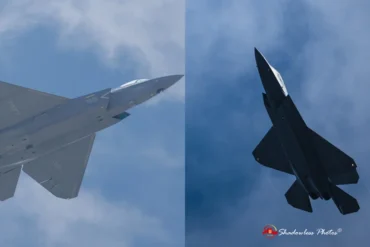
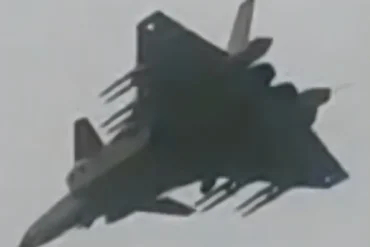
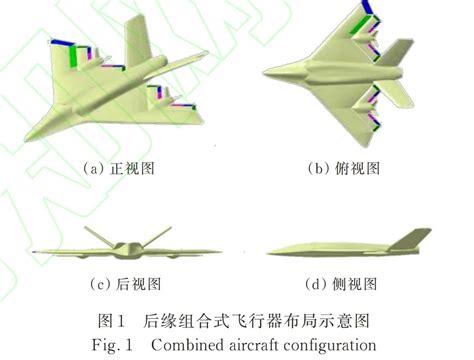
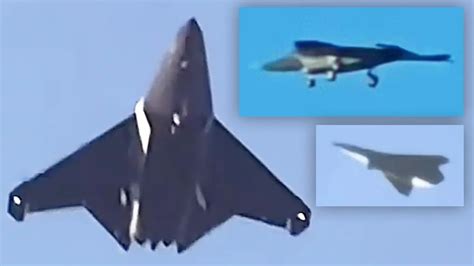
In recent years, images of exotic Chinese tailless aircraft have generated significant excitement.
These aircraft, commonly referred to as the J-36 and J-50 by outside observers, have fueled speculation that China has already entered the sixth-generation era ahead of the United States.
The visual impact is undeniable.
Their unconventional shapes suggest a dramatic departure from traditional fighter design principles.
For many observers, seeing these aircraft fly publicly creates the impression that China has seized the initiative.
However, appearances can be deceptive.
The United States confirmed years ago that demonstrators associated with its next-generation fighter efforts had already flown.
Yet unlike China, Washington has chosen not to reveal these aircraft publicly.
Very few details have emerged.
Photographs remain unavailable.
Capabilities remain classified.
Even official illustrations are widely believed to contain deliberate misdirection.
Consequently, a curious situation has developed.
China appears more advanced because its aircraft are visible.
America appears less advanced because its aircraft remain hidden.
Visibility and technological maturity are not necessarily the same thing.
The side revealing more information is not automatically the side possessing superior technology.
The Real Battlefield Is Inside The Aircraft
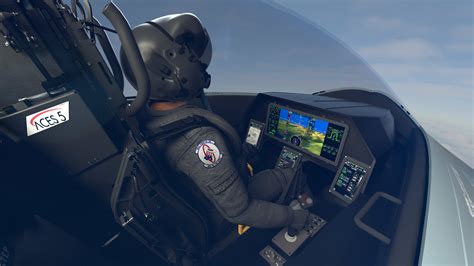
Much of the public discussion surrounding future fighter aircraft focuses on aerodynamics, stealth shaping, and external appearance.
Yet aerospace experts increasingly emphasize that the most important advances occur inside the aircraft.
Future combat systems depend heavily on software, artificial intelligence, data fusion, networking, electronic warfare, and sensor integration.
These elements are largely invisible.
They cannot be photographed during an airshow.
They rarely appear in promotional videos.
They generate far fewer headlines than dramatic aircraft silhouettes.
Yet they are arguably the most important determinants of combat effectiveness.
A modern fighter’s value increasingly stems from its ability to collect information, process it rapidly, share it across networks, and enable coordinated action among multiple platforms.
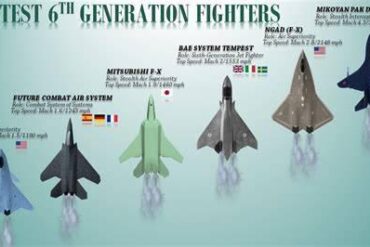
This trend is expected to accelerate dramatically in sixth-generation systems.
Future fighters may function as command centers controlling drones, integrating space-based intelligence, managing electronic attacks, and coordinating operations across vast distances.
In that environment, software architecture becomes more important than raw speed.
Information dominance becomes more important than maneuverability.
Data becomes the decisive weapon.
America’s Hidden Advantage In System Integration
One area where the United States continues to enjoy a substantial advantage is systems integration.
Building a stealthy aircraft is extraordinarily difficult.
Building a stealthy aircraft that seamlessly integrates sensors, weapons, networking, software, electronic warfare systems, and sustainment infrastructure is vastly harder.
This challenge requires decades of accumulated expertise.
It demands enormous financial resources.
It requires extensive operational testing and continual refinement.
The United States has been developing these capabilities since the Cold War.
Programs such as the F-22, F-35, B-2 Spirit, and B-21 Raider have collectively generated an immense body of knowledge regarding stealth operations, software integration, and advanced mission systems.
These lessons are not easily replicated.
They represent institutional experience accumulated across generations of programs.
Even countries capable of producing advanced aircraft often struggle to match the integration standards achieved by American platforms.
The gap may not always be visible, but it remains strategically significant.
Why Japan’s Decisions Offer Important Clues
Strategic behavior frequently reveals more than public statements.
Japan provides a particularly useful example.
As one of China’s closest regional competitors, Japan carefully evaluates Chinese military capabilities when making procurement decisions.
Tokyo currently operates a mix of F-35s, upgraded F-15s, and indigenous F-2 fighters.
It is also participating in the Global Combat Air Programme, or GCAP, alongside the United Kingdom and Italy.
The goal is to field a next-generation fighter around 2035.
This timeline carries important implications.
Japanese planners evidently believe their current force structure can provide effective deterrence throughout the coming decade.
They also appear confident that GCAP will remain relevant against emerging Chinese platforms.
If Japanese defense leaders believed China had already achieved an overwhelming technological advantage, procurement decisions would likely reflect far greater urgency.
Instead, Japan’s actions suggest confidence that current and planned capabilities can maintain a credible balance of power.
That assessment deserves attention because it comes from a nation located on the front line of regional security competition.
Why The United States Is Unlikely To Fall Decades Behind
Predictions of American decline often underestimate the country’s enduring strengths.
The United States maintains unmatched experience operating stealth aircraft.
It possesses an enormous defense industrial base.
It leads in advanced aerospace software development.
It continues investing heavily in next-generation technologies.
Most importantly, it recognizes the challenge posed by China.
The development of future air dominance systems demonstrates that Washington is actively preparing for long-term competition rather than assuming permanent superiority.
China’s advances are real.
Its progress is impressive.
Its aerospace industry has become one of the most capable in the world.
Yet none of these realities automatically translate into technological dominance.
The future of air warfare will be determined less by dramatic aircraft silhouettes and more by invisible capabilities hidden within them.
For now, the nation that introduced the world’s first operational fifth-generation fighter still retains substantial advantages in precisely those areas that matter most.
The greatest risk for analysts is confusing visibility with superiority.
China’s newest aircraft may capture headlines, but the decisive technologies shaping the future of air combat remain largely unseen.
And in that hidden contest of software, sensors, networking, and system integration, the United States continues to hold a lead that may prove far more durable than many assume.