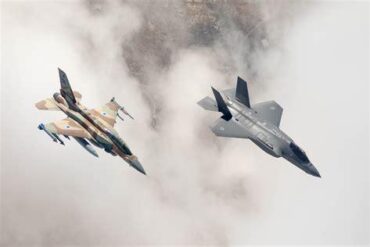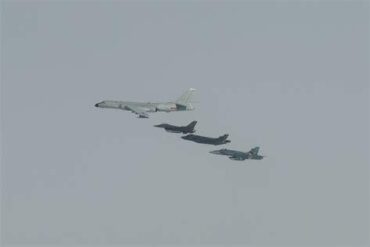
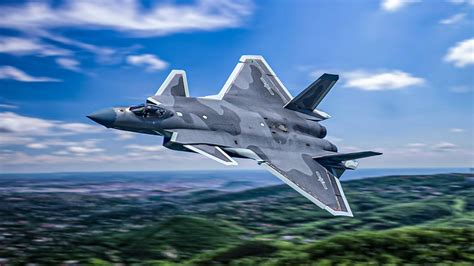
China’s rapid acceleration in the production of fifth-generation stealth warplanes has sparked intense debate among defense analysts worldwide. At the heart of this discussion is the Chengdu J-20 “Mighty Dragon”, which has now surpassed 300 operational units, officially confirmed during the Changchun Air Show in Jilin Province. This milestone is more than just symbolic—it represents a fundamental shift in the balance of aerial power between the United States and China. While the United States pioneered stealth fighter technology with the F-22 Raptor, it now faces an uncomfortable reality: China is manufacturing warplanes at a speed and scale unmatched in modern history.
The trend accelerated sharply in 2024, with at least 50 J-20s delivered in a single year. Chinese researchers tracked the milestone by analyzing serial numbers and visual records, confirming a growth trajectory that places Beijing ahead of Washington in terms of fifth-generation fleet expansion. Whereas the U.S. has approximately 180 F-22 Raptors and just over 500 F-35 Lightning IIs, China is on pace to surpass these figures within two to three years. Some projections suggest a future ratio of 12 to 1 in modern fighter availability in favor of China by 2027.
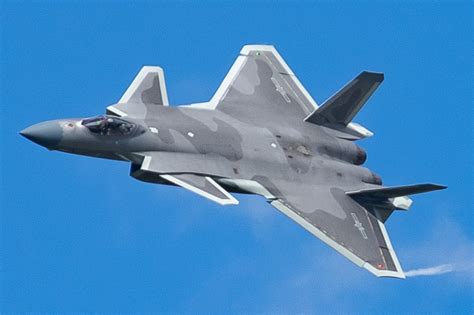
China’s Fifth-Generation Warplane Fleet
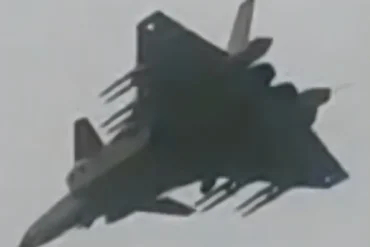
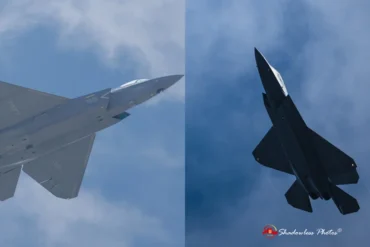
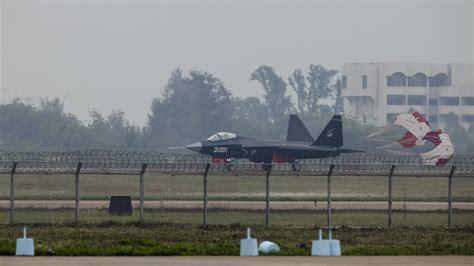
The centerpiece of China’s rise is the Chengdu J-20, first introduced in 2017. Designed as an air superiority fighter to rival America’s F-22, the J-20 combines stealth shaping, advanced avionics, and long-range strike capability. It is now joined by the Shenyang J-35, a multirole stealth fighter introduced in 2025, created as China’s counterpart to the U.S. F-35 Lightning II. Both aircraft reflect Beijing’s dual-track strategy: dominate the skies with superior numbers while maintaining technological parity with U.S. designs.
| Specification | Chengdu J-20 “Mighty Dragon” | Shenyang J-35 |
|---|---|---|
| Length | 21.2 m | 17.3 m |
| Wingspan | 13 m | 11.5 m |
| Engines | Two Shenyang WS-10C afterburning turbofans (~32,000 lbf each with afterburner) | Two Guizhou WS-21 afterburning turbofans |
| Top Speed | Mach 2.0 | Mach 1.8 |
| Combat Radius | 2,000 km | 1,250 km |
| Payload | 11,000 kg | 8,000 kg |
| Service Ceiling | 20,000 m | 16,000 m |
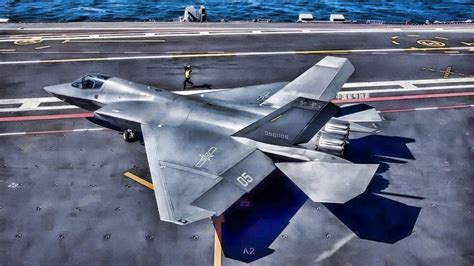
Though the J-35 fleet currently numbers only in the low tens, China is already building out its production lines, with estimates suggesting a capacity of up to 50 units per year. This pace, while slower than the J-20, still indicates a steep upward curve. Furthermore, reports suggest that Pakistan may purchase an export version, which would accelerate serial production and extend Beijing’s strategic reach beyond its borders.
Why China’s Production Model Outpaces the U.S.
The critical distinction between American and Chinese fighter programs lies in industrial capacity and strategic priorities. The United States has ceased production of the F-22 Raptor, leaving only the F-35 in active assembly lines. Roughly 140 F-35s roll out each year, but the program has faced consistent criticism for high maintenance costs, limited mission readiness rates, and ongoing software issues. As of now, the F-35 fleet reportedly hovers at just 60 percent readiness.
By contrast, China operates five J-20 production lines, each delivering new fighters at an astonishing pace—roughly one new aircraft every eight days. Unlike the U.S., which manages multiple global commitments, China focuses its military-industrial complex on the Indo-Pacific theater. This narrow strategic concentration allows Beijing to field more aircraft for regional dominance, even if individual fighters may not yet surpass American designs in raw technological sophistication.
The Strategic Implications for U.S. Air Power
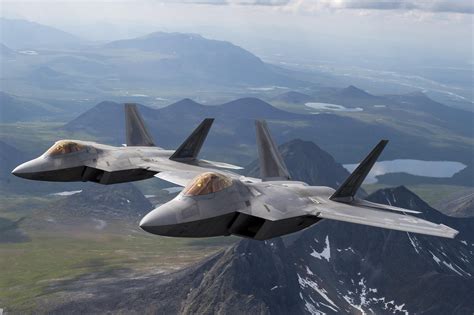
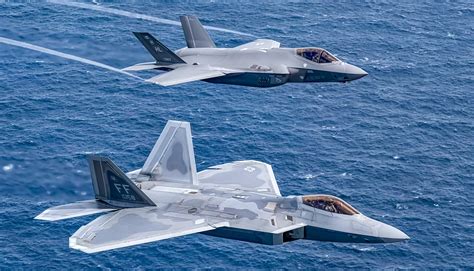
The United States still retains certain qualitative advantages. The F-22, while no longer in production, remains one of the most advanced stealth fighters ever built, with unmatched maneuverability and stealth performance. Similarly, the F-35 offers network-centric warfare integration and versatility across Air Force, Navy, and Marine variants. However, superiority in combat design alone is no longer enough.
China’s focus on quantity and operational sustainability reflects the realities of modern conflict. Wars today are shaped not only by elite technology but by the ability to replace losses quickly and maintain large-scale deployments. The Chinese military industry, heavily state-backed and independent of foreign supply chains, ensures that production can scale without external bottlenecks.
In a potential conflict over Taiwan or the South China Sea, this imbalance becomes stark. American fighters are scattered across multiple global theaters—from Europe to the Middle East—while China can concentrate its entire fifth-generation fleet against U.S. and allied forces in its immediate region. This force concentration advantage ensures that Beijing can apply overwhelming numerical superiority at the decisive point of engagement.
The Role of Drones and Sixth-Generation Development
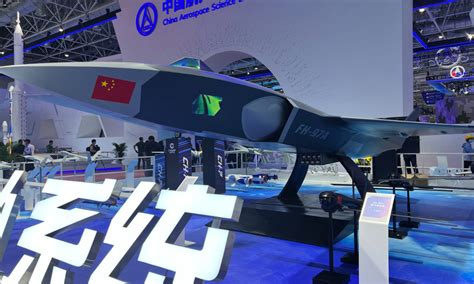
Another factor intensifying the debate is China’s investment in loyal wingman drones and alleged sixth-generation prototypes. Reports suggest that China is already experimenting with pairing its J-20s with unmanned stealth drones, extending combat range and multiplying strike options. These developments could allow China to offset any lingering qualitative gaps with the United States.
Meanwhile, Beijing’s advancements in anti-access/area denial (A2/AD) systems, including long-range surface-to-air missiles and hypersonic weapons, further complicate U.S. efforts to project power near China’s shores. Even with a superior fighter, American pilots would be forced to operate within a heavily contested air defense bubble.
America’s Global Burden vs. China’s Regional Focus
The United States faces a fundamental dilemma. Its fleet, while technologically advanced, is stretched thin across commitments in Europe, the Middle East, and Asia-Pacific. China, by contrast, can channel its entire fifth-generation fleet into defending the First Island Chain, which includes Taiwan and contested waters of the South China Sea.
This distinction gives China an enormous numerical and positional advantage. Even though the U.S. technically possesses more stealth aircraft overall, many would not be available in time or sufficient concentration during a sudden crisis in East Asia. Simply put, China has built its air force for one objective: regional dominance, while America continues to divide its strength globally.
The Outlook for U.S. Strategy
For Washington, catching up with China’s production speed is virtually impossible under current conditions. The U.S. defense industrial base is limited by cost overruns, bureaucratic inefficiencies, and dependence on complex global supply chains. Reinvigorating the aircraft industry would take years—time that China is already using to expand its advantage.
Instead, the most viable response lies in pursuing asymmetric solutions. These include:
- Expanding swarms of unmanned aerial vehicles (UAVs) to supplement manned fighters.
- Accelerating development of hypersonic weapons to challenge Chinese A2/AD networks.
- Enhancing interoperability with allied forces, ensuring Japan, South Korea, and Australia can provide immediate regional air power.
Conclusion: The Future of Air Power Balance
The reality is stark: China is outproducing the United States in fifth-generation warplanes at a pace not seen since the Cold War arms race. With over 300 J-20s already operational and J-35 production accelerating, Beijing has consolidated a fleet capable of overwhelming regional opponents. While American aircraft may remain individually superior in performance, the combination of mass production, regional concentration, and drone integration is tilting the balance of power.
Unless the United States redefines its industrial capacity or develops disruptive technologies to offset this growing gap, the air dominance it has held for decades is slipping away. In the Indo-Pacific, where any conflict would unfold within range of China’s expanding stealth fleet and missile umbrella, quantity may prove to have its own quality—and Beijing knows it.