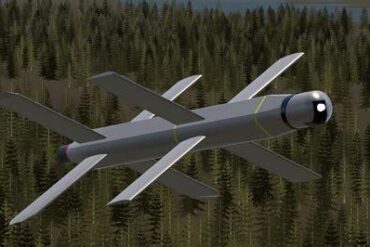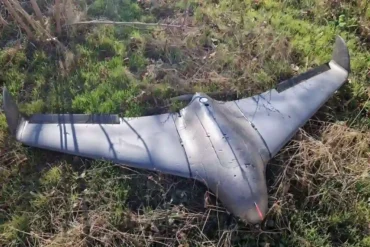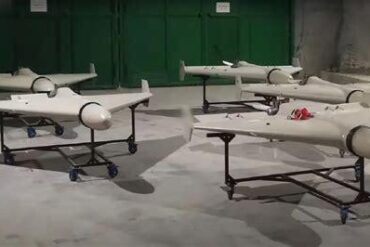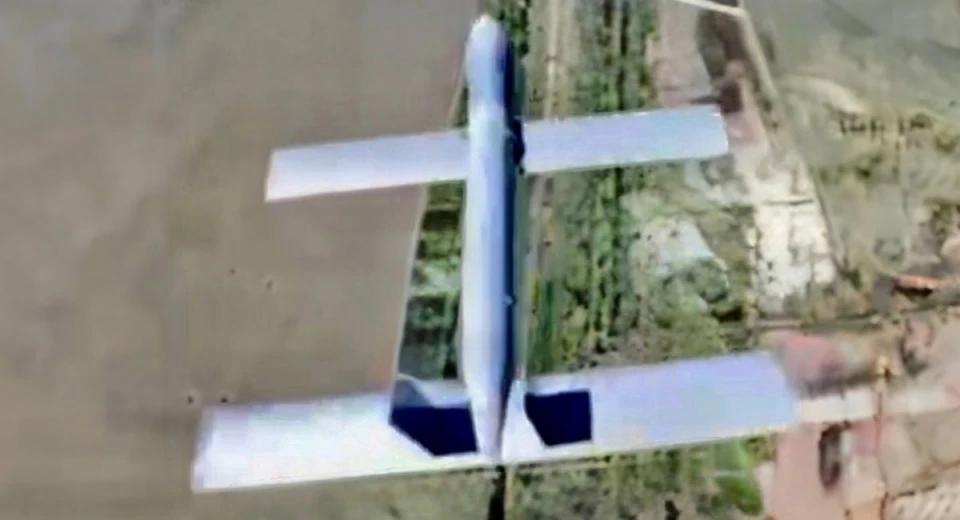
Russia has quietly unleashed a new generation of ‘kamikaze’ drone technology on the battlefield — a weapon that is not only stealthier and more autonomous than its predecessors but also capable of navigating electronic warfare zones with precision. This new drone, still unnamed, has recently surfaced on frontlines such as the eastern regions of Ukraine, where it has already begun to shift the calculus of modern drone warfare.
Reports indicate that this drone was first observed in February 2025 during limited strikes on Sumy. Its structure resembles familiar models like the Kub-BLA and Lancet, but internal upgrades in its navigation, imaging, and communication capabilities set it apart as a far more formidable and adaptive threat.
Machine Vision and Advanced Guidance Systems Redefine Drone Autonomy
The core of this new kamikaze drone’s lethality lies in its sophisticated guidance system, a feature that dramatically elevates its autonomy and target acquisition abilities. At the heart of this system is a 14-megapixel camera paired with a JETSON video processing module, which collectively enable what military engineers term “machine vision” — the capacity to identify, classify, and strike targets without continuous human input.
Unlike older systems that relied on ground-based operators or standard GPS guidance, this drone maps its environment using reference terrain imagery stored on a massive 100 GB internal disk. During flight, it actively compares real-time footage with these stored visuals, effectively navigating complex environments without needing satellite positioning. This is particularly crucial in regions saturated with electronic warfare (EW) countermeasures.
Moreover, a laser rangefinder has been integrated into the navigation suite. This tool not only aids in measuring precise distances but also enhances the drone’s terrain-following capabilities, enabling high-altitude target recognition and low-altitude precision strikes. The terrain-following function provides the drone with the agility to adjust in-flight altitude dynamically while flying over valleys, forests, or urban sprawl.
Overcoming GPS Denial and Radio Jamming Through Dual Navigation
One of the most striking features of this new drone is its dual-mode navigation system, combining satellite navigation with an inertial navigation system (INS). The inclusion of INS is particularly telling; it allows the drone to continue its mission even in environments where GPS or GLONASS signals are jammed or denied.
This layered navigation strategy reflects a growing trend in modern warfare: designing systems that can survive and function in disconnected or denied environments. INS relies on onboard accelerometers and gyroscopes to determine the drone’s position, velocity, and orientation — a method unaffected by external interference. When combined with machine vision, the drone becomes a near-autonomous hunter.
Internet-Based Communication and Beyond-Line-of-Sight Coordination
In an unusual departure from traditional radio-frequency (RF) controls, the drone employs 3G modems for internet-based communication. This seemingly modest technology enables beyond-line-of-sight (BLOS) control without requiring costly or trackable military-grade transmission systems. In practice, this means operators can send mission updates, receive video feeds, or even redirect drones across vast distances, provided a network connection exists.
Though 3G networks may seem vulnerable, the drone’s reliance on this form of communication offers lower detectability and greater operational flexibility. The absence of directional RF emissions reduces the risk of tracking or triangulation by enemy forces.
A Devastating Payload: KOFSBCH-3 Warhead
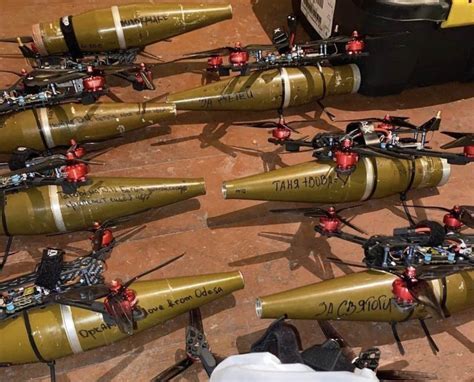
The drone’s offensive capability is enhanced by its KOFSBCH-3 warhead, a combined munition that delivers cumulative, fragmentation, and incendiary effects. At a standard 3 kg payload, the explosive is engineered for maximum impact against both soft and lightly armored targets. This hybrid payload design ensures that upon detonation, the warhead can penetrate armor, ignite fires, and scatter lethal shrapnel — making it effective against a wide array of battlefield assets, from vehicles to fortified positions.
Extended Operational Range and Battery Power
With a 34 Ah battery, the drone boasts a range of up to 80 kilometers, surpassing many short-range loitering munitions. This operational radius grants it strategic value far beyond traditional kamikaze drones like the ZALA Lancet, which often operate within limited tactical perimeters.
The drone’s electric propulsion not only extends range but also reduces acoustic signature — a crucial factor in stealth operations. This makes early detection and neutralization difficult, particularly when the drone is flying at low altitudes or loitering above a target-rich zone.
Swarm Capabilities and Cooperative Engagements
Emerging battlefield reports suggest that these drones are sometimes deployed in groups, operating in a loosely coordinated fashion akin to swarm tactics. This approach presents a significant escalation in drone warfare, allowing multiple drones to share reconnaissance data, saturate defenses, and overwhelm enemy systems simultaneously.
While full-scale, AI-controlled swarm operations are still under development in various nations, the evidence of multi-drone coordination in this context underscores the potential of Russia’s tactical drone ecosystem to evolve into distributed, semi-autonomous networks capable of decision-making on the fly.
Autonomous Target Search: The Dawn of Combat AI
Experts at Defense Express have highlighted that the new drone’s onboard computing power and visual database might permit independent target recognition from elevated flight levels. The implication here is transformative: a drone that identifies, locks onto, and destroys a target without external commands.
Such a system goes beyond traditional “fire and forget” mechanisms — it enables a “search, verify, and destroy” operation loop. If verified, this would mark a serious milestone toward true combat artificial intelligence, a field still largely theoretical in Western arsenals.
Strategic Ramifications and Cost Efficiency
Although significantly more advanced and expensive than the Lancet or Kub-2, this new drone’s deployment suggests that Russian military planners are testing cost-effectiveness in live combat. It reflects a deliberate trade-off between manufacturing expense and battlefield dominance — a model reminiscent of high-investment Western loitering munitions like the Switchblade 600 or Israel’s Harop.
Nonetheless, the repeated use of these drones in active zones implies that Russia is willing to absorb the elevated production costs in exchange for precision strikes, EW resilience, and autonomous functionality.
Conclusion: A Lethal Shift in Drone Warfare Doctrine
Russia’s new kamikaze drone represents a clear evolution in unmanned warfare, combining high-end guidance systems, AI-enabled autonomy, and modular payloads in a platform that can operate independently, even in degraded environments. Its ability to avoid EW traps, identify targets without GPS, and coordinate with other units marks a sharp departure from earlier generations of loitering munitions.
While questions remain about its production scalability and cost-efficiency, its current battlefield presence is a sobering indication of the future. Autonomous, smart, and deadly — this drone is a harbinger of next-generation asymmetric warfare, where machine vision and combat AI converge to redefine aerial threats.