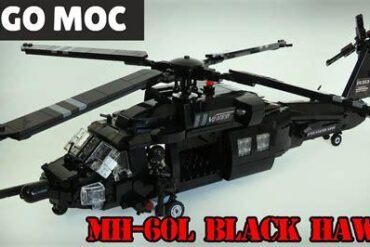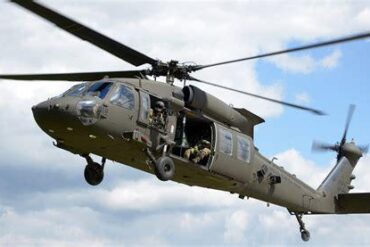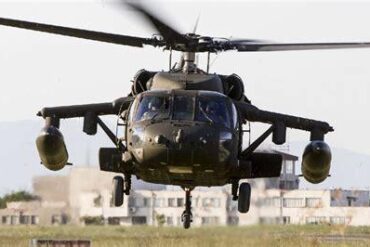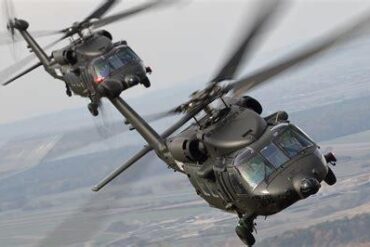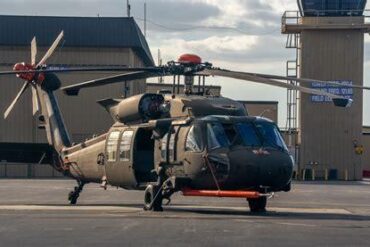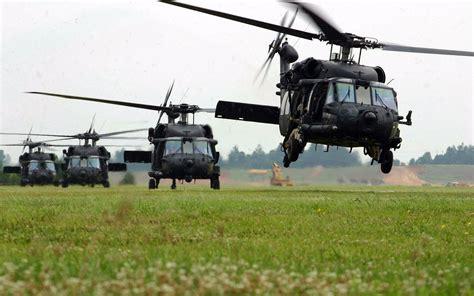
The Sikorsky UH-60 Black Hawk has earned its reputation not by being the fastest helicopter in military service, but by being exceptionally capable at almost everything a modern utility helicopter is expected to do. Since entering U.S. Army service in 1979, the Black Hawk has become one of the defining rotorcraft of modern military aviation. More than 5,000 examples have been built, and variants of the basic design continue to serve with the United States and numerous other countries. Troop transport, air assault, medical evacuation, command-and-control, resupply, and special operations have all fallen within the aircraft’s enormous mission envelope.
The standard UH-60 Black Hawk has a maximum speed of about 159 knots, or 183 mph, which is impressive when its size, payload, armor, fuel, and battlefield equipment are considered. Its speed is also more than adequate for most tactical missions. Yet conventional helicopters face a fundamental aerodynamic problem: as forward velocity increases, the advancing rotor blade experiences increasingly high airflow while the retreating blade struggles to generate sufficient lift. Eventually, retreating-blade stall, vibration, drag, and rotor-tip effects place severe limits on speed.
That is why the helicopters that beat the Black Hawk are such an interesting collection. Some use powerful attack-helicopter engines and relatively compact airframes. Others use large stub wings, coaxial rotors, tandem rotors, or completely different compound configurations that shift part of the propulsion burden away from the main rotor. A few are enormous heavy-lift machines that somehow manage to match or exceed the speed of a much smaller utility helicopter while carrying dramatically heavier loads. The result is a fascinating group of military helicopters that can push beyond the Black Hawk’s 159-knot ceiling.
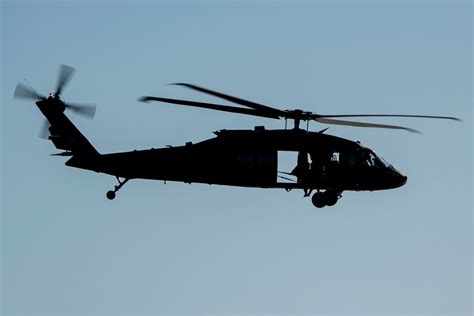
The distinction between maximum speed and normal operating speed is important throughout this list. A helicopter’s published maximum may represent a never-exceed or maximum-performance figure under specific conditions rather than a speed that crews routinely maintain across long missions. Configuration, altitude, temperature, gross weight, fuel load, external stores, and mission equipment can all change real-world performance. The figures below therefore work best as a way of understanding the aerodynamic and engineering capabilities of each helicopter rather than as a promise that every aircraft will routinely outrun a Black Hawk.
Sikorsky-Boeing SB>1 Defiant
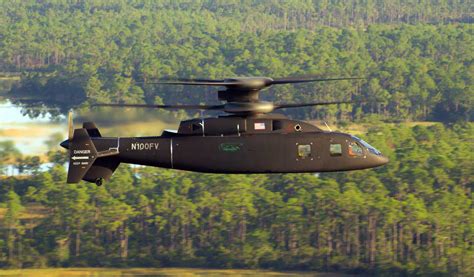
The Sikorsky-Boeing SB>1 Defiant represents one of the most dramatic attempts to break away from the conventional helicopter speed envelope. Developed for the U.S. Army’s Future Long-Range Assault Aircraft competition, the experimental rotorcraft combined rigid coaxial rotors with a rear-mounted pusher propeller. During flight testing, the Defiant reached approximately 247 knots, or 284 mph, putting it nearly 90 knots beyond the Black Hawk’s maximum speed.
The configuration is the key to that performance. Instead of asking the main rotor to provide both lift and nearly all forward propulsion, the Defiant uses its coaxial rotor system primarily for lift while the rear propeller provides substantial forward thrust. The counter-rotating rotors also eliminate the need for a conventional tail rotor, allowing more of the available engine power to contribute to useful propulsion. Sikorsky and Boeing demonstrated high-speed flight as well as aggressive low-altitude maneuvering, illustrating that the design was not simply a fast aircraft but an attempt to combine speed with helicopter-like agility.
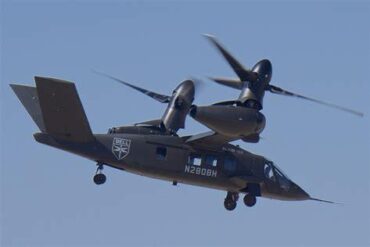
The Defiant ultimately lost the Army’s FLRAA competition to Bell’s V-280 Valor and never entered production. Nevertheless, its flight-test results demonstrated how a compound helicopter could potentially deliver a transformational improvement over conventional rotorcraft. In that sense, the Defiant is less important as an operational aircraft than as evidence of what the next generation of military helicopters can achieve when the traditional single-main-rotor formula is abandoned.
Sikorsky S-97 Raider
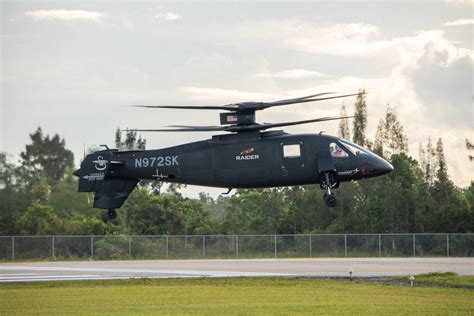
The Sikorsky S-97 Raider applies the same basic X2 philosophy on a much smaller airframe. Developed as an advanced armed reconnaissance helicopter, the Raider combines rigid coaxial rotors with a rear pusher propeller and has demonstrated speeds exceeding 220 knots, or approximately 253 mph. That makes it substantially faster than the Black Hawk while giving it a compact footprint suited to reconnaissance and attack missions.
One of the Raider’s most interesting characteristics is the way its propulsion system changes emphasis as speed increases. At lower speeds, the coaxial rotors perform the familiar helicopter functions of lift and propulsion. At high speed, however, more engine power can be directed toward the pusher propeller while the rotors operate primarily as lifting surfaces. The arrangement allows the aircraft to overcome some of the limitations that normally appear when a conventional rotor system is pushed toward very high forward velocity.
The Raider also demonstrates that high speed does not necessarily mean abandoning low-speed handling. Its rigid rotor system was designed to reduce vibration and improve controllability, while the pusher propeller can be disengaged when quieter operation is more important than maximum velocity. The result is a helicopter concept that could transition between relatively discreet low-speed flight and extremely rapid forward movement far more effectively than a traditional single-rotor aircraft.
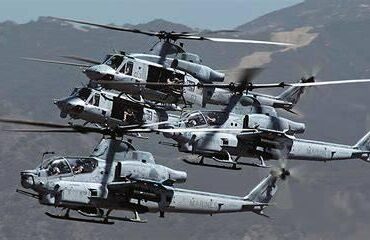
Bell AH-1Z Viper
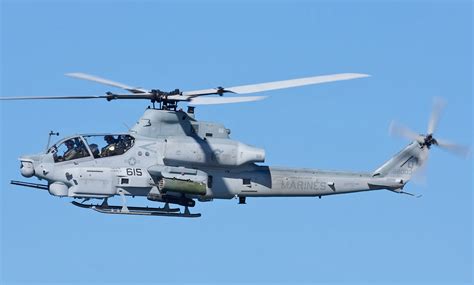
The Bell AH-1Z Viper approaches the Black Hawk’s speed problem from the opposite direction. It does not need an experimental propulsion architecture because it is a relatively compact attack helicopter optimized for power, agility, and weapons carriage. Bell lists the Viper’s maximum speed at approximately 200 knots, or 230 mph, giving it a margin of more than 40 knots over the UH-60.
The Viper’s four-blade all-composite rotor system and upgraded transmission are important contributors to its performance. The helicopter was developed from the long-running Cobra family, but it incorporates extensive modernization and shares substantial commonality with the UH-1Y Venom. The combination of two powerful engines, a refined rotor system, and a relatively streamlined attack-helicopter configuration gives the Viper considerably more speed than its larger utility counterpart.
Speed also serves a different purpose on the AH-1Z. The Viper does not need to carry a large infantry squad or a substantial internal cargo load. Instead, its mission is to move rapidly toward the battlefield, engage targets, and reposition before threats can respond. Its weapons include AIM-9 Sidewinder missiles, Hellfire missiles, and guided rockets, making its speed part of a broader combat philosophy rather than an isolated performance statistic.
Bell AH-1W Super Cobra
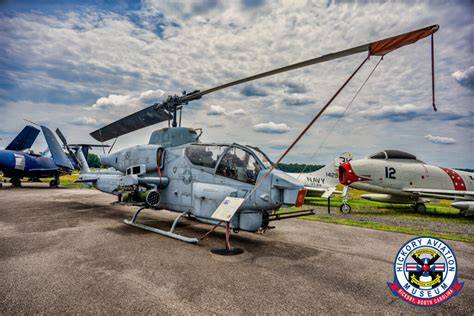
Before the Viper, the Bell AH-1W Super Cobra provided the U.S. Marine Corps with a remarkably fast attack helicopter for more than three decades. Its maximum speed of approximately 190 knots, or 219 mph, gave it a 31-knot advantage over the Black Hawk. Two General Electric T700 turboshaft engines, each producing roughly 1,690 shaft horsepower, supplied the power necessary for the compact combat helicopter.
The Super Cobra’s performance was closely related to its attack role. Compared with a troop-carrying utility helicopter, it had far less internal volume devoted to passengers and cargo, allowing its designers to concentrate on weapons, sensors, armor, and propulsion. The twin-engine configuration also provided additional redundancy, an especially important consideration for Marine aviation operating over water and in hostile environments.
The AH-1W saw extensive combat service, including the Gulf War, Iraq, and Afghanistan. During the 1991 Gulf War, Marine AH-1Ws were credited with destroying large numbers of Iraqi armored vehicles. The type was finally retired by the U.S. Marine Corps in October 2020, with the AH-1Z Viper taking over its attack mission. Its legacy remains significant because the Super Cobra demonstrated how a compact, heavily armed helicopter could combine battlefield firepower with speed well beyond the Black Hawk.
Mil Mi-24 Hind
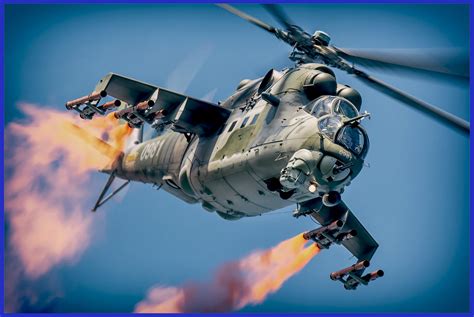
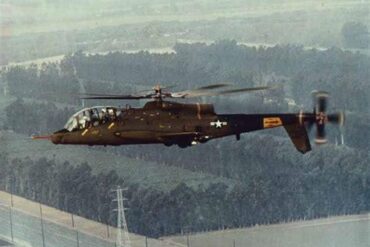
The Mil Mi-24 Hind is one of the most unusual aircraft on this list because it combines attack-helicopter characteristics with a genuine troop-transport capability. Known to Soviet crews as a formidable combat machine and widely recognized in the West by its NATO designation, the Mi-24 can reach approximately 181 knots, or 208 mph. That makes it more than 20 knots faster than the Black Hawk.
The secret is partly in the Hind’s distinctive stub wings. Unlike a conventional helicopter that relies almost entirely on its rotor for lift, the Mi-24’s wings generate useful aerodynamic lift as speed increases. This reduces the amount of lift the five-blade main rotor needs to produce during fast forward flight, helping the helicopter maintain higher velocity.
Two Klimov TV3-117 turboshaft engines provide a combined output of roughly 4,400 shaft horsepower. The Mi-24 can also carry troops in a rear cabin while carrying substantial weaponry, giving it a capability mix that was unusual when the aircraft first flew in 1969. During the Soviet-Afghan War, the Hind became one of the most recognizable symbols of Soviet air power. More than five decades after its first flight, its combination of speed, armor, weapons, and troop-carrying ability remains one of the most distinctive achievements in helicopter design.
Airbus H225M Caracal
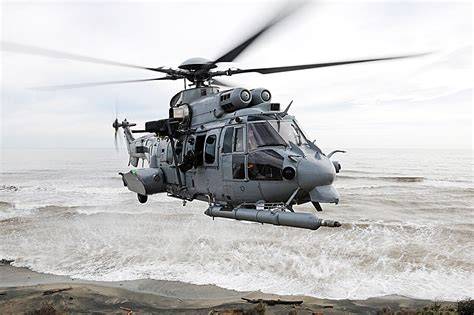
The Airbus H225M Caracal is considerably larger than the Black Hawk and belongs to a different class of military transport helicopter, yet its maximum speed reaches approximately 175 knots, or 201 mph. That gives it a useful speed advantage while offering considerably more cabin space and long-range capability.
Two Safran Makila 2A1 turboshaft engines provide the power, while the large 16.2-meter rotor supports an aircraft designed around endurance as much as speed. Depending on configuration, the Caracal can carry up to 28 troops and can be equipped for combat search and rescue, special operations, tactical transport, and other demanding missions. Standard fuel tanks provide a range of roughly 920 kilometers, while extended tanks can push that figure considerably farther.
This combination explains why the Caracal’s speed is particularly valuable. A special-operations or rescue helicopter may need to travel hundreds of miles before reaching the objective, making cruise performance, fuel capacity, and endurance just as important as the ability to hover with a heavy load. The H225M therefore demonstrates that a helicopter does not have to be small and lightly loaded to outperform the Black Hawk in straight-line speed.
Sikorsky CH-53E Super Stallion

The Sikorsky CH-53E Super Stallion is perhaps the clearest example of how surprising helicopter speed can be when raw engine power is available. This enormous Marine Corps heavy-lift helicopter can reach approximately 170 knots, or 196 mph, narrowly surpassing the Black Hawk despite being vastly larger and heavier.
Three General Electric T64 turboshaft engines produce more than 14,250 shaft horsepower combined. The aircraft’s seven-blade main rotor and enlarged airframe were engineered primarily around heavy lifting rather than speed. The Super Stallion can carry roughly 7,000 kilograms internally and sling loads approaching 14,000 kilograms externally, while stretched configurations can accommodate as many as 55 troops.
Its speed becomes even more impressive when viewed in that context. A Black Hawk flying at 159 knots is moving quickly for a medium utility helicopter, but the CH-53E can approach 170 knots while moving loads that the UH-60 could not handle. The Super Stallion served the Marine Corps for decades in amphibious assault, heavy-equipment transport, and other missions, while specialized MH-53E Sea Dragon derivatives were used for mine-countermeasures work.
Sikorsky CH-53K King Stallion
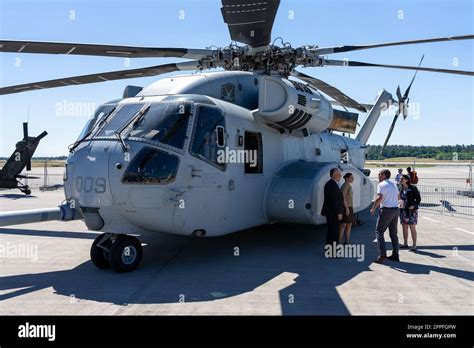
The Sikorsky CH-53K King Stallion proves that the heavy-lift philosophy can evolve without sacrificing speed. The newest Marine Corps heavy-lift helicopter cruises at roughly 170 knots, placing it above the Black Hawk’s published maximum despite its enormous size and dramatically greater lifting capability.
Three General Electric T408 engines each produce approximately 7,500 shaft horsepower. That enormous power output allows the King Stallion to carry a 27,000-pound payload at a 110-nautical-mile radius under demanding hot-and-high conditions. The aircraft also incorporates fourth-generation composite rotor blades, fly-by-wire flight controls, and a wider cabin than the CH-53E.
The important point is that the CH-53K’s speed is not achieved by making compromises that turn it into a lightweight aircraft. Instead, its designers used enormous engine power, modern rotor technology, and digital flight controls to improve performance across the entire mission envelope. A helicopter capable of carrying a Humvee internally while still matching the speed of much smaller aircraft illustrates how far heavy-lift rotorcraft engineering has progressed.
Boeing CH-47F Chinook
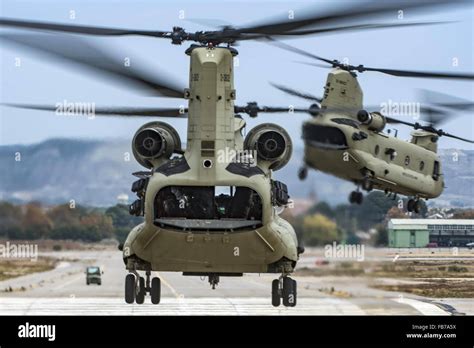
The Boeing CH-47F Chinook can reach approximately 170 knots, or 196 mph, depending on variant and configuration. Its speed is remarkable because the Chinook is fundamentally a heavy cargo helicopter rather than an attack aircraft. Its tandem-rotor layout gives it a very different aerodynamic character from the Black Hawk.
Two Honeywell T55 engines provide the power, while the tandem rotors eliminate the need for a tail rotor. That arrangement allows the Chinook to devote its engine output to its two main rotors and gives the aircraft excellent stability and lifting capability. The unobstructed rear ramp is another major advantage for loading vehicles, pallets, troops, and other cargo.
The current CH-47F family continues to evolve, with Block II upgrades increasing maximum gross weight and improving fuel capacity. The Chinook’s speed has also produced an unusual historical footnote: the type holds a Guinness World Record associated with a 1961 flight. However, subsequent helicopter development has produced aircraft that exceed the original record speed, making the distinction between historical records and modern maximum-performance figures particularly important.
Bell UH-1Y Venom
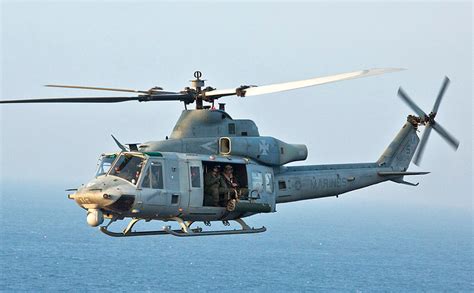
The Bell UH-1Y Venom is the modern descendant of the famous Huey and has a maximum speed of approximately 170 knots, or 196 mph. That gives the Venom more than a 10-knot advantage over the Black Hawk, even though both aircraft perform broadly similar utility functions.
The Venom uses twin T700-GE-401C engines and was designed as a modernized, marinized utility helicopter for the U.S. Marine Corps. It can perform troop transport, command-and-control, armed escort, search and rescue, and other missions. Its sensors and weapons systems also allow it to operate in environments where a conventional transport helicopter would need an escort.
One of the most interesting aspects of the Venom is its close relationship with the AH-1Z Viper. The two aircraft share roughly 85 percent of their components, creating substantial commonality in training, maintenance, and logistics. That arrangement lets Marine aviation units operate a fast utility helicopter and a fast attack helicopter using many of the same systems and support infrastructure.
Kamov Ka-50 Black Shark
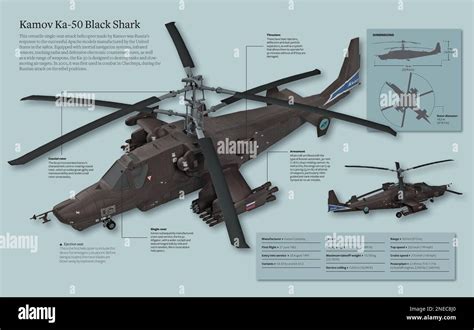
Russia’s Kamov Ka-50 Black Shark uses an entirely different solution to the helicopter speed problem. Instead of a single main rotor and tail rotor, it has two coaxial, contra-rotating rotors mounted on the same axis. Its maximum speed is approximately 170 knots, putting it above the Black Hawk.
The coaxial arrangement eliminates the need for a conventional tail rotor and its associated power requirement. More importantly, it gives the aircraft excellent control authority while maintaining a compact footprint. Two Klimov TV3-117VMA engines, each producing roughly 2,200 shaft horsepower, provide the power for the single-seat attack helicopter.
The Ka-50 was designed as a dedicated armored attack platform and carried a 30 mm cannon together with up to 12 Vikhr anti-tank missiles. Its single-seat configuration was unusual, as was its ejection-seat system. The coaxial rotor arrangement made it possible to design an escape system in which the rotors could be separated before the pilot ejected, giving the Black Shark one of the most distinctive emergency-escape systems ever fitted to an operational attack helicopter.
Kamov Ka-52 Alligator
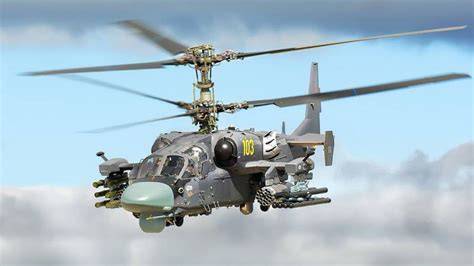
The Kamov Ka-52 Alligator retains the Ka-50’s coaxial-rotor architecture while adding a side-by-side cockpit and a second crew member. Its maximum speed is approximately 162 knots, or 186 mph, putting it only a few knots above the Black Hawk but still making it one of the faster conventional attack helicopters.
Two Klimov VK-2500 engines produce up to approximately 2,400 horsepower each. The absence of a tail rotor allows the powerplant and rotor system to concentrate on producing lift and forward performance, while the compact coaxial configuration gives the aircraft a distinctive ability to maneuver in confined spaces.
The Ka-52 has been used as a strike platform carrying anti-tank missiles, a 30 mm cannon, rockets, and other guided weapons. Its combat employment in the war in Ukraine has also made it one of the most closely observed Russian attack helicopters in recent years. Its battlefield record illustrates an important point: maximum speed alone does not determine survivability or effectiveness. Sensors, weapons, tactics, electronic warfare, air defenses, and crew training can be just as important as raw aerodynamic performance.
Mil Mi-28N Havoc
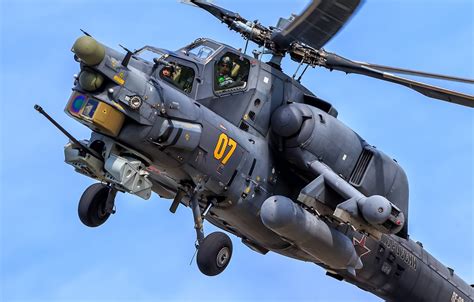
The Mil Mi-28N Havoc reaches approximately 162 knots, giving it a small but measurable advantage over the Black Hawk. Unlike the Mi-24, the Mi-28 was designed from the beginning as a dedicated attack helicopter, with armor, sensors, weapons, and survivability taking priority over troop transport.
The Mi-28N introduced day-and-night combat capability and was later developed into the Mi-28NM. The newer version incorporates an advanced radar mounted above the main rotor, giving the crew a broad view of the surrounding battlefield while allowing the helicopter to exploit terrain for concealment.
Two VK-2500-series engines provide propulsion, and the aircraft can carry a 30 mm 2A42 cannon along with anti-tank missiles and rockets. Its speed advantage over the Black Hawk is relatively modest, but that comparison is useful because the aircraft illustrates how a specialized attack helicopter can achieve higher velocity without adopting an experimental compound configuration.
Airbus NH90
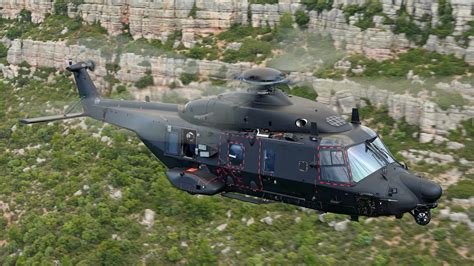
The Airbus NH90 rounds out the group with a maximum cruise speed of approximately 162 knots, or 300 km/h, depending on configuration. Developed by NHIndustries, a consortium involving Airbus Helicopters, Leonardo, and Fokker, the NH90 was created to serve multiple European military requirements.
The helicopter comes primarily in tactical transport and naval variants. The TTH version is designed for troop transport and tactical operations, while the NFH is optimized for naval missions such as anti-submarine and anti-surface warfare. The naval version can accommodate weapons such as anti-ship missiles and torpedoes and incorporates folding systems for shipboard operations.
Twin engines provide the necessary power, with available configurations including the RTM322 and GE T700 families. The NH90’s speed advantage over the Black Hawk is relatively small, but its significance lies in the aircraft’s combination of speed, modern avionics, modular mission equipment, and multi-role design. Recent special-forces developments have also expanded the type’s role beyond conventional tactical transport.
Leonardo AW101
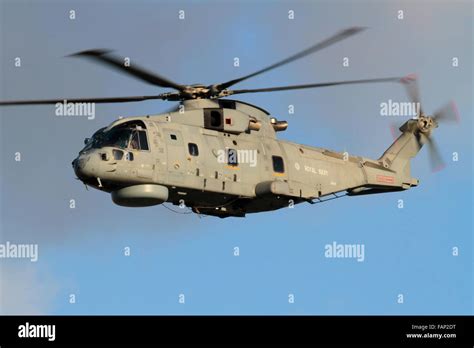
The Leonardo AW101, also known as the Merlin in several military configurations, is another large helicopter whose speed can exceed that of the Black Hawk. Published specifications for the aircraft give a never-exceed speed of approximately 167 knots, or 192 mph, although its normal maximum cruise speed is lower.
The three-engine AW101 was developed for demanding military missions including troop transport, search and rescue, anti-submarine warfare, and other maritime operations. Its large cabin and substantial fuel capacity allow it to perform missions far beyond the scale of a typical medium utility helicopter. Depending on configuration, the aircraft can carry more than two dozen personnel while supporting sophisticated sensors, defensive systems, and mission equipment.
The AW101 therefore deserves a place in this list with an important qualification: its 167-knot figure is a maximum limitation rather than its normal cruise speed. Leonardo’s published data lists maximum cruise speed at approximately 150 knots under the specified test conditions, while other references identify the higher 167-knot figure as the never-exceed speed. That distinction makes the AW101 a useful reminder that a helicopter being technically faster than the Black Hawk does not necessarily mean it normally flies faster during routine missions.
Why the Black Hawk Is Still So Important
The fact that these 15 military helicopters are faster than the Black Hawk does not make the UH-60 an outdated aircraft. Speed is only one variable in military helicopter design, and often it is not the most important one. The Black Hawk was designed around a combination of troop capacity, survivability, maintainability, reliability, range, lift, and tactical flexibility. Its 159-knot maximum is therefore a consequence of deliberate design priorities rather than an indication that its engineers simply failed to make it faster.
The aircraft’s enormous global success demonstrates the value of that compromise. A helicopter that can carry troops, evacuate casualties, transport cargo, conduct air assaults, operate from austere locations, and remain relatively straightforward to maintain can be more valuable to a military force than a much faster aircraft optimized for only one mission. The Black Hawk’s huge fleet also creates economies of scale in training, maintenance, spare parts, and infrastructure that experimental or highly specialized helicopters cannot easily reproduce.
The fastest aircraft on this list achieve their performance in very different ways. The SB>1 Defiant and S-97 Raider use compound coaxial-rotor layouts and pusher propellers. The AH-1Z, AH-1W, Mi-28N, and Ka-52 gain speed from compact attack-helicopter configurations with substantial engine power. The Mi-24 uses stub wings to generate lift at high velocity. The CH-53E, CH-53K, and CH-47F demonstrate that even very large heavy-lift aircraft can exceed the Black Hawk when sufficient power and rotor area are available.
That variety is what makes helicopter speed so fascinating. There is no single recipe for beating 159 knots. Designers can reduce rotor loading, add aerodynamic lifting surfaces, increase engine power, introduce a separate propulsive system, use coaxial rotors, streamline the fuselage, or combine several of those solutions at once. Each approach brings advantages, but each also introduces compromises involving weight, complexity, cost, maintenance, noise, fuel consumption, or low-speed handling.
The next generation of military rotorcraft is likely to push this boundary even further. Compound helicopters and advanced rotorcraft concepts are increasingly focused on combining the vertical-lift capability of helicopters with the speed and range traditionally associated with fixed-wing aircraft. The SB>1 Defiant and S-97 Raider showed what was possible experimentally, while programs such as the U.S. Army’s Future Long-Range Assault Aircraft effort have demonstrated that speed is becoming increasingly important as military forces prepare for operations across much larger distances.
For all its fame, the Black Hawk’s 159-knot maximum speed is therefore better understood as a benchmark than a limit for military helicopters as a whole. From the 170-knot Chinook and King Stallion to the 200-knot AH-1Z and the extraordinary 247-knot SB>1 Defiant, military aviation has repeatedly demonstrated that rotorcraft can go much faster when designers are willing to change the equation. The Black Hawk remains one of the most capable utility helicopters ever produced, but when the mission demands pure velocity, there is a remarkably diverse group of rotorcraft ready to leave it behind.