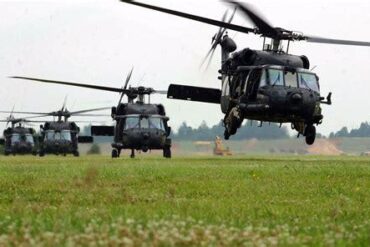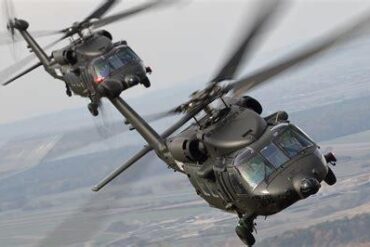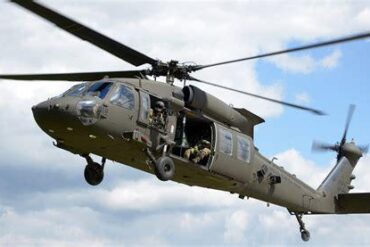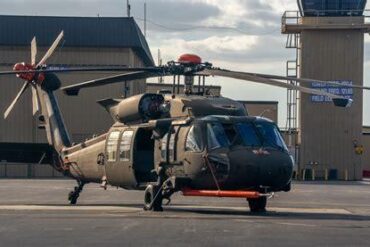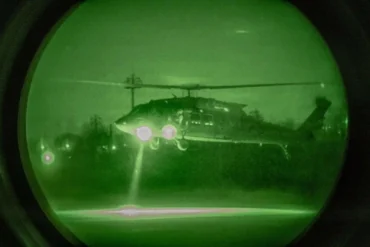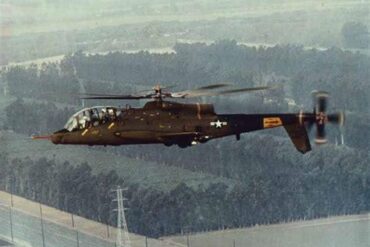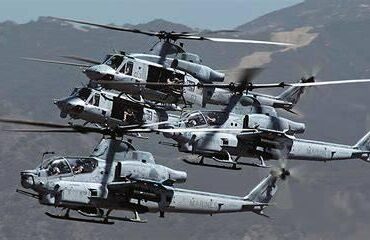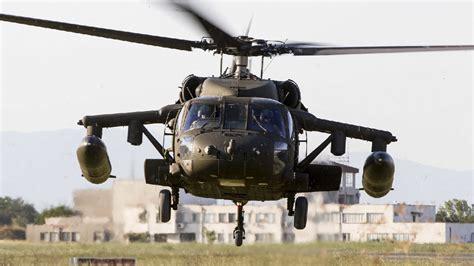
The Sikorsky UH-60 Black Hawk stands as a defining symbol of modern military aviation, embodying adaptability, resilience, and technological evolution. First taking to the skies on 17 October 1974 under the auspices of the United States Army’s Utility Tactical Transport Aircraft System (UTTAS) program, the Black Hawk swiftly replaced the venerable Bell UH-1 Iroquois, ushering in a new era of battlefield mobility and versatility. With more than 5,000 units produced by January 2023 and a unit price of approximately $11.3 million (2014), its global footprint and operational significance are undeniable.
Origins and Development of the UH-60 Black Hawk
The development of the UH-60 Black Hawk traces back to the late 1960s, when the U.S. Army issued stringent requirements for a next-generation utility helicopter emphasizing performance, survivability, and reliability. Engineers faced the challenge of incorporating dual engines, run-dry gearboxes, redundant subsystems, a crashworthy structure, and noise-reducing rotors. In January 1972, the Request for Proposals (RFP) set the stage for a fierce competition that pitted Sikorsky’s prototype, the YUH-60A, against Boeing-Vertol’s YUH-61A.
The YUH-60A’s maiden flight in October 1974 marked the beginning of rigorous evaluations. By December 1976, Sikorsky’s design emerged victorious, with the first production deliveries in October 1978 and formal entry into service by June 1979. This helicopter was purpose-built for transporting troops, providing logistical support, and executing battlefield medevac missions under demanding operational conditions.
Evolution Through Combat and Upgrades
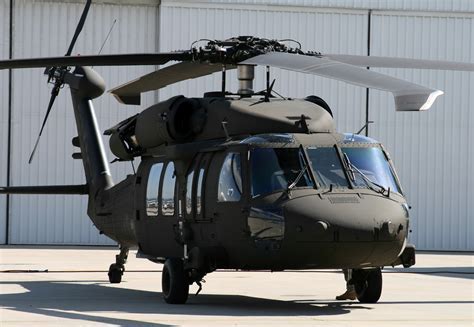
The Black Hawk’s baptism by fire came during the 1983 U.S. invasion of Grenada, where it showcased its capability to conduct air assault, medical evacuation, and mine-laying operations. This combat experience propelled iterative enhancements, leading to specialized versions like the EH-60 (electronic warfare) and the MH-60 (special operations).
The UH-60L, introduced in 1987, brought pivotal upgrades: the more powerful T700-GE-701C engines, an improved gearbox, and an Advanced Flight Control System (AFCS). Its external lift capacity increased by 1,000 pounds to a robust 9,000 pounds, reflecting a strategic shift towards heavier payloads. By 1989, the UH-60L had become the new production standard.
In 2001, the UH-60M program was launched to future-proof the fleet. Featuring T700-GE-701D engines, improved rotor blades, a glass cockpit, and an Integrated Vehicle Health Management System (IVHMS), the UH-60M represented a quantum leap in avionics and performance. Full-rate production commenced in 2007, with over 100 units delivered by March 2009 and a subsequent order of 102 helicopters in 2014 cementing its place in military arsenals.
Notably, a stealth-modified MH-60 variant played a clandestine role in the 2011 raid that killed Osama bin Laden, showcasing the platform’s adaptability for highly sensitive missions. The Containerized Target Precision Delivery System (CTPD) and Enhanced Speed Bag System (ESBS), both tested from 2011, further expanded the helicopter’s logistical and special operations capabilities.
Technical Design and Capabilities
At the heart of the UH-60 lies its four-blade articulated main rotor and a distinctive canted tail rotor, both engineered for durability and reduced acoustic signatures. Powered by two General Electric T700 turboshaft engines, the Black Hawk achieves a balance between power, redundancy, and transportability, fitting within the fuselage of a C-130 Hercules for rapid deployment.
With a standard crew of four and space for 11 fully equipped troops, the Black Hawk carries an internal payload of 2,600 pounds or an external load of up to 9,000 pounds in the UH-60L/M variants. Its mission versatility extends to troop transport, medical evacuation (UH-60Q/HH-60), electronic warfare (EH-60), and VIP transport (VH-60N ‘Marine One’).
Equipped with stub wings under the External Stores Support System (ESSS), the helicopter can mount up to four auxiliary fuel tanks (450 or 200 US gallons each) or a combination of fuel and ordnance, allowing it to carry up to 10,000 pounds of external stores.
Global Footprint: International Operators and Missions
The Black Hawk’s appeal transcends U.S. borders, with operational deployments across 35 countries as of 2024. Each nation’s adaptation reflects unique mission profiles and geopolitical landscapes.
In Australia, the locally produced S-70A-9 Black Hawks served from the late 1980s until retirement in 2021, with the UH-60M slated as their successor from 2023 onward. Meanwhile, Brazil bolstered its fleet with UH-60Ls across 1997, 2008, and 2011, and recently secured authorization for 12 UH-60Ms in 2024.
China’s acquisition of 24 S-70C-2 Black Hawks in the early 1980s catered to high-altitude operations where indigenous platforms faltered. In Colombia, the UH-60 serves as a critical asset in counterinsurgency, search and rescue, and medevac missions, with gunship adaptations like the Arpía enhancing firepower.
Israel’s Yanshuf fleet—initially 10 UH-60As acquired in 1994—demonstrated its combat worthiness in southern Lebanon in 1996. Similarly, Mexico’s UH-60Ls and MH-60Ms have become integral to federal policing and security operations since the 1990s.
The Philippines, embracing both VIP and tactical roles, procured S-70i helicopters in 2019 and 2020, expanding its fleet with 32 additional units in 2022. In Poland, the acquisition of S-70i helicopters since 2019 underscores a commitment to NATO interoperability.
Sweden integrated 15 UH-60Ms in 2017, followed by a new order for 12 more in 2024, reinforcing its Arctic operational readiness. In South Korea, approximately 130 Black Hawks were produced under license, supporting conventional and special operations aviation.
Taiwan’s multi-decade acquisition program spans from S-70C-1/1A deliveries in 1986 to 60 UH-60Ms approved in 2010, enhancing its island defense capabilities. Meanwhile, Turkey’s T-70 program and high-profile use during the 2016 coup attempt illustrate both strategic reliance and political drama.
The United States’ own deployment history charts an arc through nearly every major conflict since 1979: from Grenada and Panama to the Gulf War’s largest air assault in 1991, the streets of Mogadishu in 1993, operations in the Balkans, Haiti, Iraq, and Afghanistan, and high-profile missions like the bin Laden raid. Beyond military roles, the UH-60 also serves agencies like U.S. Customs and Border Protection and competes in the Future Long Range Assault Aircraft (FLRAA) program to be replaced by 2030.
Variants and Specialized Models
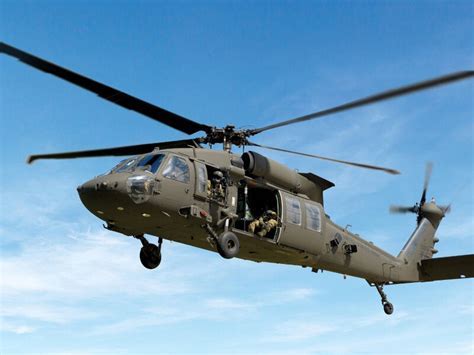
The Black Hawk’s variant lineage reflects mission diversification and continuous adaptation. Key models include:
- Utility variants: YUH-60A, UH-60A/C/L/M/V, UH-60M upgrade, UH-60V.
- Special mission variants: EH-60A/C/L (electronic warfare), UH-60Q/HH-60L/M/U/W (medical evacuation), MH-60A/L/K/M (special operations), and the elusive stealth MH-60 used in covert operations.
Each variant leverages the Black Hawk’s foundational design while incorporating mission-specific avionics, survivability enhancements, and structural modifications.
Enduring Legacy and Future Prospects
The Sikorsky UH-60 Black Hawk endures as an indispensable workhorse across global militaries, a testament to its robust design, mission versatility, and upgrade potential. Even as it approaches five decades of service, modernization programs and export orders signal sustained relevance. Its operational tapestry weaves through combat, humanitarian aid, disaster response, and special operations, making it a linchpin of both conventional and asymmetric warfare.
Looking ahead, while new technologies emerge under the FLRAA initiative, the Black Hawk’s legacy of adaptability ensures it will remain a fixture in military fleets worldwide for years to come, bridging the past, present, and future of rotary-wing aviation.