From the jungles of Vietnam to the decks of aircraft carriers and the deserts of the Middle East, Sikorsky’s rotorcraft have shaped modern warfare with unparalleled versatility and innovation. In this comprehensive guide, we explore each military helicopter that Sikorsky—now a Lockheed Martin subsidiary—has brought into service, examining their origins, capabilities, and the technological breakthroughs that keep them at the forefront of rotorcraft design.
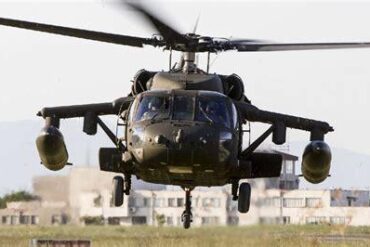
The journey begins with the legendary UH-60 Black Hawk, Sikorsky’s answer to a multipurpose battlefield workhorse. Introduced in the late 1970s, the Black Hawk redefined what a medium-lift helicopter could achieve. Its robust airframe, powerful twin turboshaft engines, and advanced avionics allow it to excel in diverse roles—from search-and-rescue missions in hostile territory to precision air assault operations under fire. Equipped with crashworthy seats, redundant flight controls, and self-sealing fuel tanks, the UH-60 delivers reliability when lives hang in the balance.
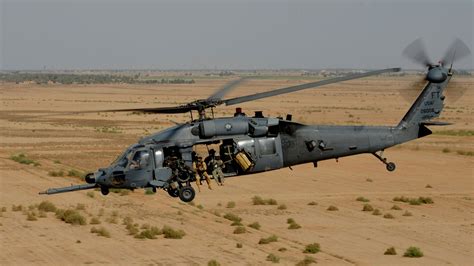
Beyond its base model, the Black Hawk family has grown into a sprawling catalog of variants tailored to specialized tasks. The Armed Black Hawk mounts a suite of machine guns and rocket pods for close air support, while the HH-60G Pave Hawk integrates the PAVE electronic warfare system to rescue downed aircrew deep behind enemy lines. Other offshoots include long-range MEDEVAC liners, electronic-surveillance platforms, and maritime adaptations with corrosion-resistant coatings and folding rotors.
CH-148 Cyclone: Canada’s Naval Sentinel
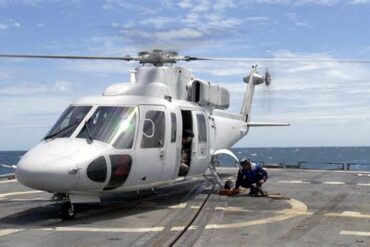
When Canada sought a modern shipborne helicopter, Sikorsky answered with the CH-148 Cyclone, a navalized evolution of the civilian S-92 transport. The Cyclone’s fly-by-wire controls replace manual linkages with digital commands, enhancing stability during low-speed deck landings on Halifax-class frigates. To conquer cramped hangars at sea, its tail and main rotors fold automatically, shaving eight feet off overall length and enabling efficient stowage.
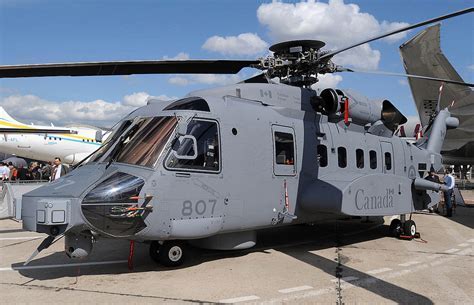
The Cyclone’s combat suite centers on a General Dynamics–supplied mission system that fuses radar, electro-optical sensors, and sonar buoys into a real-time map of the littoral battlespace both above and below the waves. Anti-submarine warfare (ASW) demands quick reaction times, and the CH-148’s high-flare countermeasure dispensers and infrared signature reduction measures give Canadian crews the edge in contested waters.
H-92 Superhawk: Tactical Transport Reinvented
Not content to rest on its laurels, Sikorsky transformed the S-92 civilian helicopter into the purebred H-92 Superhawk for military transport. While sharing cruising speed, service ceiling, and range with its S-92 progenitor, the Superhawk amplifies capacity—carrying 22 fully equipped combat troops versus the civilian 19-passenger configuration. The integration of radar-warning receivers and chaff/flare launchers ensures survivability in high-threat corridors.
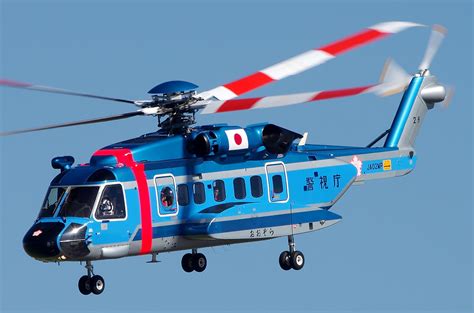
Engineers hardpoint the Superhawk for mission-specific ordnance: external fuel tanks for extended-range ferry flights, rescue hoists for humanitarian relief, and even light weapon pods for limited close air support. This multi-role transporter excels at rapid insertion and extraction of forces, resupply of forward outposts, and emergency casualty evacuation across the globe.
HH-60W Jolly Green II: The Next-Gen Rescue Warrior
The storied lineage of the “Jolly Green” rescue helos reaches a new pinnacle with the HH-60W, nicknamed “Whiskey.” Designed to supplant the aging HH-60G Pave Hawk, the Jolly Green II doubles its fuel capacity internally, extending critical-range rescue operations without clumsy external tanks. A modern glass cockpit brings high-resolution moving maps, digital radio links, and an embedded radar-warning receiver that fuses threat data with flight controls.
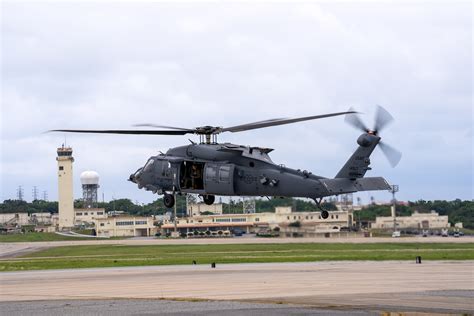
Armoring around the cabin protects aircrews and survivors, while infrared-suppressing exhausts and engine insulation reduce the helicopter’s heat signature against man-portable air-defense systems. Weapon stations beneath the stub wings allow door gunners to mount miniguns or rocket pods, providing suppressive fire during contested recovery missions.
MH-60R Seahawk: Hunter of the Deep
In the vast expanses of the world’s oceans, the MH-60R Seahawk reigns supreme as an anti-submarine and anti-surface warfare platform. Evolving from the Black Hawk airframe, the Seahawk boasts a multi-mode radar, high-definition electro-optical/infrared cameras, and a dipping sonar deployed on a winch.
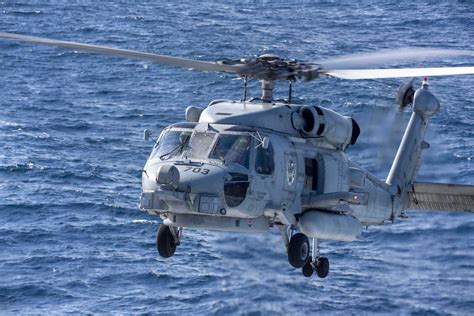
Torpedoes and hellfire missiles sit at the ready, and sonobuoy launchers scatter acoustic sensors across the sea to triangulate submerged threats. The Seahawk’s mission computer fuses sensor inputs into a shared tactical picture, enabling coordinated fleet defense. A sister variant, the MH-60S Knighthawk, trades ASW gear for additional fuel and storage, specializing in mine countermeasures and combat search-and-rescue (CSAR).
CH-53K King Stallion: The Heavy-Lift Champion
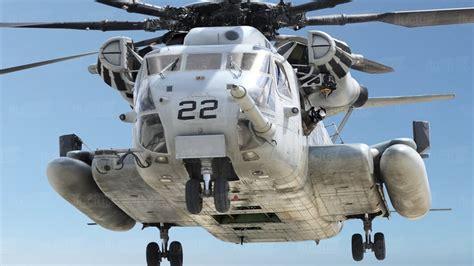
When gravity’s law becomes the fiercest adversary, the CH-53K King Stallion answers the call. As the largest and most powerful helicopter in U.S. service, the Stallion’s three GE38 turboshafts generate enough lift to haul 27,000 pounds of cargo—two fully armored Humvees or a single light armored vehicle—over hostile terrain.
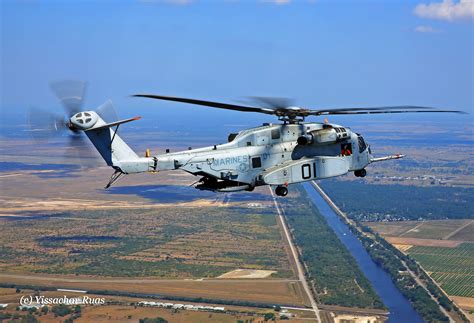
Fly-by-wire flight controls grant pilots precision hovering even in 40-knot crosswinds, a unique capability that simplifies offshore and littoral supply runs from amphibious ships to shore-based units. Advanced vibration dampening and health-monitoring sensors reduce airframe stress and maintenance downtime, ensuring that the King Stallion remains mission-ready when heavy lift is non-negotiable.
SB-1 Defiant: The Future of Fast Attack
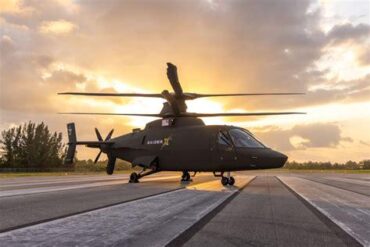
Research into advanced rotor systems culminated in the SB-1 Defiant, a prototype exploiting Sikorsky’s X2 coaxial-rotor technology. Two counter-rotating main rotors eliminate torque while a pusher propeller in the tail delivers additional thrust, enabling cruise speeds and ranges far beyond conventional helicopters.
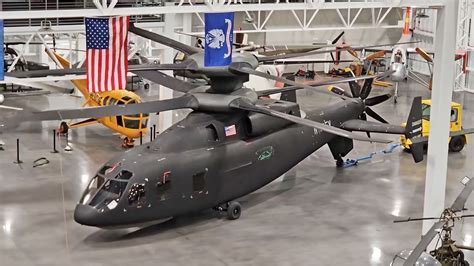
Twice as far as the Black Hawk’s 950-mile radius, the Defiant can infiltrate deeper into contested airspace and exfiltrate personnel at high speed. Its compact profile and low-altitude agility reduce exposure to radar-guided threats, making it an ideal platform for special operations and armed reconnaissance.
S-97 Raider: Silent Scout and Light Strike
Building on the Defiant’s success, the S-97 Raider refines X2 technology for reconnaissance and light assault. Whisper Mode—a simulated silence achieved by disengaging the pusher prop—allows clandestine insertions close to enemy positions. Reverse-thrust rotor blades slow vertical descents, granting unprecedented control during high-risk landings.
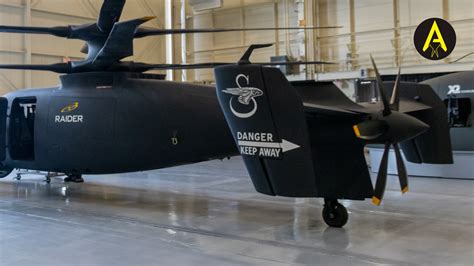
A nose-down hover capability enhances battlefield observation, keeping sensors trained on targets while presenting a smaller cross-section to ground fire. Modular payload bays accept machine guns, rockets, or medevac stretchers, morphing the Raider seamlessly between scout, gunship, and rescue profiles.
Raider X: Digital Design Meets Modular Warfare
The latest testbed in Sikorsky’s X2 family, the Raider X, stretches rotor diameter to 39 feet to house a next-generation turboshaft engine. Developed as an 80-percent scale demonstrator, Raider X leverages digital engineering to cut production costs and accelerate updates through software-defined flight controls.

Embedded health-management systems monitor critical components in real time, alerting maintainers to emerging issues before faults ground the aircraft. A modular weapon interface accepts an array of precision-guided munitions, ensuring that the Raider X can evolve with emerging threat sets over its anticipated decades of service.
X-49 Speedhawk & Gen 2 Turret: Collaboration and Modernization
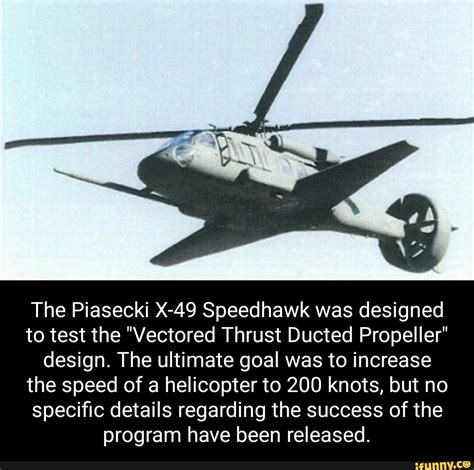
Sikorsky’s influence extends beyond its own rotorcraft. The Piasecki X-49 Speedhawk, grafted onto an SH-60 Seahawk fuselage, integrates a lifting wing and vectored tail rotor for improved speed and range—an early precursor to X2 innovations.
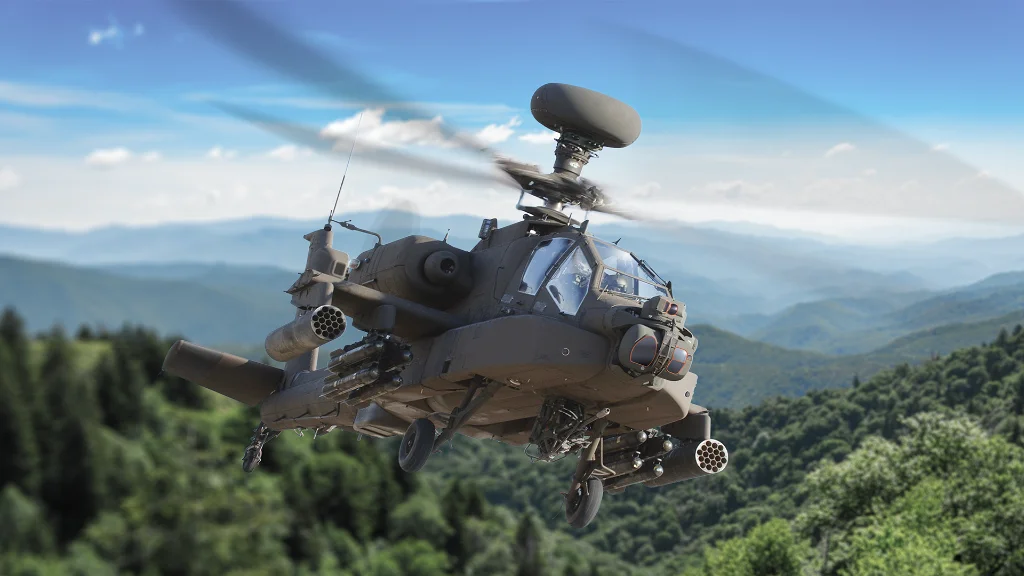
Likewise, the Gen 2 Turret modernizes ABB’s legacy Apache targeting system, replacing the aging TADS with a digital, stabilized sight that cuts track-acquisition times in half. With improved reliability and reduced maintenance demands, the Gen 2 Turret promises over $500 million in life-cycle cost savings for U.S. Army attack helicopter squadrons.
From proven workhorses like the Black Hawk and Seahawk to visionary prototypes like the Raider X and SB-1 Defiant, Sikorsky’s military helicopters epitomize the relentless march of aerospace innovation. Each airframe—whether optimized for heavy lift, combat rescue, or anti-submarine warfare—draws on decades of rotorcraft expertise to meet the ever-evolving demands of 21st-century battlefields.