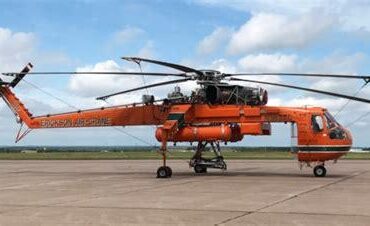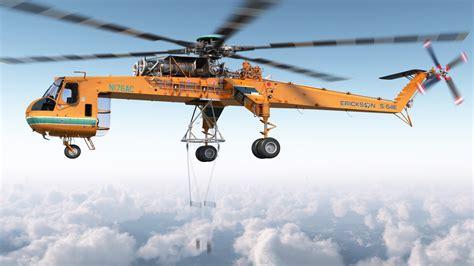
The Sikorsky S-64 Aircrane is an iconic heavy-lift helicopter that has earned its reputation as one of the most powerful aerial cranes in existence. Originating from the United States, the S-64 is a versatile machine that has played an essential role in numerous industries, including firefighting, construction, and military operations. This article delves into the development, specifications, operational uses, and legacy of this remarkable aircraft, emphasizing its enduring relevance in modern aviation.
The Evolution of the S-64 Aircrane
The story of the S-64 Aircrane begins in the early 1960s when Sikorsky Aircraft developed it as an advanced version of the CH-54 Tarhe, a military helicopter designed for heavy-lift operations. The helicopter was initially conceptualized as an aerial crane capable of lifting massive loads, and this vision was realized with the first prototype flying on May 9, 1962.
This initial version of the S-64 featured a robust airframe with a six-blade main rotor and was powered by two Pratt & Whitney JFTD12A turboshaft engines. With a total of 4,050 shaft horsepower, the S-64 became capable of lifting heavy payloads with precision and efficiency. The helicopter’s design was further refined with the inclusion of a dual-engine system, ensuring maximum performance and redundancy for critical missions.
Erickson’s Role in the S-64 Aircrane Legacy
In 1992, the manufacturing rights and the type certificate for the S-64 were acquired by Erickson Air-Crane. This shift in production allowed Erickson to significantly enhance the helicopter’s design. They introduced over 1,350 modifications, improving everything from the airframe to the instrumentation and the payload capabilities of the helicopter.
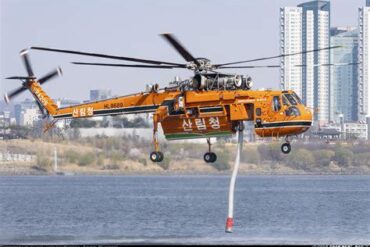
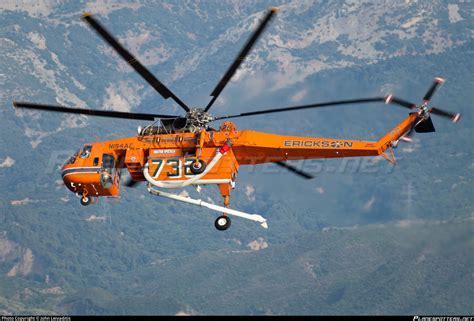
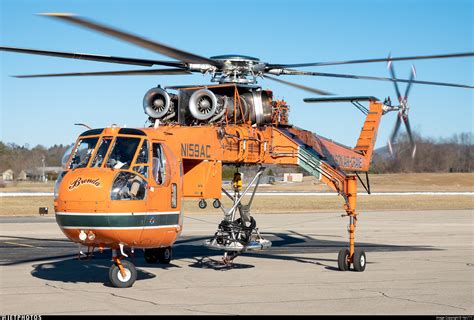
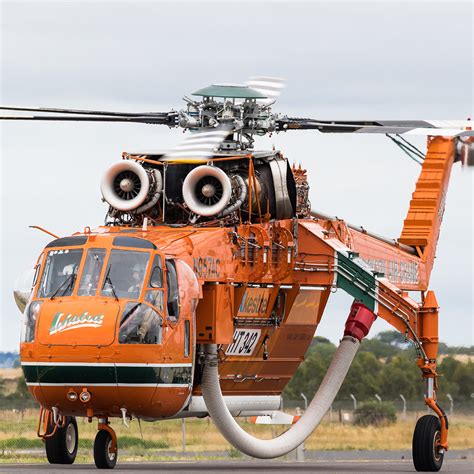
One of the most notable upgrades was the Firefighting Conversion, which included a 2,650-gallon retardant tank. This modification enabled the S-64 to play a crucial role in aerial firefighting, where it is used to combat wildfires by delivering large quantities of water or fire retardant to affected areas. The helicopter’s ability to refill its tank in just 45 seconds using a specialized snorkel is an impressive feat of engineering, making it one of the most effective firefighting tools available.
The S-64 Aircrane is now primarily manufactured by Erickson Inc., which has become the world’s largest operator of the aircraft. The helicopter is widely used in fire suppression, heavy-lift construction, civil protection, and even timber harvesting. These operations often require the S-64 to lift massive loads, such as large equipment, prefabricated structures, or emergency supplies, into locations that are difficult to access by other means.
The Versatility of the S-64 in Various Sectors
Firefighting
The S-64 Aircrane’s ability to carry and drop large amounts of water or fire retardant has made it an invaluable asset in wildfire suppression efforts. Its high-capacity tank, combined with the rapid refill capability, makes it particularly effective in areas with extensive wildfire activity, such as in Australia, California, and parts of Europe.
Beyond its size and lifting power, the S-64 excels in precision when performing aerial firefighting tasks. It can navigate tight spaces, fly low and slow, and drop payloads accurately on firelines, helping to contain fires before they spread uncontrollably.
Construction and Heavy-Lift Operations
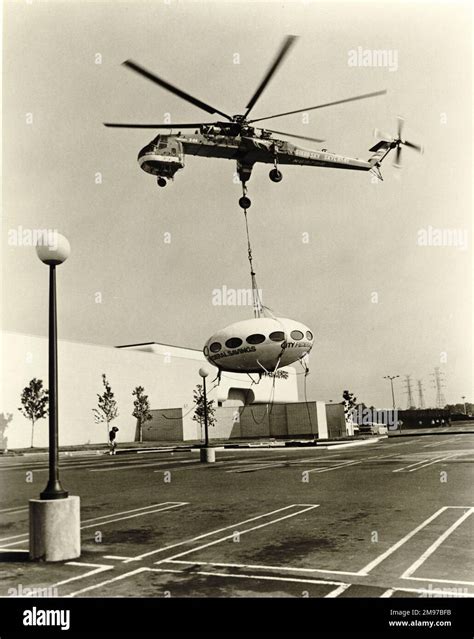
Another key application of the S-64 is in heavy-lift construction. The Aircrane can transport and install massive components such as power plant equipment, pre-fabricated buildings, and even antennas. One of the most famous examples of this was its role in the construction of the CN Tower in Toronto, where the Aircrane was used to lift and position the top antenna section.
The S-64 can lift up to 20,000 pounds (9,100 kg) and has a maximum takeoff weight of 42,000 pounds (19,051 kg). This incredible lifting capacity, combined with its precise flying capabilities, allows it to handle the most challenging aerial construction tasks.
Military Use
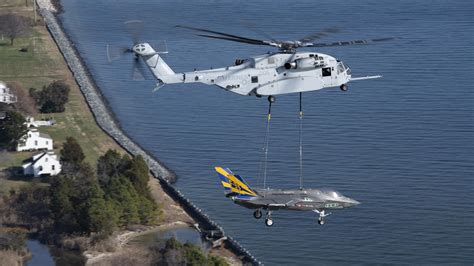
The military version of the S-64, the CH-54 Tarhe, was originally designed to serve as a transport and recovery helicopter for heavy equipment and vehicles. The S-64 Aircrane retains this capacity, and its heavy-lift capabilities have been used in military operations, both in the United States and abroad. However, in modern operations, the S-64 is primarily utilized by civilian contractors, with military forces relying more on other platforms like the CH-53 Sea Stallion for heavy-lift missions.
The Technological Features Behind the S-64
Design and Airframe
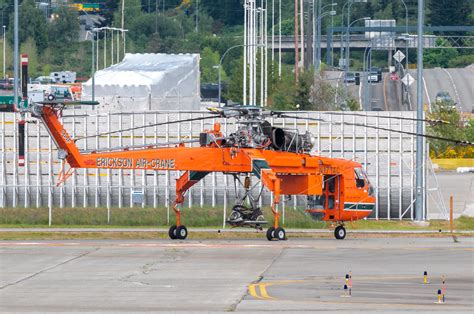
The S-64 Aircrane is a twin-engine helicopter that features a unique design characterized by a large open airframe, which allows for the attachment of external loads. Unlike conventional helicopters, the S-64 is not equipped with a fuselage but instead uses a crane-like structure to carry payloads. This innovative design allows for greater flexibility when lifting oversized or awkward loads.
The helicopter’s main rotor spans an impressive 72 feet (21.95 meters), and the main rotor area measures approximately 4,070 square feet (378 m²), providing ample lift capacity. Additionally, the dual-engine system provides redundancy, ensuring that the aircraft can safely continue operations even if one engine fails.
Performance Specifications
The S-64 Aircrane is powered by two Pratt & Whitney JFTD12-4A turboshaft engines, each delivering 4,500 shaft horsepower. This engine setup provides the aircraft with the power needed to carry out high-performance operations in challenging conditions. The Aircrane’s maximum speed is 115 knots (132 mph, 213 km/h), and it has a range of 200 nautical miles (230 miles, 370 km).
The helicopter’s hover ceiling – the height at which it can remain stationary – is approximately 10,600 feet (3,200 meters), allowing it to operate in high-altitude environments. Its rate of climb is an impressive 1,330 feet per minute (6.8 meters/second), ensuring that it can quickly gain altitude when necessary.
Notable S-64 Aircrane Models and Variants
The S-64 has been produced in several variants to meet the evolving needs of operators across the globe. Some of the most well-known variants include:
- S-64E: This is an upgraded version of the CH-54A, which has been extensively modified for civilian use. It features improvements in airframe design and avionics.
- S-64F: An upgraded version of the CH-54B, this model includes more powerful engines and improved performance in firefighting operations.
- S-64F+: A proposed upgrade featuring new engines, avionics, and optional autonomous flying capabilities.
Erickson’s Customizations
Erickson has made numerous customizations to the S-64 Aircrane, including the addition of firefighting tanks, improved avionics, and specialized equipment for various industries. These modifications have made the S-64 an essential tool in firefighting, construction, and emergency response operations worldwide.
Conclusion: The Enduring Legacy of the S-64 Aircrane
The Sikorsky S-64 Aircrane remains one of the most reliable and powerful helicopters in existence. With its exceptional lifting capacity, unique design, and versatility across various sectors, the Aircrane has earned its place as a critical tool for industries around the world. Whether it’s fighting wildfires, lifting heavy construction materials, or providing support during emergency response missions, the S-64 continues to prove itself as a heavy-lift giant that can tackle the most demanding challenges.
The future of the S-64 Aircrane is as promising as its past. With advancements in technology and continued modifications by companies like Erickson Inc., this helicopter is poised to remain an indispensable asset for the aviation industry in the years to come.
![Big Drones & Heavy Lift Drones: A Comprehensive Guide for Drone Pilots [New for 2025]](https://boltflight.com/wp-content/uploads/2025/05/big-drones-heavy-lift-drones-comprehensive-guide-drone-pilots-new-2025-370x247.jpg "Big Drones & Heavy Lift Drones: A Comprehensive Guide for Drone Pilots [New for 2025]")