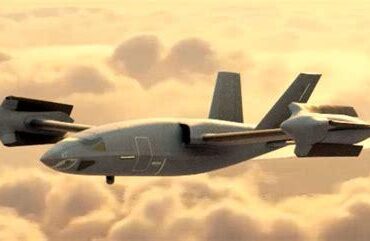
The Future Vertical Lift (FVL) program stands as the most ambitious transformation of military vertical lift capability in over half a century. Spearheaded by the U.S. Department of Defense, FVL is a forward-looking initiative aimed at replacing aging rotary-wing fleets like the UH-60 Black Hawk, AH-64 Apache, CH-47 Chinook, and OH-58 Kiowa with a new family of aircraft designed for multi-domain operations. The vision is clear: faster, more agile, longer-range platforms that outperform current assets in speed, survivability, payload, and mission flexibility.
The need for this shift was made unmistakably urgent during the intense combat rotations in Iraq and Afghanistan, where helicopters were flown at rates five times higher than during peacetime. The resulting wear underscored the limitations of legacy airframes and the necessity of a new class of rotorcraft designed for modern warfare, logistics support, and strategic deterrence across all theaters.
A Long-Term Strategy Rooted in Immediate Necessity
In October 2011, the U.S. Deputy Secretary of Defense issued the FVL Strategic Plan, establishing a roadmap that will define vertical lift development for the next 25 to 40 years. With 80% of fleet decisions expected to occur within a decade, the impact of FVL will resonate across U.S. military operations for more than half a century. It is not merely a procurement strategy but a doctrinal pivot to ensure air mobility dominance amid rapidly evolving global threats.
The Joint Multi-Role (JMR) technology demonstration effort, which forms the technological bedrock of FVL, has unfolded in a three-phase development track: JMR-TD (Technology Demonstrator), Phase I (Air Vehicle), and Phase II (Mission Systems). The U.S. Army alone intends to acquire up to 4,000 FVL aircraft, a monumental investment supported by parallel engine development efforts that began in 2016.
Platform Families and Configurations: Tailored Versatility Across Missions
FVL is not a one-aircraft solution but a family of five aircraft classes, each tailored to replace specific legacy platforms. The configurations reflect both near-term and long-term strategic needs:
- JMR-Light (FARA): Envisioned as the Future Attack Reconnaissance Aircraft to replace the OH-58 Kiowa, this program was cancelled in February 2024. Its termination followed $2 billion in spending and a shifting focus toward unmanned reconnaissance and enhanced existing platforms.
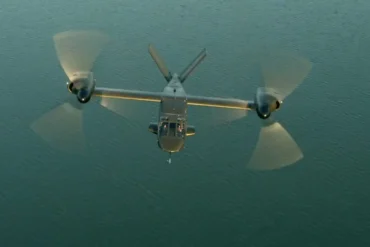
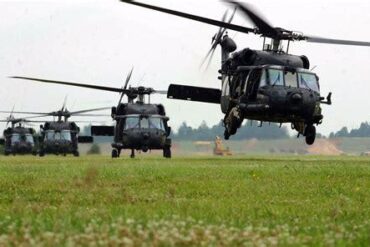
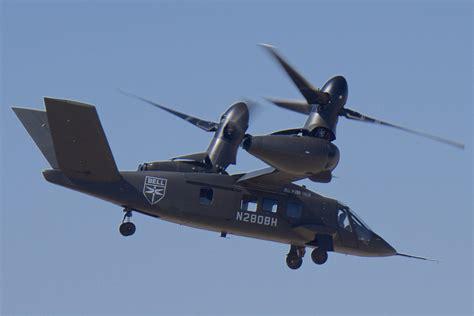
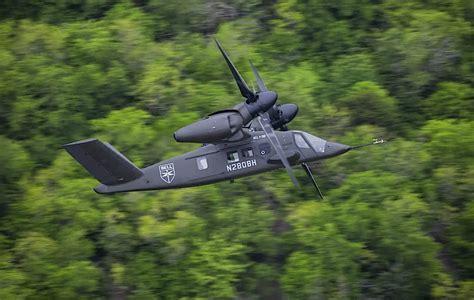
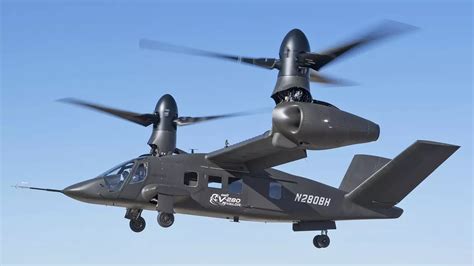
- JMR-Medium-Light/Medium: Developed to supersede the UH-60 Black Hawk, this class saw the Bell V-280 Valor declared winner of the Future Long Range Assault Aircraft (FLRAA) competition in December 2022. Entry into service is slated for 2030.
- JMR-Heavy: Meant to replace the CH-47 Chinook cargo helicopter, it’s planned for introduction around 2035, though Boeing projects possible entry as late as 2060.
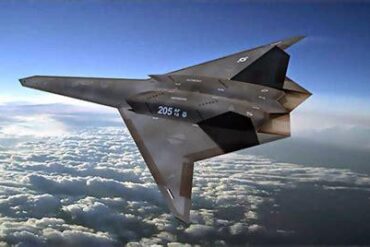
- JMR-Ultra: Designed to meet C-130-class lift capability with vertical takeoff and landing (VTOL), it is tentatively scheduled for 2025, though significant details remain classified.
- MH-XX (Navy derivative): With naval operations in mind, this would replace the MH-60S/R Seahawk and leverage shared components with other FVL aircraft to minimize logistical burdens.
Design Mandates: Where Engineering Meets the Mission
The FVL initiative is not just about replacing old helicopters—it demands revolutionary improvements. The aircraft must cruise at 230 knots, carry 12 troops, operate effectively at 6,000 feet in 95°F conditions, and achieve a combat radius of 263 miles with a maximum range of 527 miles. This performance standard ensures operational versatility from urban theaters to high-altitude conflict zones.
These multi-role aircraft must excel in missions such as:
- Tactical transport
- Reconnaissance and attack
- MEDEVAC and combat search-and-rescue (CSAR)
- Anti-submarine warfare (ASW)
- Special operations and vertical replenishment (VERTREP)
- Mine countermeasures
FVL platforms will support optionally piloted or fully autonomous configurations, enabling seamless transition to unmanned operations as AI and autonomy mature. Engines will range from 40 shp for drones to over 10,000 shp for heavy-lift models. These aircraft are expected to hover at 10,000 feet and cruise as high as 30,000 feet—performance metrics that are unparalleled among current rotorcraft.
Lockheed Martin is playing a key role in developing a common mission system architecture, enhancing interoperability across the fleet. Notably, the pilot helmet draws on F-35 technology, integrating heads-up displays, target tracking, and enhanced situational awareness features.
Technological Showdown: Bell vs. Sikorsky-Boeing
At the heart of the FVL development is a fierce competition between industry giants. The Bell V-280 Valor, a tiltrotor platform, emerged victorious in the FLRAA program due to its 280-knot cruise speed, efficiency, and simpler tilt-only rotor design. Its selection marks a turning point in the future of air mobility, embracing tiltrotor advantages in range and speed without inheriting the mechanical complexity of tilting engines.
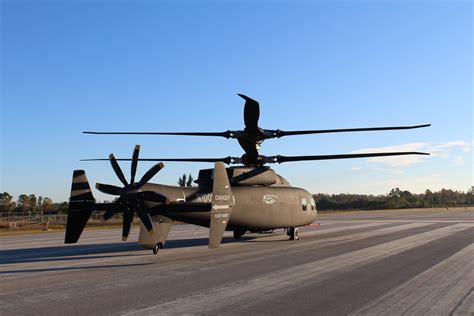
Meanwhile, the Sikorsky–Boeing SB-1 Defiant, with its coaxial rotor and pusher propeller, was a formidable contender. First flown in March 2019, its Defiant X evolution boasted the powerful Honeywell HTS7500 turboshaft engine. This high-speed compound helicopter pushed rotorcraft physics to the limit, offering agility and speed in a more traditional helicopter form factor.
Other experimental designs included:
- AVX: Compound coaxial with ducted fans
- Karem TR36TD: An optimum-speed tiltrotor
- EADS (Eurocopter X³): Withdrawn in 2013
- Piasecki PA61-4 AWC: An unconventional but innovative contender
From Demonstration to Deployment: A Timeline of Transformation
The journey of FVL has been long and methodical. In June 2013, the Pentagon awarded initial Phase I JMR-TD contracts to Bell, Sikorsky-Boeing, AVX, and Karem. By August 2014, the focus narrowed to the Bell-Lockheed Martin V-280 and Sikorsky-Boeing SB-1, paving the way for prototype development and flight testing by 2017.
The lessons from JMR directly informed the Future Long Range Assault Aircraft (FLRAA) and Future Attack Reconnaissance Aircraft (FARA) requirements. By March 2020, Bell and Sikorsky-Boeing began risk-reduction testing, preparing for system refinement ahead of flight testing in 2025 and FLRAA’s expected operational debut in 2030.
FARA, however, met an untimely end in February 2024, following an internal strategic reassessment. The $2 billion already spent on the program redirected to upgrades for existing platforms like the Black Hawk and CH-47F Block II, as well as investments in unmanned reconnaissance, reflecting battlefield insights from Ukraine, where drone warfare has proven decisive.
Conclusion: A Vertical Leap Into the Future of Warfare
Future Vertical Lift is not merely about replacing old aircraft with faster ones—it is about reshaping the geometry of the modern battlefield. It represents a technological, strategic, and doctrinal evolution in military aviation. From autonomously piloted scout aircraft to ultra-heavy vertical transports that rival the capabilities of fixed-wing platforms, FVL aims to deliver unmatched tactical agility, speed, and survivability.
With platforms like the Bell V-280 Valor poised to lead the charge and a unified mission architecture enabling seamless integration across all services, FVL will define how the U.S. military projects power, rescues its wounded, delivers troops, and maintains superiority for generations to come.
The sky, quite literally, is no longer the limit.