The Future of American Air Dominance
The United States military aviation landscape is undergoing a sweeping transformation. As threats evolve and technology accelerates, the Department of Defense is investing heavily in a new generation of future military aircraft designed to ensure air superiority, surveillance, strategic mobility, and force projection deep into the 21st century. These aircraft are not speculative dreams—they are in active development or near deployment, backed by billions in research and procurement funding.
From stealth bombers and loyal wingman drones to command-and-control platforms and next-generation refuelers, the U.S. is laying the foundation for unmatched air capabilities. Let us explore the critical systems shaping this future force.
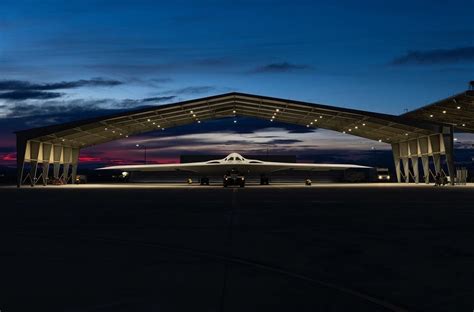
B-21 Raider: Stealth Redefined
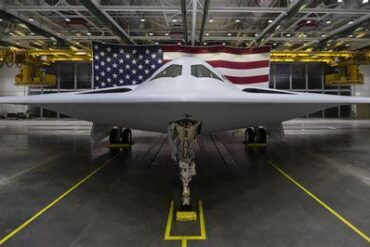
Scheduled to enter service in 2025, the Northrop Grumman B-21 Raider is the cornerstone of America’s future long-range strike capability. As a sixth-generation stealth strategic bomber, the B-21 integrates the latest radar-absorbing materials, advanced electronic warfare systems, and modular payload capabilities.
Its design emphasizes deep penetration into contested environments, countering anti-access/area denial (A2/AD) threats posed by adversaries like China and Russia. Crucially, the B-21 is expected to carry both nuclear and conventional munitions, giving the U.S. Air Force unparalleled flexibility in mission planning.
Next Generation Air Dominance (NGAD) & Boeing F-47
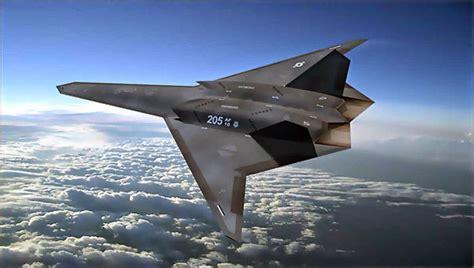
The Next Generation Air Dominance (NGAD) program is the most ambitious air superiority project since the development of the F-22 Raptor. NGAD aims to field a family of systems—including the manned Boeing F-47 fighter and an array of autonomous drones—by 2030.
What sets NGAD apart is its architecture: modular, scalable, and AI-integrated. The aircraft is expected to employ adaptive cycle engines for extended range and thrust variability, advanced sensor fusion, and seamless integration with space-based ISR and cyber warfare assets.
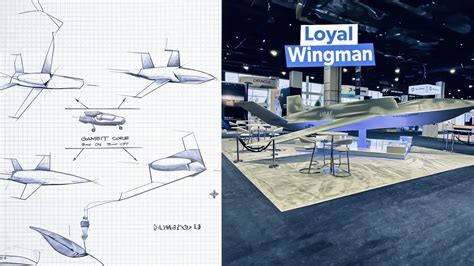
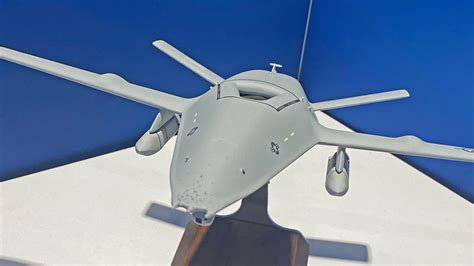
Collaborative Combat Aircraft (CCA): The Rise of Loyal Wingmen
One of the most revolutionary shifts in U.S. military aviation is the introduction of autonomous wingman drones under the Collaborative Combat Aircraft (CCA) program. Slated to enter service before 2030, leading contenders include the Anduril YFQ-44 and General Atomics YFQ-42.
These UCAVs (Unmanned Combat Aerial Vehicles) will fly alongside manned fighters, providing reconnaissance, electronic warfare, and strike support. Controlled by AI or human pilots, these assets reduce risk to personnel while increasing battlefield awareness.
F/A-XX: Naval 6th Generation Supremacy
To replace the aging F/A-18 Super Hornets, the U.S. Navy is advancing the F/A-XX program, a 6th-generation multirole combat aircraft set for deployment around 2030. Priorities for the F/A-XX include:
-
Superior stealth and maneuverability
-
Longer-range missiles and hypersonic weapons integration
-
Advanced network-centric warfare capabilities
-
High endurance to support extended carrier operations
Unlike past designs, F/A-XX will focus on team operations with unmanned aerial systems, making it a key player in distributed maritime operations (DMO).
Boeing MQ-25 Stingray: Tanker and Beyond
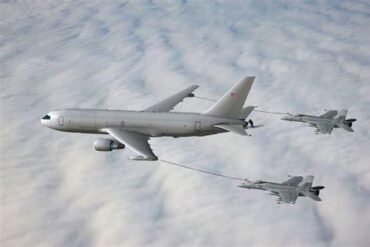
Entering Navy service by 2026, the Boeing MQ-25 Stingray is an unmanned aerial refueling vehicle that promises to transform carrier-based operations. The Stingray extends the range of carrier strike aircraft like the F-35C and F/A-18, enhancing both operational reach and fleet survivability.
Its autonomous design and low observable features also allow for intelligence, surveillance, and reconnaissance (ISR) roles, creating a highly versatile platform.
T-7 Red Hawk: Training the Future Fighter Force
The Boeing T-7 Red Hawk is not just a trainer aircraft—it’s a leap in pilot preparation. Due to enter service around 2028, the T-7 integrates immersive simulation, realistic adversary replication, and modular avionics, aligning training with 5th and 6th-generation fighter tactics.
This aircraft replaces the aging T-38 Talon and is crucial for ensuring that future pilots are combat-ready for platforms like the F-35, NGAD, and F/A-XX.
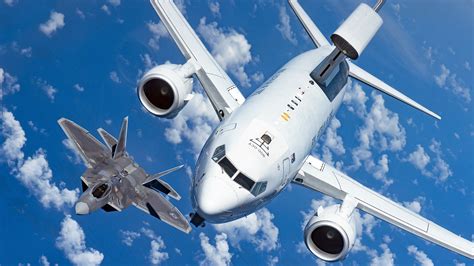
Boeing E-7 Wedgetail: Next-Gen Battle Management
Replacing the legacy E-3 Sentry AWACS, the Boeing E-7 Wedgetail brings advanced radar coverage, battlefield management, and networked operations. Entering service by 2027, the Wedgetail will provide:
-
Active electronically scanned array (AESA) radar
-
Superior target tracking and discrimination
-
Interoperability with NATO and allied forces
Survivable Airborne Operations Center (SAOC)
To replace the aging E-4B Nightwatch, the SAOC will become the U.S. military’s new “Doomsday Plane”, responsible for nuclear command and control in the event of national crisis. Expected around 2032, SAOC will incorporate:
-
Hardened electronics to survive EMP attacks
-
Satellite communication arrays
-
Long-duration loitering capability with aerial refueling
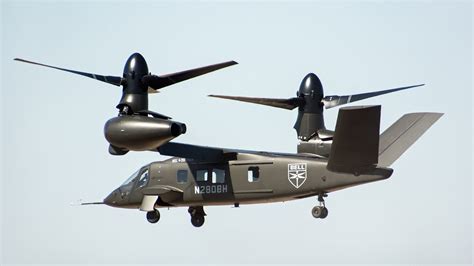
Future Vertical Lift (FVL) and Bell V-280 Valor
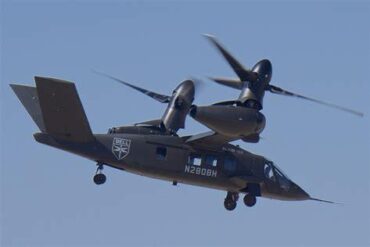
The U.S. Army’s Future Vertical Lift (FVL) initiative is redefining rotary-wing capabilities between 2025–2035. A centerpiece is the Bell V-280 Valor, a tiltrotor aircraft blending helicopter agility with fixed-wing speed.
Designed to replace the UH-60 Black Hawk, the V-280 can reach speeds over 280 knots, features a fly-by-wire cockpit, and offers improved range and survivability in contested zones.
KC-Z: The Stealth Tanker of Tomorrow
Anticipated to arrive by 2040, the KC-Z program envisions a next-generation air refueling tanker with stealth characteristics, autonomous operations, and hardened defenses against electronic attack. Unlike traditional tankers, KC-Z aircraft will be designed for survivability in denied airspace, supporting stealth bombers and fighters on deep strike missions.
E-130J and ME-11B HADES: ISR Reinvented
Two critical platforms will define the next phase of intelligence, surveillance, and reconnaissance (ISR):
-
Lockheed Martin E-130J: A maritime command post platform with enhanced communications and strategic awareness tools for the Navy, entering post-2027.
-
ME-11B HADES: An Army ISR platform focused on signals intelligence (SIGINT) and electronic surveillance, scheduled around 2027.
Together, these aircraft ensure robust data gathering and threat tracking across all domains.
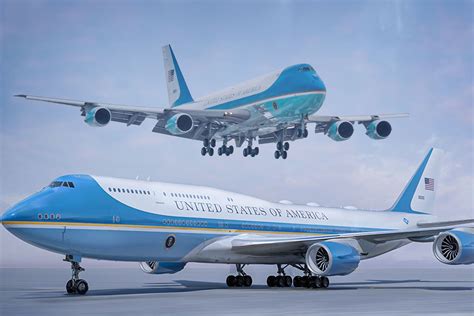
Presidential Transport: Boeing VC-25B
The iconic Air Force One is also evolving. The Boeing VC-25B, due by 2027–2028, will replace the current 747-200B fleet. It includes:
-
Upgraded self-defense systems
-
Hardened communications and EMP shielding
-
Improved fuel efficiency and mission range
The Integrated Future of Air Combat
Each of these platforms reflects a broader strategy: integration, survivability, automation, and dominance. The future U.S. air fleet is not just a collection of advanced aircraft—it’s a networked ecosystem designed to respond rapidly, project force globally, and deter aggression before it starts.
As threats become more complex, these aircraft will form the vanguard of U.S. national security, ensuring the skies—and space beyond—remain secure for decades to come.
FAQ: Future Military Aircraft
What is the most advanced future military aircraft in development?
The B-21 Raider is currently the most advanced, integrating next-gen stealth, long-range strike capabilities, and nuclear readiness. It is also the first sixth-generation manned bomber being produced.
When will NGAD and Loyal Wingman drones enter service?
The Next Generation Air Dominance system is planned for deployment around 2030, with its drone counterparts—the Collaborative Combat Aircraft—entering service slightly earlier, before 2030.
What makes the Bell V-280 Valor different from traditional helicopters?
The Bell V-280 Valor uses a tiltrotor design, allowing it to fly faster and farther than conventional helicopters while still maintaining vertical takeoff and landing capabilities, making it ideal for modern Army operations.