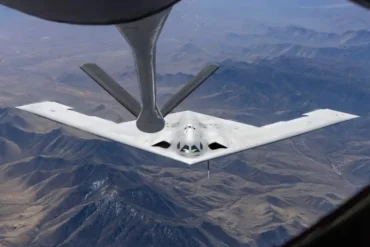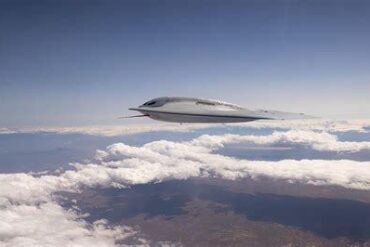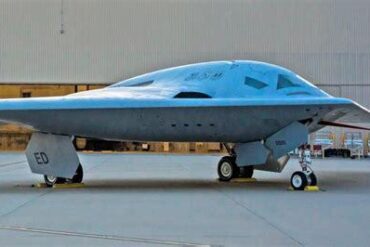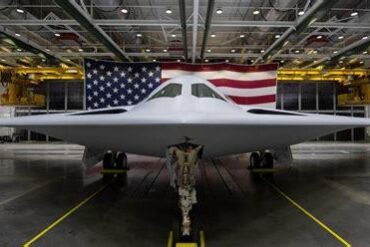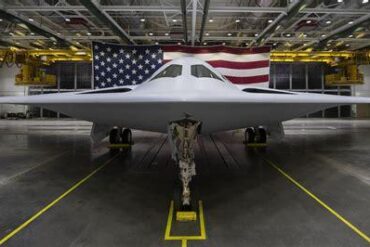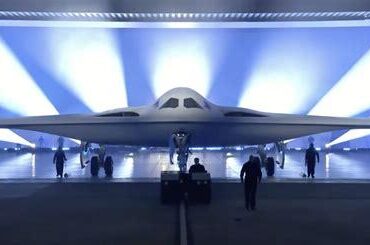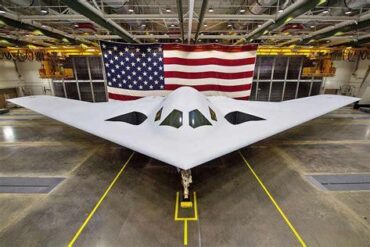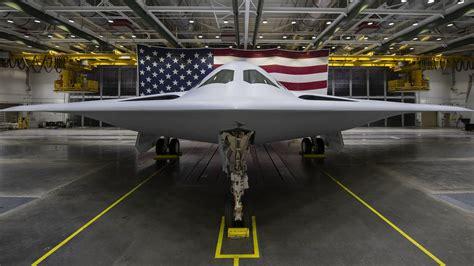
The B-21 Raider represents one of the most ambitious military aviation projects of the 21st century. Designed by Northrop Grumman for the United States Air Force, this next-generation stealth bomber is intended to redefine long-range strike capability while restoring a technological edge that American air power has enjoyed for decades. With the first aircraft already flying and operational service expected by 2027, the B-21 Raider is more than a replacement for aging bombers—it is a cornerstone of future warfare strategy.
The excitement surrounding the B-21 is not simply about a new aircraft entering service. It reflects a larger transformation in how modern wars may be fought. Stealth, network integration, artificial intelligence support systems, and deep-strike capability combine in a platform that is expected to penetrate the most heavily defended airspace on Earth.
For the U.S. Air Force, the B-21 represents a strategic reset. Aging aircraft like the B-1B Lancer and B-2 Spirit have served for decades, but rising maintenance costs, evolving air defenses, and new geopolitical challenges demand a bomber designed specifically for the threats of the 2030s and beyond.
The Strategic Need For A New Penetrating Bomber
Strategic bombers have long played a central role in U.S. military power. These aircraft allow the United States to strike targets across the globe without relying on foreign bases. During the Cold War, bombers like the B-52 Stratofortress served as airborne components of the nuclear triad. Over time, new threats forced the development of stealth aircraft capable of slipping past enemy radar networks.
The B-2 Spirit, introduced in 1997, revolutionized stealth bombing. Its flying-wing design and radar-absorbing materials allowed it to infiltrate heavily defended regions and deliver precision strikes. At the time of its introduction, it enjoyed a near-unmatched ability to penetrate hostile airspace.
But technology never stands still. Over the past three decades, nations such as China and Russia have developed advanced air defense systems. Modern surface-to-air missile networks, low-frequency radars, and stealth-detecting sensors have eroded some of the advantages earlier stealth bombers once possessed.
Today, most strategic bombers cannot safely enter contested airspace. Aircraft like the Tu-160 Blackjack, Tu-95 Bear, Xi’an H-6, and even the U.S. B-52 operate primarily as standoff missile platforms, launching cruise missiles from hundreds of miles away rather than flying directly over targets.
That approach works well for many missions. However, certain targets—especially deeply buried bunkers or hardened underground facilities—require heavy penetrator bombs. These weapons must be delivered directly over the target by aircraft capable of penetrating sophisticated defenses.
The B-21 Raider is designed specifically to fill this role.
Flight Testing And Early Development Progress
Unlike many modern military programs that suffer years of delays and ballooning costs, the B-21 Raider program has progressed relatively smoothly. The first aircraft entered flight testing in 2025, marking a major milestone for the program.
Shortly afterward, a second pre-production Raider joined the testing effort. These aircraft are part of a broader development fleet that includes multiple test platforms and non-flying structural airframes used for evaluation and validation.
At least four additional B-21 aircraft are already in different stages of construction, supporting an expanding test campaign that examines flight performance, stealth characteristics, avionics systems, and operational capabilities.
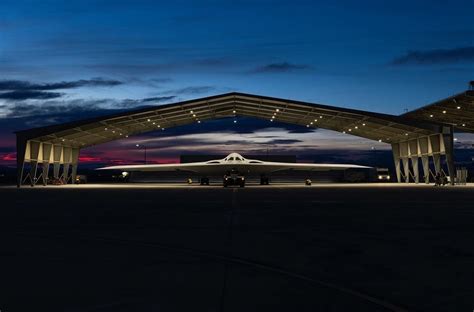
The aircraft is expected to achieve initial operational capability at Ellsworth Air Force Base in South Dakota by 2027. This timeline is notable because major defense programs often slip years beyond their original schedules.
In urgent situations, military planners have suggested the bomber could potentially be rushed into service even earlier, possibly as soon as 2026.
While the full capabilities of the B-21 remain classified, early statements from the Air Force suggest that the aircraft will operate very differently from traditional bombers. Instead of functioning solely as a bomb delivery platform, it is expected to operate as a multi-role strategic node within a larger combat network.
Restoring America’s Technological Edge
One of the main reasons the U.S. Air Force is excited about the B-21 is its potential to restore a technological overmatch against advanced adversaries.
Modern battlefields are increasingly defined by complex sensor networks. Ground radar installations, airborne early-warning aircraft, infrared tracking systems, and satellite surveillance combine to create layered detection grids capable of spotting many conventional aircraft.
To survive in this environment, stealth must go far beyond simply reducing radar reflection.
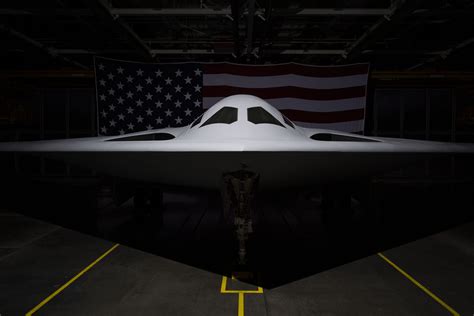
The B-21 Raider integrates all-aspect stealth technology, meaning its design reduces detection across multiple sensor types simultaneously. This includes radar, infrared emissions, and electronic signals that could otherwise reveal its position.
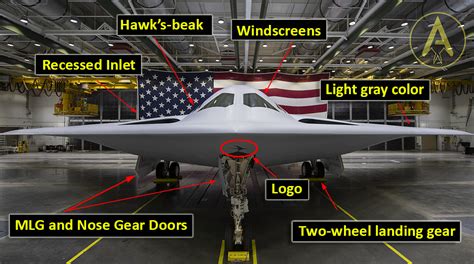
Engine intakes are deeply buried within the airframe to conceal the spinning compressor blades that typically reflect radar signals. The exhaust system is also carefully shielded to minimize heat emissions that infrared sensors might detect.
The bomber’s smooth flying-wing shape eliminates vertical surfaces that commonly reflect radar waves. This geometry, combined with advanced radar-absorbent coatings, dramatically reduces the aircraft’s radar cross-section.
A Rare Success Story In Defense Procurement
Major military programs often become infamous for cost overruns and delays. The B-21 Raider has largely avoided these pitfalls so far.
When the B-2 Spirit was originally developed, it became one of the most expensive aircraft programs in history. Only 21 bombers were ultimately built, far fewer than the 132 originally planned. The extremely small production run drove costs sky-high.
The B-21 is taking a different approach.
By leveraging modern digital engineering tools, Northrop Grumman was able to design and simulate much of the aircraft virtually before building physical prototypes. This process allowed engineers to identify problems earlier and reduce costly redesigns during development.
The Air Force currently plans to purchase at least 100 B-21 bombers, with some officials advocating a fleet of 145 aircraft. Larger production numbers dramatically reduce the cost per unit.
Estimated figures place the B-21’s price at roughly $750 million per aircraft in 2024 dollars, significantly cheaper than the B-2 when adjusted for inflation.
Operating costs are also expected to drop substantially. The B-2 currently costs around $41 million annually per aircraft to sustain. The B-21 is projected to reduce that figure to approximately $25 million.
Maintenance improvements include more durable radar-absorbing coatings, which historically required intensive upkeep on stealth aircraft.
These efficiencies are expected to boost operational availability. The B-21 could achieve a mission capable rate exceeding 80%, compared with roughly 60% for the B-2 fleet.
Expanding Production To Meet Strategic Demand
Recognizing the strategic importance of the program, the U.S. government has moved to accelerate production capacity.
In February 2026, the Department of the Air Force announced an agreement with Northrop Grumman to expand manufacturing infrastructure for the B-21 Raider. The agreement injected $4.5 billion in funding, enabling the company to scale up production facilities and increase annual output.
This expansion is expected to boost manufacturing capacity by approximately 25 percent, significantly reducing delivery timelines for operational units.
Political leaders have also hinted at large orders for the aircraft. Statements referencing “new B-2 bombers” were widely interpreted as referring to the B-21 Raider, which resembles the B-2 in shape but represents a completely new design.
Production ramp-up is critical because the U.S. Air Force intends to replace multiple aging aircraft types with the B-21.
A Generational Leap Beyond The B-2 Spirit
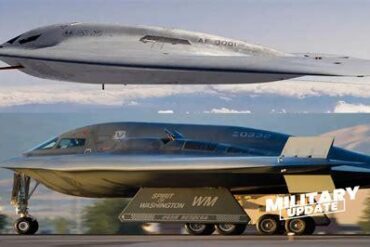
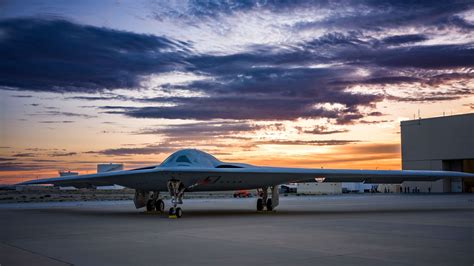
At first glance, the B-21 Raider looks very similar to the B-2 Spirit. Both aircraft use a flying-wing configuration, a design that maximizes stealth by eliminating vertical stabilizers and reducing radar reflections.
Despite this visual similarity, the B-21 is fundamentally a new generation of bomber.
The B-2 was designed during the 1980s, when Soviet radar systems represented the primary threat. Engineers optimized the aircraft to evade those specific technologies.
Modern threats are far more complex.
Today’s air defenses combine networked sensors, infrared tracking, artificial intelligence analysis, cyber warfare, and satellite surveillance. Surviving in such an environment requires far more advanced stealth integration.
The B-21 incorporates lessons learned from decades of stealth operations. Its design emphasizes reduced electronic emissions, improved thermal management, and greater integration with digital combat networks.
Another major difference is the aircraft’s architecture. The B-2’s systems are tightly integrated, making upgrades complicated and expensive.
The B-21 uses open mission systems architecture, meaning its hardware and software are modular. New sensors, weapons, or electronic warfare systems can be integrated more easily without redesigning the entire aircraft.
This design ensures the bomber can evolve continuously throughout its service life.
Smaller Design, Greater Flexibility
Interestingly, the B-21 Raider is smaller than the B-2 Spirit. Its wingspan is estimated to be roughly 20 to 25 percent shorter, making the aircraft more compact and potentially easier to maintain.
Despite its smaller size, the bomber still carries a formidable payload.
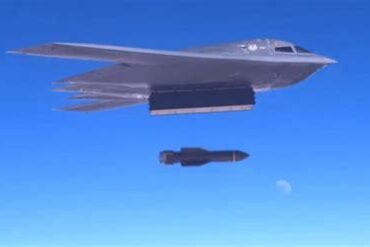
The Air Force lists its official payload capacity at 30,000 pounds of weapons, including precision-guided bombs, nuclear weapons, and advanced stand-off missiles.
The aircraft’s estimated range exceeds 6,500 nautical miles, allowing it to strike targets across vast distances without refueling.
Another important change involves the engine configuration. The B-2 uses four engines, while the B-21 is powered by two advanced turbofan engines believed to be derived from the F-35’s F135 engine family.
Reducing the engine count cuts maintenance requirements and simplifies logistics while improving fuel efficiency.
A Bomber That Functions As A Battlefield Network Node
Perhaps the most revolutionary aspect of the B-21 Raider is not its stealth or range but its role within the broader military ecosystem.
Traditional bombers operate largely as standalone strike platforms. They carry weapons to a target and deliver them.
The B-21 is being designed as a networked combat node, capable of coordinating operations across multiple domains including air, land, sea, space, and cyberspace.
The aircraft is expected to incorporate advanced data fusion technology, allowing it to collect information from sensors, satellites, drones, and other aircraft while sharing that data with allied forces.
In this role, the B-21 may act as a command platform for uncrewed systems, guiding drones on reconnaissance or strike missions deep inside hostile territory.
Electronic warfare systems will likely allow the bomber to disrupt enemy communications and radar networks while carrying out its strike mission.
The result is an aircraft that functions as both a stealth bomber and an airborne command center, dramatically expanding its strategic value.
The Future Of Long-Range Strike Warfare
The introduction of the B-21 Raider signals a profound shift in the future of aerial warfare. As global military competition intensifies, the ability to project power across vast distances while surviving advanced air defenses becomes increasingly important.
For the United States Air Force, the B-21 is not merely a new aircraft. It represents a platform designed for decades of technological evolution, capable of integrating emerging weapons, artificial intelligence tools, and unmanned systems.
With at least 100 aircraft planned and production ramping up, the B-21 Raider will eventually become the backbone of America’s strategic bomber fleet.
Combined with upgraded B-52 Stratofortress aircraft and advanced standoff weapons, it ensures the United States retains the ability to strike virtually any target on the planet.
The excitement surrounding the B-21 Raider is therefore understandable. It promises not just incremental improvement but a generational leap in stealth bombing capability, one that could shape global military strategy for the next half century.
FAQ: B-21 Raider Stealth Bomber
What makes the B-21 Raider different from the B-2 Spirit?
The B-21 Raider incorporates modern stealth technologies, digital engineering, and modular system architecture that allow rapid upgrades. While the B-2 was designed in the 1980s, the B-21 is optimized for modern sensor networks and future warfare environments.
When will the B-21 Raider enter service?
The U.S. Air Force currently plans to introduce the B-21 Raider into operational service in 2027, with the first units based at Ellsworth Air Force Base.
How many B-21 bombers will the United States build?
Current plans call for at least 100 aircraft, although many defense analysts and Air Force leaders advocate expanding the fleet to around 145 bombers to meet future strategic demands.