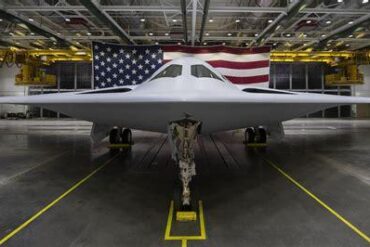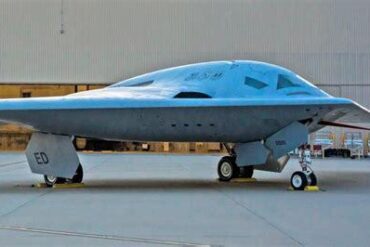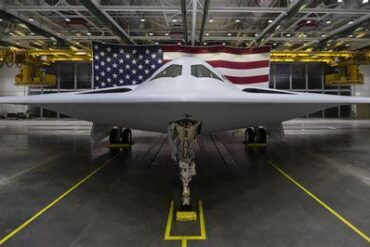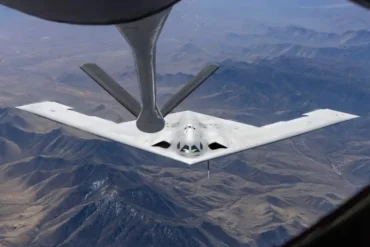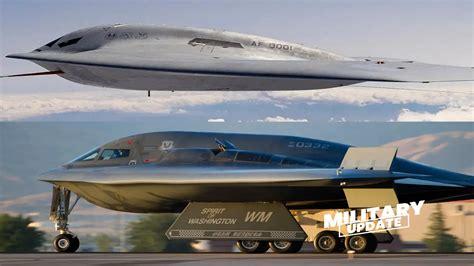
The evolution of American strategic bombers has been marked by bold leaps in technology, tactical thinking, and mission scope. With the introduction of the Northrop Grumman B-21 Raider, the United States Air Force is poised to redefine the landscape of long-range strike capabilities. Unlike its predecessors, the B-21 is conceived not merely as a bomber but as a multirole, networked asset capable of executing missions across highly contested environments. Its emergence invites a careful comparison against stalwarts of the Air Force fleet: the B-2 Spirit, B-52 Stratofortress, and B-1B Lancer.
The B-52, often referred to as the ultimate “bomb truck,” embodies a design philosophy rooted in the era of World War II strategic air power. Originally designed to endure flak and early jet fighters, it was built for attrition-heavy missions where sheer numbers would compensate for expected losses. Its large wingspan and heavy airframe allow it to carry a staggering 70,000 pounds of ordnance, including bombs and stand-off missiles, over intercontinental distances. However, this venerable aircraft’s massive radar signature prevents it from entering heavily defended airspace without substantial electronic warfare support. The B-52 excels in strategic missile deployment, high-volume bombing from standoff ranges, and as a flexible platform for emerging technologies, but it lacks the stealth to directly challenge peer adversary air defenses.
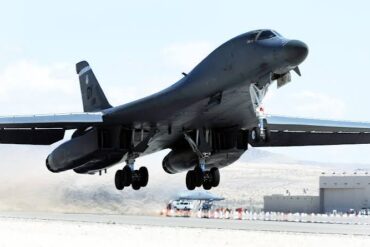
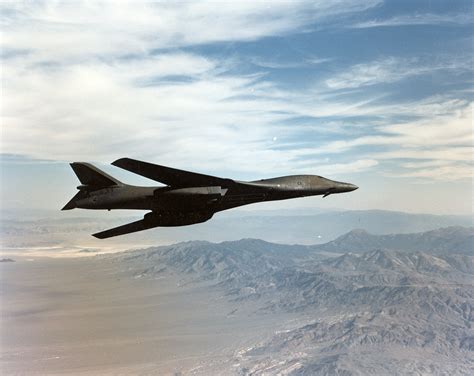
By contrast, the B-1B Lancer represents a transitional philosophy between supersonic penetration bombers and stealth-centric design. It was engineered to operate at low altitudes, hugging the terrain to evade radar detection while traveling at low supersonic speeds around Mach 1.25. Its variable-sweep wings enable dynamic flight profiles, optimizing fuel efficiency and maneuverability during long-range missions. With a maximum payload of 75,000 pounds, the B-1B exceeds the B-52 in ordnance capacity, making it an excellent platform for mass conventional strikes. Yet, decades of low-altitude operations have fatigued its airframe, and advancements in look-down radar and short-range air defense systems have significantly reduced its survivability in contested environments. While it remains operationally valuable against lesser-equipped adversaries, the B-1B is approaching obsolescence when faced with the integrated air defense networks of modern peer competitors.
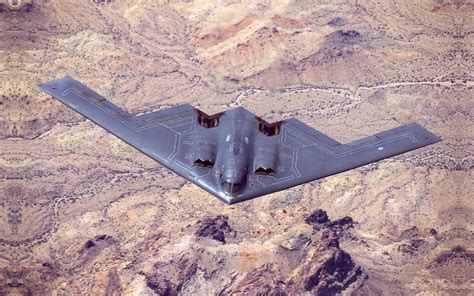
The B-2 Spirit, in many ways, was the vanguard of the stealth bomber era. Its flying-wing design, minimized radar cross-section, and advanced materials enabled penetration of sophisticated air defense networks in ways that the B-52 and B-1B could not match. With a maximum unclassified payload of 40,000 pounds—and the potential to carry two 30,000-pound bunker-busting ordnance for specialized missions—the B-2 exemplifies precision strike capability over sheer volume. However, the program’s limited production run of only 21 aircraft has constrained its operational impact. Maintenance costs and the complexity of upgrades further emphasize the challenges of sustaining such an elite fleet, highlighting the need for a more scalable, cost-effective solution.
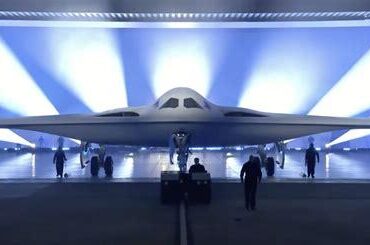
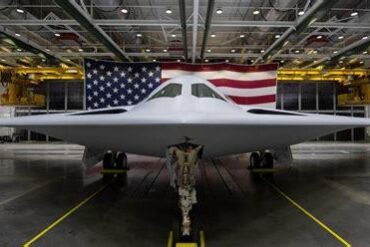
Enter the B-21 Raider, a deliberate generational leap over the B-2. Designed from inception to combine stealth, affordability, and modular upgrades, the B-21 addresses the critical shortcomings of its predecessors. Its internal payload bay is listed at 30,000 pounds, which, while lower than the B-2, is more than sufficient in an era where precision-guided munitions dominate operational doctrine. Unlike the B-2, the B-21 is envisioned as a scalable asset, potentially fielded in numbers exceeding 150 aircraft, allowing the USAF to maintain robust operational coverage while mitigating attrition risk. Beyond its stealth characteristics, the Raider integrates a sophisticated sensor suite and networked systems that allow it to act as both a strike platform and an airborne command node, effectively coordinating broader mission sets across the fleet.
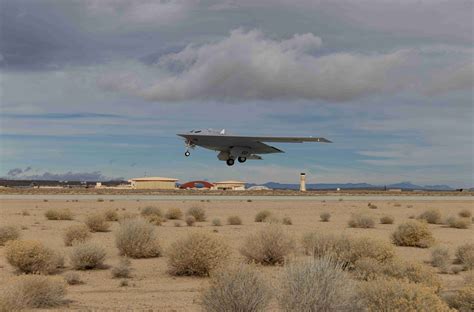
The strategic reasoning for retiring the B-1B while preserving and expanding the B-52 fleet lies in the specific operational envelopes these aircraft occupy. The B-21 will supplant the B-2 directly in penetrating heavily defended airspace and handling precision strikes on high-value targets. The B-1B, while capable of carrying substantial payloads, cannot survive in peer-level contested zones without substantial escort and suppression support, particularly as air defense systems continue to proliferate and improve. Maintenance demands for the Lancer are increasing due to airframe fatigue from decades of low-altitude operation, and budgetary forecasts from 2025 onwards had already indicated planned retirements phased between 2028 and 2032. While B-1Bs remain effective in limited conflicts, their design no longer aligns with future operational concepts focused on stealth, electronic warfare integration, and survivability in anti-access/area denial (A2/AD) environments.
Comparing payloads across these platforms elucidates another critical dimension of their differences. The B-52’s 70,000-pound maximum payload still exceeds all other bombers, emphasizing its role as a high-volume, long-range delivery platform. The B-1B’s 75,000-pound capacity makes it ideal for large-scale conventional bombardment. The B-2 Spirit’s design prioritizes stealth over volume, with a payload ceiling of 40,000 pounds, but capable of carrying specialized ordnance such as the GBU-57 Massive Ordnance Penetrator. The B-21, with a disclosed payload of 30,000 pounds, sits slightly below the B-2 in weight but compensates with operational flexibility, advanced targeting systems, and reduced lifecycle costs. It’s notable that even the F-15EX, a tactical fighter, approaches the B-21’s payload with 29,500 pounds, highlighting how the modern bomber role emphasizes precision and survivability over raw mass.
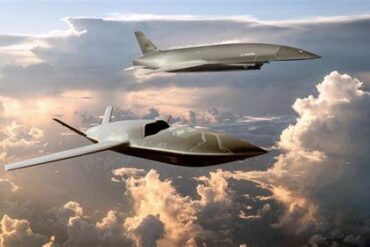
The evolution from the B-2 to the B-21 reflects a broader shift in strategic bombing philosophy. The B-2, though revolutionary, was a niche platform: expensive to produce, limited in numbers, and with constrained upgrade potential. The B-21 embraces modularity, maintainability, and cost control as core principles. Its low radar cross-section from all angles, minimized infrared signature, and electronic emissions control enable operations deep within contested airspace. Beyond stealth, the B-21 integrates electronic decoys, jamming capabilities, and advanced sensor fusion, positioning it as a central node in modern air campaigns rather than merely a delivery vehicle. This represents a critical distinction: where the B-2 was a lone stealth asset, the B-21 is designed for networked synergy with other manned and unmanned platforms, expanding both situational awareness and combat lethality.
The B-21’s subsonic design may seem a step back compared to the supersonic B-1B, yet it is a conscious decision reflecting operational realities. The supersonic bomber experiment, spanning the B-58 Hustler through the XB-70 Valkyrie and culminating in the B-1B, demonstrated that speed alone could not overcome modern radar and missile systems. Subsonic stealth combined with high endurance, precision munitions, and electronic warfare is far more effective against contemporary integrated air defenses. By retiring the B-1B and focusing on stealth subsonic bombers like the B-21, the Air Force aligns with survivability and strategic relevance rather than chasing speed records at prohibitive cost and risk.
Operational doctrine also favors differentiation between bomber roles. The B-52 continues as the high-payload, long-range strike platform, capable of deploying both conventional and nuclear ordnance, including stand-off weapons and future hypersonic missiles. Its lack of stealth is compensated by the ability to engage from outside contested airspace and maintain persistent coverage over multiple theaters. The B-21 and B-2, conversely, focus on high-value target engagement within contested environments, where survivability and precision are paramount. The B-1B has become an intermediary in practice, often relegated to missions where adversary defenses are degraded or where stand-off weapons mitigate direct exposure. With the Raider’s introduction, the Air Force can streamline bomber roles: B-52s as the strategic missile carriers, B-21s as the stealthy penetrators, and B-2s gradually phased or upgraded until sufficient B-21 numbers exist.
The B-21’s introduction also marks a shift toward integrated warfare. Unlike older bombers, which primarily carried weapons, the Raider is a data hub capable of linking with off-board sensors, satellites, and even unmanned systems. This networked capability allows real-time mission adaptation, including dynamic targeting, electronic suppression, and coordinated strike packages. In effect, each B-21 is more than a bomber—it functions as a command node, enhancing the lethality of both stealth and non-stealth platforms within its operational sphere. This network-centric approach transforms traditional bombing missions into multi-domain operations, where information dominance complements ordnance delivery.
Cost considerations play a pivotal role in the B-21’s design philosophy. The B-2 program, while technologically groundbreaking, became a cautionary tale of escalating development and maintenance costs, limiting fleet size and operational reach. The B-21 addresses these constraints by emphasizing affordability without sacrificing core capabilities. Lower acquisition and operational costs, combined with modular upgrades, ensure that the Raider can be produced and maintained in sufficient numbers to sustain operational resilience against peer competitors. This approach mitigates the risk of single-platform dependency, a vulnerability the B-2 fleet exposed due to its limited numbers.
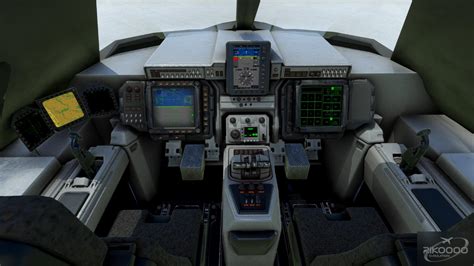
In evaluating the B-21 against its predecessors, one must also consider survivability in contested airspace. The B-52, with its large radar signature, is highly vulnerable to modern integrated air defenses, relying heavily on standoff munitions or electronic warfare escorts. The B-1B’s low-altitude supersonic approach once mitigated detection, but advancements in radar and missile technology have reduced its effectiveness. The B-2’s stealth enabled deep penetration, but limited numbers constrained mission availability. The B-21 overcomes these limitations by combining all-aspect stealth, electronic countermeasures, and networked operational control, offering both survivability and scalability. Its design philosophy anticipates the densification of air defenses by adversaries like China, ensuring that the Air Force retains credible strike capability well into the mid-21st century.
Mission versatility further distinguishes the Raider. While the B-2 is specialized, and the B-52 excels at volume, the B-21 integrates precision strike, networked coordination, and multi-domain awareness into one platform. Its internal bays allow carriage of a wide array of ordnance, from conventional bombs to emerging hypersonic munitions, all while maintaining stealth. This versatility extends beyond strike to reconnaissance and command roles, making the B-21 a force multiplier across the battlefield. The capacity to adapt missions on-the-fly, coordinate with manned and unmanned assets, and deliver precision effects in contested environments positions the Raider as the keystone of future strategic operations.
Finally, the B-21 underscores the Air Force’s strategic shift toward survivable, networked, and affordable platforms. The B-1B’s retirement is as much about airframe fatigue and operational obsolescence as it is about aligning resources with modern mission needs. The B-2, though extraordinary, remains constrained by cost and numbers. The B-52 endures as a high-payload asset, complementing stealth operations with long-range stand-off firepower. The B-21 bridges the gap, offering survivable, flexible, and scalable capabilities that redefine the role of strategic bombers in the 21st century. As the Raider enters service, it promises to enhance mission effectiveness, reduce vulnerability, and ensure that the United States retains strategic options in an era of increasingly sophisticated air defense systems.
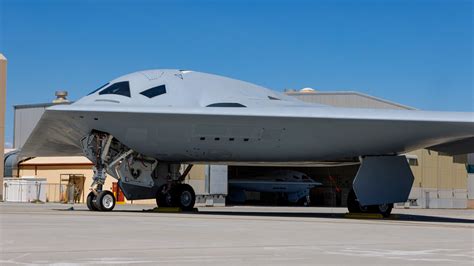
In conclusion, the B-21 Raider is not just a next-generation bomber—it is a paradigm shift in strategic aerial warfare. Its stealth, networked operational capabilities, modular design, and affordability allow it to perform missions once spread across multiple platforms, consolidating effectiveness while reducing risk. The B-1B, once the frontline of low-altitude, high-speed penetration, faces retirement due to airframe wear, obsolescence, and changing mission requirements. The B-2 Spirit, while stealthy, remains limited in number and cost-prohibitive for large-scale operations. The B-52 continues to excel as a high-payload, long-range strike platform capable of supporting modern operations with standoff weapons. Collectively, the integration of the B-21 into the fleet reshapes the U.S. Air Force’s strategic bomber force, ensuring that America retains a decisive edge in both precision strike and survivability against emerging peer threats. Its combination of stealth, versatility, and network-centric warfare capability firmly establishes the B-21 as the centerpiece of 21st-century aerial dominance, ushering in a new era where strategic bombing is defined not by mass, but by precision, adaptability, and resilience.