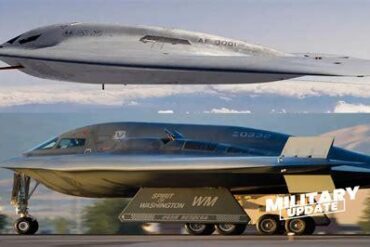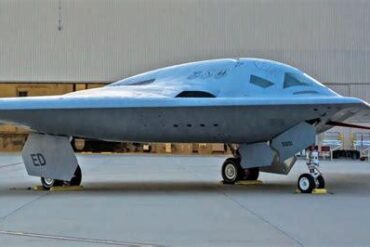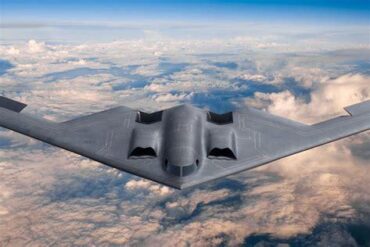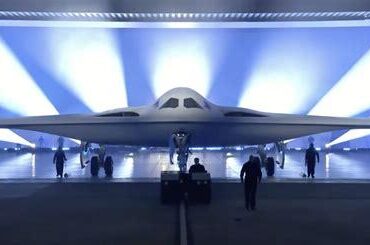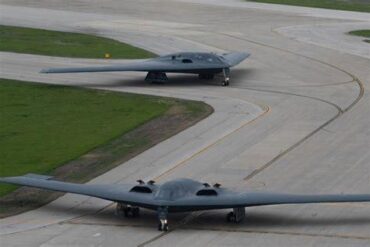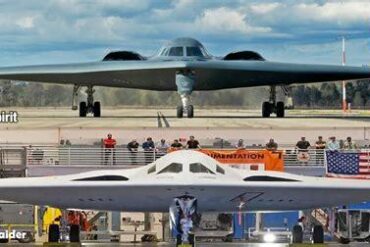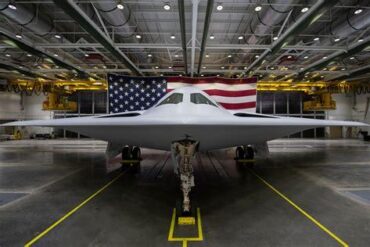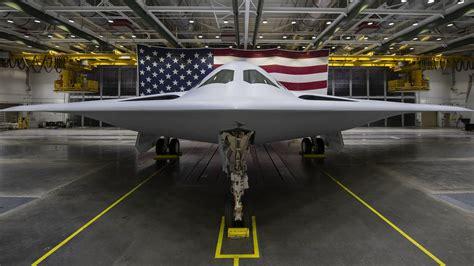
The transition from the Northrop Grumman B-2 Spirit to the B-21 Raider is not merely a routine modernization—it represents a profound shift in how the United States approaches strategic bombing, stealth warfare, and global power projection. While the B-2 once stood as an untouchable symbol of technological supremacy, the realities of evolving threats, aging airframes, and changing warfare doctrines have made its replacement not only logical, but unavoidable.
What makes this transition particularly compelling is that the B-2 is not being replaced because it failed. On the contrary, it succeeded so completely that it redefined aerial warfare. But success in military aviation is temporary by design. In a domain where adversaries constantly adapt, even the most advanced platforms eventually become vulnerable.
The B-21 Raider is the answer to that inevitability—a bomber designed not just to match the B-2’s legacy, but to surpass it in survivability, scalability, and digital warfare integration.
The Evolution of Strategic Bombers: From Speed to Stealth Dominance
To understand why the B-21 is replacing the B-2, it’s necessary to trace the evolution of bomber philosophy. Early Cold War bombers like the B-52 Stratofortress relied on brute force—large payloads, high numbers, and the assumption that some aircraft would inevitably get through enemy defenses.
This philosophy shifted dramatically with the introduction of supersonic bombers like the B-58 Hustler and the experimental XB-70 Valkyrie, which aimed to outrun threats entirely. Speed and altitude were the defenses of choice—until surface-to-air missile systems rendered those advantages obsolete almost overnight.
The next adaptation was low-level penetration, embodied by the B-1 Lancer, which attempted to evade radar by flying beneath it. But radar technology evolved again, closing that gap.
The ultimate solution emerged in the form of stealth technology, culminating in the B-2 Spirit. Instead of outrunning or outmaneuvering defenses, the B-2 embraced a radically different idea: avoid detection entirely.
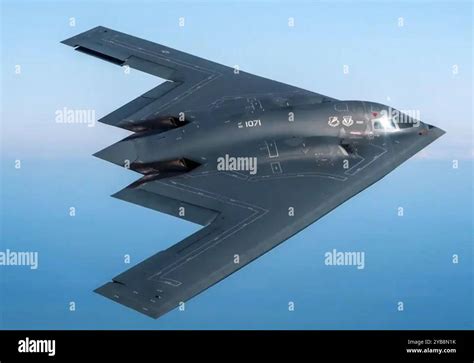
This marked the beginning of a new era—one where invisibility, not speed, defined survivability.
The B-2 Spirit: A Revolutionary Yet Finite Advantage
When the B-2 entered service, it was nothing short of revolutionary. Its flying wing design, advanced materials, and meticulous shaping reduced its radar cross-section to unprecedented levels. It could penetrate heavily defended airspace and deliver precision strikes with minimal warning.
Unlike previous bombers, the B-2 was engineered to minimize multiple signatures simultaneously:
- Radar signature through shape and materials
- Infrared emissions via engine placement and cooling
- Acoustic and visual detectability through design refinement
Its operational doctrine was equally groundbreaking. The B-2 was not designed to overwhelm defenses—it was designed to slip through them undetected, strike critical targets, and exit without engagement.
This capability made it the tip of the spear in numerous conflicts since 1999, often leading the first wave of strikes against high-value targets.
However, even the most advanced systems are bound by the technological context of their era. The B-2, despite upgrades, remains fundamentally a product of 1980s engineering.
Why the B-2 Spirit Is No Longer Enough
The challenge facing the B-2 today is not sudden obsolescence, but gradual erosion. Modern adversaries have invested heavily in multi-layered air defense systems, including:
- Advanced low-frequency radars capable of detecting stealth shapes
- Infrared search and track systems (IRST)
- Networked sensor grids that fuse data across platforms
Individually, these systems may not neutralize stealth. But collectively, they reduce its effectiveness. The B-2’s design prioritized radar invisibility above all else, while newer threats operate across multiple detection spectrums.
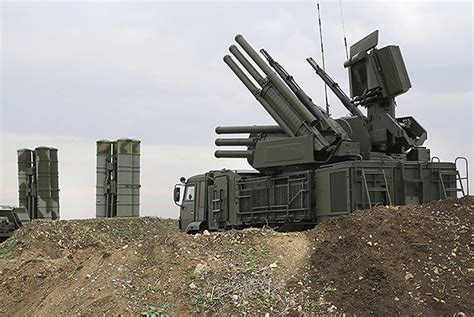
This is where the gap becomes clear. The B-2 is stealthy—but the battlefield has evolved into a multi-spectral detection environment, where being invisible to radar alone is no longer sufficient.
Additionally, the B-2 suffers from structural and logistical constraints:
- Only 19 aircraft remain operational
- Maintenance is extremely complex and expensive
- Spare parts and production infrastructure are long gone
Operating such a small, specialized fleet creates a strategic bottleneck. Every mission carries disproportionate risk, and scaling operations becomes difficult.
The Hidden Crisis: Aging Fleets and Strategic Gaps
Compounding the issue is the condition of the B-1B Lancer fleet. Originally designed for high-speed, low-altitude penetration, the B-1B has endured decades of structural stress. Of the 100 aircraft built, fewer than half remain in active service—and even those are increasingly difficult to maintain.
This creates a dangerous imbalance:
- The B-52 remains effective as a stand-off missile platform, but cannot penetrate advanced defenses
- The B-1B is nearing retirement due to airframe fatigue
- The B-2 is too limited in number and increasingly challenged by modern defenses
The U.S. Air Force doesn’t just need a replacement for the B-2—it needs a platform that can simultaneously replace the B-1B and expand stealth strike capacity.
Enter the B-21 Raider: A Stealth Bomber for the Digital Age
The B-21 Raider is not simply a successor—it is a complete reimagining of the stealth bomber concept. While it retains the flying wing configuration, nearly every aspect of its design reflects three decades of technological advancement.
At its core, the B-21 is built around multi-spectral stealth, meaning it reduces detectability across all major sensing domains:
- Radar
- Infrared
- Electronic emissions
- Visual and acoustic signatures
This holistic approach ensures survivability in environments where multiple detection systems operate simultaneously.
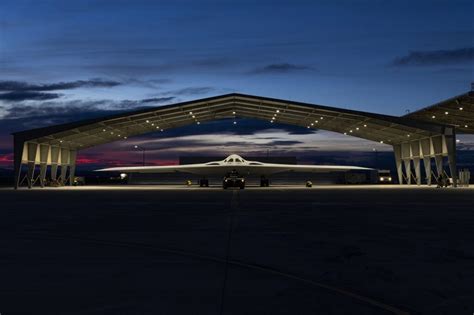
Equally important is its digital architecture. Unlike the B-2, which was designed as a largely standalone platform, the B-21 functions as part of a networked combat ecosystem. It can:
- Share and receive real-time battlefield data
- Coordinate with unmanned systems
- Act as a command-and-control node within a broader kill chain
In essence, the B-21 is not just a bomber—it is a flying data hub.
Open Architecture and Future-Proof Design
One of the most significant advantages of the B-21 lies in its open systems architecture. This allows for rapid integration of new technologies without requiring extensive redesigns.
Where the B-2 demands costly and time-consuming upgrades, the B-21 is designed to evolve continuously. New sensors, weapons, and software can be integrated with minimal disruption.
This adaptability is critical in an era where technological cycles are accelerating. The B-21 is built not just for today’s threats, but for unknown future challenges.
Cost, Scale, and the Power of Production
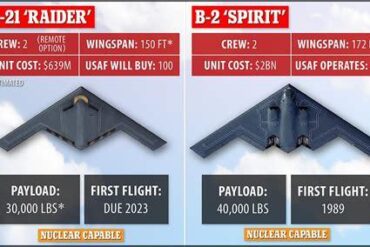
Another decisive factor driving the transition is cost. The B-2’s limited production run resulted in an astronomical unit cost—approximately $2 billion per aircraft. Maintenance costs further compound the issue.
In contrast, the B-21 is engineered for scalable production. The U.S. Air Force aims to procure at least 100 aircraft, with potential for even higher numbers. Estimated unit costs hover around $550 million, a fraction of the B-2’s price.
This shift reflects a broader strategic philosophy: move away from exquisite but scarce platforms toward capable and numerous systems.
Recent investments have already accelerated production capacity, enabling faster delivery timelines while maintaining cost discipline. This ensures that the Air Force can field a meaningful fleet size, rather than relying on a handful of irreplaceable aircraft.
Operational Flexibility and Strategic Impact
The B-21’s design emphasizes flexibility. It is expected to perform a wide range of missions, including:
- Nuclear deterrence
- Conventional precision strikes
- Electronic warfare support
- Intelligence, surveillance, and reconnaissance (ISR)
This multi-role capability enhances its value in modern conflict scenarios, where adaptability often determines success.
Unlike the B-2, which excels in specific mission profiles, the B-21 is designed to operate across the full spectrum of warfare. It can function independently or as part of a coordinated, multi-domain operation.
Why Replacing the B-2 Is Inevitable
The decision to replace the B-2 is not a critique of its performance—it is a recognition of strategic reality. Several factors make the transition unavoidable:
- Technological evolution has reduced the effectiveness of legacy stealth designs
- Fleet size limitations restrict operational flexibility
- Aging infrastructure increases maintenance burdens
- Emerging threats demand multi-domain survivability
Rebuilding the B-2 would require recreating an obsolete production ecosystem while redesigning the aircraft to meet modern standards—an effort more costly and less effective than developing a new platform.
The B-21 represents a cleaner, more forward-looking solution.
A New Era of Stealth Warfare
As the B-21 Raider moves toward operational deployment, it signals the beginning of a new chapter in aerial warfare. The principles that defined the B-2—stealth, precision, and global reach—remain intact, but they have been expanded into a more integrated, adaptable, and scalable framework.
The battlefield of the future will be defined by data dominance, networked systems, and multi-spectral detection. In that environment, survival depends not just on being hard to see, but on being hard to track, target, and counter across every domain.
The B-21 is designed with that reality in mind.
And if the B-2 was the aircraft that proved stealth could work, the B-21 is the one that ensures stealth continues to matter.