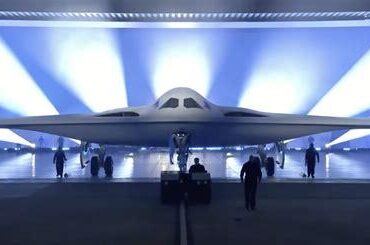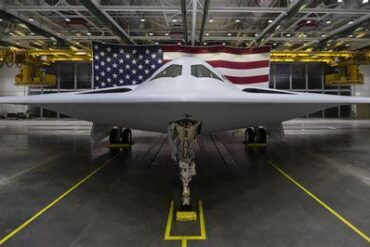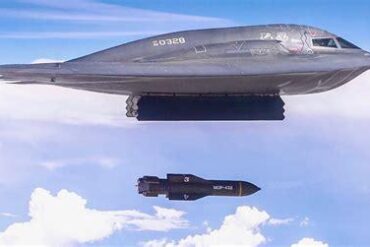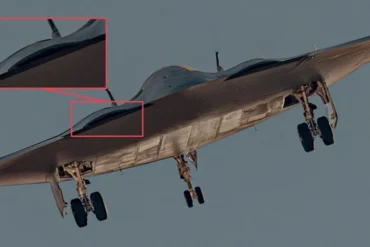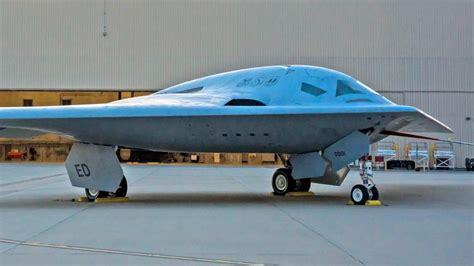
The B-2 Spirit, introduced in the late 1980s, revolutionized airpower with its flying wing design and pioneering stealth capabilities. For decades, it stood as the crown jewel of America’s strategic bombing force. But time has moved on—and so has technology. Now enters the B-21 Raider, a platform designed not just to succeed the B-2, but to leapfrog an entire generation of warfare aviation.
From composite materials to artificial intelligence-assisted design, from all-aspect stealth to digital twin integration, the B-21 Raider is far more than an upgrade—it is a complete reinvention of how stealth bombers are conceived, built, and deployed.
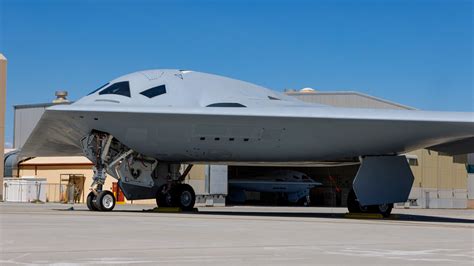
A Generation Apart: Design Philosophy from Cold War to Digital War
When the B-2 Spirit took its maiden flight in 1989, it was a marvel. Built during the final days of the Cold War, it was optimized for penetrating Soviet airspace undetected, primarily from the front angle. Its defining feature—stealth—relied heavily on angular shaping, iron ball RAM coating, and careful radar cross-section (RCS) management. While still formidable, the B-2’s foundational technology reflects an era when analog systems and Cold War doctrines prevailed.
The B-21 Raider, on the other hand, embodies the warfare needs of the 21st century. Designed for deep strike operations in highly contested environments, it had to evolve stealth to counter integrated air defense systems (IADS) fielded by China and Russia. Unlike its predecessor, the B-21 isn’t merely stealthy from select angles—it is stealthy from every direction, including overhead and rear quadrant perspectives.
Stealth at a Whole New Level: Beyond Radar Cross Sections
The B-2 was reputed to have an RCS similar to that of a small bird. But the B-21’s RCS is expected to be even lower—potentially a fraction of that, although exact figures are tightly classified. This next-gen stealth is accomplished through:
- Refined geometries that blend curves and angles seamlessly for reduced radar backscatter.
- Advanced electromagnetic optimization, using high-fidelity computational electromagnetic (CEM) models and AI-driven design tools.
- 360-degree low observability, compared to the B-2’s largely frontal stealth bias.
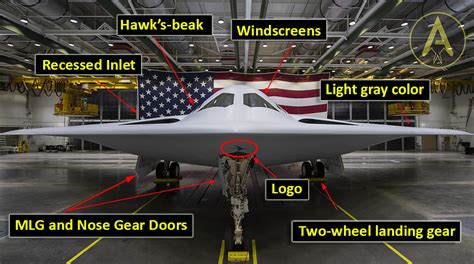
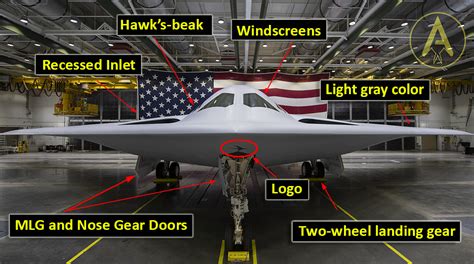
The B-21 also leverages tighter edge alignment, flush seams, and recessed fasteners, eliminating radar traps that plagued older aircraft. The stealth is embedded, not layered, making it far more robust and less maintenance-intensive—a huge leap forward in both capability and operational cost.
Materials That Redefine Invisibility
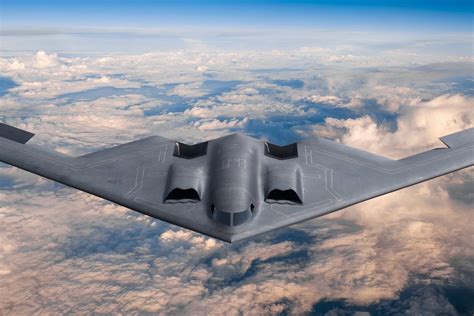
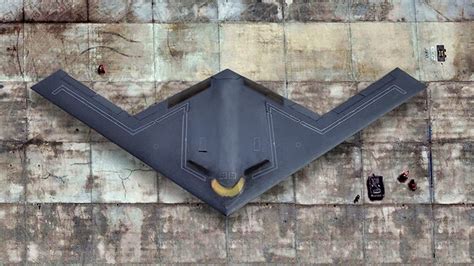
One of the most visually striking differences is the surface coating. The B-2’s iconic black sheen comes from its iron ball radar-absorbing paint. It’s effective, but also fragile and high-maintenance, often requiring hours of restoration after each mission.
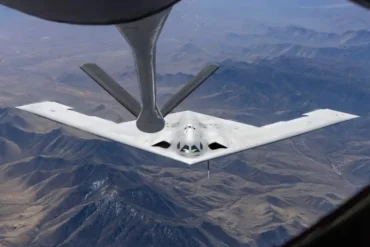
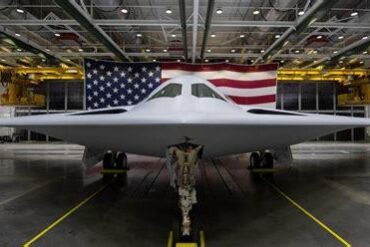
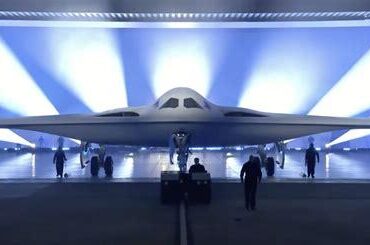
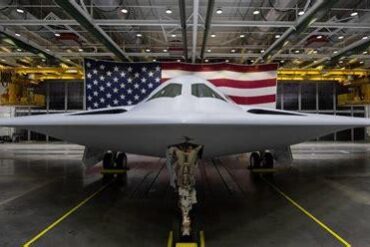
In contrast, the B-21 Raider’s surface is brighter, reflecting a move toward new composite materials with multifunctional embedded RAM. These aren’t just coatings—they’re engineered into the skin of the aircraft. This makes them:
- More resistant to wear and tear
- Capable of absorbing radar across broader frequency spectrums
- Likely to include thermal management properties for IR suppression
Engine Integration: The Invisible Powerhouse
Stealth is about more than radar. Heat signatures from engines are another vulnerability. The B-2’s engines, while embedded in the wing, still produce a rearward infrared signature that modern sensors can detect.
The B-21 Raider solves this through next-level engine masking:
- Deeply buried intakes with superior S-duct shaping to conceal compressor blades.
- IR-suppressing nozzles, likely featuring active cooling to eliminate heat trails.
- Exhausts are completely shrouded, reducing detectability by IR search-and-track (IRST) systems.
This results in an aircraft with not just radar stealth, but IR stealth, making it far harder to target with modern missile systems.
Software-Defined, AI-Enhanced: The Digital Backbone of the B-21
The B-2’s avionics, while state-of-the-art in the ‘90s, are heavily analog. Modernizing these systems has proven difficult and costly due to legacy wiring, software limitations, and rigid architecture.
The B-21 Raider, by contrast, is digital-first. Designed from the ground up with a modular open systems architecture (MOSA), it allows for:
- Rapid software upgrades without hardware overhauls
- Cybersecurity hardening built into every subsystem
- AI-assisted mission planning, navigation, and even threat detection
It is even believed the B-21 integrates with digital twin technology, allowing engineers to simulate wear, maintenance needs, and performance under real-world conditions—remotely and in real time.
Maintenance Revolution: Sustainment as a Core Capability
One of the biggest criticisms of the B-2 has been its nightmarish sustainment burden. It reportedly requires 119 hours of maintenance for every one hour of flight. Stealth restoration, in particular, has been a monumental headache.
With the B-21, the U.S. Air Force demanded maintainability from day one. The aircraft was designed with:
- Modular stealth coatings that are easier to replace
- Line-replaceable units (LRUs) for major components
- Built-in diagnostics to detect faults before they cause mission failures
This dramatically increases mission availability, reduces cost, and ensures that the Raider is a combat-ready platform, not a hangar queen.
Strategic Superiority: What the B-21 Means for Global Deterrence
The B-2 Spirit gave America the ability to strike deep inside enemy territory with little to no warning. That capability reshaped geopolitics. But in today’s contested environments—where A2/AD (anti-access/area-denial) strategies dominate—the B-2 risks exposure.
Enter the B-21 Raider: a bomber capable of slipping through dense air defense webs in the Indo-Pacific or Eastern Europe, delivering strategic payloads against hardened targets, and vanishing before the enemy even realizes it’s been hit.
This makes it a centerpiece of America’s nuclear triad, while also providing conventional strike capabilities, potentially even in non-permissive environments. Its adaptability allows it to operate from dispersed bases, deploy in swarm formations, and even integrate with unmanned aerial vehicles (UAVs).
Final Thoughts: The Future Is Flying
While the B-2 Spirit will remain operational until the mid-2030s, its time is ending. The B-21 Raider is not simply a successor—it is a transformative leap forward. With its stealth across all spectrums, digital integration, and unmatched survivability, the B-21 positions the United States to maintain air superiority well into the 21st century.
In an era defined by peer threats and rapidly evolving technologies, the B-21 Raider is the embodiment of future warfare—engineered not just for survival, but for dominance.