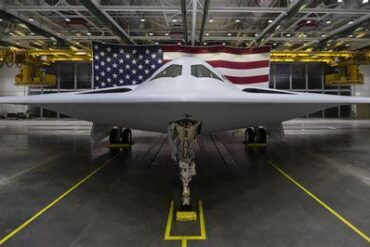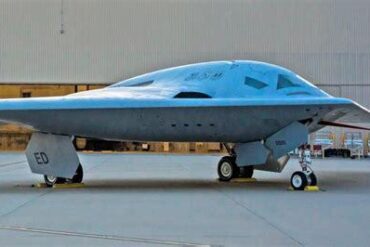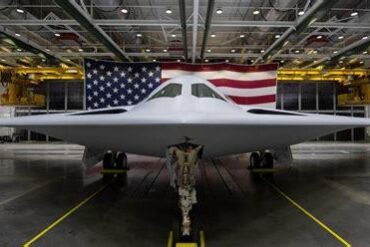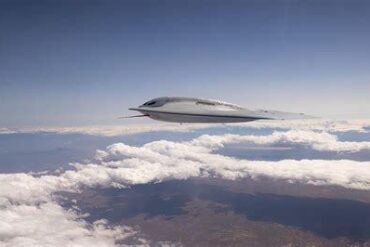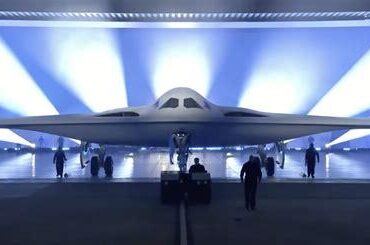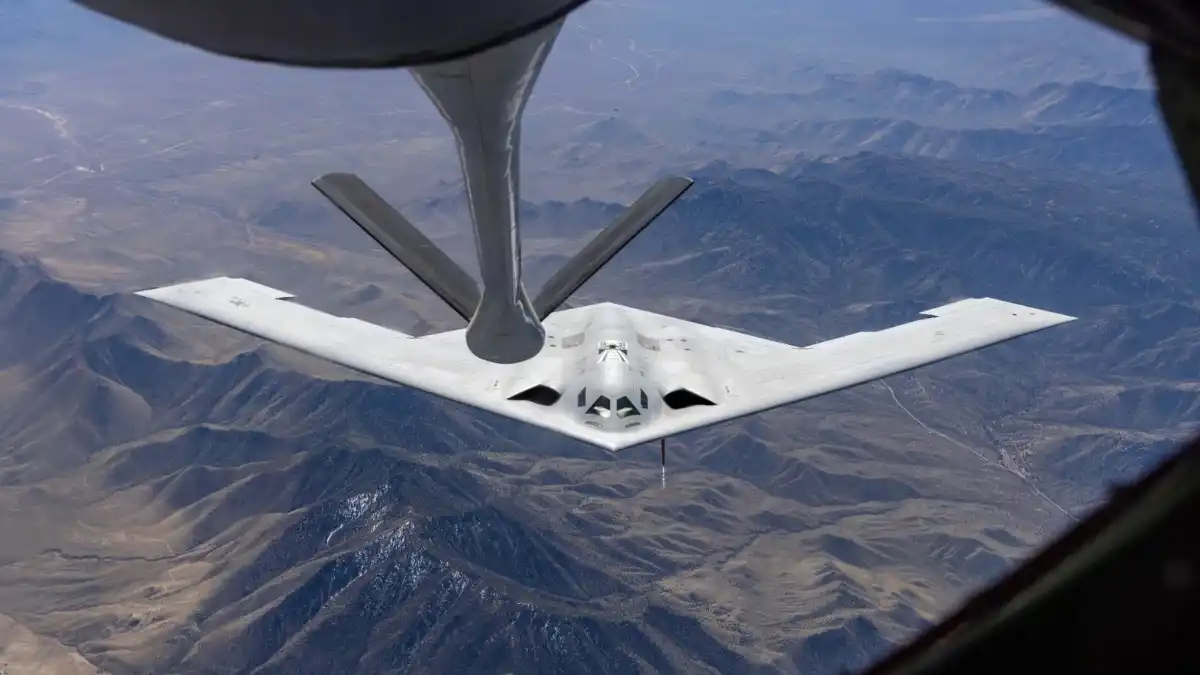
The unveiling of the first overhead image of the B-21 Raider marks a defining moment in modern military aviation, offering a rare glimpse into one of the most secretive and technologically advanced aircraft programs in the world. Developed by Northrop Grumman, the B-21 is not merely a successor to the legendary B-2 Spirit—it is a calculated evolution, shaped by decades of stealth warfare, efficiency optimization, and strategic foresight. From this new top-down perspective, subtle but significant design choices begin to emerge, each one hinting at a future where survivability, range, and adaptability take precedence over brute force.
What makes this overhead shot particularly compelling is not just its rarity, but its clarity. For years, the B-21 existed primarily as a concept cloaked in speculation. Now, with tangible imagery, analysts and aviation enthusiasts alike can begin decoding its aerodynamic philosophy. The aircraft’s smoother contours, refined wing edges, and more compact footprint immediately distinguish it from its predecessor. It feels less like a redesign and more like a precision-engineered refinement—every curve serving a purpose, every angle reducing detection.
The timing of this reveal is no coincidence. As the aircraft progresses through testing phases and edges closer to its expected 2027 operational debut, controlled disclosures like this serve both strategic and symbolic purposes. They demonstrate progress, project capability, and subtly reshape deterrence narratives without exposing critical vulnerabilities.
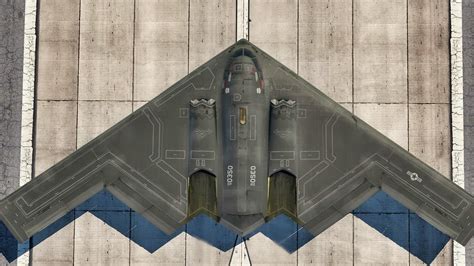
Overhead Perspective Reveals a Smaller, Smarter Stealth Platform
Viewed from above, the B-21 Raider immediately communicates efficiency. Its reduced size compared to the B-2 Spirit is not a compromise—it is a deliberate design philosophy. A smaller airframe translates into a lower radar cross-section, making detection significantly more difficult in contested environments. The clean, uninterrupted lines of the fuselage minimize radar reflections, reinforcing the aircraft’s stealth-first approach.
The engine configuration further underscores this shift. Unlike the four-engine setup of the B-2, the B-21 appears to utilize a twin-engine layout. This adjustment is more than aesthetic—it represents a major leap in propulsion efficiency. Fewer engines reduce weight, simplify maintenance, and lower fuel consumption, all while maintaining the thrust necessary for long-range missions. In an era where endurance often outweighs payload, this trade-off is both logical and strategic.
Another detail revealed from the overhead angle is the aircraft’s refined intake design. Subtly embedded within the airframe, these intakes are optimized to shield engine components from radar exposure. This not only enhances stealth but also contributes to smoother airflow, improving overall aerodynamic performance. The result is an aircraft that is not only harder to detect but also more efficient in sustained flight.
Fuel Efficiency and Extended Range Redefine Strategic Reach
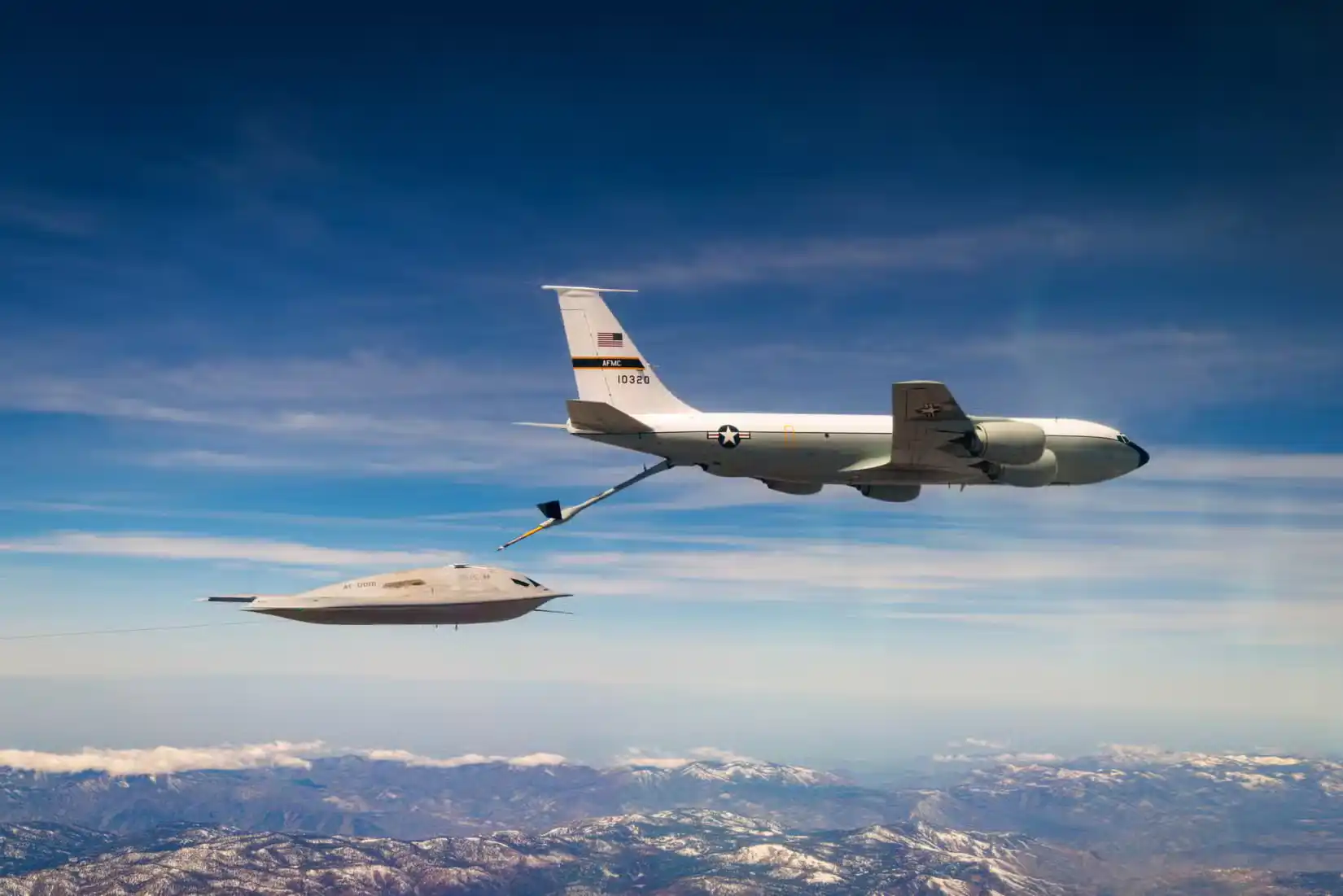
The B-21 Raider’s defining advantage lies in its operational efficiency. Northrop Grumman has positioned it as the most fuel-efficient bomber ever developed, a claim supported by its streamlined design and reduced engine count. This efficiency directly translates into extended range, allowing the aircraft to operate farther from aerial refueling assets and penetrate deeper into contested territories.
The recent successful mid-air refueling test reinforces this capability. It demonstrates not only compatibility with existing tanker infrastructure but also the aircraft’s readiness for long-duration missions. In practical terms, this means fewer logistical constraints and greater mission flexibility—two factors that are critical in modern warfare scenarios where unpredictability is the norm.
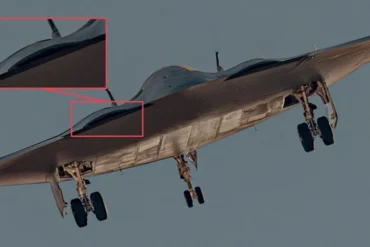
Smaller flight deck windows, another subtle yet impactful design choice, further enhance performance. By reducing structural openings, the aircraft can operate more effectively at higher altitudes, where thinner air reduces drag and improves fuel economy. At the same time, these smaller windows contribute to stealth by minimizing reflective surfaces.
The Trade-Off: Payload Capacity vs. Survivability
Every engineering decision carries a compromise, and the B-21 Raider is no exception. Its emphasis on efficiency and stealth comes at the cost of payload capacity. With an estimated maximum payload of around 30,000 pounds, it falls short of the B-2 Spirit’s 40,000-pound capability. However, this reduction is far from a limitation—it reflects a shift in strategic doctrine.
Modern warfare increasingly prioritizes precision over volume. Advanced munitions, including stand-off weapons and smart bombs, allow smaller payloads to achieve disproportionately large effects. In this context, the B-21’s reduced capacity is offset by its ability to reach targets undetected and deliver highly accurate strikes.
Moreover, a lighter payload contributes to overall performance gains. Reduced weight enhances range, maneuverability, and fuel efficiency, creating a more versatile platform. In high-threat environments, survivability often outweighs firepower, and the B-21 is clearly optimized for the former.
Biomimicry and the Evolution of Stealth Aerodynamics
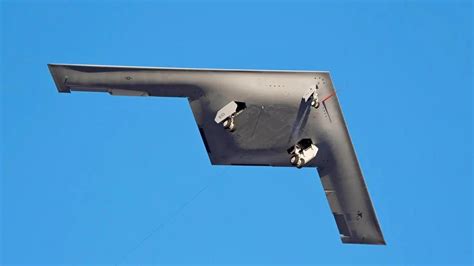
The B-21 Raider continues a long-standing tradition in aviation: drawing inspiration from nature. Its flying-wing design echoes the aerodynamic efficiency of birds, particularly the peregrine falcon. This is not merely aesthetic mimicry—it is a functional adaptation that enhances lift, reduces drag, and improves stability.
The absence of a traditional fuselage and tail structure allows for a seamless airflow across the aircraft’s surface. This not only boosts aerodynamic efficiency but also minimizes radar signatures. In essence, the B-21’s shape is both its shield and its engine, enabling it to glide through contested airspace with minimal resistance and maximum discretion.
This principle of biomimicry extends beyond military aviation. Aircraft like the Airbus Beluga demonstrate how nature-inspired designs can solve complex engineering challenges, balancing aerodynamics with specialized functionality. In the case of the B-21, the result is a platform that embodies both elegance and lethality.
A Strategic Signal Wrapped in Secrecy
Despite the insights offered by the overhead image, much of the B-21 Raider remains shrouded in secrecy. Critical systems, including avionics, electronic warfare capabilities, and next-generation stealth technologies, are closely guarded. This deliberate opacity is itself a strategic asset, preserving uncertainty and complicating adversary planning.
What is clear, however, is the aircraft’s intended role. The B-21 is designed to operate in highly contested environments, where advanced air defense systems and sophisticated detection technologies are the norm. Its combination of stealth, efficiency, and adaptability positions it as a cornerstone of future airpower.
The overhead reveal, therefore, is more than a visual update—it is a statement. It signals that the next generation of strategic bombers will not rely on sheer size or payload, but on intelligence, precision, and invisibility. In that sense, the B-21 Raider is not just an aircraft; it is a reflection of how warfare itself is evolving.
As testing continues and additional details gradually emerge, the B-21 will likely redefine expectations once again. For now, this single overhead image offers a powerful preview—one that hints at an aircraft designed not just to compete, but to dominate in the shadows.