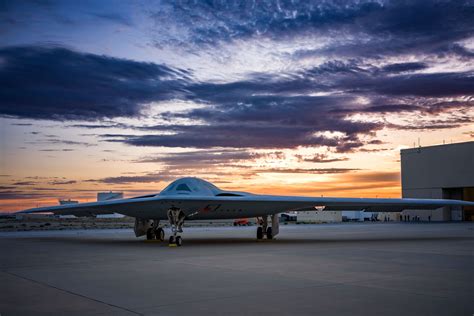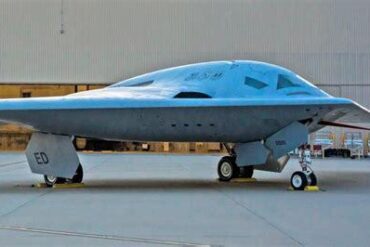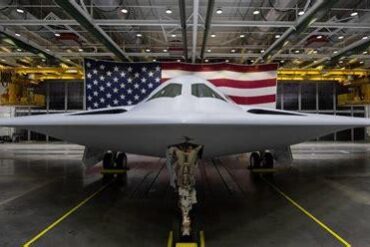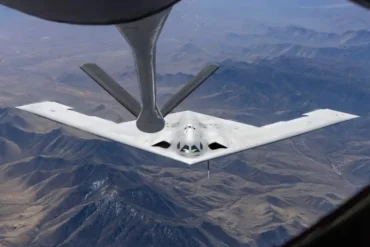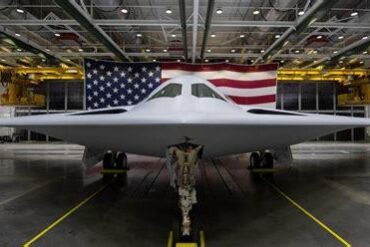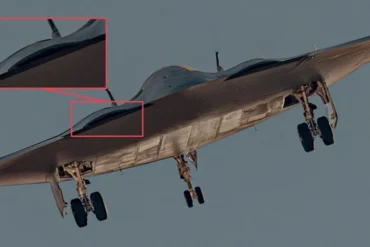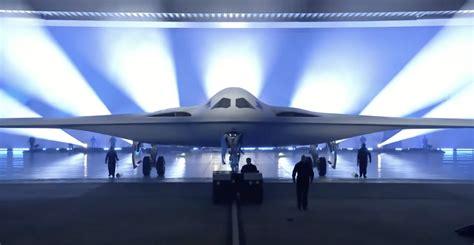
The arrival of the Northrop Grumman B-21 Raider represents far more than the introduction of another stealth bomber. It signals a fundamental shift in how the United States Air Force intends to fight future wars. Unlike the legendary B-2 Spirit, which often required climate-controlled hangars and extensive ground infrastructure, the B-21 has been designed from the outset to operate in harsh, unpredictable conditions. One of the most striking examples of this new philosophy is remarkably simple: the B-21 can remain parked outdoors overnight.
That capability may appear mundane at first glance. Yet in military aviation, especially in the world of stealth aircraft, the ability to leave an aircraft exposed to the elements without degrading its combat effectiveness is revolutionary. For decades, the B-2 Spirit earned a reputation as a technological masterpiece that demanded extraordinary care. Its exquisite stealth characteristics came at a cost—extensive maintenance requirements, fragile radar-absorbing materials, and dependence on specialized facilities.
The B-21 Raider changes that equation entirely. By combining advances in materials science, digital engineering, environmental resilience, and sustainment philosophy, the Air Force has transformed its next-generation bomber into a far more rugged and deployable weapon system.
The difference is so significant that many defense analysts view it as one of the Raider’s most important advantages over its predecessor.
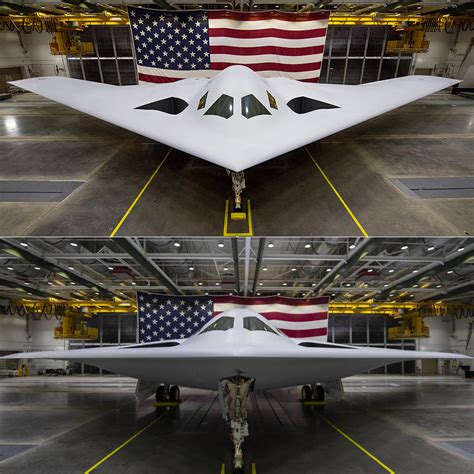
Why the B-2 Spirit Became Known as a ‘Hangar Queen’
The Northrop Grumman B-2 Spirit was revolutionary when it entered service during the Cold War. Its flying-wing design, low-observable technology, and intercontinental strike capability gave the United States an unprecedented strategic advantage.
However, stealth technology during the 1980s and early 1990s remained immature.
Much of the B-2’s radar invisibility depended upon specialized radar-absorbent coatings applied to its outer skin. These materials were highly sensitive to environmental conditions, including moisture, humidity, temperature fluctuations, and prolonged exposure to precipitation.
As a result, maintaining the bomber’s stealth characteristics became an enormously labor-intensive process. Even routine operations frequently required climate-controlled shelters large enough to house the aircraft’s enormous 172-foot wingspan. Ground crews often spent dozens of maintenance hours restoring stealth coatings after operational sorties.
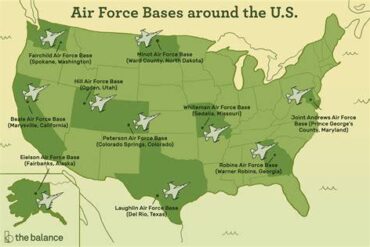
The aircraft’s dependency on specialized infrastructure severely restricted where it could deploy. In practice, the B-2 fleet primarily operated from a handful of carefully prepared facilities, most notably Whiteman Air Force Base in Missouri and temporary deployments to Andersen Air Force Base in Guam.
Because only 21 B-2s were ever produced—and just 19 remain operational today—each bomber became an irreplaceable national asset. The Air Force understandably treated every aircraft with exceptional caution.
The Rainstorm That Exposed the B-2’s Greatest Vulnerability
The B-2’s sensitivity to environmental conditions became painfully clear during an accident that remains one of the most expensive aviation mishaps in history.
On February 23, 2008, the B-2 known as “Spirit of Kansas” attempted to depart Andersen Air Force Base following heavy tropical rainfall that had struck Guam the previous day.
The aircraft lifted off normally before suddenly pitching upward uncontrollably. Moments later, it stalled and crashed onto the runway. Although both pilots successfully ejected and survived, the bomber was completely destroyed in the ensuing fire.
Subsequent investigations determined that moisture contamination within the aircraft’s air-data sensors had generated inaccurate readings. Those faulty inputs fed directly into the B-2’s sophisticated flight-control computers, causing catastrophic errors immediately after takeoff.
The accident destroyed an aircraft worth approximately $1.4 billion, making it one of the costliest crashes in aviation history.
More importantly, the incident highlighted a troubling reality: even environmental exposure posed operational risks to the world’s premier stealth bomber.
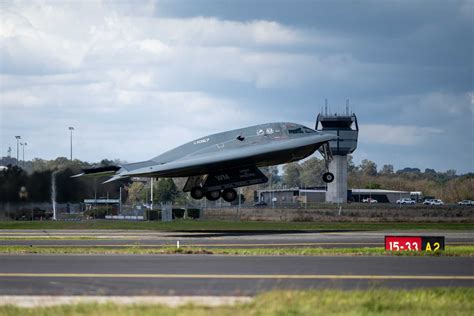
Stealth Materials Have Evolved Dramatically Since the B-2 Entered Service
The B-21 benefits from over three decades of stealth technology evolution.
Engineers designing the Raider had access to decades of operational data collected from B-2 deployments across multiple combat theaters, climatic zones, and maintenance environments. Every challenge encountered by the Spirit fleet provided valuable lessons for the new aircraft.
Modern radar-absorbing materials are fundamentally different from those used on early stealth platforms.
Instead of relying heavily upon delicate surface coatings that require constant repair, contemporary low-observable technologies increasingly integrate stealth properties directly into structural components. In effect, stealth becomes “baked into” the aircraft rather than merely painted onto it.
This approach produces several major advantages.
First, moisture resistance improves dramatically because environmental exposure no longer threatens sensitive external coatings to the same extent.
Second, maintenance requirements decrease substantially because fewer repairs are needed after routine operations.
Third, aircraft availability rises because bombers spend less time inside hangars and more time ready for combat missions.
According to publicly available information, the Raider’s stealth materials were specifically engineered to endure real-world operating conditions, including tropical humidity, rain, dust, and temperature extremes.
That durability allows the B-21 to remain parked outdoors for extended periods without suffering the same degradation concerns that plagued the B-2.
The B-21 Was Designed for Agile Combat Employment
Perhaps the most important reason the B-21 can operate outdoors lies in the changing nature of warfare itself.
The Air Force increasingly embraces a doctrine known as Agile Combat Employment (ACE). Under ACE, combat aircraft disperse across numerous airfields rather than concentrating at a few major bases.
The logic is straightforward.
In a conflict against a peer competitor such as China, large fixed installations could quickly become targets for ballistic missiles, cruise missiles, cyberattacks, or long-range precision strikes. Concentrating an entire bomber fleet at one location creates an attractive target.
Dispersal complicates enemy planning.
Instead of tracking bombers operating from only one or two installations, adversaries must monitor dozens of possible operating locations scattered across an enormous geographic area.
The B-2’s infrastructure requirements made such dispersal extremely difficult.
The B-21 was specifically engineered to solve that problem.
Because it requires significantly less support equipment and fewer specialized facilities, the Raider can deploy to numerous Cold War-era airfields, hardened shelters, allied bases, and austere locations previously unavailable to America’s stealth bomber force.
The ability to park outside overnight is therefore not merely a convenience. It is central to the Air Force’s operational strategy.
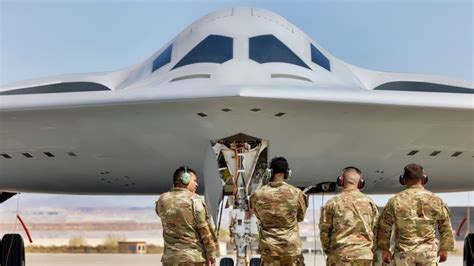
A Smaller Airframe Creates Enormous Operational Flexibility
Size matters in strategic aviation.
The B-2’s enormous 172-foot wingspan limited its basing options considerably. Massive hangars and specialized infrastructure were often necessary simply to accommodate the aircraft physically.
The B-21 is expected to possess a wingspan between approximately 132 and 150 feet, making it substantially smaller.
This reduction immediately expands the number of suitable operating locations.
Smaller dimensions allow the Raider to utilize hardened aircraft shelters originally constructed for fighter aircraft during the Cold War. It also enables operations from a much broader network of allied airfields throughout regions such as the Indo-Pacific.
The practical implications are enormous.
Rather than operating predictably from a small number of highly visible bomber bases, the Air Force can continuously reposition Raider squadrons among dozens—or potentially hundreds—of locations.
Such mobility dramatically increases survivability while simultaneously enhancing strategic ambiguity.
An adversary cannot target bombers effectively if it cannot determine where those bombers are located.
Digital Engineering Eliminated Many of the B-2’s Hidden Risks
The B-2 accident at Guam exposed another major challenge beyond moisture sensitivity: organizational complexity.
Investigators discovered that undocumented maintenance procedures and incomplete understanding of interactions between various onboard systems contributed to the disaster.
The B-21 was developed in a radically different manner.
Northrop Grumman employed advanced digital engineering techniques throughout the Raider program. Virtual models allowed engineers to simulate thousands of operational scenarios before the first aircraft ever flew.
These digital tools enabled designers to identify vulnerabilities, predict maintenance challenges, and refine system interactions early in development.
Equally important, the B-21 incorporates sophisticated health-monitoring capabilities capable of continuously evaluating aircraft systems.
Automated diagnostics reduce reliance upon improvised field procedures while improving maintainability across dispersed operating locations.
By embedding resilience directly into both hardware and software, the Raider minimizes the possibility that obscure maintenance workarounds or environmental anomalies could create unforeseen hazards.
In many respects, the B-21 transforms hard-earned lessons from the B-2 era into foundational design principles.
Operating Outside Reduces Strategic Vulnerability
Stealth bombers are most vulnerable when parked on the ground.
Historically, concentrating the entire B-2 fleet at a limited number of installations created substantial strategic risk. Advanced adversaries could potentially monitor those bases using satellites, airborne surveillance systems, or other intelligence assets.
The B-21 fundamentally alters that equation.
Air Force leaders plan to acquire at least 100 Raiders, with some officials advocating for a fleet of 145 aircraft. A larger force naturally supports greater geographic dispersal.
Combined with reduced infrastructure requirements, the result is a bomber fleet capable of surviving in contested environments.
Aircraft distributed across multiple bases are significantly harder to destroy than aircraft concentrated at a single installation.
Even if an enemy successfully attacks one airfield, dispersed operations ensure that most of the fleet remains intact and combat-capable elsewhere.
The simple ability to leave a bomber parked outdoors therefore contributes directly to strategic deterrence.
Lower Maintenance Demands Mean Higher Combat Readiness
Maintenance has always represented one of the B-2’s greatest challenges.
Stealth coating repairs consumed enormous manpower and frequently reduced aircraft availability. Historical mission-capable rates for the Spirit often hovered between 50 and 60 percent.
The B-21 aims to change that dramatically.
Thanks to more resilient materials, simplified sustainment requirements, automated diagnostics, and reduced infrastructure dependence, the Raider is projected to achieve mission-capable rates exceeding 80 percent.
Fewer maintenance demands also translate into smaller deployed support teams.
This reduced logistical footprint is essential for expeditionary warfare. Smaller ground crews can deploy rapidly, relocate frequently, and sustain operations from austere bases without requiring extensive support infrastructure.
Ultimately, the B-21’s ability to remain outdoors overnight symbolizes a much larger transformation in American airpower.
The B-2 Spirit proved that stealth bombers could dominate heavily defended airspace. The B-21 Raider demonstrates that stealth bombers can also be rugged, resilient, and deployable on a global scale.
For the United States Air Force, eliminating the need for climate-controlled shelter is not merely an engineering achievement. It is a strategic revolution that ensures America’s next-generation bomber can survive—and fight—in the demanding operational environments of the twenty-first century.