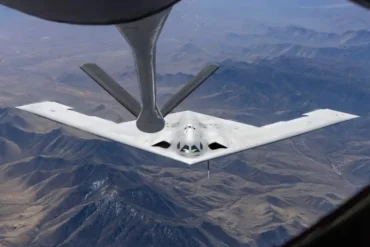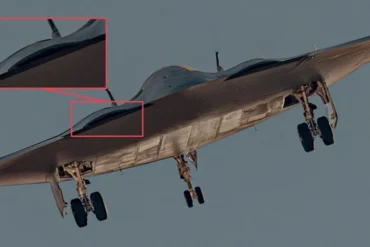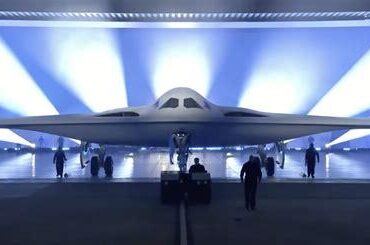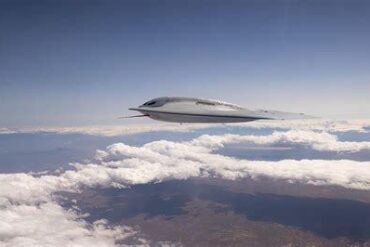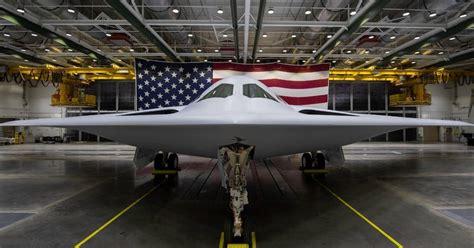
The arrival of the Northrop Grumman B-21 Raider marks one of the most important transformations in military aviation since stealth technology first emerged during the Cold War. Officially described as a next-generation strategic bomber, the Raider is rapidly proving to be something far more ambitious. It is being designed not only as a penetrating stealth aircraft, but also as an airborne battle manager, intelligence node, electronic warfare platform, and potentially even a controller for autonomous drones.
Yet amid the excitement surrounding the aircraft’s stealth profile, nuclear capability, and sixth-generation ambitions, one surprisingly simple question has become central to understanding the Raider’s future:
Will the B-21 even need a co-pilot?
The answer is complicated because the bomber appears to have been engineered for multiple operational futures simultaneously. Depending on mission requirements, technological maturity, and Air Force doctrine, the B-21 could eventually operate with two crew members, one crew member, or perhaps no onboard pilot at all.
That possibility would have sounded absurd during the age of the B-52 Stratofortress. But the Raider belongs to a very different era of warfare.
The B-21 is not merely replacing older bombers. It is redefining what a bomber actually is.
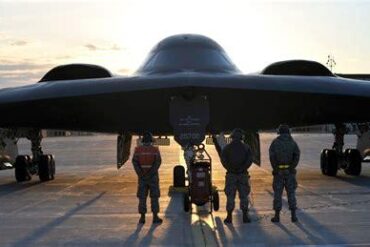
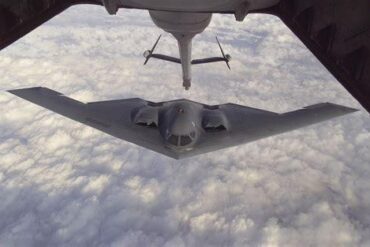
The progression of American bomber crews reveals the scale of this transformation. The massive B-52, introduced in the 1950s, originally required a crew of five: pilot, co-pilot, navigator, weapons officer, and electronic warfare officer. By the 1980s, the swing-wing B-1B Lancer reduced crew requirements to four thanks to better avionics and automation. The stealth-focused B-2 Spirit dropped the number further to two pilots.
Now the B-21 is preparing to push that evolution even further.
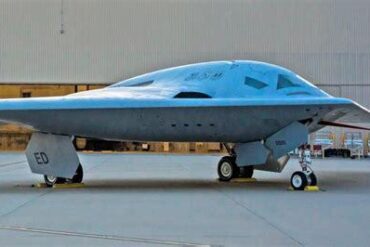
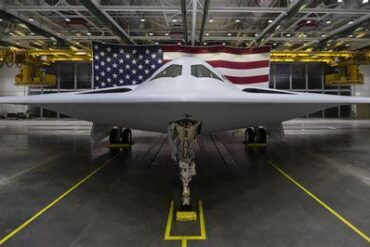
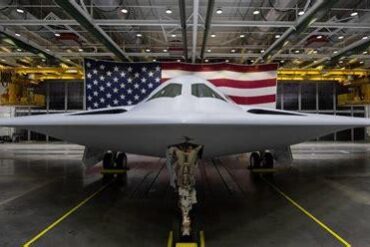
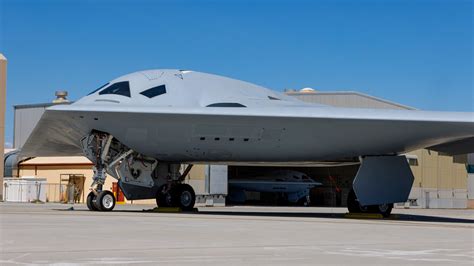
At first glance, the Raider appears to continue the B-2 model because it features a cockpit with two seats. But the important detail is not the number of seats. It is the intended role of the people occupying them.
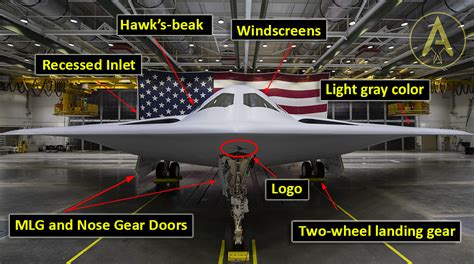
Why The B-21 Raider May Only Need One Pilot
Reports connected to the Air Force’s Long Range Strike Bomber program indicate that the B-21 was designed from the beginning as an optionally crewed aircraft. That phrase carries enormous implications.
Unlike traditional bombers that fundamentally depend on human pilots for every stage of operation, the Raider appears to incorporate a level of automation sophisticated enough to dramatically reduce pilot workload. In practical terms, the Air Force is increasingly confident that a single aviator may be able to manage the flying responsibilities that once required two fully qualified pilots.
Under current planning concepts, the second seat would likely belong not to a co-pilot, but to a Weapons Systems Officer (WSO).
That distinction matters.
A co-pilot traditionally shares flying duties, assists with navigation, monitors aircraft systems, and takes over if the pilot becomes incapacitated. A WSO, however, focuses on mission management. In the Raider’s case, that could involve electronic warfare, sensor coordination, targeting, battle management, communications, and overseeing autonomous systems operating around the aircraft.
This represents a profound philosophical shift in bomber operations.
The B-21’s onboard systems appear advanced enough that the aircraft itself may function as a kind of digital co-pilot. Artificial intelligence, sensor fusion, predictive automation, and mission-management software are likely taking over many routine flight responsibilities previously handled by human crew members.
In effect, the aircraft may become an active participant in the mission rather than simply a machine being operated.
Air Force Global Strike Command leadership has already hinted at this future. Former commander General Thomas Bussiere emphasized that the Raider’s missions would demand expertise in electromagnetic warfare, battle management, sensor control, and dynamic combat replanning. Those are tasks associated with information dominance rather than traditional stick-and-rudder flying.
That explains why the Air Force increasingly sees value in replacing the second pilot with a systems-focused operator.
Automation Is Transforming Combat Aviation
The B-21’s evolving crew structure reflects a broader revolution happening across military aviation.
Modern combat aircraft already perform tasks that once overwhelmed pilots. Advanced flight-control computers stabilize inherently unstable aircraft. Radar systems automatically prioritize threats. Electronic warfare suites react faster than humans can respond. Mission computers integrate enormous volumes of data in real time.
The Raider is expected to push these capabilities to unprecedented levels.
Unlike legacy bombers, the B-21 is being built around a digital architecture designed for continuous software upgrades. This means the aircraft’s autonomy could become significantly more capable over time without major hardware redesigns.
Today, the Raider may require one pilot and one WSO. Tomorrow, software updates could allow the aircraft to autonomously handle cruise phases, aerial refueling coordination, navigation adjustments, threat avoidance, and even parts of tactical mission execution.
That does not mean human crews are disappearing immediately. Nuclear deterrence missions, strategic strike operations, and politically sensitive combat deployments still demand strong human oversight. But automation is clearly moving from an assistance role into a decision-support role.
The Raider may become the first operational bomber where the aircraft itself acts as a highly intelligent crew member.
The Long-Endurance Problem Facing Stealth Bombers
One major challenge complicates the idea of a single-pilot bomber: endurance.
Strategic bombers routinely fly missions lasting more than 20 hours. Some B-2 Spirit operations have stretched beyond 40 hours, with crews conducting intercontinental strike missions directly from the continental United States.
These marathon sorties are physically exhausting.
Two pilots on the B-2 can alternate duties, allowing one aviator to rest while the other manages the aircraft. A single-pilot configuration creates obvious concerns regarding fatigue, situational awareness, and long-term cognitive performance.
This is where optional autonomy becomes especially valuable.
The B-21 may eventually allow pilots to temporarily hand over portions of the mission to autonomous systems during less demanding phases of flight. Instead of continuously manually managing every aspect of the aircraft, the crew could supervise automation while resting or focusing on strategic decisions.
In many ways, this mirrors developments already occurring in commercial aviation. Modern airliners spend large portions of flights under autopilot management. The difference is that the Raider’s systems must function inside hostile combat environments involving cyber threats, electronic warfare, GPS disruption, and enemy interception attempts.
That is vastly more difficult.
The Air Force appears increasingly convinced that advanced autonomy can overcome those challenges.
Could The B-21 Eventually Fly Fully Uncrewed?
The possibility of an entirely autonomous Raider remains controversial, but it is no longer science fiction.
The aircraft’s optional-crewing requirement strongly suggests that Northrop Grumman and the Air Force intentionally preserved a pathway toward fully uncrewed operations. Even if the Raider initially enters service with onboard crews, future software blocks could theoretically permit remote or autonomous missions under certain circumstances.
Several operational advantages make this idea attractive.
An uncrewed B-21 could undertake extraordinarily dangerous penetration missions without risking pilot lives. It could endure longer sorties without fatigue concerns. It could potentially operate with more aggressive flight profiles in heavily defended airspace.
Most importantly, autonomous bombers could dramatically expand operational flexibility during high-intensity conflict against near-peer adversaries such as China.
However, major obstacles remain.
Strategic bombers carry nuclear weapons, and autonomous nuclear delivery systems raise severe ethical, political, and command-and-control concerns. Even conventional autonomous strike operations introduce questions regarding accountability, target identification, escalation management, and rules of engagement.
As a result, the Air Force is unlikely to completely remove humans from decision-making loops anytime soon.
Instead, the more realistic near-term future involves human-supervised autonomy. The Raider’s crew may gradually transition from active aircraft operators into mission commanders overseeing increasingly capable onboard AI systems.
The B-21 Is More Than A Bomber
One reason the Raider’s crew requirements are becoming so unusual is because the aircraft itself no longer fits traditional bomber definitions.
Northrop Grumman has described the B-21 as the world’s first sixth-generation combat aircraft. That wording is revealing because sixth-generation terminology normally applies to advanced fighters rather than bombers.
The distinction between fighters and bombers is beginning to blur.
Historically, bombers specialized in payload delivery while fighters specialized in air superiority. The Raider challenges that separation. Its stealth characteristics, sensor capabilities, networking architecture, and electronic warfare systems suggest an aircraft designed to influence the entire battlespace rather than merely drop weapons.
Some analysts have even speculated that the B-21 could contribute to air-superiority operations by leveraging stealth, long-range sensors, and advanced missiles to engage hostile aircraft from standoff distances.
That possibility reflects a broader trend in modern warfare: combat aircraft are becoming multi-domain systems instead of narrowly specialized platforms.
The Raider is expected to function simultaneously as:
- A nuclear deterrent platform
- A conventional strike aircraft
- An intelligence-gathering asset
- An electronic warfare node
- A communications relay
- A battle-management center
- A potential drone controller
That enormous mission portfolio helps explain why the second cockpit seat may be shifting from pilot duties toward systems management responsibilities.
Artificial Intelligence And The Rise Of The Virtual Co-Pilot
The idea of an AI-powered virtual co-pilot is no longer confined to experimental labs.
Across the defense industry, autonomous combat systems are rapidly advancing. Companies such as Shield AI are already developing AI pilots capable of operating sophisticated aircraft without GPS, communications, or direct human input.
Shield AI’s Hivemind autonomy architecture is particularly significant because it demonstrates how AI systems are evolving beyond simple drone automation into adaptive combat decision-making.
While it remains unclear whether Hivemind technology itself will appear in the Raider, the underlying trend is unmistakable. Future combat aircraft will increasingly rely on AI assistance for tactical analysis, navigation, sensor management, and mission execution.
For the B-21, this could manifest as a digital system capable of:
- Monitoring aircraft health in real time
- Recommending tactical maneuvers
- Prioritizing threats automatically
- Managing electronic warfare responses
- Coordinating with drones
- Assisting with route replanning
- Reducing pilot workload during combat
In many respects, the Raider’s AI systems may become equivalent to an invisible crew member sitting beside the pilot.
That changes the meaning of “crew size” entirely.
Why Human Crews Still Matter
Despite rapid advances in autonomy, humans remain central to strategic airpower for several critical reasons.
Combat is unpredictable. Electronic warfare environments are chaotic. Communications can fail. Targets can change unexpectedly. Political conditions may shift during missions. Human judgment still provides flexibility that algorithms struggle to replicate reliably under every circumstance.
There is also the issue of trust.
Military leaders may accept autonomous navigation assistance, but fully autonomous lethal decision-making remains deeply controversial. Strategic bombers represent some of the most sensitive and expensive assets in the American arsenal. Losing control of one due to software malfunction, cyber intrusion, or AI miscalculation would be catastrophic.
That reality explains why the Raider is likely to retain onboard crews for the foreseeable future, even if automation continues expanding.
Interestingly, the future B-21 crew might not include a traditional pilot at all.
If autonomy matures sufficiently, the Air Force could theoretically assign two mission specialists capable of supervising the aircraft while relying on automation for most flight functions. In emergencies, those crew members could still manually operate the bomber if necessary.
That possibility highlights how radically military aviation roles are changing.
The Future Of Strategic Bombers
The B-21 Raider is arriving during a transitional moment in aerospace history.
For more than a century, military aircraft development revolved around improving speed, altitude, maneuverability, and payload capacity. Today, the most transformative advances involve software, networking, sensor integration, and artificial intelligence.
The Raider embodies that transformation.
Its stealth design remains important, but stealth alone no longer guarantees battlefield dominance. Survivability increasingly depends on information superiority, autonomous support systems, electronic warfare resilience, and seamless integration across multiple combat domains.
Crew structure is becoming part of that evolution.
The progression from five-person B-52 crews to potentially pilot-optional B-21 operations illustrates how automation is steadily reshaping the human role in aerial warfare. The bomber’s cockpit may still contain two seats, but the responsibilities associated with those seats are changing dramatically.
One seat may belong to a pilot.
The other may belong to a battle manager.
Eventually, the aircraft itself may perform much of the flying.
That future is no longer theoretical. It is already taking shape inside the B-21 Raider program.
Conclusion: The B-21’s Real Revolution Is Invisible
The most revolutionary aspect of the B-21 Raider may not be its stealth coating, flying-wing design, or classified sensors.
It may be the gradual disappearance of the traditional pilot role itself.
The Raider is being built for an era where artificial intelligence, autonomous systems, and human-machine teaming redefine how combat aircraft operate. Its cockpit reflects that reality. What appears externally to be a familiar two-seat stealth bomber may internally represent the beginning of a radically different form of warfare.
In the near future, the B-21 will likely fly with one pilot and one weapons systems officer. But its architecture clearly points toward deeper automation and increasing operational autonomy over time.
That makes the answer to the original question surprisingly fluid.
Will the world’s most advanced stealth bomber have a co-pilot?
Sometimes yes.
Sometimes no.
And one day, perhaps, it may not need a pilot at all.