The Northrop Grumman B-2 Spirit, widely recognized as one of the most advanced and lethal bombers in the world, is defined by one critical attribute: unmatched long-range stealth capability. With its low observable profile, heavy payload, and massive flight range, the B-2 is an essential pillar in the U.S. Air Force’s strategic arsenal. Whether flying solo missions into enemy territory or spearheading multinational air campaigns, this flying wing proves the old military adage true — distance is power.
The B-2 Spirit: An Engineering Marvel With Stealth at Its Core
The B-2 Spirit’s origins are deeply rooted in Cold War anxieties. Designed in secrecy during the 1980s, its mission was simple: penetrate the Soviet Union’s layered and formidable air defense networks to deliver nuclear weapons. What emerged was a triumph of aerospace engineering — a flying wing platform unlike any bomber before it.
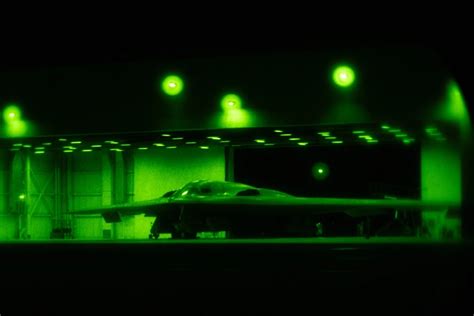
With no vertical stabilizers and a uniquely curved wing shape, the B-2’s structure minimizes radar cross-section from all directions. That design, when combined with radar-absorbing materials, results in a silhouette that’s virtually invisible to enemy detection systems.
The aircraft’s stealth profile is multi-layered — acoustic dampening to reduce sound, infrared shielding to limit heat detection, and electromagnetic containment to avoid tracking. These features give the B-2 a critical edge: the ability to travel deep into hostile territory without ever being seen.
Flying Without a Trace: The True Range of the B-2 Bomber
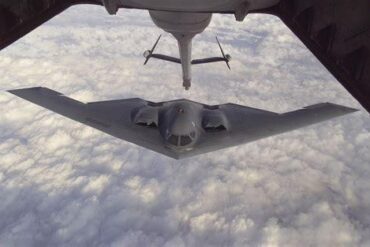
The B-2 Spirit is capable of flying an astounding 6,000 nautical miles (11,100 kilometers) on a single tank of fuel — without refueling. This impressive range places it among the furthest-flying aircraft in the U.S. military, allowing it to strike distant targets without dependence on foreign airbases. For perspective, the B-2 can take off from Whiteman Air Force Base in Missouri, fly to Western Europe and back, and still have reserves for a safe return.
When aerial refueling is employed — a routine strategy in global U.S. Air Force operations — the B-2’s range increases dramatically to nearly 10,000 nautical miles (18,500 kilometers). That’s the approximate distance between New York and Sydney, making the B-2 truly intercontinental in capability.
While these numbers are awe-inspiring, what elevates the B-2’s reach is not just how far it can fly — but how far it can fly undetected. Whether it’s flying over radar installations in Eastern Europe or threading the complex defenses of the Middle East, the B-2’s stealth ensures it arrives unseen and unchallenged.
Operation Enduring Freedom: A Record-Breaking Endurance Test
The B-2 Spirit etched its name in history during the opening salvos of Operation Enduring Freedom in 2001. In what remains one of the most logistically demanding aerial missions ever executed, six B-2s took off from Whiteman AFB and delivered 40 precision-guided munitions in Afghanistan, flying over 44 hours non-stop.
To complete the mission, flight crews were changed mid-mission at Diego Garcia, a strategic U.S.-U.K. outpost in the Indian Ocean. The aircraft then flew back to Missouri, totaling 70 hours of continuous operation. The mission served as a demonstration of two capabilities: strategic global reach and the endurance of both man and machine under extreme operational conditions.
Recent Engagements: Iran and the Reinforcement of American Air Dominance
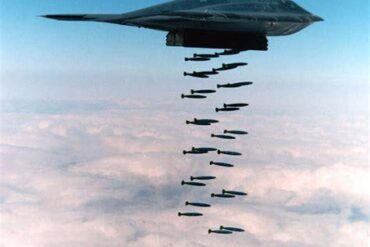
On June 21, 2025, seven B-2 Spirits carried out the largest coordinated stealth bombing raid in U.S. military history. Launching from undisclosed locations, the fleet dropped 14 GBU-57A/B Massive Ordnance Penetrators (30,000-pound bombs) on Iranian nuclear facilities at Fordo, Natanz, and Isfahan.
Remarkably, the bombers penetrated Iranian airspace and returned undetected, neutralizing heavily fortified underground structures in a matter of seconds. The precision, range, and secrecy of the mission reaffirmed the B-2’s dominance and justified its elite status among strategic bombers.
The Numbers Behind the Machine: Technical Specs and Performance
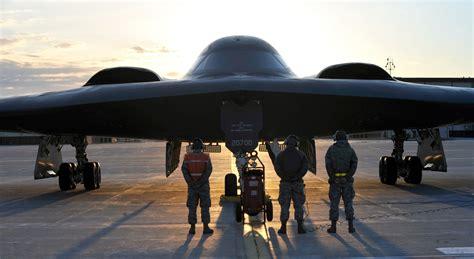
The B-2 Spirit is as massive as it is elegant. With a wingspan of 172 feet (over 52 meters), a length of 69 feet, and a height of 17 feet, it’s a flying fortress disguised in the form of a wing.
- Maximum Takeoff Weight: 336,500 lbs (152,200 kg)
- Engines: 4 x General Electric F118-GE-100 turbofans
- Thrust: 17,300 lbf per engine (69,200 lbf total)
- Cruising Speed: Mach 0.85
- Top Speed: Mach 0.95 (around 630 mph or 1,014 km/h)
- Operational Ceiling: 50,000 feet
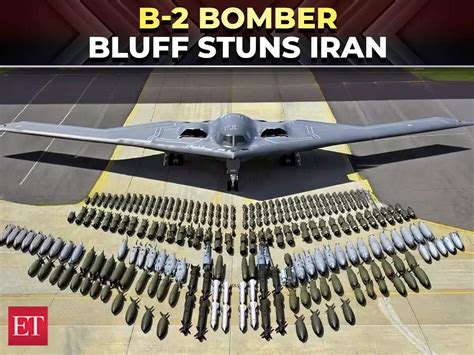
- Payload Capacity: Up to 40,000 lbs of ordnance, including conventional and nuclear weapons
Despite its stealth-first design, the B-2 is a formidable payload carrier, capable of delivering both precision-guided and bunker-busting munitions.
Strategic Reach: Why Range Matters in Modern Warfare
In the age of precision warfare, distance is no longer just a logistical detail — it’s a strategic weapon. The B-2’s range enables the United States to project force globally without stationing troops abroad or relying on regional allies.
The ability to strike targets across continents while launching from within U.S. borders provides a political and tactical edge. It minimizes the need for diplomatic permissions, reduces the exposure of personnel, and accelerates military response times in crisis situations.
Furthermore, the B-2’s capacity to loiter — to remain in the air and await a go-ahead to strike — allows it to be used in scenarios requiring real-time intelligence or last-minute target adjustments.
The Cost of Superiority: Budgeting for the Spirit
At $2.13 billion per unit, the B-2 Spirit remains the most expensive aircraft ever built on a per-unit basis. Its cost reflects the complexity of its stealth technologies, manufacturing processes, and maintenance requirements.
Originally, the U.S. planned to build 132 B-2 bombers. However, after the end of the Cold War and the fall of the Soviet Union, the program was cut to 21 aircraft. Today, only 19 remain in active service, with others lost to accidents or decommissioned.
Critics have long debated the cost-benefit equation of the B-2 program. However, few would argue with the results. In mission after mission, the B-2 has proven itself not only survivable but indispensable — often achieving objectives that would have required dozens of conventional aircraft.
Conclusion: The Legacy and Future of the B-2 Bomber
More than three decades after its first flight, the B-2 Spirit continues to shape U.S. air doctrine and strategic planning. Its role has evolved from a Cold War deterrent to an active participant in America’s 21st-century military engagements.
Its latest missions — from Kosovo to Kabul to the skies above Iran — prove that stealth, speed, and range are not relics of past wars but tools of current and future deterrence. While its successor, the B-21 Raider, is expected to begin replacing it in the coming years, the B-2’s legacy will remain a gold standard.
As long as global threats require rapid, undetected, and precise response, the B-2 will remain a symbol of American airpower and engineering excellence, capable of flying halfway across the world — without ever being seen.