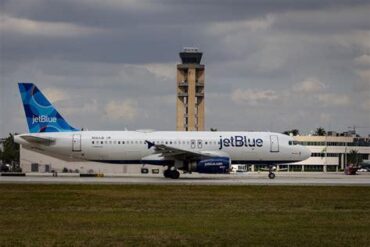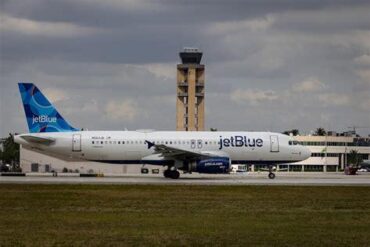
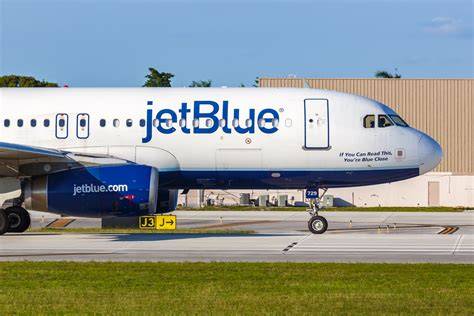
A routine aircraft preparation at Fort Lauderdale-Hollywood International Airport (FLL) turned into an unusual security incident after JetBlue Airways employees discovered an alleged trespasser sleeping inside an Airbus A320-family aircraft. A 911 call released in connection with the case provides a remarkable account of the moment workers realized that someone unauthorized was inside the jet.
The incident occurred during the early morning hours of August 2, while the aircraft was undergoing maintenance. According to the Broward County arrest report and local reporting from WSVN, the man was identified as 32-year-old Sammuel Lackey of Fort Lauderdale. Authorities allege that he entered a restricted airport area, boarded the aircraft without authorization, and remained hidden inside the cabin.
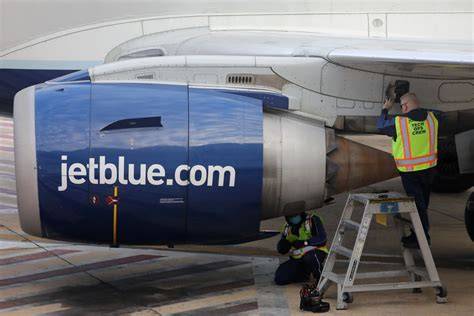
The discovery came after maintenance work had been completed and JetBlue’s Move team arrived to retrieve the aircraft for its next operation. Employees entered the aircraft, activated its systems, and then left the cockpit to conduct a walk-around inspection. What should have been a normal operational check instead revealed an unexpected occupant toward the rear of the plane.
JetBlue Employees Discover Man Sleeping Inside Aircraft
The 911 call captures the surprise of the workers who discovered the alleged trespasser. According to WSVN, the caller told emergency dispatchers, “They found somebody sleeping inside the plane.” The simple statement reflected a situation that airline employees would hardly expect during a routine aircraft inspection.
The aircraft was not carrying passengers at the time and was positioned for maintenance, which helps explain how the alleged intrusion could remain unnoticed initially. After entering the aircraft, the man allegedly concealed himself in the aft lavatory before eventually falling asleep. Workers only encountered him when they began preparing the jet for its next stage of operation.
The discovery immediately prevented the aircraft from continuing its scheduled activities. Employees notified authorities, and the individual was eventually removed from the aircraft and taken into custody. For an airline, however, finding an unauthorized person inside a jet creates consequences extending well beyond simply removing that person.
Arrest Report Describes Alleged Route Onto JetBlue Aircraft
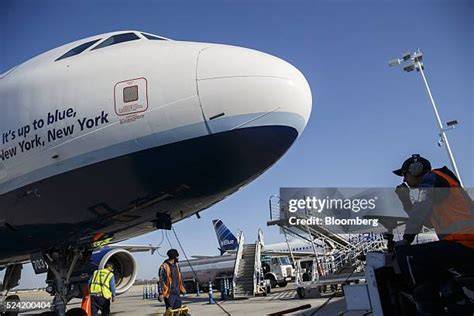
The arrest report provides additional details about how Lackey allegedly reached the aircraft. Deputies said he was observed walking west along a service road near JetScape before accessing a portable staircase and entering the aircraft. Authorities further allege that he climbed over a fence to reach the secure identification display area and aircraft operations area at the airport.
According to the report, Lackey then entered the aircraft and concealed himself in the rear lavatory. The alleged route is significant because it involved movement through areas that are intended for authorized airport and airline personnel rather than ordinary travelers.
The circumstances highlight the importance of physical security around parked aircraft. A jet sitting away from a terminal may appear isolated, but it remains part of a tightly controlled operational environment. Access can involve perimeter fencing, secured doors, employee credentials, maintenance procedures, and repeated inspections. A breach of any one layer can potentially create a wider operational problem.
Trespasser Discovery Delays Aircraft Operation
The incident also demonstrates why airline employees physically inspect aircraft even after maintenance activities have concluded. Electronic systems and maintenance records can confirm that technical work has been completed, but they cannot necessarily reveal whether an unauthorized individual has entered and concealed themselves inside the cabin.
In this case, the aircraft could not simply continue toward its next operation after the discovery. Authorities had to respond, the alleged trespasser had to be removed, and the airline faced an operational disruption. The arrest report states that the incident caused a flight delay and resulted in approximately $2,400 in costs for the airline.
Sammuel Lackey Faces Three Criminal Charges
Lackey’s case has moved into the criminal justice system, where prosecutors will have to establish the allegations in court. A Broward County Circuit Court judge found probable cause on three counts: burglary of an occupied conveyance, criminal mischief involving more than $1,000, and interrupting or impairing critical infrastructure.
The judge stated that probable cause existed for all three counts. Lackey remained in custody as of August 19, according to WSVN. The charges remain allegations, and a probable-cause finding does not establish guilt.
The unusual discovery nevertheless raises broader questions about airport security and aircraft access control. Commercial aircraft are valuable operational assets, and even an empty jet requires careful protection while undergoing maintenance, repositioning, or overnight parking.
Why Aircraft Security Checks Remain Essential
The Fort Lauderdale incident illustrates how an apparently ordinary aircraft inspection can become an important security checkpoint. The JetBlue workers were not simply checking the aircraft’s exterior condition; their walk-around ultimately revealed a person who allegedly had no authorization to be inside.
For airlines and airports, the episode reinforces the value of layered security procedures. Restricted areas must remain controlled, aircraft access must be monitored, and physical inspections remain an important safeguard alongside technology and surveillance systems.
What began with a quiet aircraft waiting for its next operation ended with a 911 call, an arrest, criminal charges, and an unexpected flight disruption. The case serves as an unusual reminder that even when a passenger cabin is empty, a commercial aircraft remains a highly controlled part of critical aviation infrastructure.