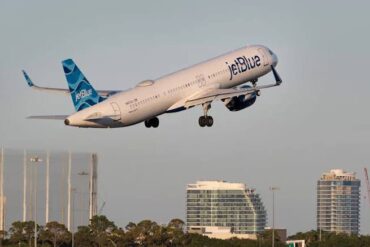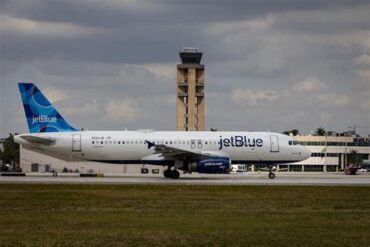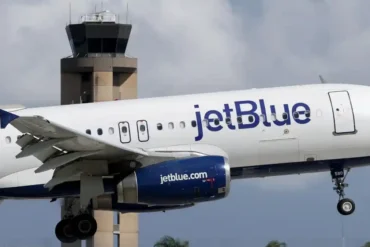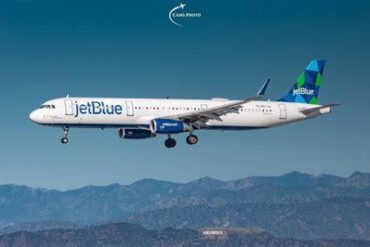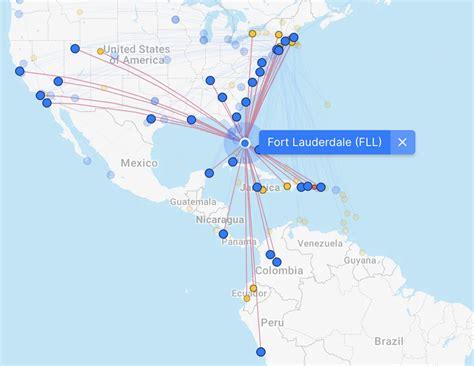
Fort Lauderdale-Hollywood International Airport (FLL) has entered a new era in its competitive airline landscape, and JetBlue Airways now sits firmly at the center of that transformation. Through a steady stream of route launches, frequency increases, and strategic network depth, the New York-based carrier has firmly established itself as the number one airline at Fort Lauderdale, reshaping an airport long associated with ultra-low-cost dominance.
Rather than relying on dramatic one-time announcements, JetBlue has pursued a carefully layered expansion strategy. The airline has gradually rebuilt routes, strengthened existing markets, and added new destinations across the United States, the Caribbean, and Latin America. The result is a rapidly growing operation that now exceeds 180 daily flights and continues to expand as demand across South Florida remains robust.
This approach signals something deeper than simple growth. It represents a structural shift in the Fort Lauderdale aviation ecosystem, where JetBlue is moving from a secondary competitor to the airport’s defining airline presence.
JetBlue Expands Frequency on Key Fort Lauderdale Routes
JetBlue’s latest announcement focuses on strengthening existing routes rather than launching brand-new destinations. The airline is increasing flight frequencies and converting seasonal services into permanent year-round routes, a strategy designed to deepen its hold on markets already showing strong passenger demand.
Beginning in mid-June, the airline will expand service on four routes that connect Fort Lauderdale with both domestic and international destinations.
Cartagena, Colombia will see its schedule rise from four weekly flights to daily service starting June 11, marking a significant boost to JetBlue’s Latin American connectivity. Meanwhile, Jacksonville, Florida, which had previously been offered only as a seasonal spring break route, will transition into daily year-round service beginning June 18.
Domestic connectivity will also improve through increased frequencies to two major markets. Both Dallas-Fort Worth and Tampa will shift from once-daily flights to twice-daily service, offering travelers greater flexibility and improved connections through JetBlue’s growing FLL network.
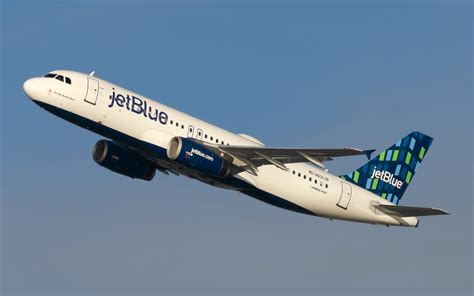
These frequency upgrades may appear modest on paper, but in the airline industry they carry major strategic importance. Additional daily flights increase scheduling convenience for passengers, strengthen network connectivity, and allow airlines to capture more business and leisure demand. For travelers choosing between airlines, schedule flexibility often matters as much as price, making frequency one of the most powerful competitive tools in aviation.
JetBlue executives have made it clear that the decision reflects strong local demand. According to Daniel Shurz, JetBlue’s Senior Vice President of Network Planning, the expansion represents continued confidence in Fort Lauderdale as a core focus city for the airline.
The strategy is simple: deepen the network where demand is already proven and build a structure that supports long-term growth rather than temporary seasonal spikes.
The Year-Long Climb to the Top Spot at FLL
JetBlue’s current dominance did not happen overnight. The airline has spent the past year quietly assembling one of the most aggressive expansion campaigns seen at Fort Lauderdale in more than a decade.
Throughout 2025 and early 2026, JetBlue methodically introduced twenty new routes from FLL, expanding both domestically and internationally. The process began in April 2025 with the restoration of service to Philadelphia and Guayaquil, Ecuador, two routes that reinforced JetBlue’s Northeast and Latin American connections.
By July, the expansion accelerated. New service launched to Atlanta, Austin, Norfolk, and Tampa, strengthening JetBlue’s domestic reach across key U.S. markets.
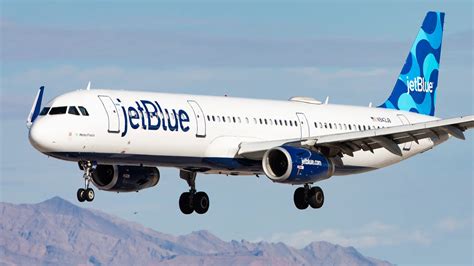
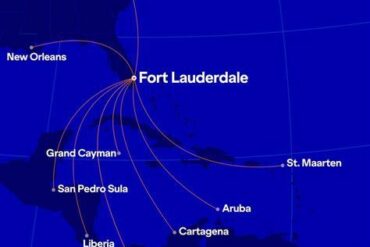
The momentum continued into September when the airline introduced nine additional routes, significantly broadening the airport’s route map. Destinations included Caribbean favorites such as Aruba and St. Maarten, Central American gateways like San Pedro Sula and Liberia, and several U.S. cities including New Orleans and Pittsburgh.
Earlier this year, JetBlue added Orlando International Airport and expanded flights to Dallas-Fort Worth while boosting frequencies on its flagship New York routes.
Taken together, these additions created a layered network that connects Fort Lauderdale to a wide array of business centers, leisure destinations, and international tourism markets. Instead of relying on a single expansion moment, JetBlue built its presence incrementally—an approach that allowed the airline to respond quickly to passenger demand while minimizing risk.
Industry data illustrates just how dramatic this transformation has been. According to Cirium Diio aviation analytics, JetBlue will operate more than 16,000 flights from Fort Lauderdale in the second quarter of 2026, representing a 45 percent increase compared with the previous year. That equates to over 5,000 additional flights within a single quarter.
Such growth has fundamentally altered the balance of power at FLL.
Spirit Airlines Pullback Opens the Door
For years, Spirit Airlines defined Fort Lauderdale’s identity as a hub for ultra-low-cost travel. The Florida-based carrier maintained a massive presence at the airport, using its low fares and dense route map to dominate the budget travel segment.
That dominance has begun to fade.
Spirit has spent the past year navigating financial pressures and restructuring efforts that forced the airline to reduce fleet size and cut capacity across several markets. At Fort Lauderdale, the impact has been especially visible.
Year-over-year comparisons show Spirit operating roughly 2,000 fewer flights in Q2 2026, a decline of approximately 14 percent. As gates and operational capacity opened up, competing airlines moved quickly to claim the opportunity.
JetBlue has been the largest beneficiary of that shift, but it is far from alone.

Other carriers have also begun expanding their footprint at FLL. Frontier Airlines has dramatically increased service, growing more than 200 percent year over year, while Allegiant Air has expanded selectively in leisure routes. Meanwhile, Breeze Airways, the rapidly growing startup airline founded by aviation entrepreneur David Neeleman, has begun serving Fort Lauderdale for the first time.
The airport is therefore transitioning from a single-carrier stronghold into a multi-airline battleground, where several low-cost and hybrid carriers compete for market share.
JetBlue’s advantage lies in its scale and its network design. Unlike many ultra-low-cost competitors that focus on limited point-to-point routes, JetBlue operates a broader system that integrates domestic and international connectivity. That flexibility allows the airline to capture both tourism traffic and connecting passengers, giving it a powerful competitive edge.
Fort Lauderdale’s Next Chapter of Airline Competition
JetBlue’s rise to the top position at Fort Lauderdale appears far from complete. Company leadership has already hinted that additional announcements may follow as the airline evaluates new opportunities created by the shifting competitive landscape.
JetBlue President Marty St. George recently suggested that more expansion is likely, particularly as gate availability improves due to Spirit’s reduced presence. Infrastructure developments at the airport may accelerate that growth even further.
Fort Lauderdale is currently constructing Terminal 5, a new facility designed to support additional airline operations and handle rising passenger volumes. Once completed, the expansion will provide valuable capacity for airlines seeking to grow their networks in South Florida.
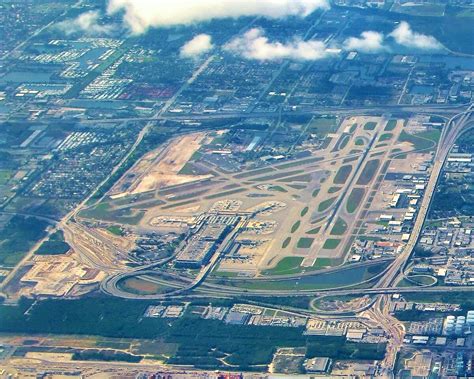
For JetBlue, the airport represents a strategically valuable gateway. South Florida offers strong tourism demand, a large population base, and convenient access to the Caribbean and Latin America—regions where the airline has steadily expanded its presence.
As the airport’s airline hierarchy continues evolving, JetBlue’s position at the top highlights a broader industry pattern. Airline dominance rarely changes through a single dramatic event. More often, it shifts gradually through a series of deliberate decisions—route by route, flight by flight, and market by market.
That slow accumulation of capacity is precisely how JetBlue turned Fort Lauderdale from a competitive outpost into one of the airline’s most important operational centers.
And if current trends continue, the story of JetBlue at FLL is not about reaching the top. It is about building a long-term stronghold in one of America’s fastest-growing aviation markets.