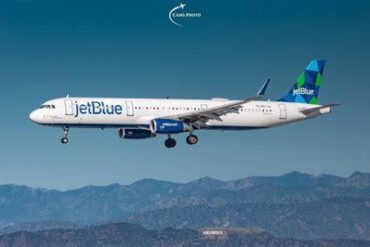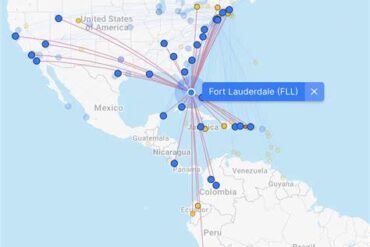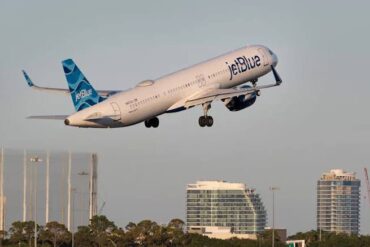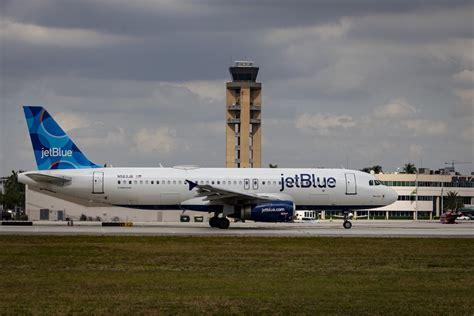
JetBlue Airways is making one of the boldest network decisions in its history by transforming Fort Lauderdale-Hollywood International Airport (FLL) into the centerpiece of its premium domestic strategy. Rather than concentrating exclusively on its traditional strongholds of New York and Boston, the airline is investing heavily in South Florida, expanding its schedule to approximately 150 daily departures while deploying its largest-ever Mint operation from the airport. The move represents far more than another seasonal schedule adjustment. It is a strategic shift designed to improve profitability, strengthen JetBlue’s competitive position, and redefine how premium leisure travel works in the United States.
For years, Fort Lauderdale was viewed primarily as a large leisure gateway where low-cost airlines dominated through aggressive pricing. Today, that landscape is changing rapidly. JetBlue has recognized an opportunity created by shifting competitive dynamics, growing passenger demand, and weakening capacity from rivals. Instead of simply filling available market space with additional flights, the airline is using its premium Mint product as the foundation for long-haul expansion, betting that travelers will increasingly pay for a better onboard experience on cross-country routes.
The airline’s newest announcement perfectly illustrates this strategy. Beginning on November 19, 2026, JetBlue will introduce daily Mint service between Fort Lauderdale and San Diego International Airport. While one additional route may appear modest on paper, it forms part of a much broader transformation that will see Fort Lauderdale become one of JetBlue’s most important operational bases and one of the airline’s largest premium gateways.
Why Fort Lauderdale Has Become One of JetBlue’s Most Important Hubs
JetBlue’s expansion at Fort Lauderdale has happened remarkably quickly. Only a year earlier, the airline averaged approximately 72 daily departures from the airport, placing it behind Spirit Airlines in overall operations. Since then, competitive conditions have shifted dramatically, allowing JetBlue to steadily increase capacity while capturing additional market share across South Florida.
By the middle of the following winter schedule, departures had climbed to roughly 95 flights each day. During the spring, the airline accelerated its growth by introducing more than twenty additional routes while increasing frequencies across many existing destinations. By the start of the summer schedule, daily departures had already reached approximately 130.
The airline now expects to exceed 150 daily departures during the winter 2026 schedule, representing more than a 75 percent increase compared with the previous year. That level of growth fundamentally changes Fort Lauderdale’s role within JetBlue’s network.
Historically, New York John F. Kennedy International Airport has served as JetBlue’s flagship hub, operating approximately 180 daily departures. Boston Logan has long been regarded as another defining base, averaging roughly 130 daily flights. Fort Lauderdale is now approaching JFK’s scale while overtaking Boston in operational size, signaling a major realignment of JetBlue’s long-term priorities.
This expansion is not simply measured by flight numbers. Market share has also increased substantially. Industry data shows JetBlue’s departing-seat share at Fort Lauderdale rising from roughly 19 percent to approximately 34 percent within just twelve months. Even more importantly, company executives have indicated that revenue performance in the market has exceeded internal expectations, suggesting that demand is keeping pace with the additional capacity.
The JetForward Strategy Is Driving Every Decision
JetBlue’s Fort Lauderdale expansion cannot be understood without examining its broader JetForward transformation plan. Following several difficult years marked by operational challenges, rising costs, the collapse of its Northeast Alliance, and the blocked acquisition of Spirit Airlines, the carrier has been searching for a sustainable path back to long-term profitability.
Rather than competing solely on low fares, JetForward focuses on improving revenue through better products, smarter network planning, and disciplined deployment of aircraft. Premium services such as Mint occupy a central role in that strategy because they generate significantly higher revenue per flight than standard narrowbody operations.
Fort Lauderdale fits almost perfectly into this vision. South Florida combines strong leisure demand, substantial visiting-friends-and-relatives traffic, expanding business activity, and year-round tourism. Instead of chasing market share through discounted fares, JetBlue believes it can increase profitability by offering a premium experience on routes where passengers spend five or six hours onboard.
The company’s financial targets illustrate why execution matters. JetForward has already generated hundreds of millions of dollars in incremental earnings, with JetBlue targeting additional improvements through 2027. Success at Fort Lauderdale therefore represents more than local expansion—it serves as one of the clearest indicators of whether the airline’s long-term turnaround strategy is working.
San Diego Adds Another Premium Transcontinental Link
The introduction of daily Mint service between Fort Lauderdale and San Diego represents another important piece of JetBlue’s expanding transcontinental network.
The route covers approximately 2,263 miles, making it ideally suited for premium service. Flights of nearly six hours provide passengers with enough time to fully appreciate features such as lie-flat seating, improved privacy, enhanced dining, and upgraded onboard amenities.
Westbound flights are scheduled to depart Fort Lauderdale early in the morning before arriving in Southern California before midday. Return services leave San Diego late in the morning and arrive back in South Florida during the evening, creating a schedule attractive to both leisure travelers and premium passengers seeking convenient daytime departures.
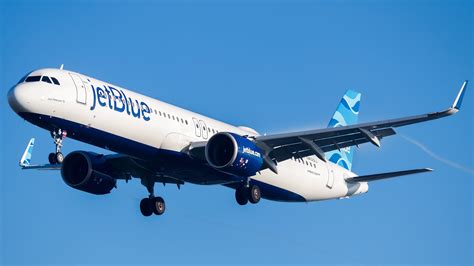
Although JetBlue will not enjoy a monopoly on the route, its competitive positioning is unique. Alaska Airlines plans to launch daily service using Boeing 737-900 aircraft, while Southwest Airlines will operate up to five weekly flights with Boeing 737 MAX 8 aircraft.
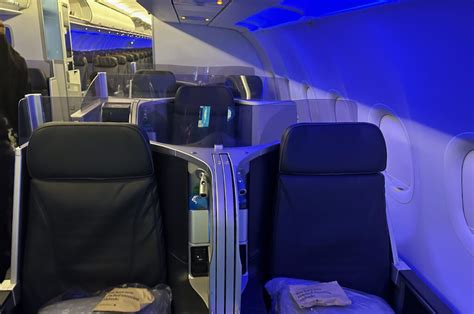
Neither competitor, however, offers a true international-style business-class cabin. JetBlue will become the only airline providing fully lie-flat seating between Fort Lauderdale and San Diego, creating a significant point of differentiation in an increasingly competitive market.
Mint Is Becoming the Backbone of JetBlue’s California Network
While San Diego has attracted headlines because it represents a new destination, Los Angeles and San Francisco remain the real foundation of JetBlue’s premium West Coast strategy.
Los Angeles International Airport is receiving the largest investment. JetBlue plans to increase Mint frequencies from five daily flights to as many as eight daily departures during the winter schedule.
That level of frequency is especially significant because premium travelers often value schedule flexibility as much as onboard comfort. Business travelers, affluent leisure passengers, and frequent flyers frequently choose airlines that provide multiple departure options throughout the day.
By offering eight daily flights, JetBlue moves beyond simply serving the market. It aims to become one of the most convenient carriers between South Florida and Southern California while simultaneously delivering one of the strongest premium products available.
San Francisco serves a somewhat different purpose. Although demand is lower than Los Angeles, the Bay Area remains one of America’s most valuable premium markets due to its concentration of technology companies, financial services, and international business activity.
JetBlue currently operates two daily Fort Lauderdale-San Francisco flights but plans to increase service to three daily Mint departures during the winter. The added frequency strengthens the airline’s competitiveness against United Airlines while maintaining a schedule tailored toward higher-yield passengers rather than pure seat volume.
Competitive Pressure Is Increasing Across Every Route
JetBlue’s premium expansion places the airline into direct competition with nearly every major U.S. carrier.
Los Angeles represents perhaps the most competitive market. Delta Air Lines and United Airlines both operate multiple daily nonstop flights between Fort Lauderdale and Los Angeles, supported by extensive loyalty programs, corporate contracts, and powerful hub operations.
Phoenix introduces competition from American Airlines, while San Francisco pits JetBlue directly against United’s largest hub. San Diego adds Alaska Airlines and Southwest Airlines into the competitive mix.
Rather than attempting to match these airlines solely on loyalty benefits or network size, JetBlue is emphasizing product superiority.
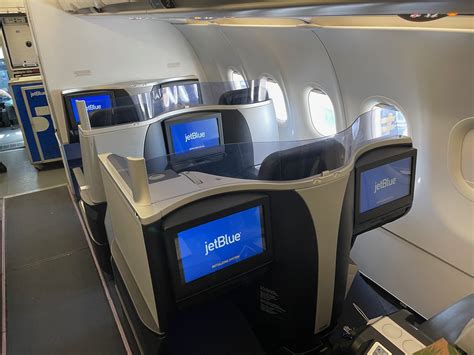
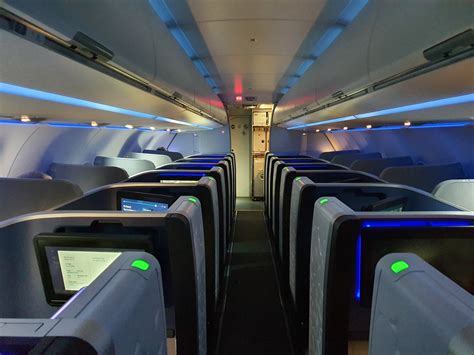
Passengers choosing Mint receive fully lie-flat seating, premium dining curated specifically for the service, complimentary Fly-Fi internet, seatback entertainment throughout the aircraft, and a cabin environment that many travelers consider among the strongest premium products offered on domestic narrowbody aircraft.
This differentiation becomes increasingly valuable on flights lasting five to six hours, where passenger comfort significantly influences purchasing decisions.
Frequency Gives JetBlue a Competitive Advantage
One of the most overlooked aspects of JetBlue’s strategy is its emphasis on frequency rather than simply adding destinations.
Airlines competing for premium passengers understand that schedule convenience strongly influences booking decisions. A traveler paying for a premium cabin often wants flexibility to depart early, midday, or later in the afternoon depending on personal schedules.
By operating as many as eight daily flights to Los Angeles, three to San Francisco, three to Las Vegas, two to Phoenix, and daily service to San Diego, JetBlue creates a network where travelers can select departure times rather than adjusting their schedules around limited availability.
Collectively, the airline expects to operate up to 17 daily Mint flights from Fort Lauderdale during the winter season.
That volume transforms Mint from an occasional premium offering into a core component of JetBlue’s South Florida operation.
Mint Provides More Than Luxury
Although Mint is frequently discussed in terms of comfort, its importance extends far beyond premium seating.
Every additional Mint flight increases JetBlue’s potential revenue because premium cabins command substantially higher fares than standard economy seating. Even when economy pricing becomes highly competitive, premium demand often remains comparatively resilient.
Mint also strengthens customer loyalty. Travelers who experience the airline’s flagship product may become more likely to continue flying with JetBlue across other routes, particularly when integrated with the carrier’s TrueBlue loyalty program and Mosaic elite benefits.
Importantly, Mint has retained a distinct identity instead of becoming a copy of legacy airline business-class products. JetBlue has consistently emphasized stylish cabin design, hospitality-focused service, and approachable premium travel rather than traditional corporate business-class formality.
That identity aligns well with Fort Lauderdale’s customer base, where affluent leisure travelers often outnumber traditional corporate travelers.
Fleet Differences Still Matter
Despite Mint’s strong reputation, passengers should recognize that not every Mint-equipped aircraft offers exactly the same experience.
JetBlue’s earlier Airbus A321 Mint aircraft feature sixteen premium seats arranged as a combination of paired seats and more private individual suites. While these cabins remain highly competitive, seating configurations differ depending on location within the aircraft.
Newer Airbus A321neo aircraft introduce a more consistent premium experience through sixteen fully enclosed Mint Suites, including two larger Mint Studios offering additional personal space and enhanced privacy.
As JetBlue continues expanding premium operations, aircraft assignment may influence passenger experience, particularly for travelers specifically seeking the newest enclosed suite design.
Fort Lauderdale Is Becoming the Ideal Premium Leisure Gateway
Fort Lauderdale’s geographic advantages make it particularly well suited for JetBlue’s evolving strategy.
South Florida attracts millions of visitors annually while serving one of the nation’s fastest-growing population centers. The airport also benefits from strong cruise traffic, international tourism, second-home ownership, and extensive visiting-friends-and-relatives demand.
Unlike airports dominated primarily by corporate business travel, Fort Lauderdale supports a diverse passenger mix willing to pay for additional comfort during lengthy coast-to-coast journeys.
That balance allows JetBlue to position Mint as both a luxury leisure product and an attractive option for premium business travelers without depending exclusively on corporate travel contracts.
The airport’s continued expansion also provides JetBlue with room for growth that would be more difficult to achieve at increasingly congested facilities elsewhere in the United States.
Why This Is One of JetBlue’s Biggest Strategic Bets
JetBlue’s Fort Lauderdale expansion represents far more than the launch of another premium route or the addition of extra frequencies to California. It reflects a fundamental belief that carefully targeted premium service can deliver stronger financial performance than pursuing growth through low fares alone.
The airline is effectively reshaping Fort Lauderdale into its premier leisure-focused hub, combining an expanding domestic network with one of the largest concentrations of Mint flights anywhere in the country. By investing in premium cabins, increasing schedule frequency, and strengthening its position across major West Coast markets, JetBlue is attempting to differentiate itself in ways that extend beyond simple ticket pricing.
The strategy also demonstrates increasing discipline in how the airline deploys its most valuable assets. Recent reductions in Mint flying from Newark suggest JetBlue is reallocating aircraft toward markets where competitive positioning, local demand, and profitability appear stronger. Fort Lauderdale has clearly emerged as one of those markets.
Ultimately, the success of this expansion will not be measured solely by passenger numbers or route launches. It will be judged by whether Mint can consistently generate higher yields, attract loyal premium travelers, and help deliver the financial improvements envisioned under JetForward. If those objectives are achieved, Fort Lauderdale may become the blueprint for how JetBlue builds its future—a network centered not simply on flying more passengers, but on flying them better.