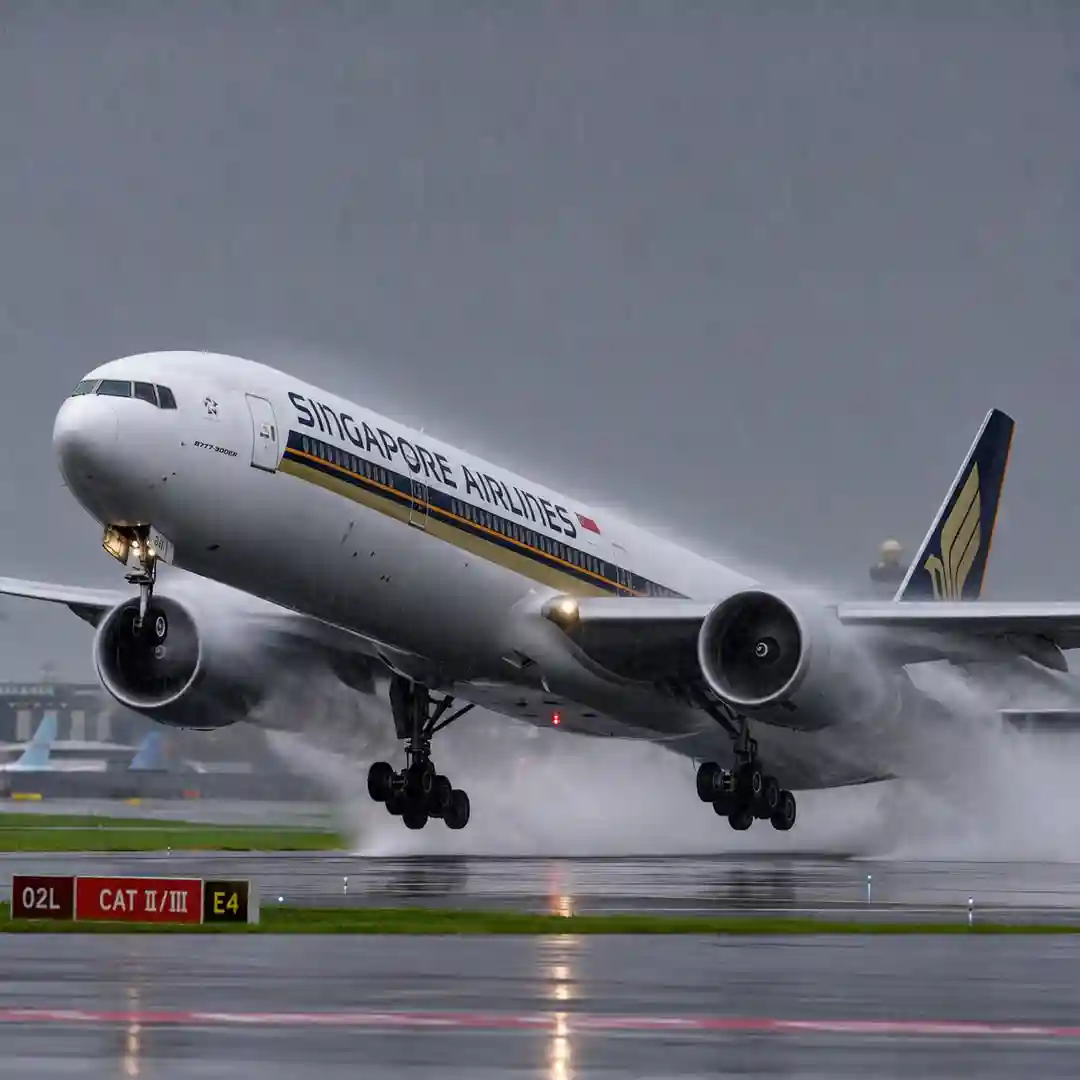
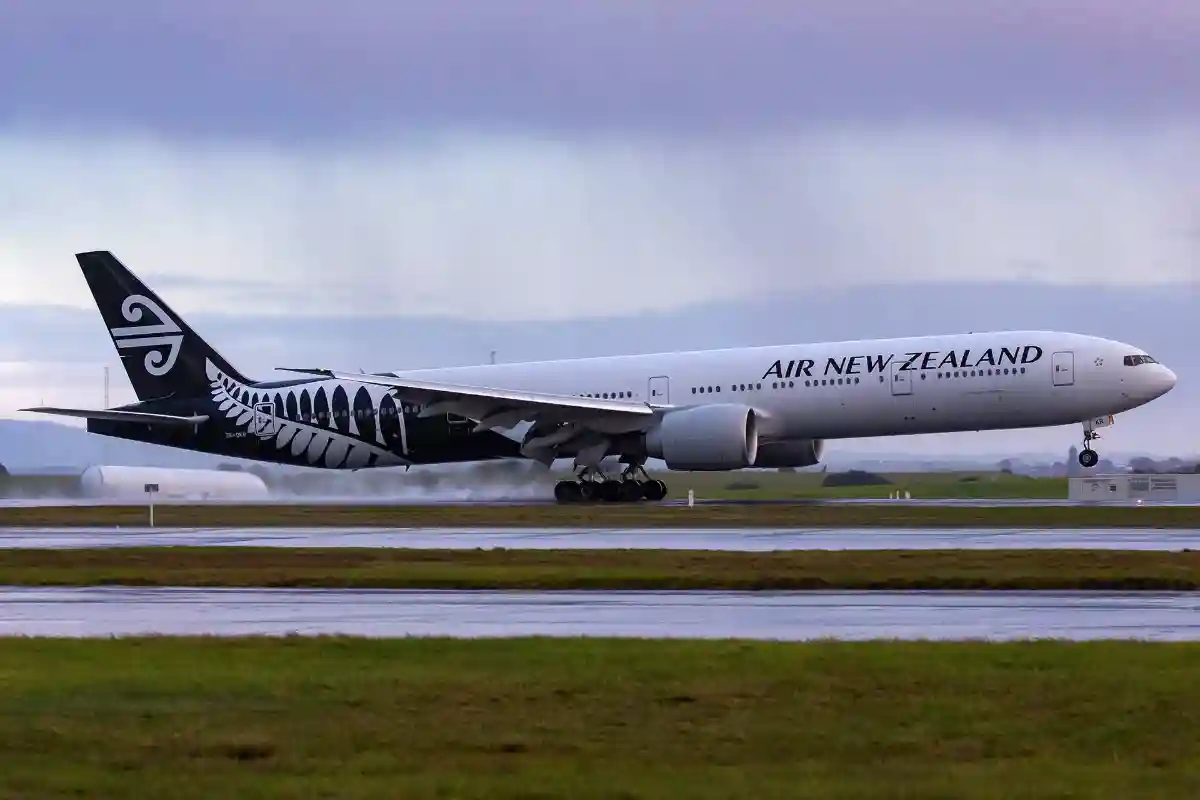
The Boeing 777 is one of the largest and heaviest twin-engine commercial aircraft ever placed into widespread airline service. With a fully loaded 777-300ER potentially weighing well over 300 metric tons, the sight of one turning onto a runway can create the impression that the takeoff procedure is always identical: line up with the centerline, stop, set the brakes, bring the engines up to power, and then release the aircraft. In reality, some Boeing 777 crews never bring the aircraft to a complete stop before applying takeoff thrust.
Instead, the aircraft continues moving slowly as the pilots smoothly advance the thrust levers. This is known as a rolling takeoff, and it is a deliberate operational technique rather than a shortcut or an indication that the crew is rushing the departure. The decision depends on the airline’s standard operating procedures, runway conditions, aircraft weight, available runway length, air traffic control instructions, and the performance calculations made before departure.
That difference is particularly interesting because a 777 carries enormous kinetic energy once it begins accelerating. A small decision made while the aircraft is moving at taxi speed can influence how much runway remains, how the engines are stabilized, how the aircraft responds to an engine problem, and how efficiently an airport can sequence departures. The procedure therefore reflects a careful balance between performance, safety, fuel consumption, and operational efficiency.
What Is a Rolling Takeoff on a Boeing 777?
A rolling takeoff occurs when the aircraft enters the runway and continues moving rather than stopping completely before the takeoff sequence begins. The 777 may turn onto the runway centerline at a low taxi speed, after which the crew smoothly advances the thrust levers while the aircraft is already rolling.
The exact procedure varies by airline and aircraft configuration, so there is no universal Boeing 777 rule requiring every operator to use either a rolling or standing takeoff. Airline SOPs and the applicable Boeing operating procedures determine how the technique is performed. The crew must still complete all required thrust-setting, engine-monitoring, runway-alignment, and takeoff checks.
The key distinction is that a rolling takeoff does not mean the engines are simply pushed immediately to maximum thrust without verification. The crew still needs to establish the appropriate takeoff thrust and confirm that the engines are responding normally. Depending on the specific 777 variant and engine installation, the relevant engine indications and thrust-setting procedures differ.
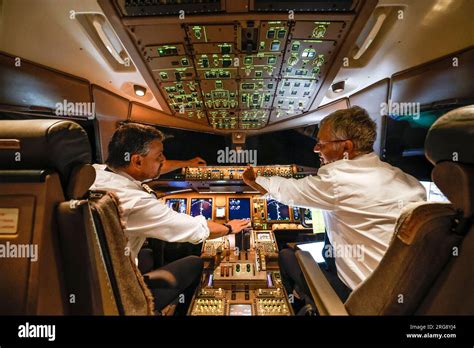
A rolling start can therefore look deceptively simple from the passenger cabin. From the flight deck, however, it is a carefully choreographed sequence involving aircraft alignment, thrust management, engine indications, flight instruments, runway awareness, and coordination between the pilots.
Why Airlines May Prefer Rolling Takeoffs
One of the most obvious advantages is operational efficiency. Stopping a 300-ton aircraft and then accelerating it from zero requires additional energy compared with maintaining a small amount of forward momentum. The difference on a single departure is not dramatic, but airlines operate thousands of flights every year, making small efficiency gains potentially meaningful across an entire fleet.
The aircraft also spends less time occupying the runway during the initial portion of the departure sequence. At a busy international airport, where several aircraft may be waiting to depart, shaving seconds from each movement can contribute to better runway utilization.
Fuel consumption is another consideration. A large turbofan consumes substantial fuel while producing high thrust, and the aircraft does not gain much operational benefit from holding the brakes while the engines are being brought toward takeoff power. A rolling procedure can reduce some of that unnecessary stationary engine operation.
However, it would be misleading to describe rolling takeoffs as a major fuel-saving technology. The fuel benefit is relatively small on an individual departure. The more important advantages can involve runway occupancy, engine handling, brake management, and overall airport throughput.
There is also a mechanical consideration. A stationary aircraft with very large high-bypass turbofans operating at elevated power can generate strong airflow and suction around the engine inlets. Keeping the aircraft moving can reduce the amount of time spent in a stationary high-power condition, which may be desirable where loose debris, snow, water, or other contaminants are concerns.
Engine Stabilization Still Matters During a Rolling Start
One of the most important misconceptions about rolling takeoffs is that pilots simply push the thrust levers forward and immediately accelerate away. Engine stabilization remains essential.
Large turbofan engines do not instantaneously reach their commanded takeoff thrust. The rotating assemblies need time to accelerate, fuel flow must increase appropriately, and the engine instruments must show that the powerplants are responding normally. On a twin-engine aircraft such as the 777, symmetrical engine response is especially important.
If one engine develops thrust faster than the other, the aircraft can experience a yawing tendency. At low speed, the pilots have considerable control authority and time to correct it. As acceleration continues, however, the consequences of asymmetric thrust become increasingly significant.
This is why the takeoff procedure incorporates specific thrust-setting and engine-monitoring techniques. The crew is not merely watching the speed increase. They are confirming that the engines are producing the expected response while ensuring the aircraft remains properly aligned with the runway.
The exact thrust indication used depends on the engine type. Boeing 777 variants have been powered by engines from General Electric, Rolls-Royce, and Pratt & Whitney, and their cockpit indications and thrust-management procedures are not identical. The GE90, for example, uses N1-based engine indications, while other engine families have their own parameters and operating procedures.
When a Standing Takeoff Makes More Sense
The rolling technique has advantages, but it is not automatically preferable. A standing takeoff can be the better choice when the aircraft is operating close to its performance limits.
Take a heavily loaded 777 departing on a long-haul route from an airport with a relatively constrained runway. Every meter of available pavement matters. If the aircraft must achieve a specific takeoff performance target, the crew may want the aircraft stationary at the designated starting point before releasing the brakes.
Starting from a precisely selected point can make the performance calculation more straightforward. The aircraft begins its acceleration with the engines established at the required takeoff thrust, and the runway available for acceleration is used as efficiently as possible.
This becomes particularly relevant when aircraft weight is high, temperatures are elevated, the runway is relatively short, or obstacles and climb requirements impose demanding performance conditions. The 777-300ER, especially when carrying a heavy payload and large quantities of fuel, can create significant takeoff-performance demands.
A standing start can therefore provide a useful performance advantage because the aircraft does not spend the initial portion of the runway completing its turn, accelerating from taxi speed, or establishing takeoff power.
Runway Surface Conditions Can Change the Decision
Dry pavement provides excellent tire friction and predictable directional control, but airports do not always offer ideal conditions. Rain, standing water, slush, snow, and ice can fundamentally change how a heavy aircraft behaves during the takeoff roll.
When runway friction is reduced, directional control becomes more important. The crew wants the aircraft accurately aligned with the centerline before high thrust is applied. An asymmetric engine response on a slippery runway can produce a more challenging situation than it would on dry pavement.
This is one reason airline procedures may call for different techniques depending on the runway condition. The choice is not simply about saving fuel. It is about maintaining the appropriate safety margin for the conditions that actually exist at the airport.
Snowy airports such as New Chitose in Japan or Chicago O’Hare during severe winter weather demonstrate why a procedure that works well on a dry summer runway may not be appropriate in degraded conditions. Runway friction, wind, contamination, braking performance, and directional control all interact.
The aircraft’s takeoff performance calculation must account for those factors, and crews operate within the limitations and procedures established for the particular aircraft and airline.
Air Traffic Control Can Determine How the 777 Enters the Runway
The decision is not always made solely by the pilots. Air traffic control instructions can directly influence whether a rolling takeoff is possible.
Consider a controller instructing a 777 crew to “line up and wait.” The aircraft must enter the runway and stop at the designated position. A rolling takeoff is obviously impossible if the clearance requires the aircraft to hold its position.
Conversely, at a congested airport, a crew may receive a takeoff clearance that allows the aircraft to continue directly into the departure sequence. In that situation, maintaining momentum can help reduce unnecessary runway occupancy.
This interaction between the cockpit and tower is an important part of modern airport operations. A runway is a shared resource, and the objective is not simply to get one aircraft airborne as quickly as possible. Controllers must maintain separation, manage arrivals and departures, account for wake turbulence, and coordinate traffic across the airport.
For a widebody aircraft, even a small reduction in runway occupancy can have a cumulative effect when repeated dozens or hundreds of times each day.
Brake Temperature Is Another Hidden Consideration
The 777’s braking system is designed to absorb enormous amounts of energy during a rejected takeoff. That makes brake temperature an important operational consideration before departure.
A high-speed rejected takeoff can transform a tremendous amount of kinetic energy into heat within a very short period. The heavier the aircraft and the faster it is traveling, the greater the energy that the brakes may need to absorb.
Carbon brakes behave differently from conventional steel brakes and can perform particularly well within their intended temperature range. Nevertheless, excessive pre-existing brake heat is something flight crews and aircraft systems must consider.
A rolling takeoff can reduce the need for unnecessary braking immediately before departure. Taxiing for a long period and repeatedly applying the brakes can generate heat, while a stop-and-hold procedure introduces another period during which the aircraft is stationary on the brakes.
The Brake Temperature Monitoring System and aircraft indications help crews assess whether brake temperatures are within the required operating limits. If temperatures are unusually high, the crew may have to follow additional procedures or allow the brakes to cool before departure.
Why Maximum Takeoff Weight Changes Everything
A Boeing 777 operating at a relatively light weight has much greater flexibility than one departing near its maximum takeoff weight. Weight affects acceleration, stopping distance, climb performance, and the amount of runway required for different takeoff scenarios.
For an aircraft weighing hundreds of tons, even a small difference in acceleration performance can translate into meaningful runway distance. This is why takeoff calculations are performed before every departure rather than relying on a universal technique.
The crew considers factors including aircraft weight, runway length, runway slope, temperature, wind, pressure altitude, runway condition, obstacle requirements, and available thrust. The resulting performance data helps determine the appropriate takeoff configuration and operating limits.
A standing takeoff can be particularly valuable when the aircraft needs every available meter. Conversely, when runway length is plentiful and conditions are favorable, a rolling procedure may provide operational benefits without compromising the required performance margins.
Low Visibility Makes Precision Even More Important
Low-visibility operations introduce another layer of complexity. When visibility is extremely poor, runway alignment becomes a critical part of the departure procedure.
A rolling turn onto the runway can make it more difficult to visually confirm the aircraft’s exact alignment before thrust is increased, particularly when the crew is operating with limited outside visual references. Modern flight decks provide sophisticated navigation and runway information, but precise runway alignment remains fundamental.
A stationary position gives the crew an opportunity to confirm heading, runway identification, centerline alignment, and instrument indications before beginning the acceleration phase.
This is especially important because an aircraft as large as the 777 carries substantial momentum once it accelerates. If an abnormality occurs shortly after entering the runway, the crew needs the aircraft positioned correctly and operating within the assumptions used by the takeoff-performance calculation.
The Takeoff Technique Is a Balance, Not a Preference
It is tempting to divide airline pilots into two groups: those who prefer rolling takeoffs and those who prefer standing starts. The reality is much more sophisticated.
The procedure is governed by conditions. Airline SOPs establish the framework, Boeing procedures establish aircraft-specific requirements, performance calculations determine what the aircraft can safely do, and ATC controls the runway sequence. The crew then applies those requirements to the actual situation.
That means the same 777 crew could use a rolling takeoff on one flight and a standing takeoff on another. The difference might be caused by aircraft weight, runway condition, weather, runway length, traffic instructions, brake temperatures, or a combination of several factors.
Passengers rarely notice this distinction because the entire process takes place before the aircraft reaches its most dramatic acceleration. From the cabin, the difference may simply feel like a few extra seconds of movement before the engines roar to full takeoff power.
What Passengers Are Really Seeing During Takeoff
When a Boeing 777 turns onto the runway and appears to accelerate without stopping, there is no mystery or missing step. The aircraft is performing a controlled rolling takeoff under an established operating procedure.
The pilots have already completed the necessary preparation, confirmed the aircraft’s takeoff data, assessed the runway, and coordinated the departure with ATC. The gradual increase in thrust is part of a carefully managed sequence rather than an attempt to save time at the expense of safety.
When the aircraft stops before takeoff, the same principle applies. The standing start may be selected because the available runway, aircraft weight, surface condition, visibility, or operating procedure makes that technique more appropriate.
The Boeing 777 is an excellent example of how aviation decisions that appear simple from outside the aircraft can involve several layers of engineering and operational judgment. A few seconds of rolling versus stopping can reflect an entire chain of calculations involving thrust, runway performance, braking energy, weather, traffic management, and aircraft weight.
Ultimately, there is no single “best” way for every 777 to begin its takeoff roll. The safest and most efficient technique is the one that matches the aircraft, runway, weather, operational rules, and current traffic situation. That is why some Boeing 777 crews never stop before applying takeoff thrust—and why those same crews may choose to stop on another departure when the conditions demand it.