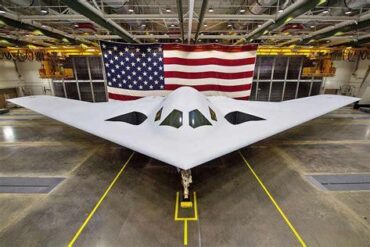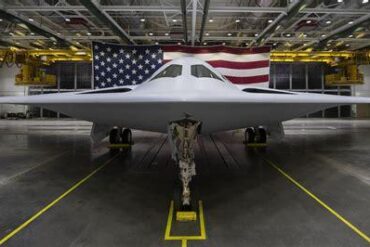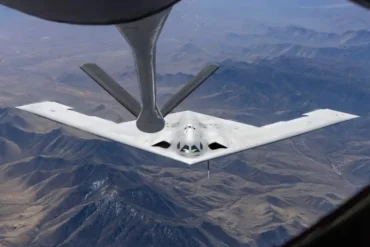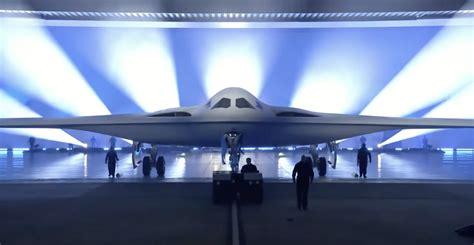
The U.S. Department of Defense (DoD) has taken a decisive step toward reshaping its long-range strike capability, unveiling a substantial $10.3 billion allocation for the B-21 Raider program in its Fiscal Year 2026 defense budget. This new generation of stealth bombers is intended to replace the aging B-1B Lancer and B-2 Spirit fleets, redefining strategic air power and projecting American military dominance into a new era.
The budget, presented at the Pentagon on June 26, 2025, by senior defense leaders, includes $4.74 billion dedicated specifically to B-21 development, divided between the base budget ($2.3 billion) and reconciliation bill funding ($2.4 billion). This bold move signifies a renewed push to accelerate production and deliver operational units before the decade’s end.
Massive Budget as Geopolitical Tensions Mount
The FY2026 $1.01 trillion national defense budget, announced under President Donald Trump’s administration, reflects growing geopolitical urgency. With $301.1 billion earmarked for the Air Force and an additional $40 billion for the U.S. Space Force, the strategic pivot toward future-ready technologies is evident. Roughly $60 billion is funneled into nuclear enterprise modernization, with the B-21 Raider and LGM-35A Sentinel ICBM forming the cornerstone of the modernization initiative.
A senior defense official noted the funding is essential to “deter Chinese aggression in the Indo-Pacific” and to maintain a technological edge amid Beijing’s own development of its H-20 stealth bomber. The increased tempo of funding for the B-21 comes on the heels of a series of U.S. strategic bomber strikes using the B-2 Spirit in Iran, underlining the need for an even more survivable and versatile platform in the global threat landscape.
From Plant 42 to Strategic Readiness
The B-21 Raider conducted its maiden flight from Northrop Grumman’s facilities at Plant 42 in Palmdale, California, in late 2023 and is now undergoing Low-Rate Initial Production (LRIP). This phase focuses on building limited units to refine manufacturing workflows and incorporate real-time feedback before transitioning to full-scale production.
Northrop Grumman, which suffered a $477 million loss in Q1 2025 due to changes in manufacturing strategy, has pivoted its approach to enable faster and more cost-effective production, according to internal reports. The program’s speed-up is not just a matter of operational planning—it’s a calculated move to prepare the U.S. for high-stakes contingencies against peer adversaries.
How the B-21 Raider Surpasses the B-2 Spirit
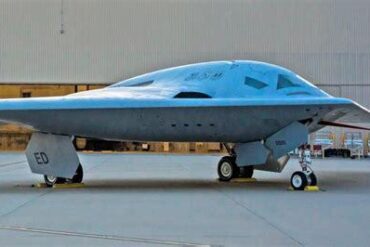
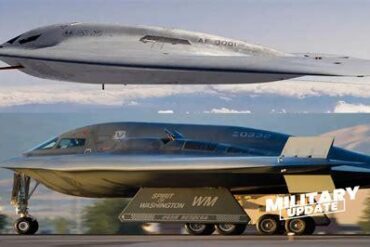
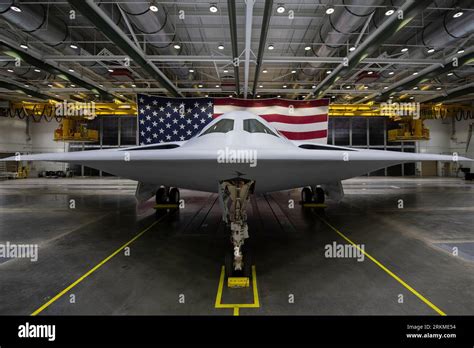
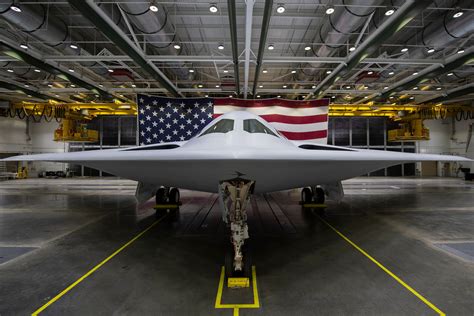
Although both the B-2 Spirit and B-21 Raider are stealth bombers developed by Northrop Grumman, the similarities largely end with appearance. The B-21 incorporates a host of technological advancements that make it smaller, stealthier, more adaptable, and more cost-effective than its predecessor.
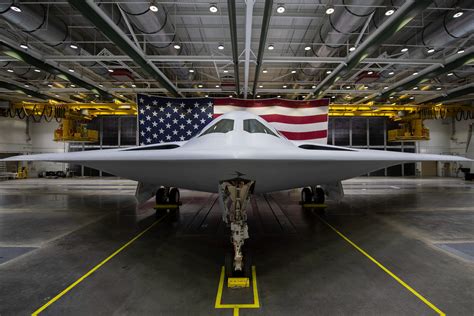
A defining feature is its 2-D exhaust system, seamlessly integrated into the aircraft’s fuselage to minimize heat signatures and reduce infrared visibility. This contrasts with the B-2’s exposed “sugar-scoop” exhausts that compromise stealth. Moreover, the air intakes of the B-21 are deeply recessed, virtually invisible even in side-profile imagery, ensuring a dramatically lower radar cross-section.
Engineered using sixth-generation open-systems architecture, the B-21 supports modular upgrades. The digital engineering underpinning its design slashes design-to-production changes from as much as 20% in older programs to under 1%, streamlining both cost and adaptability. This architecture futureproofs the Raider against evolving threats and offers seamless integration of AI, cyber-resilience tools, and next-generation munitions.
Maintenance Revolution and Operational Readiness
The B-2 Spirit, although formidable, has long been regarded as the most maintenance-heavy aircraft in the USAF inventory. The B-21 breaks that mold. With durable radar-absorbent materials that don’t require climate-controlled hangars, sortie rates can be dramatically increased. Maintenance downtimes will drop, operational costs will decline, and deployment speed will surge—all without sacrificing survivability.
This maintenance efficiency is pivotal. As global crises demand rapid, unpredictable force projection, the ability to keep aircraft mission-ready in forward-deployed settings is no longer a luxury—it’s a necessity. The B-21 Raider enables the USAF to meet this challenge head-on.
Technical Overview: Specifications and Capabilities
Publicly available data on the B-21 remains limited, but a few key details have emerged:
- Wingspan: Estimated at ~140 feet, smaller than the B-2’s 172-foot span
- Payload Capacity: Approx. 9,100 kg, compared to B-2’s 18,000 kg
- Range: Global reach with mid-air refueling
- Armament: Full suite of nuclear and conventional precision-guided munitions
- Stealth: Advanced RAM coatings, 2-D exhaust, deeply recessed intakes
- Sensors and Avionics: Upgraded radar arrays, multi-domain situational awareness
While the B-21 may appear lighter on payload, its ability to penetrate dense enemy airspace compensates with strategic flexibility. According to Northrop Grumman, nearly 90% of the current bomber fleet cannot effectively infiltrate modern integrated air defense systems—a capability the B-21 Raider is uniquely designed to master.

Learning From the Past, Scaling for the Future
The USAF learned critical lessons from the B-2 program, which initially envisioned 132 aircraft but was curtailed at just 21 due to budget cuts, ballooning per-unit costs to nearly $2 billion. This time, the Air Force has committed to a minimum fleet of 100 B-21 Raiders, beginning with 21 aircraft under low-rate production.
Unlike the B-2 program, which suffered from programmatic isolation, the B-21’s development is collaborative and iterative, incorporating lessons from other platforms, including the B-52 modernization and F-35 Lightning II program. The intention is clear: build smarter, faster, and at scale.
Strategic Basing and Deployment Plans
The USAF has already chosen its initial operating base: Ellsworth Air Force Base in South Dakota will house the first combat-coded Raider squadrons. It will later be followed by deployments to Whiteman Air Force Base in Missouri—current home to the B-2 Spirit—and Dyess Air Force Base in Texas.
These bases offer the strategic depth needed to sustain global operations, maintain training tempo, and ensure integration with legacy and next-gen support platforms. The Raider’s reach and survivability will allow the U.S. to project power in both peacetime deterrence and high-intensity conflict.
Global Strategic Implications
As China’s H-20 stealth bomber remains under wraps and Russia’s strategic bomber fleet ages, the B-21 Raider’s entry marks a historic leap. No other nation is close to deploying a sixth-generation long-range strike platform. The Raider reinforces U.S. aerial dominance, ensuring credible deterrence from the Arctic to the South China Sea.
In fact, analysts note that the recent deployment of B-2 bombers in a surprise strike on Iranian nuclear sites was a reminder of what stealth bombers can achieve. But even that mission, impressive as it was, will pale in comparison to what the B-21 can do—more precision, deeper penetration, and far greater survivability.
Conclusion: The Future of Air Dominance
The FY2026 defense budget’s prioritization of the B-21 Raider sends an unmistakable message: the U.S. is preparing for an era of high-intensity warfare where stealth, survivability, and adaptability will be key. The Raider is not just a bomber—it is a strategic instrument of deterrence and power projection built for the 21st century battlespace.
With production accelerating and funding secure, the B-21 Raider will soon redefine the strategic landscape, eclipsing legacy bombers and cementing American air superiority in a time of emerging threats and great-power rivalry. This is not merely a platform for the future—it is the future of global air combat.