The U.S. Department of Defense has reaffirmed its commitment to modernizing America’s air combat capabilities with a $3.1 billion allocation for Boeing’s F-15EX Eagle II fighter jet program, as outlined in the proposed Fiscal Year 2026 (FY2026) defense budget. This announcement, made on June 26, 2025, at the Pentagon, underscores Washington’s emphasis on enhancing the tactical airpower of the U.S. Air Force while reinforcing the country’s defense industrial base.
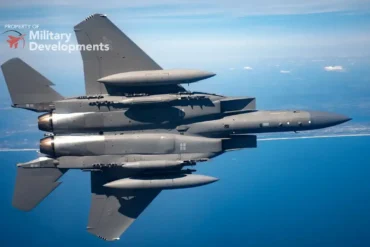
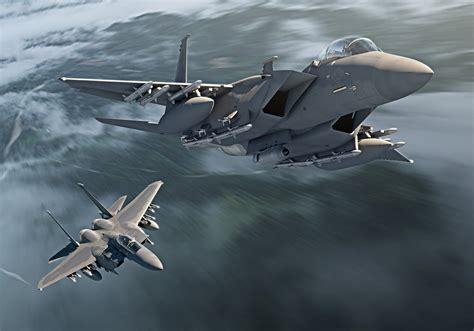
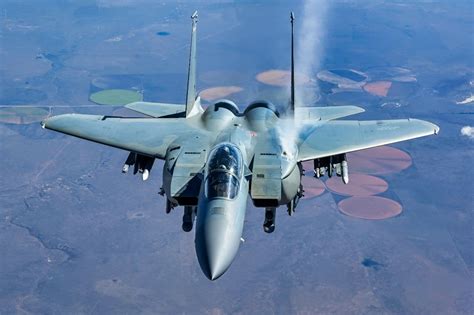
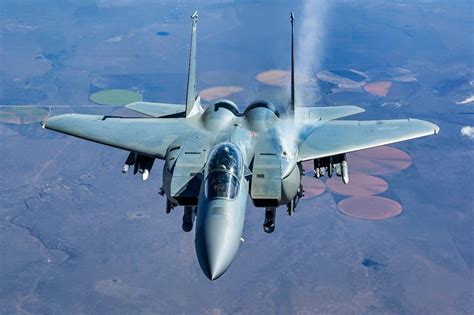
The F-15EX Eagle II, developed by Boeing Defense, Space & Security at its facilities in St. Louis, Missouri, represents a significant leap forward from the legacy F-15 aircraft platform. With a design that integrates modern avionics, advanced electronic warfare systems, and an unparalleled weapons payload, the F-15EX is engineered to operate alongside stealth platforms such as the F-35, providing a complementary force multiplier in both homeland defense and high-threat combat environments.
Pentagon Prioritizes Air Superiority and Industrial Base Stability
A Pentagon spokesperson emphasized that the F-15EX procurement strategy serves dual objectives: reinforcing U.S. air superiority and stabilizing domestic aircraft production lines. “The F-15EX will help us bolster the industrial base and maintain production continuity at Boeing’s facilities,” the spokesperson stated, highlighting the broader economic and strategic implications of the program.
Boeing’s production of the F-15EX supports thousands of high-skilled jobs across multiple states, with critical supply chains extending deep into the U.S. defense manufacturing sector. Maintaining continuous production of fighter aircraft is seen as vital for national defense readiness, ensuring that the nation’s aerospace workforce and infrastructure remain at peak capability.
F-15EX Eagle II: A Technological Evolution of a Proven Platform
The F-15EX Eagle II traces its lineage to the original F-15, first introduced in the 1970s as a dedicated air superiority fighter. Over the decades, the F-15 has earned a reputation for unmatched performance, boasting over 100 aerial victories with zero air-to-air combat losses. The Eagle II builds upon this combat-proven legacy with cutting-edge upgrades designed to meet 21st-century operational demands.
Notably, the F-15EX offers:
- Expanded Payload Capacity: Capable of carrying up to 22 air-to-air missiles or a combination of air-to-ground and air-to-air munitions, providing unmatched firepower.
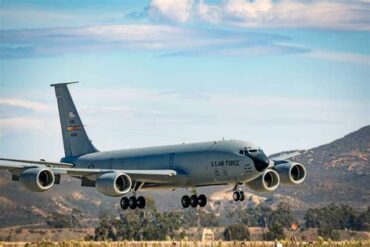
- Extended Operational Range: Thanks to conformal fuel tanks and structural enhancements, the Eagle II can conduct long-range missions with reduced reliance on aerial refueling.
- Advanced Avionics and Sensors: Equipped with the AN/APG-82(V)1 Active Electronically Scanned Array (AESA) radar, enabling superior target detection and tracking.
- Next-Generation Electronic Warfare Suite: Featuring sophisticated electronic countermeasures to enhance survivability in contested environments.
- Open Mission Systems Architecture: Allowing rapid integration of new weapons, sensors, and capabilities as technology evolves.
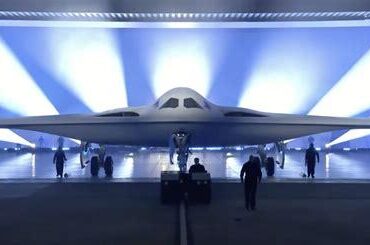
These attributes position the F-15EX as a critical component of the U.S. Air Force’s mixed-fleet approach, designed to complement stealth fighters like the F-35 Lightning II and strategic bombers such as the B-21 Raider.
A Strategic Shift: From Initial Procurement to Fleet Modernization
The F-15EX program originated with a July 2020 contract, initiating an order for eight aircraft under a framework agreement valued at up to $23 billion for a potential 144 units. However, evolving defense priorities and fiscal realities have seen the procurement target adjusted to 104 aircraft, primarily aimed at replacing the aging F-15C/D fleet.
The F-15C/D variants, which have been the backbone of U.S. air superiority for decades, face obsolescence amid the rapid evolution of near-peer adversary capabilities. The Eagle II’s introduction ensures that the U.S. maintains a robust fourth-generation-plus air combat capability, bridging the operational gap as fifth-generation platforms mature.
Balancing High-End Stealth with Force Volume and Flexibility
One of the F-15EX’s key advantages is its ability to operate in less permissive but not fully denied airspaces, where stealth aircraft are not always necessary or cost-effective. The platform provides:
- Increased Force Capacity: Allowing the U.S. Air Force to field more combat-ready aircraft without solely relying on expensive stealth fighters.
- Rapid Deployment: Leveraging existing F-15 infrastructure, training programs, and logistics systems to accelerate operational readiness.
- Cost-Effective Modernization: Utilizing mature technologies and proven airframes to reduce development risks and acquisition costs.
This approach ensures the U.S. can respond to diverse mission requirements ranging from homeland defense and maritime security to joint force operations in contested regions.
Boeing’s Role and the Broader Defense Industrial Ecosystem
Boeing’s F-15EX production line in Missouri, supported by a nationwide network of suppliers, plays a pivotal role in sustaining the American aerospace and defense industrial base. Continuous procurement ensures that the specialized workforce, critical tooling, and engineering expertise remain intact.
In addition to providing aircraft to the U.S. Air Force, Boeing positions the F-15EX for potential foreign military sales, capitalizing on the aircraft’s reputation and interoperability benefits among U.S. allies.
Challenges and Geopolitical Context
The decision to invest heavily in the F-15EX comes against a backdrop of escalating global security concerns. Rising tensions with near-peer competitors such as China and Russia, coupled with regional conflicts and airspace security demands, have accelerated U.S. efforts to reinforce its air combat capabilities.
However, the F-15EX program faces scrutiny over cost, survivability in highly contested environments, and the broader debate regarding the balance between stealth and conventional aircraft procurement. Critics argue that resources could be better allocated to expanding fifth-generation fleets, while proponents emphasize the necessity of a diversified force structure.
Future Outlook: Deliveries, Deployment, and Integration
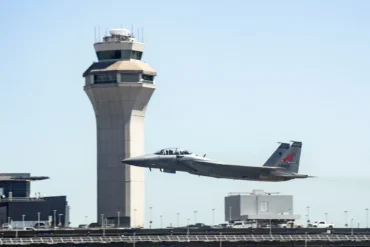
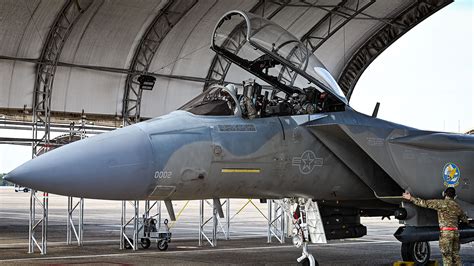
The U.S. Air Force has already begun receiving initial F-15EX units, with further deliveries scheduled through FY2026 and beyond. The aircraft are expected to be stationed at key operational bases, including Eglin Air Force Base in Florida, where testing and evaluation are ongoing.
As production ramps up, the F-15EX will gradually replace aging airframes, contributing to the Air Force’s strategic vision of building a resilient, agile, and lethal air combat force. The platform’s open-systems architecture ensures that it remains adaptable to future technological advancements, including the integration of hypersonic weapons, advanced sensors, and artificial intelligence-enabled systems.
Conclusion: Strengthening America’s Airpower for the Future
The $3.1 billion FY2026 investment in the F-15EX Eagle II program reflects a calculated strategy to balance technological advancement with industrial sustainability. By leveraging proven platforms and integrating next-generation capabilities, the U.S. Department of Defense seeks to maintain a competitive edge amid evolving global threats.
As the F-15EX enters broader operational service, it will serve as a cornerstone of U.S. airpower—delivering formidable firepower, strategic flexibility, and enduring value to the nation’s defense posture well into the coming decades.