For nearly thirty years, the Northrop Grumman B-2 Spirit stood alone as the United States’ premier stealth bomber, a technological marvel capable of penetrating the most heavily defended airspace on Earth. Designed during the final years of the Cold War, the B-2 introduced a radical flying-wing design and advanced radar-evading capabilities that reshaped modern aerial warfare. Even in 2026, the aircraft remains a critical component of the U.S. nuclear triad, delivering both conventional and nuclear payloads with remarkable precision. However, time inevitably catches up with even the most advanced machines, and the B-2 fleet—small, expensive, and aging—has gradually approached the limits of its operational lifespan.
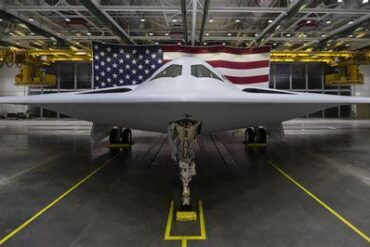
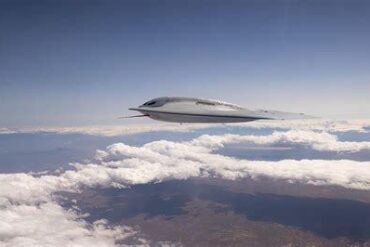
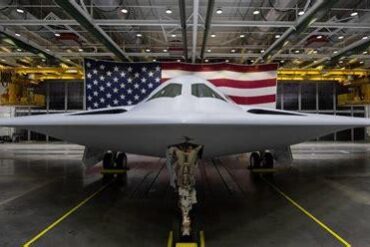
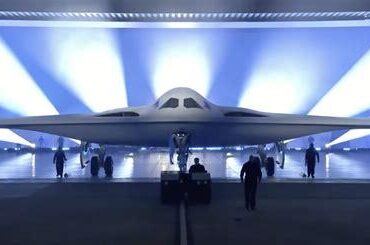
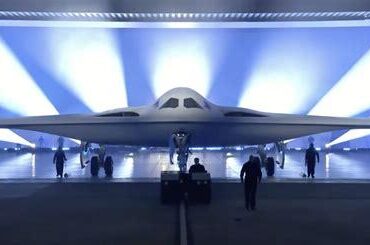
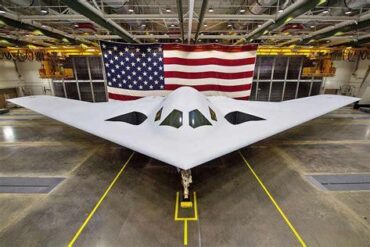
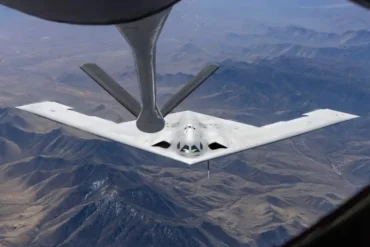
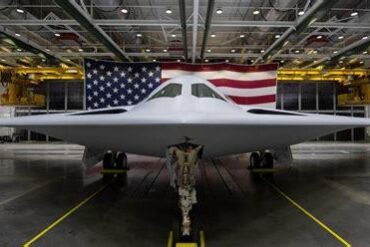
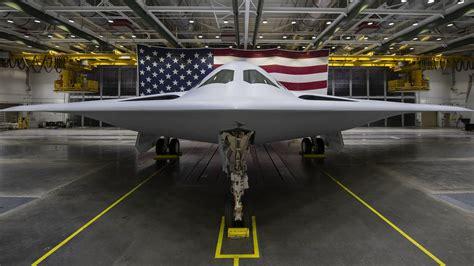
To address this looming gap, the U.S. Air Force has moved decisively toward the next generation of stealth strike capability: the Northrop Grumman B-21 Raider. This highly secretive bomber is designed to succeed the B-2 while dramatically improving the United States’ long-range strike capabilities. While the aircraft visually resembles its predecessor with a similar flying-wing configuration, the B-21 incorporates extensive internal upgrades. Its design is smaller, more efficient, and powered by fewer engines, reducing maintenance complexity while maintaining the low-observable characteristics essential for modern stealth warfare.
The strategic importance of the B-21 program has become increasingly clear as global military competition intensifies. To accelerate deployment, the Department of the Air Force has signed a new agreement with Northrop Grumman that dramatically increases production capacity for the bomber. The updated arrangement is intended to push the program into a faster manufacturing cycle, allowing the Air Force to field operational B-21 units earlier than originally planned.
B-21 Raider Accelerates Toward Operational Deployment
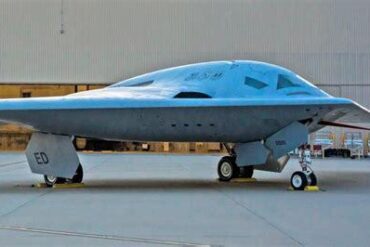
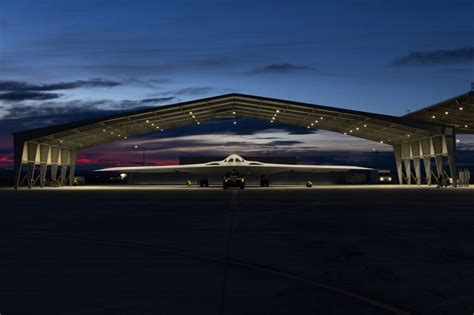
The B-21 Raider is not merely a replacement aircraft—it represents a generational leap in long-range strategic bombing capability. At least two B-21 test aircraft have already entered the U.S. Air Force inventory, with additional prototypes expected to arrive during Fiscal Year 2026. These early airframes are being used to validate flight performance, stealth characteristics, avionics integration, and mission systems.
Under the revised production plan, the Air Force expects the B-21 to begin entering operational service around 2027, significantly strengthening the nation’s ability to conduct deep-strike missions across contested regions. The Raider is designed with an open-architecture digital backbone, allowing rapid upgrades to sensors, electronic warfare systems, and weapons payloads as new technologies emerge.
This flexibility is particularly important as modern air defense networks grow increasingly sophisticated. Nations are deploying layered radar systems, advanced surface-to-air missiles, and integrated command networks designed to detect and intercept traditional aircraft. The B-21’s design focuses on penetrating these defenses by combining low observability, electronic warfare capabilities, and advanced data connectivity, ensuring that it remains relevant for decades.
Production Boost Reflects Urgent Strategic Demand
In February 2026, the Air Force publicly confirmed that it had reached a new agreement with Northrop Grumman to increase B-21 production rates by approximately 25 percent annually. The move reflects growing urgency within the Pentagon to deploy next-generation stealth bombers at scale, ensuring the United States retains a credible long-range strike deterrent.
The increased manufacturing pace will enable the Air Force to acquire aircraft faster than previously projected, allowing squadrons to achieve combat readiness sooner. Military planners believe this accelerated timeline could significantly strengthen the nation’s ability to respond to emerging global threats.
The financial commitment behind the expansion is substantial. The United States has allocated $4.5 billion in additional funding to support the production surge. These funds were already authorized through the FY2025 Reconciliation Act, sometimes referred to as the “One Big Beautiful Bill.” By front-loading investment into manufacturing capacity, the Pentagon aims to deliver more aircraft within a shorter timeframe while preventing the kind of long-term cost overruns that have plagued other defense programs.
A Rare Defense Program Staying on Schedule
One of the most notable aspects of the B-21 Raider program is its relative stability compared with other major U.S. defense projects. Large military initiatives frequently suffer from ballooning budgets, delayed timelines, and technological setbacks. High-profile examples—such as the heavily delayed USS Enterprise aircraft carrier—demonstrate how complex modern weapons systems can spiral beyond initial expectations.
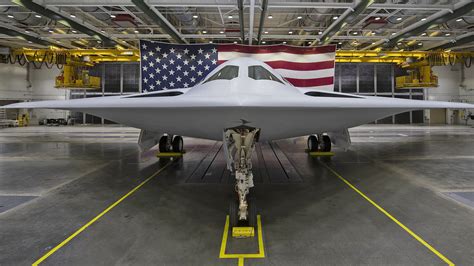
The B-21 program, however, has largely remained on schedule and within projected cost estimates. Northrop Grumman adopted modern digital engineering techniques during development, including advanced simulation tools and integrated design environments. These approaches allow engineers to identify and solve problems before hardware is even built, significantly reducing the risk of expensive redesigns later in the process.
Still, the decision to accelerate production introduces new challenges. Increasing manufacturing output while maintaining strict stealth tolerances requires exceptional precision. Any disruption to the supply chain or production workflow could potentially affect delivery timelines. Whether the program can sustain its impressive track record under this expanded production tempo will be closely watched across the defense industry.
The Future Backbone of America’s Strategic Bomber Force
The B-21 Raider is expected to become the backbone of the U.S. strategic bomber fleet for decades to come. Designed for both conventional and nuclear missions, it will operate alongside upgraded B-52 Stratofortress bombers and the remaining B-2 aircraft until those older platforms eventually retire.
What makes the B-21 particularly significant is its emphasis on adaptability and survivability in high-threat environments. As geopolitical tensions rise and advanced air defense systems proliferate, the ability to strike targets anywhere on the planet without detection becomes increasingly valuable.
With production now accelerating and operational deployment on the horizon, the B-21 Raider represents more than just a new aircraft—it marks the beginning of a new era in stealth bomber dominance for the United States Air Force.