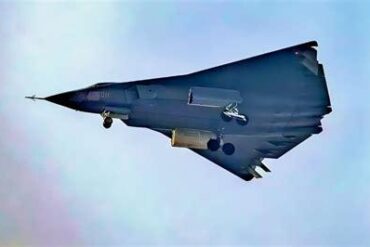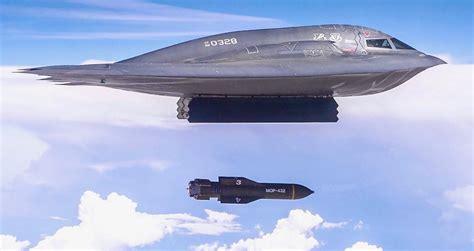
The U.S. Air Force (USAF) has officially begun transitioning away from the aging yet formidable GBU-57 Massive Ordnance Penetrator (MOP), aiming instead to develop a Next Generation Penetrator (NGP) tailored for future strike needs. This new weapon, conceived for delivery from the stealthy B-21 Raider, is being developed to defeat Hard and Deeply Buried Targets (HDBTs) with surgical precision and unmatched lethality.
The turning point came on June 22, 2025, when 14 GBU-57 MOPs were deployed in the first-ever combat strike involving the bomb, targeting Iranian nuclear sites at Fordo and Natanz. Despite the unprecedented scale and impact of the mission—codenamed Operation Midnight Hammer—the sheer size and logistical burden of the MOP underlined the need for a more versatile, compact, and accurate successor.
The Evolution from GBU-57 to NGP
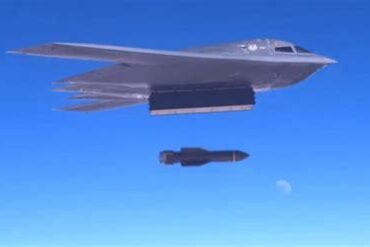
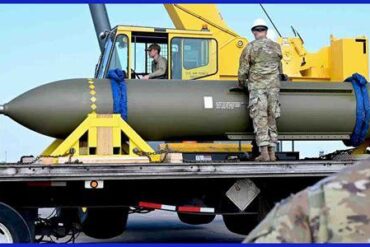
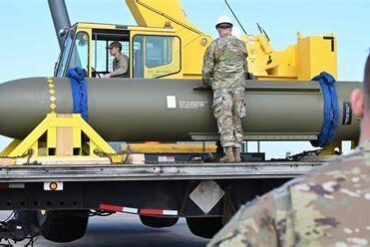
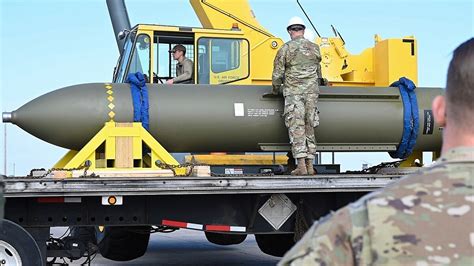
The GBU-57 MOP remains a technological marvel, weighing an astounding 30,000 pounds and capable of burrowing 200 feet into fortified structures before detonation. Yet, its massive footprint limits deployment options. Only the B-2 Spirit can carry two of these behemoths, and the upcoming B-21 Raider—designed with enhanced stealth and survivability—will only be able to carry one.
Enter the Next Generation Penetrator. The NGP is being envisioned as a more compact, precisely guided, and optionally powered bunker-buster bomb. It is slated to integrate advanced technologies, including:
- Rocket boosters for standoff capability
- CEP (Circular Error Probable) of 2.2 meters, enabling precision in GPS-aided, degraded, or denied environments
- An embedded adaptive fuze system capable of detecting structural voids during penetration
These features represent a significant leap in munition capability, enabling the USAF to strike HDBTs without risking aircraft to close-range deployment requirements.
Why the MOP Is No Longer Enough
The GBU-57’s guidance system combines GPS and Inertial Navigation System (INS) technologies, with adaptive detonation timing for maximum internal damage. But while powerful, it is not powered—meaning aircraft must approach dangerously close to deliver it. The bomb also demands enormous internal bay space, reducing mission flexibility.
More critically, the MOP is increasingly inadequate against modern underground military complexes built by U.S. adversaries. Nations like China, Russia, North Korea, and Iran have developed deeply embedded, reinforced bunkers that demand more dynamic and penetrating solutions.
Design Requirements: A New Kind of Bomb
In February 2024, the USAF issued a formal contracting notice for the NGP, calling for vendors to prototype a new penetrator warhead. The criteria are ambitious:
- Weight limit of 22,000 pounds, enabling greater flexibility in bomber configuration
- Must be capable of blast, fragmentation, and penetration effects
- Precision targeting with CE90 accuracy of 2.2 meters even in GPS-denied zones
- Integration of embedded fuze technologies for structural void detection
- Compatibility with the B-21 Raider’s internal weapons bay
The guidance accuracy being demanded—especially in denied environments—is almost without precedent. By comparison, the Tomahawk Block II cruise missile has a CEP of 10 meters, while JDAM munitions clock in at around 5 meters under ideal conditions. The NGP aims to quadruple that accuracy in harsher scenarios.
Lessons from Operation Midnight Hammer
The first operational use of the GBU-57 in June 2025 provided valuable insight. Fourteen bombs were used—more than ever deployed in combat—to ensure destruction of two nuclear facilities. The operational scale highlighted the burden of relying on such heavy ordnance.
B-2 Spirits, capable of carrying two MOPs each, required extensive planning and support. The forthcoming B-21 Raider, which can only carry one MOP, would require twice the number of aircraft to achieve the same effect. This is an unsustainable ratio, especially in high-threat environments where stealth and standoff distance are crucial.
The USAF’s analysis of Operation Midnight Hammer is expected to further refine the NGP’s design specs. Enhanced penetration, flexibility, and delivery methods are all top priorities. The ability to integrate boosters for stand-off launch, thereby avoiding the need to fly directly over the target, is a likely evolution.
B-21 Raider: The Future Delivery Platform
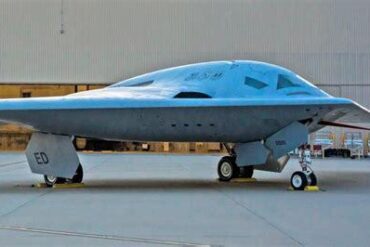
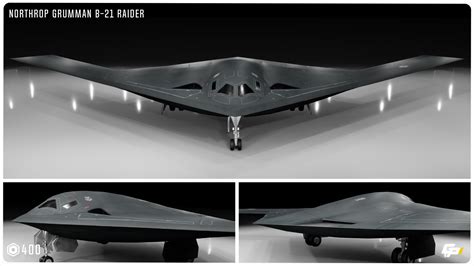
Central to the NGP’s deployment strategy is the B-21 Raider, the stealth bomber that will eventually replace the B-2 Spirit. Built by Northrop Grumman, the B-21 is designed with a smaller profile, enhanced stealth characteristics, and improved range and survivability.
Crucially, it is engineered to carry next-gen weapons internally, maintaining its low observable signature. The NGP is being sized and designed specifically with the B-21 in mind. This includes attention to:
- Internal weapons bay dimensions
- Weight distribution for stealth optimization
- Networked targeting integration for synchronized multi-platform strikes
Unlike the MOP, which restricts airframe options, the NGP’s flexibility will unlock a broader range of operational scenarios, including potential delivery by future unmanned platforms.
Global Precision Attack Weapon (GPAW): Another Complement
Parallel to the NGP development is the USAF’s interest in the Global Precision Attack Weapon (GPAW) program. GPAW aims to create a miniaturized bunker-buster, small enough for stealth fighters like the F-35 Joint Strike Fighter.
While GPAW is not a direct competitor to the NGP, it reflects the USAF’s broader strategy to enable precision strikes on fortified targets using a wider fleet. With the F-35 serving as a penetrating strike asset in contested airspace, a GPAW-class weapon would complement the heavier NGP, creating a tiered strike capability across multiple platforms.
Legacy and Continuity: From HTM to NGP
The NGP didn’t emerge in a vacuum. It is the product of over a decade of research, beginning shortly after the MOP’s induction in the early 2010s. The 2012 Hard Target Munitions (HTM) Analysis of Alternatives and a 2019 follow-up study directly fed into the current 2024 NGP contracting roadmap.
These studies emphasized the growing challenge of deeply buried military complexes and the limitations of existing penetrator technology. With potential adversaries actively expanding their hardened infrastructure, the need for a new generation of bunker-busting ordnance became inevitable.
Strategic Implications and Battlefield Impact
The development of the NGP has profound implications for U.S. global strike capabilities. As the geopolitical environment grows more volatile, with hardened facilities proliferating across Eurasia and the Indo-Pacific, the USAF requires munitions that can neutralize threats in contested and denied zones.
Moreover, integrating stand-off precision with deep-penetration warheads ensures the U.S. can dismantle underground targets without risking its most valuable airborne assets. The use of rocket boosters will allow aircraft to release the weapon dozens of miles away, maintaining stealth integrity and reducing exposure to enemy air defenses.
The evolution from MOP to NGP is not just technological—it’s strategic. It signals a shift to smart, scalable strike assets that reflect the multi-domain nature of modern warfare.
Conclusion
The GBU-57 MOP may have just seen its first combat use, but its time in the USAF’s arsenal is already nearing its end. The Next Generation Penetrator, purpose-built for the B-21 Raider, represents the future of bunker-busting precision warfare.
By combining miniaturization, smart guidance, adaptive fuzing, and optional propulsion, the NGP will offer an agile and devastating toolset for neutralizing the most hardened threats on Earth. As the B-21 prepares for operational deployment, it is weapons like the NGP that will define the next era of American airpower.