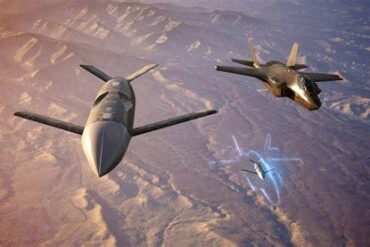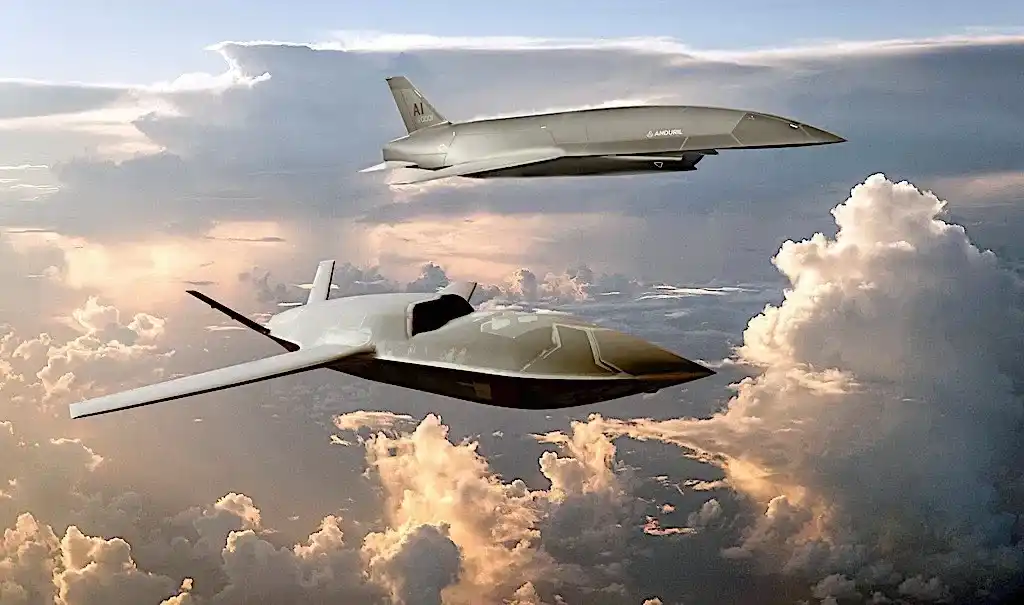
The U.S. Air Force has officially transitioned its Experimental Operations Unit (EOU) into a full-fledged operational squadron—a bold move that represents a pivotal milestone in the military’s shift toward human-machine integration on the battlefield. This transformation, announced during a formal ceremony at Nellis Air Force Base in Nevada, positions the EOU at the center of the Air Force’s strategy to fast-track the development of Collaborative Combat Aircraft (CCA).
Activated under the 53rd Wing, the EOU had operated as a test detachment since 2023. Its elevation to full unit status underscores the growing urgency in integrating autonomous systems into future combat scenarios. The Air Force’s ultimate goal is to realize a deployable and lethal CCA Increment 1 capability by the end of the decade, creating a tactical edge through seamless manned-unmanned teaming.
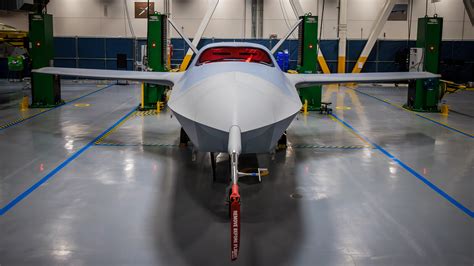
The Strategic Vision Behind the Activation
This latest development is not merely bureaucratic. It reflects a foundational pivot in how the Air Force perceives combat readiness and technological superiority. Lieutenant Colonel Matthew Jensen, commanding officer of the EOU, articulated this clearly: “Our experimental operations will ensure that CCA are immediately viable as a credible combat capability that increases Joint Force survivability and lethality.”
The EOU will now function under the Virtual Warfare Center and the Joint Integrated Test and Training Center, allowing it to leverage the full technological infrastructure of Nellis AFB. Through a fusion of live-fly experimentation and virtual simulation, the unit will test advanced AI algorithms, autonomous flight protocols, and machine-pilot coordination in increasingly realistic environments. These simulations are not theoretical exercises—they are combat drills meant to iterate rapidly on real-world tactics.
Collaborative Combat Aircraft: Beyond the Loyal Wingman
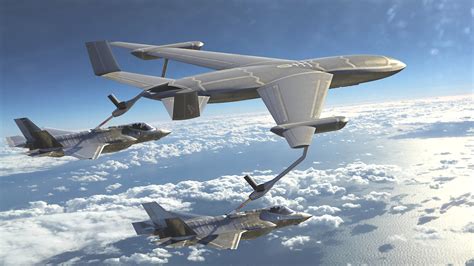
The CCA initiative expands upon concepts previously hinted at in programs like the “Loyal Wingman”, but with broader strategic objectives. While Loyal Wingman projects focused primarily on support roles for unmanned aircraft, the CCA is envisioned to carry out full-spectrum combat duties—from target acquisition and ordinance delivery to EW (Electronic Warfare) operations and autonomous reconnaissance.
By removing human pilots from the cockpit in select roles, the Air Force hopes to reduce operational risk, slash long-term costs, and increase adaptability in contested airspaces. But this isn’t about replacing humans—it’s about enhancing them. Each CCA system is designed to work in concert with manned platforms, ideally anticipating commands and responding in milliseconds.
A Response to Global Threats and Rapid Technological Shifts
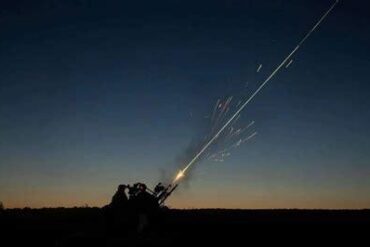
The timing of this activation is no coincidence. Global powers are accelerating their own unmanned combat programs. Earlier this month, Ukraine’s successful use of autonomous aerial assets in the field demonstrated just how potent and accessible such technologies have become. The battlefield is shifting—rapidly—and the U.S. cannot afford to fall behind.
General David Allvin, the current Air Force Chief of Staff, emphasized this exact point: “The pace of innovation must outmatch the pace of the threat. CCA is how we do that.”
For the U.S., maintaining air superiority means investing not just in machines, but in the relationships between those machines and their human counterparts. This is where the EOU’s mission becomes critical. They’re not just testing hardware—they’re crafting the protocols, software logic, and decision-making frameworks that will govern how drones interpret battlefield data, coordinate with humans, and ultimately act with a degree of autonomous intent.
From Simulations to Combat-Ready Integration
The Virtual Warfare Center and the Joint Integrated Test and Training Center are not sandbox environments. They simulate highly contested environments, including electronic warfare scenarios, satellite-denied zones, and multi-domain operations where sea, air, space, and cyberspace are all integrated into one tactical framework.
Within this digital crucible, the EOU conducts thousands of scenarios where drones are asked to lead operations, react to unexpected variables, and coordinate with fighter pilots on split-second decisions. The fidelity of these simulations is unparalleled. Sensors mimic real-world radar. Communications latency is factored in. Even atmospheric conditions are considered. And the results are cross-validated with live-fly tests using current airframes and next-gen prototypes.
A Force Multiplier for Joint Combat Teams
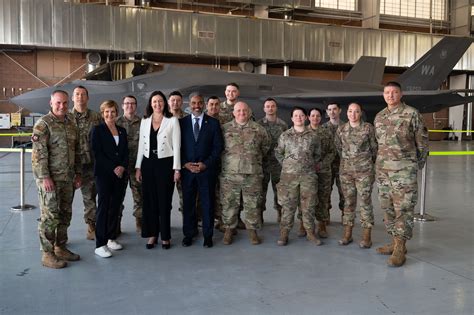
One of the EOU’s most transformative promises is how it changes the nature of Joint Force collaboration. In an age where U.S. operations are rarely conducted in isolation, the ability to share target data, reconnaissance imagery, and tactical updates in real-time—across not just units but across services and allies—is invaluable.
CCAs are being designed with interoperability as a foundation. Using open architecture standards and modular sensor packages, they can integrate into the broader battlespace as quickly as traditional manned platforms. From Navy carrier strike groups to Marine expeditionary units, autonomous aircraft guided through EOU’s protocols could offer extended reach and strike capabilities without compromising human lives.
Combat Drones as Tactical Assets, Not Replacements
Despite concerns among some military purists that unmanned systems could dilute the role of fighter pilots, the Air Force’s messaging has been consistent: this is augmentation, not substitution. The vision is clear—drones handling the dull, dirty, and dangerous, while pilots focus on complex decision-making and mission leadership.
In practice, this may mean CCA drones leading the initial push into a contested zone, drawing fire, jamming enemy radars, and delivering the first wave of munitions. Behind them, manned aircraft would follow up with adaptive strategies based on real-time intel—a lethal combination of autonomy and human cognition.
Challenges Ahead: Ethics, AI, and International Law
As advanced as the EOU’s mission is, its challenges are equally complex. Building reliable AI systems that can make split-second decisions about lethal force brings ethical concerns and legal scrutiny. The Air Force must thread a delicate line—ensuring that autonomous drones operate within the bounds of international law, rules of engagement, and civilian protection protocols.
Moreover, adversaries are watching. As the U.S. invests in transparency and safeguards, not all nations may adhere to the same standards. The EOU’s challenge, then, is not just to build smarter drones, but to ensure that the U.S. sets the global benchmark for responsible autonomous warfare.
Looking Forward: A Decade of Transformation
By setting an ambitious target of operational deployment by 2030, the Air Force is committing to rapid iteration, aggressive testing, and seamless integration of AI into warfighting doctrine. The activation of the Experimental Operations Unit is not the end goal—it’s the launchpad.
Through a combination of human insight, virtual warfighting, and live-fly validation, the EOU is charting a new course for the Air Force—one that melds the best of both man and machine into a unified, unstoppable force.