The battlefield of the 21st century is being reshaped not by tanks or missiles alone, but by drones—agile, low-cost, and rapidly proliferating. These unmanned aerial systems have become a staple of both state and non-state actors, increasingly deployed in coordinated swarms designed to overwhelm traditional defenses. In response to this growing challenge, the United States Army is entering a new phase in its counter-drone strategy by turning to a powerful yet overlooked weapon: high-power microwave (HPM) systems.
The Rise of Drone Swarms and the Strategic Vacuum
Over the past decade, drone use has exploded across global conflict zones—from the trenches of Ukraine to the deserts of the Middle East. Their affordability, versatility, and decentralized deployment capabilities have made them particularly effective for asymmetric warfare. However, what began with individual drone reconnaissance missions has evolved into highly orchestrated drone swarms, capable of saturating air defenses and inflicting real damage.
Unlike traditional aircraft, these drones are often too small and numerous to be intercepted cost-effectively by missiles or other kinetic weapons. Existing counter-UAS (unmanned aerial systems) technologies, while innovative, often fall short when dealing with swarm scenarios. Radar-guided interceptors and jamming technologies have limitations in scope, speed, and cost per use. The U.S. military needed a game-changing solution—and it seems they have found one.
Enter Leonidas: The High-Powered Microwave Solution
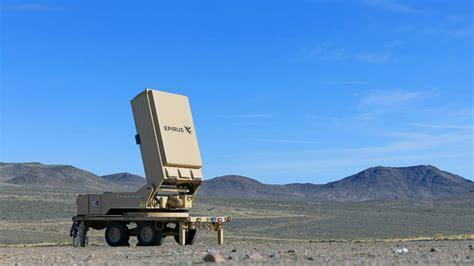
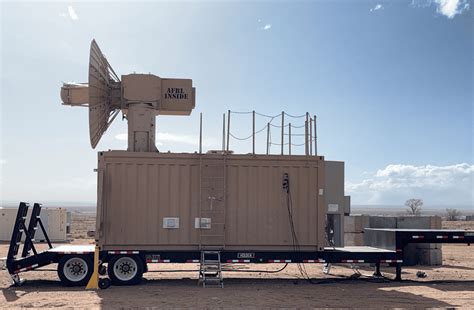
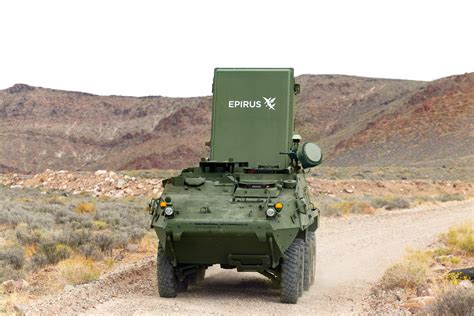
At the heart of this new strategy lies Leonidas, a next-generation HPM system developed by Los Angeles-based firm Epirus. On July 17, 2025, the U.S. Army inked a $43.5 million deal with Epirus, cementing its commitment to directed-energy technologies as a viable and scalable counter-drone solution. Unlike traditional weapons that rely on impact or explosion, Leonidas emits concentrated bursts of electromagnetic energy to disable drones by frying their onboard electronics.
Leonidas isn’t just effective—it’s also modular and versatile. It can be installed on fixed platforms, mounted on mobile vehicles, or integrated into pods for airborne or ground-based systems. Built on gallium nitride (GaN) solid-state architecture, it uses software-defined emissions that allow real-time optimization, extending its utility across different operational environments without requiring physical modifications.
During an April 30, 2025, military exercise at Naval Station Leovigildo Gantioqui in the Philippines, Leonidas demonstrated its capability to neutralize multiple drones simultaneously under tropical weather conditions. U.S. Army Captain Bray McCollum confirmed that this test marked a critical milestone toward operational readiness, particularly given the harsh climate in which it was deployed.
Unpacking the Tech: Why Leonidas Stands Out
Leonidas’ most powerful asset is its ability to disable entire swarms with a single pulse. Unlike kinetic defense systems that require pinpoint targeting and multiple rounds to engage a swarm, Leonidas can clear a large area in one emission cycle. This gives it significant cost and time advantages:
- Extremely low cost per engagement
- No need for ammunition resupply
- Instantaneous area denial capability
- Safe for friendly personnel and systems
- Fully integrable with existing command-and-control infrastructure, including FAAD C2
The system also boasts a reduced SWaP (Size, Weight, and Power) profile, making it easier to deploy across a variety of mission types. Maintenance is streamlined through the use of line-replaceable amplifier modules, allowing quick on-field fixes and upgrades.
A Shift in Doctrine: From Kinetics to Directed Energy
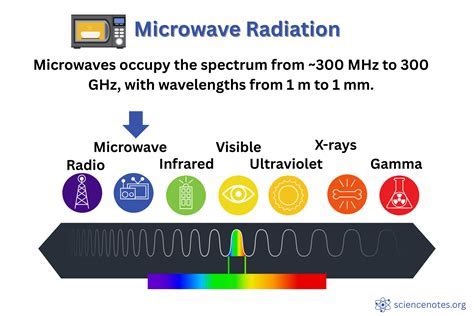
Microwave weapons represent a fundamental shift in military doctrine. Whereas traditional air defenses rely on interception, the HPM approach is about disruption at the source. Microwave pulses interfere directly with a drone’s critical components—sensors, GPS receivers, flight controllers—rendering them inoperable without requiring physical destruction. This approach is particularly advantageous when dealing with low-cost, mass-produced drones where using $1 million missiles to shoot down $500 quadcopters is unsustainable.
Epirus CEO Andy Lowery pointed out that drone threats are no longer confined to overseas battlefields. In recent months, military facilities along the southern U.S. border have seen increased incursions from surveillance and smuggling drones. “The battlefield is here,” Lowery said, stressing the need for rapidly deployable, scalable defense systems like Leonidas.
Upgrades Underway: Doubling the Range, Increasing the Punch
The newly signed contract with the Army not only secures the current generation of Leonidas but also marks the beginning of a significant upgrade cycle. Epirus has pledged to deliver a new version with double the effective range and higher output power. This evolution aims to address larger and more sophisticated threats, including long-range swarm attacks potentially guided by AI coordination.
Importantly, these systems are already being aligned with the Army’s Indirect Fire Protection Capability–High-Power Microwave (IFPC-HPM) program. This inclusion validates Leonidas as a production-ready, deployable solution for high-priority defense initiatives.
The Challenge of Over-Reliance and Evolving Threats
Despite its promise, Leonidas is not a silver bullet. Experts caution that no single system can address every threat vector in an ever-evolving theater of war. Neil Hart, writing for the Australian Strategic Policy Institute, emphasized the importance of a layered air defense strategy. According to Hart, a resilient defense architecture must integrate:
- Kinetic interceptors (missiles, guns)
- Electronic warfare (jamming, signal interference)
- Directed-energy systems (HPM, lasers)
Relying too heavily on one approach, even one as promising as microwave weaponry, could lead to vulnerabilities. Adversaries are already experimenting with hardened electronics, shielded circuits, and tethered drones that are less susceptible to electromagnetic disruption. Therefore, the effectiveness of Leonidas will depend largely on how well it is integrated into a multi-layered system, not as a standalone fix.
Toward a Cost-Effective and Scalable Counter-Drone Future
The microwave solution shines most in its cost-effectiveness and scalability. Conventional anti-air methods—whether involving interceptor missiles or rapid-firing autocannons—are not financially or logistically sustainable in high-intensity drone swarm scenarios. Leonidas flips that equation, offering a near-zero marginal cost after deployment. Each engagement does not require a resupply run or costly projectile; it requires only energy.
As adversaries adapt, so too must U.S. defense systems. The software-defined core of Leonidas means that it can evolve dynamically, with software updates enabling adaptation to new threats without mechanical overhauls. This digital-first architecture positions microwave systems as a living platform rather than a fixed product, ensuring they remain relevant even as the threat landscape transforms.
A Glimpse Into the Future of Warfighting
The $43.5 million investment into Epirus is not just a procurement—it is a clear statement about the future of warfare. In a world where drones are cheap, disposable, and ubiquitous, countermeasures must be smart, scalable, and sustainable. Microwave weapons like Leonidas fulfill these requirements, promising to shift the balance of power in favor of those who can disrupt rather than destroy.
But their effectiveness won’t be judged by laboratory specs or demo footage alone. It will be measured on the field—under fire, in rain, in sandstorms, and under real-world operational constraints. And with its recent successes, Leonidas may well represent the beginning of a new era in U.S. military defense strategy: one where energy, not explosives, determines dominance in the skies.