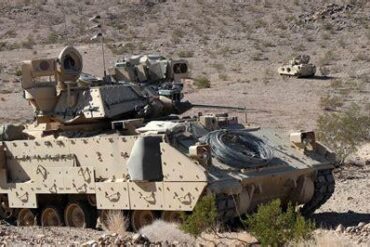
The U.S. Army’s modernization strategy has taken a bold leap forward with the testing and procurement of the XM913 50mm Bushmaster Chain Gun, marking a pivotal move in the effort to replace the aging M2 Bradley Fighting Vehicle. This significant enhancement in firepower and modularity aligns with the Army’s broader objectives of achieving overmatch, enhancing survivability, and preparing for future battlefield threats.
XM913: A Strategic Firepower Evolution
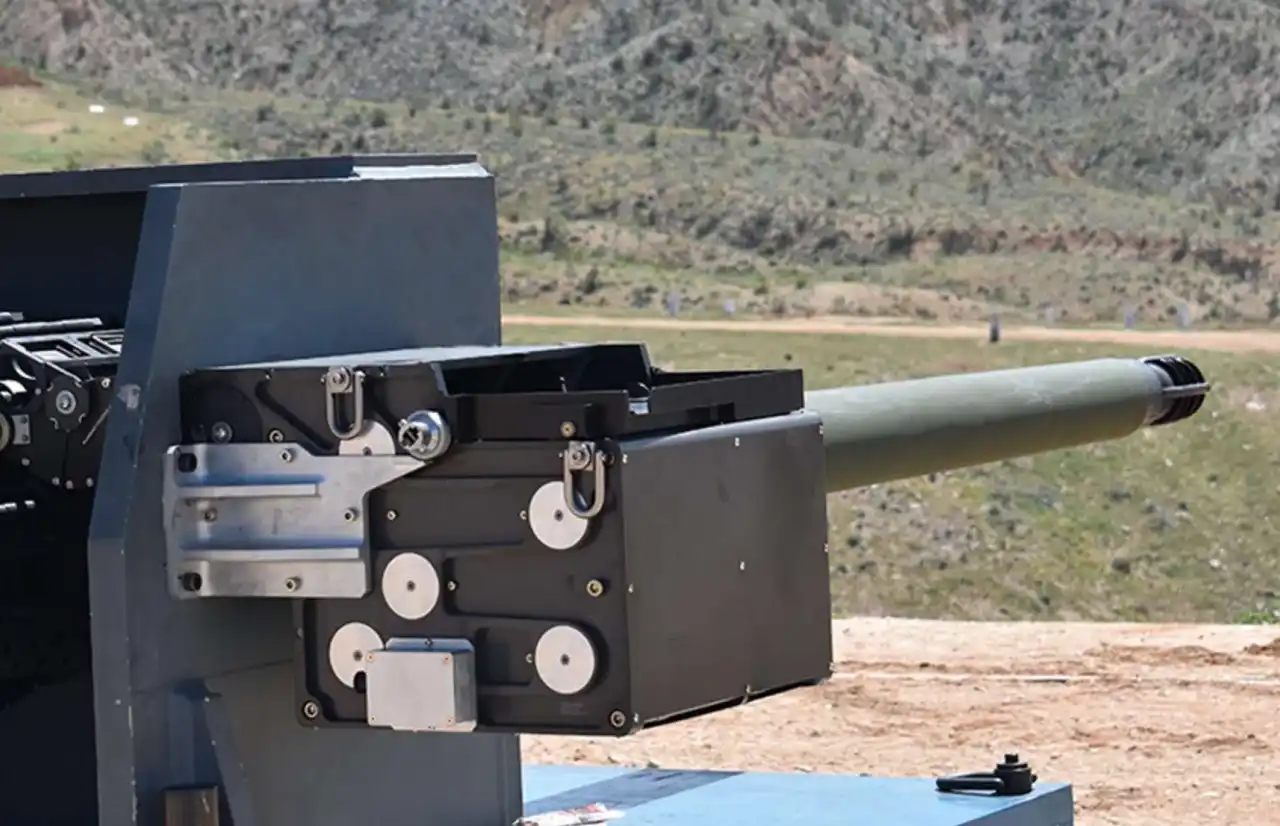
The XM913 50mm Chain Gun, produced by Northrop Grumman, represents a transformational shift in medium-caliber weaponry. With its 50x228mm caliber, programmable ammunition, and dual-feed system, the XM913 is not just a bigger gun — it’s a multi-role weapon designed for versatility, precision, and lethality. The Army has ordered 16 of these cannons, now being delivered to testing units under the XM30 Mechanized Infantry Combat Vehicle (MICV) program.
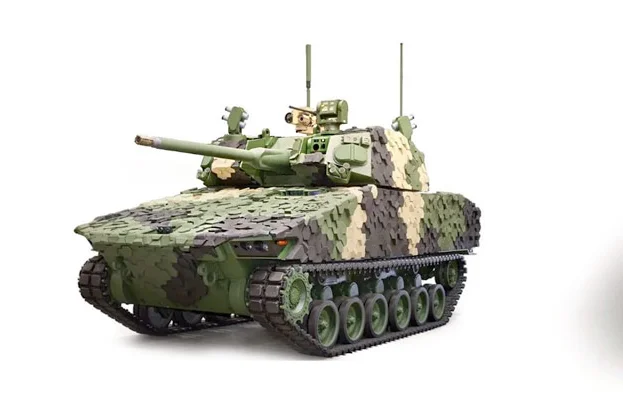
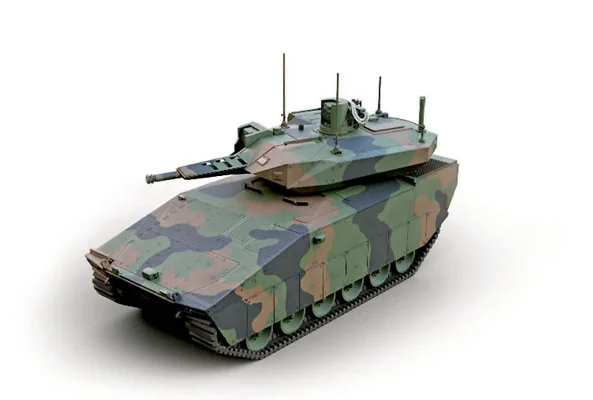
This cannon is central to the Army’s pursuit of a new era in ground combat vehicles. XM913 will be installed as Government Furnished Equipment (GFE) in prototype platforms submitted by American Rheinmetall Vehicles and General Dynamics Land Systems (GDLS) — both contenders in the XM30 competition. The XM30 project itself, previously known as the Optionally Manned Fighting Vehicle (OMFV) initiative, is the Army’s solution to break through the upgrade limitations of the Bradley fleet.
The Technological Backbone of XM913
At the core of XM913’s appeal is its external-driven chain gun mechanism, known for reliability and recoil control — essential for accurate firing while on the move. The chain-driven system enables predictable recoil, crucial when integrated into remote or unmanned turrets that demand high precision in dynamic battlefield conditions.
But what truly distinguishes the XM913 is its dual-feed capability, allowing the gunner to switch seamlessly between two types of ammunition without disengaging. This is a critical advantage during real-time combat, where target sets can change from infantry in cover to armored threats within moments.
Advanced Ammunition: Tactical Agility in Every Round
The XM913’s ammunition suite is nothing short of groundbreaking. The 50x228mm High Explosive Air Bursting (HEAB) round can be programmed for:
- Point Detonation: For direct hits.
- Delayed Detonation: To penetrate and explode after impact.
- Air Burst: To strike above entrenched or covered positions.
This gives the gunner the ability to address a wide array of battlefield scenarios — from trench lines and bunkers to reverse slopes and light structures — all with a single projectile. Complementing the HEAB is the Armor Piercing Fin Stabilized Discarding Sabot (APFSDS) round, tailored for defeating hard targets and armored vehicles.
These programmable munitions compress the time between detection and effect, enabling faster response and reduced exposure to enemy retaliation. It also limits the need for artillery or indirect fires, giving squads more autonomy and reaction speed in complex terrain.
Integration with the XM30: A Modular, Future-Proof Platform
The XM30 is envisioned as a highly modular, open-architecture vehicle, where firepower, sensors, and protection systems are designed to co-evolve. In this context, the XM913 is more than just a cannon — it is the centerpiece of a digitally linked kill chain, connected to advanced targeting systems, automated fire controls, and unmanned turrets.
Northrop Grumman’s system integrates tightly with computerized fire control, enhancing first-round hit probability and enabling fire modes from single-shot to automatic. Spent casings are ejected forward, maintaining cleanliness inside the turret and improving crew safety.
The modular approach ensures that upgrades to armor, countermeasures, or optics don’t require an overhaul of the weapon system, extending the XM30’s relevance over decades.
First-Round Effects and Battlefield Survivability
The tactical benefit of pairing XM913 with the XM30 platform lies in the concept of first-round effects. The Army emphasizes lethality at range — if a vehicle can deliver decisive impact on the first shot from longer standoff distances, it significantly narrows the window for enemies to react with anti-tank missiles, loitering drones, or return fire.
This is particularly important as combat environments shift toward dispersed, contested logistics zones, where every engagement must be swift, lethal, and resource-efficient. While XM30 may carry fewer rounds than Bradley, each 50mm round packs more punch, reducing the number of rounds needed per engagement — an important logistical consideration in near-peer conflicts.
Logistics, Training, and Maintenance: Built for the Real World
Beyond battlefield performance, the XM913 benefits from commonality with existing Bushmaster systems, such as the M242 25mm used in the Bradley. This means that crews already trained on Bushmaster platforms will face a lower learning curve, easing the transition during fielding. Maintainers will also benefit from shared parts, procedures, and diagnostics, streamlining the support chain.
This compatibility reduces total lifecycle costs, increases operational readiness, and allows for faster scaling of the XM30 fleet once production ramps up.
Future Deployment and Export Potential
Currently, the XM913 is being evaluated by the U.S. Army Combat Capabilities Development Command (DEVCOM), and installed on the two XM30 prototype platforms. But the strategic significance extends far beyond the competition.
Northrop Grumman’s imagery has shown the gun mounted on the GDLS Griffin III and Rheinmetall Lynx vehicles, both likely candidates for XM30. The XM913 design is heavily based on the Bushmaster III 35mm already in service with multiple European armies on CV90 platforms, indicating a clear export roadmap.
The system supports both link-fed and linkless ammunition configurations, making it adaptable to NATO-aligned forces and allied customers with varying integration standards. The cannon, including its feeder, receiver, and barrel, weighs approximately 314 kg, suitable for medium-to-heavy IFVs with sufficient turret ring diameter and power.
The Bigger Picture: Overmatch at the Tactical Edge
The Army’s direct linkage between XM913 development and the open-architecture design of XM30 sends a clear message: medium-caliber weapons are no longer viewed as incremental improvements. Instead, they are central to maintaining tactical overmatch — the ability to outgun, out-see, and outlast adversaries in decisive close combat.
This approach breaks from legacy upgrade cycles where each subsystem (gun, armor, sensors) evolved independently. The XM30 program aims to synchronize these advancements, creating a cohesive platform that evolves with threat landscapes.
If successful, the XM913 will be remembered not merely as a powerful cannon, but as a symbol of the Army’s return to dominance in mechanized infantry combat — ensuring that U.S. forces regain decisive advantage in the places where victory is decided: the last few hundred meters.
As the competition for XM30 moves into the next phase, all eyes remain fixed on whether this high-tech pairing of XM913 firepower and modular vehicle design will fulfill its battlefield promise — and redefine how America fights and wins on future frontlines.