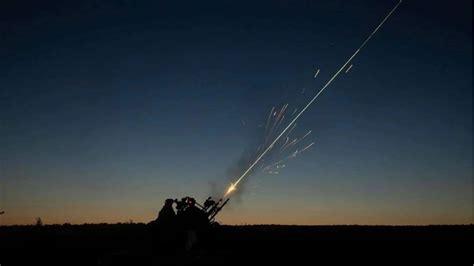
Modern warfare is being reshaped by one deceptively simple innovation: cheap drones. What once required multi-million-dollar aircraft or complex missile systems can now be achieved with small unmanned aerial vehicles assembled from commercial components. In the skies over Ukraine, these low-cost machines have become a defining feature of the battlefield, forcing both attackers and defenders to rethink how air defense should work in an age of mass-produced aerial threats.
Small drones have proven capable of surveillance, electronic warfare, and even precision attacks. Their accessibility has transformed them into one of the most disruptive technologies in modern military strategy. Militaries once relied heavily on surface-to-air missiles and interceptor systems, but these weapons are often dramatically more expensive than the drones they destroy. In many cases, a missile costing tens or hundreds of thousands of dollars may be used to destroy a drone worth only a few hundred dollars.
This imbalance has pushed defense planners toward an urgent question: how can you defeat cheap drones without spending enormous sums of money? Ukraine may have found one answer in an experimental laser system known as SunRay, a compact directed-energy weapon capable of destroying drones in seconds.
The Rising Threat of Low-Cost Drone Warfare
Drone warfare has accelerated rapidly during the ongoing conflict in Eastern Europe. Both Ukrainian and Russian forces have relied on unmanned aerial vehicles for reconnaissance, targeting, and direct attack missions. Many of these drones are inexpensive, sometimes built using off-the-shelf parts or even modified consumer electronics.
The economic logic behind drone warfare is simple. Instead of risking pilots or deploying expensive aircraft, military units can launch waves of small drones toward a target. Some may carry explosives, others may transmit intelligence, and still others may serve purely as decoys to overwhelm defenses.
Traditional air-defense systems were never designed for this kind of threat. Missiles such as interceptor rockets are effective but costly. When large swarms of drones approach simultaneously, defenders face a difficult calculation: use expensive missiles or risk allowing drones to reach critical infrastructure.
This dilemma has driven the search for cheaper and more scalable defensive technologies. Directed-energy weapons, particularly lasers, have long been viewed as a promising solution.
SunRay: A Compact Laser Weapon Designed for Modern Battlefields
Ukraine’s experimental SunRay laser weapon represents a practical attempt to solve the cost problem of drone defense. Developed by Ukrainian air-defense commander Pavlo Yelizarov and a team of engineers, the system reportedly took about two years to design and build.
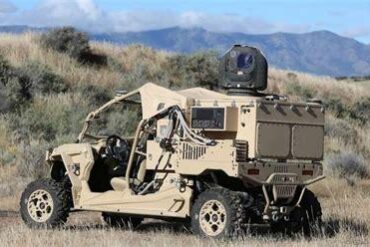
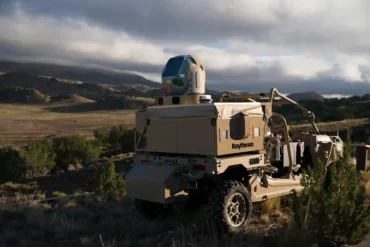
Unlike massive experimental laser systems tested by major world powers, SunRay emphasizes simplicity, portability, and affordability. The entire device is small enough to fit inside a car trunk, making it easy to transport and deploy quickly across different positions on the battlefield.
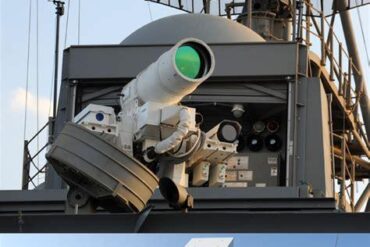
Visually, the system resembles a telescope mounted on a tripod, with several camera modules attached to its sides. These cameras act as tracking sensors, automatically locking onto aerial targets while operators supervise the engagement process.
How the Laser Destroys Drones in Seconds
The operational concept behind SunRay is straightforward yet powerful. Once the cameras detect and track a drone, the system directs a focused laser beam toward the target. Operators guide the engagement while the tracking system maintains precise alignment.
Within a few seconds, the concentrated energy begins heating critical components of the drone. Lightweight materials used in drone construction—such as plastics, wiring, and exposed electronics—are particularly vulnerable to intense heat. As the beam remains focused on the same point, the drone can ignite, lose control, and fall from the sky.
This method provides a dramatic advantage in terms of cost per shot. Instead of firing an expensive missile for each drone, the laser weapon essentially uses electrical power to generate the destructive beam. As long as the system has sufficient energy and cooling, it can continue engaging multiple targets in rapid succession.
Why Laser Weapons Could Transform Air Defense
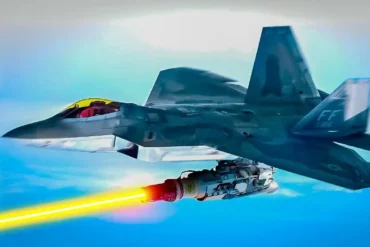
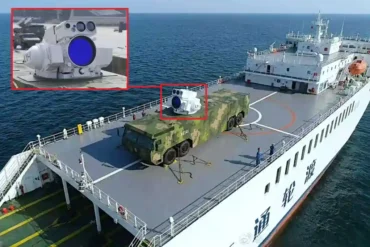
Laser weapons have long been discussed as the future of air defense, but practical battlefield deployments have remained rare. Ukraine’s SunRay system highlights why the concept is gaining renewed attention.
First, laser engagements are extremely inexpensive compared to missile launches. This makes them ideal for countering mass drone attacks where dozens of targets may appear simultaneously.
Second, lasers operate at the speed of light, meaning there is no travel time between firing and impact. This instantaneous response is particularly valuable when dealing with fast or maneuvering drones.
Finally, compact laser systems like SunRay can be deployed across multiple locations, creating distributed defense networks capable of protecting infrastructure, military bases, and urban areas.
The Future of Anti-Drone Technology
As drone warfare continues to evolve, defensive technologies must advance just as quickly. Ukraine has already become one of the most active testing grounds for innovative battlefield systems, ranging from autonomous drones to electronic warfare tools.
SunRay may represent only the beginning of a broader shift toward directed-energy defenses. Militaries worldwide are closely observing developments in Ukraine, recognizing that affordable anti-drone solutions will be essential in future conflicts.
The rapid pace of innovation suggests that tomorrow’s battlefields may include laser-based defense grids capable of neutralizing swarms of drones in real time. If systems like SunRay continue to prove effective, the era of laser air defense may arrive sooner than many analysts once expected.
FAQs
What is the SunRay laser weapon?
SunRay is an experimental Ukrainian anti-drone laser system designed to track and destroy unmanned aerial vehicles using a focused energy beam.
Who developed the SunRay system?
The weapon was developed by Ukrainian air-defense commander Pavlo Yelizarov and a team of engineers, reportedly over a two-year period.
Why are laser weapons effective against drones?
Lasers deliver concentrated heat to sensitive drone components, quickly damaging electronics and structural materials while maintaining very low operational costs compared to missiles.