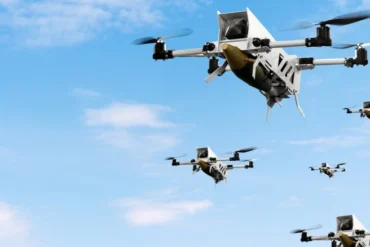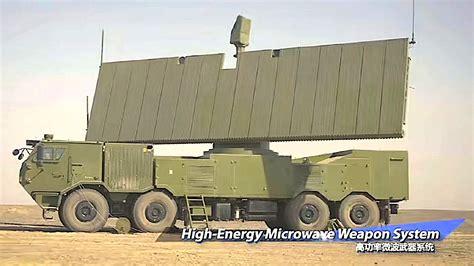
Low-cost drones have rewritten the rules of modern conflict. Once niche tools, they are now everywhere—cheap, disposable, and terrifyingly effective when deployed in swarms. Militaries around the world are scrambling for answers, and China has stepped forward with an unusually blunt one: high-power microwave weapons designed to erase drones from the sky in bursts of invisible energy. The latest system, known as Hurricane 3000, is not subtle, not experimental, and not defensive in the traditional sense. It is purpose-built to overwhelm the drone age with physics rather than missiles.
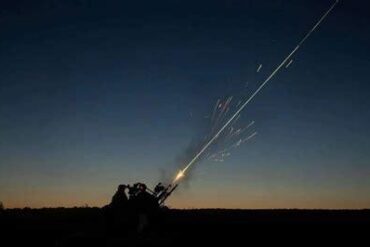
Battlefields like Ukraine have made the drone problem impossible to ignore. Surveillance drones hover for hours, watching every movement. Strike drones dive with explosive payloads that cost a fraction of the interceptor missile meant to stop them. Some are radio-controlled, others tethered by fiber-optic cables that laugh at jamming systems. Traditional air defenses can win individual engagements, but they lose the economic war. Expensive missiles versus disposable drones is a mismatch that favors the attacker every time.
China’s answer is to flip the cost equation. Microwaves are cheap, fast, and relentless. Instead of chasing drones one by one, Hurricane-class systems aim to disable entire groups at once, turning electronic brains into scrambled silicon.
By the time Hurricane 3000 appeared, China already had a foundation. The earlier Hurricane 2000 could reach targets at roughly two kilometers. The new system extends that reach beyond three kilometers, creating a wider defensive bubble that can protect mobile units, bases, or critical infrastructure without firing a single round of ammunition.
Hurricane 3000 and the Rise of Microwave Defense
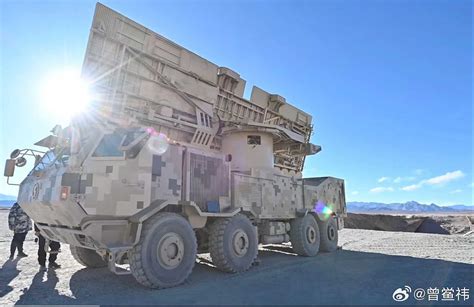
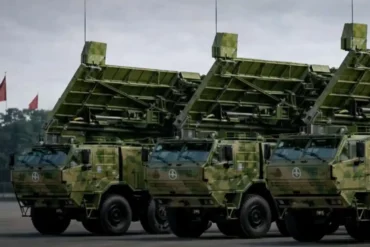
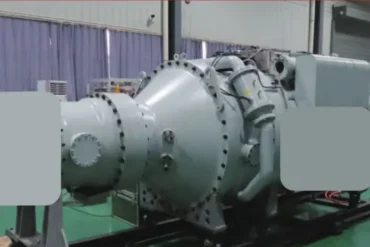
Mounted on a heavy truck, Hurricane 3000 looks unassuming, but its significance lies in what it doesn’t need. No missile reloads. No ammunition trucks. No stockpiles to exhaust. Instead, it relies on radar to detect aerial targets, optical sensors to refine tracking, and a high-energy microwave emitter to deliver the final blow. Once powered, it can engage repeatedly, making it especially suited to countering drone swarms that would otherwise saturate conventional defenses.
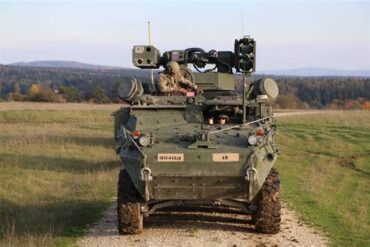
Norinco, the Chinese defense contractor behind the system, has described Hurricane 3000 as being at the cutting edge of global HPM technology. That claim matters because the United States fields its own microwave system, Leonidas, which roughly matches the older Hurricane 2000 in range. Hurricane 3000 pushes beyond that envelope, at least on paper, signaling China’s intent to lead rather than follow in this niche.
How High-Power Microwave Weapons Actually Kill Drones
Despite the dramatic name, the science behind HPM weapons is refreshingly brutal. These systems emit intense microwave pulses, typically between 300 and 300,000 megahertz, directed at electronic targets. When those pulses hit a drone, they induce electrical surges inside delicate circuits. The result is electronic overload: processors crash, sensors fail, and control systems go blind.
At lower energy levels, drones may simply lose control and crash. At higher intensities, components can suffer permanent physical damage. Unlike jamming, which attempts to confuse signals, microwaves attack the hardware itself, making them effective even against autonomous drones or fiber-optic-controlled platforms immune to radio interference.
China has been studying this technology for over a decade. As early as 2017, researchers at the Northwest Institute of Nuclear Technology in Xi’an demonstrated compact microwave weapons suitable for vehicles and aircraft. Hurricane 3000 represents the maturation of that research into a deployable, battlefield-ready system.
Lessons From Ukraine and the Economics of Swarm Warfare
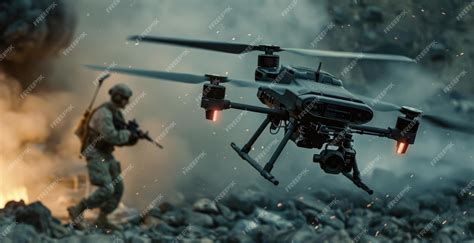
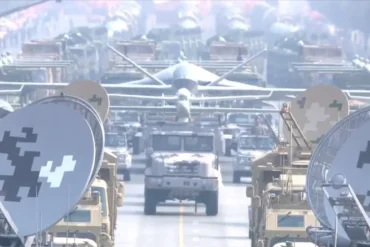
The war in Ukraine has become a live laboratory for drone tactics. Defenders use drones to spot artillery targets, attackers use them to strike deep behind lines, and both sides continuously adapt. One lesson stands out: quantity has a quality all its own. Drone swarms overwhelm point defenses not through sophistication, but through sheer numbers.
Missile-based air defenses are powerful, but economically fragile. Each interceptor can cost tens or hundreds of thousands of dollars. A basic attack drone may cost a few hundred. Microwave weapons like Hurricane 3000 disrupt that math. Once deployed, their cost per engagement drops dramatically, making them ideal for sustained defense against persistent drone threats.
Mobility, Integration, and Strategic Impact
Another quiet advantage of Hurricane 3000 is mobility. Mounted on a truck with its own power and cooling systems, it can move with advancing forces or redeploy rapidly, rather than being tied to fixed installations. This flexibility allows it to protect frontline units, logistics hubs, or temporary bases.
China has also emphasized integration. Microwave weapons are not meant to stand alone but to operate alongside laser systems, jammers, and conventional air defenses. In such layered networks, drones face multiple kill mechanisms at different ranges, increasing the likelihood of failure at every step.
Hurricane 3000 is not just a new weapon; it is a statement. It reflects a strategic understanding that future wars will be fought as much against electronics as against soldiers. In that sense, China is not merely chasing drones. It is redefining how they are hunted, one microwave pulse at a time.