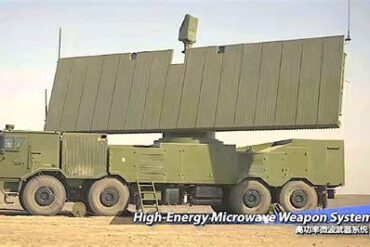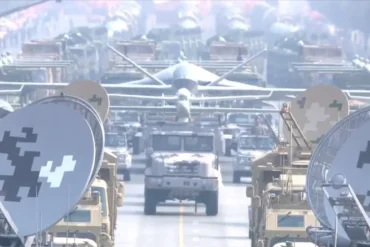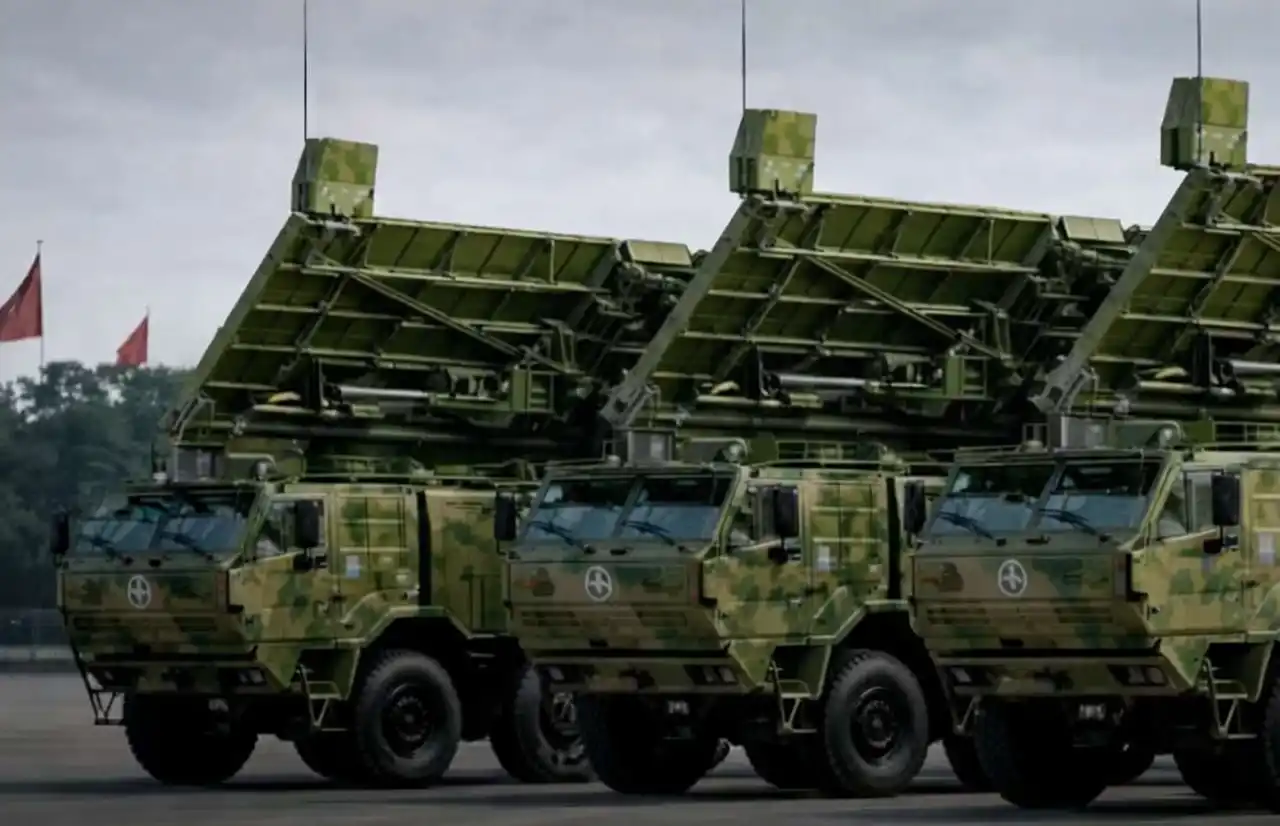
China has moved decisively into the era of directed-energy warfare with the public deployment of the Hurricane 3000, a vehicle-mounted high-power microwave weapon designed specifically for counter-drone operations. Revealed during a nationally televised military parade in early 2026, the system represents a rare instance in which the People’s Liberation Army openly showcased a previously opaque capability. The appearance was not symbolic. It signaled that China now considers microwave weapons a combat-ready element of its air defense architecture rather than a developmental experiment.
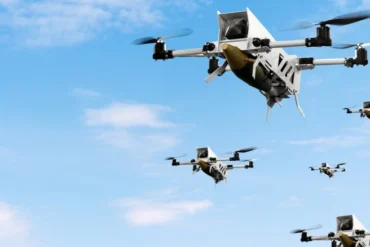
The unveiling comes as unmanned aerial systems reshape modern conflict at an unprecedented pace. From low-cost quadcopters to coordinated drone swarms, unmanned platforms have demonstrated their ability to overwhelm traditional air defenses through sheer numbers. By fielding the Hurricane 3000, Beijing is responding to a battlefield reality in which missiles and guns alone are no longer economically or tactically sufficient.
Unlike interceptor-based defenses, the Hurricane 3000 targets the invisible backbone of unmanned systems: electronics. By emitting intense microwave pulses, the weapon overwhelms flight control computers, navigation systems, sensors, and data links, rendering drones blind, unstable, or permanently inoperable. This approach allows a single system to defeat multiple targets within seconds, fundamentally altering the cost-exchange ratio that has long favored drone operators.
The system’s debut also reflects a broader strategic message. Directed-energy weapons have often been discussed in abstract terms, but rarely paraded as operational hardware. China’s decision to display the Hurricane 3000 publicly suggests confidence in its maturity and a willingness to demonstrate technological parity, or even leadership, in an area long dominated by Western research programs.
Operational Design and Technical Characteristics
At its core, the Hurricane 3000 is assessed to be a vehicle-mounted high-power microwave emitter with a reported effective range of up to three kilometers. Mounted on a stabilized platform, the directional antenna focuses electromagnetic energy toward aerial targets, delivering bursts capable of overwhelming even hardened electronics. Analysts believe the system operates in the high-gigahertz frequency range, exploiting known vulnerabilities in both commercial and military-grade drone components.
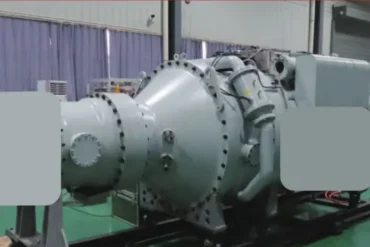
The supporting vehicle houses dedicated power generation and cooling systems, indicating sustained firing capability rather than short experimental bursts. Unlike laser weapons, microwave systems are less affected by weather conditions such as fog, smoke, or dust, giving the Hurricane 3000 consistent performance across varied environments. Its apparent lack of organic radar suggests it is designed to integrate into a networked air defense ecosystem, receiving targeting data from external sensors, radars, or command vehicles.
Tactical Advantages on Drone-Saturated Battlefields
The battlefield value of the Hurricane 3000 lies in its ability to counter mass unmanned threats efficiently. Missile interceptors costing hundreds of thousands of dollars are ill-suited to defeat drones that may cost only a few thousand. Microwave weapons reverse this imbalance by enabling repeated engagements at negligible per-shot cost, constrained mainly by fuel consumption and maintenance cycles.
Operationally, the system offers rapid reaction times and the ability to engage multiple drones nearly simultaneously. Its effects are immediate, often causing drones to crash or drift uncontrollably without the explosive debris associated with kinetic interceptors. This makes the Hurricane 3000 particularly suitable for defending sensitive sites where collateral damage must be minimized.
Integration Within China’s Layered Air Defense Doctrine
China’s air defense philosophy emphasizes layered protection, combining long-range missiles, short-range guns, electronic warfare, and now directed-energy systems. Within this structure, the Hurricane 3000 fills a critical gap against small, low-altitude, and low-signature targets. Its line-of-sight limitations mean it is unlikely to operate alone, but when paired with radar cueing and traditional interceptors, it significantly enhances defensive resilience.
Potential deployment roles include protection of command posts, logistics hubs, air defense batteries, and maneuver units during high-intensity operations. The system’s mobility allows it to accompany ground forces, creating localized defensive bubbles against persistent drone surveillance and attack.
Strategic Implications and Global Comparisons
Internationally, the Hurricane 3000 occupies similar conceptual ground to Western systems such as the US-developed THOR and IFPC-HPM prototypes. The key difference lies in visibility and messaging. While many Western programs remain in limited trials or constrained deployments, China’s public parade suggests a deliberate effort to portray operational readiness.
This does not necessarily mean technological superiority, but it underscores China’s prioritization of counter-drone warfare as a near-term requirement. Western systems often emphasize modular integration and exportability, whereas China’s approach appears focused on rapid domestic fielding within the PLA.
Relevance to Taiwan Strait and Regional Security
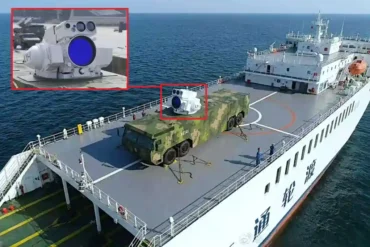
In a potential Taiwan Strait contingency, the Hurricane 3000 could play a decisive supporting role. Deployed alongside amphibious units, coastal defenses, or even aboard large landing ships, the system could suppress Taiwanese and allied drone reconnaissance during critical early phases of an operation. By degrading situational awareness and targeting accuracy, microwave defenses would enhance the survivability of forces operating in contested airspace.
More broadly, the deployment reflects a shift in regional military balances. As drone warfare becomes ubiquitous, states capable of fielding effective countermeasures gain a significant operational advantage. The Hurricane 3000 signals that China intends to be among those states, integrating directed-energy weapons into its standard toolkit rather than treating them as experimental novelties.
Ultimately, the public emergence of the Hurricane 3000 underscores a defining trend in modern warfare: control of the electromagnetic spectrum is becoming as decisive as control of land, sea, or air. By operationalizing microwave weapons, China is betting that future battles will be won not only with firepower, but with the ability to silently and efficiently disable the machines that increasingly define combat.