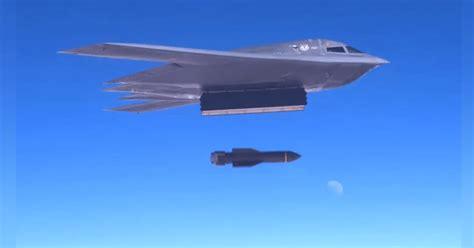
The United States Air Force is moving aggressively to develop a new generation of bunker-busting munitions, known as the Next Generation Penetrator (NGP), as a successor to the GBU-57/B Massive Ordnance Penetrator (MOP). This pivotal initiative comes on the heels of Operation Midnight Hammer, where MOPs were used in combat for the first time, targeting Iranian nuclear infrastructure. With the B-21 Raider poised to take over as the cornerstone of America’s stealth bomber fleet, the NGP is set to become a defining asset in the U.S. strategic arsenal.
The MOP, while formidable, showed its limitations in real-world combat, compelling the Pentagon to rethink how it engages deeply buried and hardened targets across the globe. The NGP represents more than a simple upgrade — it is a complete redesign driven by the operational gaps exposed during recent high-stakes missions.

The End of an Era: GBU-57 MOP’s Operational Debut and Shortcomings
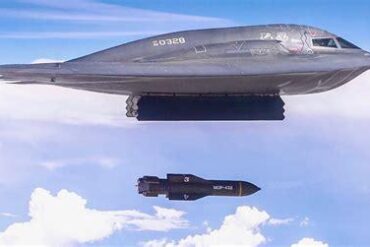
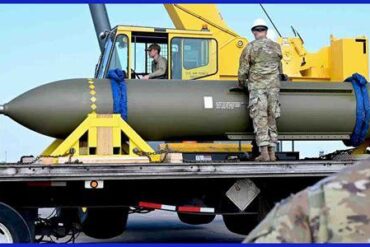
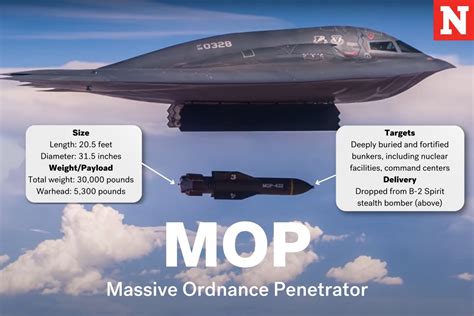
The GBU-57/B Massive Ordnance Penetrator has long been regarded as the heaviest and most powerful non-nuclear bomb in the U.S. inventory. Weighing in at 30,000 pounds and measuring over 20 feet in length, it was engineered to pierce up to 60 meters of reinforced concrete — or more, depending on classification. However, the weapon’s unpowered, free-fall nature required bombers like the B-2 Spirit to fly dangerously close to their targets. In high-threat environments filled with layered air defenses, this is a significant operational liability.
During Operation Midnight Hammer on June 21–22, 2025, B-2s dropped 14 MOPs in a daring nighttime raid. Twelve targeted the Fordow enrichment facility, with two more aimed at Natanz. Satellite imagery confirmed precise hits, yet reports soon surfaced indicating that Fordow’s critical infrastructure might have survived. Fordow’s greater depth — estimated to exceed MOP’s penetration capabilities — revealed the bomb’s ceiling, both literally and figuratively.
These revelations accelerated the Air Force’s already-brewing plan to develop a new, more versatile penetrator capable of both greater lethality and stand-off delivery.
Enter the Next Generation Penetrator: A Game-Changer in Design Philosophy
The Next Generation Penetrator is not merely a heavier or tougher bomb. It is an entirely new munition system built for the future battlespace. According to a February 2024 contracting notice, the NGP will have a maximum warhead weight of 22,000 pounds, notably lighter than the MOP. This design choice aims to ensure compatibility with the B-21 Raider, whose internal weapons bay is narrower and more stealth-sensitive than the B-2’s.
While the total weight and dimensions remain unspecified, indications suggest a more compact form factor, possibly enhanced with standoff propulsion. This would allow the NGP to be launched from outside the envelope of enemy defenses, a vital improvement in an age of integrated air defense systems (IADS) and anti-access/area-denial (A2/AD) networks.

Precision by Design: Terminal Accuracy and Advanced Guidance Systems
A cornerstone of the NGP program is its unprecedented terminal accuracy, with a Circular Error Probable (CE90) requirement of just 2.2 meters, even in GPS-degraded or denied environments. This is a quantum leap from traditional GPS-assisted JDAMs, which can see their accuracy degrade to over 30 meters without signal access.
To meet this challenge, the Air Force is demanding a new generation of Guidance, Navigation, and Control (GNC) systems. These will incorporate:
- Autonomous navigation algorithms
- Anti-jamming and GPS-independent capabilities
- High-res targeting via synthetic aperture radar or optical seekers
Moreover, the munition will feature advanced fuze technology, including void-sensing and floor-counting capabilities. This enables the weapon to detonate only after reaching internal structures — essential when intel on subterranean layouts is sparse or intentionally obfuscated.
From Rapid Reaction to Long-Term Architecture: Strategic Evolution
Unlike the MOP, which was developed as a rapid-response weapon outside formal acquisition channels, the NGP is being pursued as a long-term scalable system. The Air Force envisions it as a family of munitions, potentially fielding:
- Smaller variants for medium-penetration targets
- Powered models for long-range stand-off
- Platform-tailored versions beyond the B-21
This vision aligns with the Long Range Strike (LRS) architecture that includes the AGM-181A LRSO nuclear cruise missile and the B-21 Raider. The Air Force has committed to developing 10 subscale test articles and 3–5 full-scale prototypes within two years under the Eglin Wide Agile Acquisition Contract (EWAAC).
Operational Integration with B-21: A Tactical Marriage
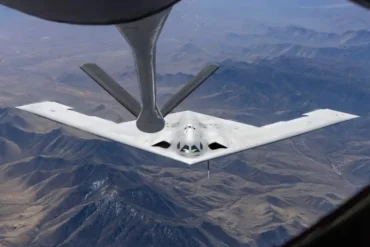
The B-21 Raider, set to become operational later this decade, is central to the NGP’s deployment. Designed with greater stealth, digital adaptability, and cost-efficiency than its B-2 predecessor, the B-21 is intended to carry out high-risk strategic strikes deep into enemy territory.
However, it can only accommodate one MOP-sized weapon per sortie due to internal bay constraints — a significant limitation compared to the B-2’s dual-munition capability. The NGP’s smaller, smarter design helps offset this by allowing more flexible mission profiles and potentially greater survivability in contested environments.
Historical Context: The Evolution of Bunker-Busting Arsenal
The NGP’s development reflects a lineage of U.S. penetrator bombs dating back to the 1991 Gulf War, where the GBU-28 was crafted from modified artillery barrels. Later additions included:
- GBU-37: GPS-guided penetrator for B-2
- GBU-72/B: A 5,000-lb JDAM-ER variant used against Houthi targets in Yemen
- BLU-113: A hardened penetrator used in Iraq and Serbia
These weapons have consistently enabled the U.S. to strike deeply buried and fortified enemy facilities without escalating to nuclear force, preserving strategic restraint while delivering overwhelming kinetic effect.
Global Demand for Hard Target Defeat: Strategic Imperatives
Worldwide trends are reinforcing the need for advanced penetrator weapons. China, for instance, has constructed over 320 hardened missile silos between 2021 and 2025, and maintains a 1,500-acre underground command complex near Beijing. These deeply buried facilities present formidable challenges for conventional munitions.
Similarly, North Korea and Russia have invested heavily in underground bases, command centers, and missile launch systems, raising the bar for any credible strike capability. The RAND Corporation and Atlantic Council have both argued that the U.S. must possess standoff, precision-guided penetrators to neutralize these threats if conventional deterrence fails.
Conclusion: A New Chapter in Strategic Strike Capability
The Next Generation Penetrator marks a pivotal transition in U.S. strategic strike doctrine. It seeks to address the emerging vulnerabilities exposed by the limitations of the MOP and reflects the broader reality that future conflicts will likely unfold in highly contested, technologically advanced environments. With the B-21 Raider at its core and supported by AI-enhanced guidance systems, hardened target detection fuzes, and possibly standoff propulsion, the NGP promises to be not just a weapon — but a capability shift.
This new penetrator will allow the U.S. to retain credible conventional deterrence against deeply buried nuclear, command, and missile facilities, preserving escalation dominance without immediately resorting to nuclear weapons. It also sends a clear message to adversaries that no bunker is beyond reach.
The Pentagon’s urgency — from accelerated prototype delivery timelines to operational integration planning — reveals that the Next Generation Penetrator is not a speculative concept, but a strategic necessity in a world where hard targets are no longer a rarity, but the rule.