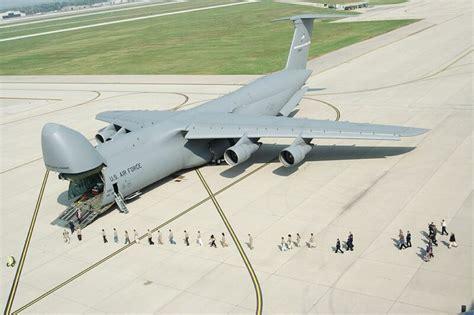
The United States Air Force is steering hard toward a new era of strategic mobility with its Next-Generation Airlifter (NGAL) program, an ambitious effort designed to bring a faster, more adaptable, and survivable heavy transport aircraft into service by the early 2040s. This next leap in airlift capability is being built around the demands of future combat environments, where speed, flexibility, and resilience will matter as much as payload tonnage. The push is driven not by modernization for its own sake but by operational necessity: the aging C-5M Super Galaxy and C-17A Globemaster III fleets can no longer shoulder the burden indefinitely.
At the heart of the Air Force’s vision is a single, highly advanced platform capable of replacing both existing airframe families. That goal demands a fusion of strategic reach, tactical agility, and survivability enhancements that were never possible during the Cold War designs of the C-5 and the early post-Cold War engineering behind the C-17. General John Lamontagne, head of Air Mobility Command (AMC), has been clear that the next decade is pivotal: analysis, funding stability, and early design commitments will determine whether the first NGAL aircraft can roll out by fiscal year 2038.
Current fleet plans underscore the urgency. The C-5M Super Galaxy is mandated to remain operational until at least 2045, despite an airframe lineage that traces back to the 1960s. The C-17A Globemaster III, younger but increasingly taxed, is planned to fly until 2075, meaning some aircraft may approach 80 years of service without a next-generation successor. This long tail of operational life creates a window where NGAL must step in before performance, readiness, or survivability gaps widen.
The NGAL is intended to unify and streamline America’s global airlift capability into one transformative workhorse. Where the C-5M prioritizes raw payload and intercontinental reach and the C-17A excels in tactical flexibility and short-field operations, NGAL is being shaped to deliver both advantages in a single package. That means higher cruise speeds, reduced runway requirements, and enhanced performance in contested environments, where electronic warfare, long-range air defenses, and adversary sensors will challenge legacy aircraft.
General Lamontagne emphasized that future airlift missions will take place in battlespaces far more dangerous than today’s. Instead of flying unopposed into established airfields, NGAL will need to support distributed, fast-moving operations. This demand aligns closely with the Pentagon’s broader shift toward Agile Combat Employment (ACE), a doctrine that requires logistics forces to move rapidly, unpredictably, and often into austere locations.
AMC’s strategy memo lays out an aggressive timeline: an accelerated Analysis of Alternatives in FY 2027, uninterrupted acquisition activity, and full Initial Operational Capability by FY 2041. The target is ambitious but achievable if design maturity and funding discipline align.
Why the C-17 and C-5 Still Matter—and Why Replacement Is Critical
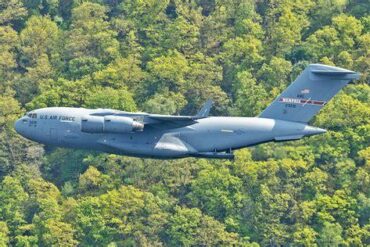
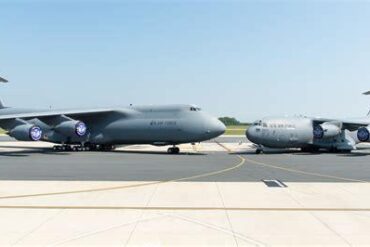
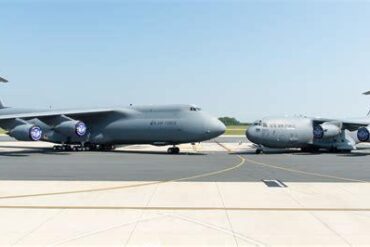
The two giants of American strategic mobility remain indispensable today. The C-17 Globemaster III is the backbone of tactical and strategic transport, while the C-5M Super Galaxy remains unmatched in raw cargo volume. Together, they shape how the United States projects power across continents, responds to crises, and sustains global operations.
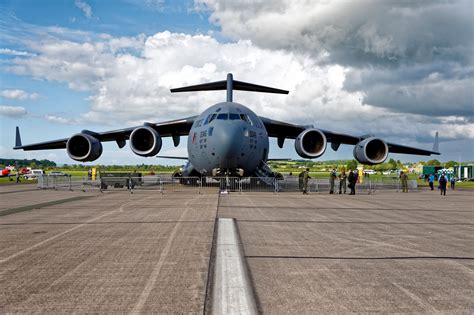
The C-17, developed by McDonnell Douglas and entering service in 1995, was engineered to replace the venerable C-141 Starlifter and complement the C-5. Its combination of short-runway performance, high payload capacity, and in-flight refueling capability made it a logistics revelation. Despite the end of its production line in 2015, its reliability and export success keep it central to U.S. and allied strategy.
The C-5M Super Galaxy, a heavily upgraded descendant of the original 1968 C-5, brings unmatched lift capacity, able to carry entire armored vehicles or outsized cargo the C-17 simply cannot. Its modernized engines, avionics, and structural upgrades ensure that it remains relevant—but even after decades of improvements, the basic airframe is unmistakably a relic of another technological generation.
Current Fleet Numbers and Global Context
As of fiscal year 2025, Air Mobility Command operates 222 C-17As and 52 C-5M aircraft. This distribution provides the backbone for America’s rapid global reach. Over time, the C-17 fleet grew to 279 aircraft manufactured, with dozens exported to allies including Australia, India, Canada, Qatar, the UAE, and Kuwait. The multinational Strategic Airlift Capability program also flies the type, underscoring its global significance.
The C-5’s exclusivity to the USAF highlights its strategic role, but also the urgency of replacing such a unique capability with a modern system that can survive future threats.
Performance Benchmarks That Shape NGAL Requirements
The performance of the C-17 and C-5M provides the baseline from which the NGAL must leap. The C-17 hauls up to 170,900 pounds and cruises around 450 knots, with a typical unrefueled range of about 2,400 nautical miles at operational load. Meanwhile, the C-5M can shoulder an extraordinary 281,001-pound payload and, depending on load, fly between 2,150 and 7,000 nautical miles.
These aircraft still deliver world-class capability, but engineers shaping NGAL are being asked to go further: greater range, greater speed, higher survivability, and smarter operational flexibility. Simply matching the past will not meet the demands of the 2040s battlespace.
The Early 2040s: The Dawn of a New Mobility Era
If funding, engineering, and political support align, the first NGAL aircraft could roll out in FY 2038, with the first operational squadron following by FY 2041. This schedule would allow the Air Force to begin retiring the oldest C-5Ms and eventually replace the entire C-17 fleet on a one-for-one basis.
By the time the transition reaches its final phase, the youngest C-17s will be decades into service, and the oldest will be approaching historical airframe records for longevity. The need for a next-generation successor is not speculative—it is inevitable.
The Air Force’s timeline signals a pivotal shift: after nearly half a century of relying on the legacy C-5 and three decades of leaning on the C-17, American airpower is preparing for its next great leap in global mobility. As geopolitical competition intensifies and logistics challenges evolve, the NGAL stands to become one of the most consequential aircraft programs of the 21st century.