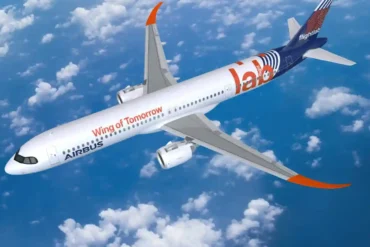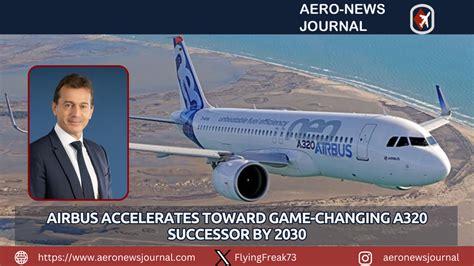
Airbus has reaffirmed its commitment to one of the most significant commercial aircraft developments of the coming decade, with Chief Executive Guillaume Faury confirming that the European aerospace giant remains firmly on course to launch a successor to the immensely successful A320 family in 2030. Internally known as eAction, the clean-sheet aircraft is expected to enter commercial service during the second half of the 2030s, marking the beginning of a new era for single-aisle aviation.
Rather than introducing another incremental upgrade, Airbus is preparing an entirely new aircraft platform designed to redefine efficiency, sustainability, manufacturing resilience, and operational economics. The project represents the company’s biggest commercial aircraft investment since the launch of the A350 and could ultimately determine the competitive balance between Airbus and Boeing for decades.
The announcement also sends a powerful strategic signal. While Boeing continues evaluating the timing of its next clean-sheet narrowbody aircraft, Airbus is positioning itself to lead the industry’s next technological cycle instead of responding to competitors.
After years of research, technology demonstrations, and engineering studies, Airbus now appears increasingly confident that the required technologies will mature in time for a formal program launch before the end of this decade.
Airbus Confirms eAction Development Is Moving Forward
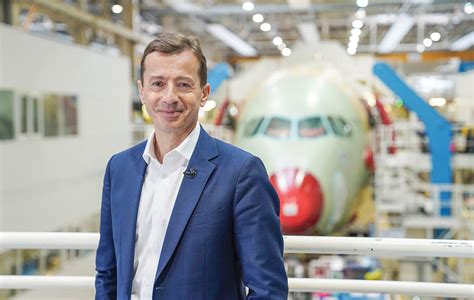
Speaking with Aviation Week, Guillaume Faury emphasized that Airbus is no longer merely evaluating theoretical concepts. Instead, engineering teams are actively advancing research across multiple disciplines that will eventually define the aircraft’s configuration.
According to Faury, Airbus is simultaneously studying wing architecture, fuselage optimization, propulsion technologies, advanced industrial manufacturing systems, and digital engineering processes. Numerous simulations and pre-development studies are already underway alongside close collaboration with suppliers and technology partners.
The CEO stressed that Airbus intends to remain faithful to the development schedule it has outlined in previous years.
“We say what we do; we do what we say.”
That message reflects more than corporate confidence. It indicates that Airbus believes enough technological progress has been achieved to justify maintaining its ambitious timeline despite the enormous complexity involved in replacing one of the world’s most successful commercial aircraft families.
The internal project name, eAction, continues to represent Airbus’ long-term vision for next-generation short- and medium-haul travel, with certification and airline entry into service targeted for the latter half of the 2030s.
Why Replacing the A320 Family Is One of Aviation’s Biggest Challenges
Few commercial aircraft programs have transformed global aviation like the Airbus A320 family.
Since entering service, the aircraft has become the backbone of airline fleets across every continent, serving full-service airlines, low-cost carriers, charter operators, cargo companies, and government customers alike. The introduction of the A320neo family further strengthened Airbus’ position by delivering significantly lower fuel consumption while maintaining fleet commonality for existing operators.
Today, the scale of the A320 program illustrates both its remarkable success and the immense challenge of replacing it.
The aircraft family has accumulated more than 20,000 total orders, over 12,600 deliveries, and roughly 11,000 aircraft remain in active airline service. Even more importantly, Airbus still holds a backlog approaching 7,500 aircraft, ensuring production will continue well into the next decade.
The larger A321neo has become particularly dominant, emerging as one of the industry’s most sought-after narrowbody aircraft thanks to its exceptional range, seating capacity, and operating economics.
Creating a successor therefore requires Airbus to improve upon an aircraft that airlines already consider highly efficient while simultaneously preserving the operational advantages that have made the family so successful.
Airbus Wants to Define the Next Generation Before Boeing Does
One of the most notable aspects of Faury’s comments concerns competitive strategy rather than engineering.
Boeing CEO Kelly Ortberg has previously suggested that market conditions may not yet justify launching an entirely new single-aisle aircraft. Airbus, however, appears comfortable moving ahead independently.
Rather than waiting for Boeing’s next move, Airbus wants to establish the industry’s technological direction first.
By launching earlier, Airbus could secure engineering talent, strengthen supplier commitments, accelerate production planning, and encourage airlines to begin incorporating the new aircraft into long-term fleet replacement strategies years before competing products become available.
Faury’s remarks suggest Airbus sees timing itself as a competitive advantage.
Instead of reacting to external pressures, the manufacturer intends to control its own development schedule while leveraging its current market strength to finance one of aviation’s most ambitious research programs.
Managing Two Aircraft Generations at the Same Time
Ironically, Airbus faces a challenge created by its own success.
Unlike many replacement programs introduced after declining sales, the A320neo family continues selling at extraordinary rates. Production is expected to reach approximately 75 aircraft per month by the end of 2027, while Airbus continues expanding manufacturing capacity across its global industrial network.
With ten final assembly lines operating in Hamburg, Toulouse, Mobile, and Tianjin, the company has invested heavily in supporting long-term A320 production.
Consequently, the future transition will almost certainly involve years during which both aircraft families are manufactured simultaneously.
Faury acknowledged that the current A320 family will likely remain commercially attractive long after eAction enters airline service.
That overlap resembles the earlier transition between the original A320ceo and the A320neo, although this time the technological differences are expected to be considerably greater because Airbus is preparing an entirely new aircraft architecture rather than another derivative.
Balancing production rates between legacy and next-generation aircraft will require careful planning to satisfy existing backlog commitments while gradually introducing the replacement into airline fleets.
Advanced Technologies Will Shape the New Aircraft
Although Airbus has not finalized the aircraft’s configuration, several technologies are expected to play central roles.
The manufacturer has repeatedly indicated that its next-generation narrowbody could deliver 20% to 30% better fuel efficiency than today’s aircraft while supporting operations using 100% Sustainable Aviation Fuel (SAF).
Multiple technology streams are currently under evaluation.
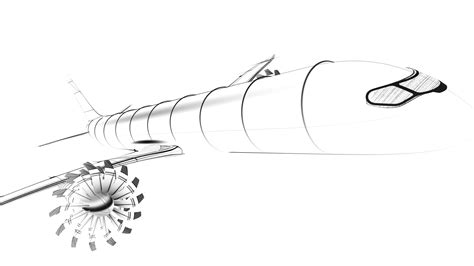
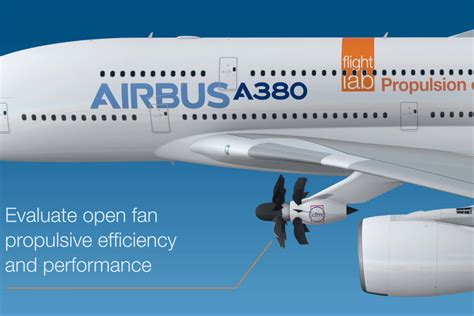
Potential innovations include ultra-efficient engines, open-fan propulsion concepts, longer high-aspect-ratio wings, foldable wingtip designs, hybrid-electric onboard architecture, lightweight composite structures, digital aircraft systems, and highly connected maintenance capabilities.
Each technology promises incremental gains individually, but together they could produce one of the largest efficiency improvements commercial aviation has seen in decades.
The aircraft’s ultimate design will likely depend upon which technologies mature sufficiently before Airbus reaches its 2030 launch decision.
Engine Selection Could Become the Most Important Decision
Among every technical decision Airbus faces, propulsion may prove the most consequential.
Current A320neo aircraft offer airlines two engine options: the CFM International LEAP-1A and the Pratt & Whitney PW1100G.
Historically, providing multiple engine suppliers has given airlines greater flexibility while encouraging competition between manufacturers.
However, Faury acknowledged that Airbus would also consider a single-engine supplier if doing so offered stronger performance, lower development risks, and improved certification efficiency.
Such a decision would represent a significant strategic departure from previous Airbus narrowbody programs.
Choosing one engine provider could simplify aircraft development while reducing manufacturing complexity. Conversely, maintaining two engine options would preserve customer choice and reduce dependence on a single supplier.
The eventual decision will influence certification schedules, airline purchasing strategies, maintenance economics, and long-term supply chain resilience.
Wings, Manufacturing, and Supply Chains Will Define Long-Term Success
Engine technology alone will not determine whether eAction succeeds.
Wing design has become equally important as manufacturers pursue greater aerodynamic efficiency. Longer, thinner wings reduce fuel consumption but introduce practical challenges because airports worldwide were originally designed around existing narrowbody dimensions.
Foldable wingtip technology—already utilized on larger commercial aircraft—could provide a practical solution by allowing larger wings during flight while maintaining airport compatibility during ground operations.
Equally important is Airbus’ determination to avoid the supply chain disruptions that have affected aerospace manufacturing throughout recent years.
Rather than relying heavily on single suppliers for critical components, Airbus intends to diversify sourcing, strengthen supplier resilience, and incorporate greater manufacturing flexibility from the earliest stages of development.
That philosophy extends beyond aircraft design itself.
The company is effectively redesigning its production ecosystem alongside the aircraft, seeking to create a manufacturing system capable of supporting stable deliveries throughout decades of future production.
A Defining Moment for the Future of Commercial Aviation
The planned A320 successor represents far more than another aircraft launch.
It will determine how airlines replace thousands of existing narrowbody jets over the next thirty years while establishing new standards for fuel efficiency, sustainability, operating economics, and industrial manufacturing.
Airbus is entering this transition from a position of considerable strength. The company enjoys record order books, an enormous installed customer base, and a production system capable of supporting unprecedented output. Those advantages provide the financial and engineering foundation necessary to pursue a clean-sheet aircraft while continuing to fulfill current customer demand.
If Airbus successfully launches eAction in 2030 and delivers the promised technological improvements during the second half of the 2030s, the program could reshape the global single-aisle market for an entire generation. More importantly, it would allow Airbus to define the industry’s next chapter on its own timetable, forcing competitors to respond rather than setting the pace themselves.