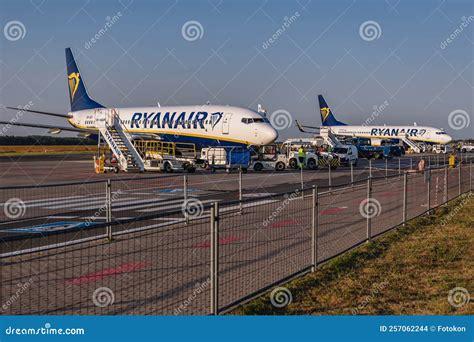
Europe’s largest low-cost carrier, Ryanair, has taken a bold step to cement its dominance in Central Europe by announcing a $400 million joint investment with Warsaw-Modlin Airport (WMI). This extensive infrastructure and operational upgrade, confirmed on July 8, 2025, marks the beginning of a new era for the regional Polish airport. With plans to more than triple annual passenger traffic to over 5 million by 2030, the partnership is not just an expansion—it is a strategic recalibration of air travel dynamics in the region.
A Strategic Turnaround After Decline
The ambitious investment comes after a period of strained relations and operational downsizing. Since 2023, passenger numbers at Warsaw-Modlin had declined by over 50%, primarily due to Ryanair’s route cuts and reduction in based aircraft, following what it called “unfavorable airport fees.” By 2024, the airport had served just 2.8 million passengers, a stark contrast to its main competitor, Warsaw-Chopin Airport (WAW), which managed over 21.2 million in the same period.
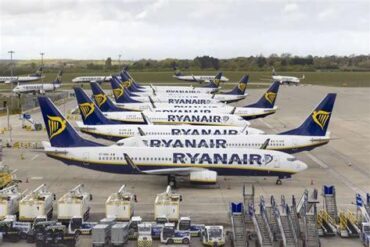
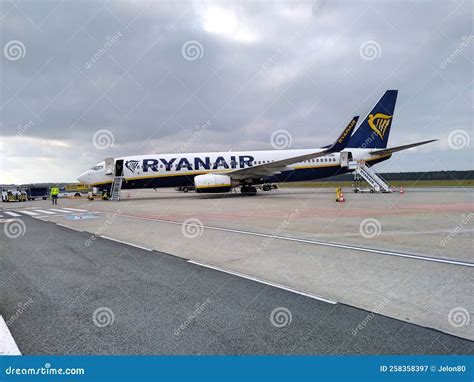
Now, that downward trajectory is poised for reversal. Ryanair will double its aircraft based at WMI from four to eight, and plans to introduce up to 25 new routes from the facility over the coming years. This expansion repositions Modlin as a cornerstone of Ryanair’s Central European network and rekindles its status as Poland’s secondary aviation hub.
Infrastructure Overhaul: Modlin’s $400M Revamp
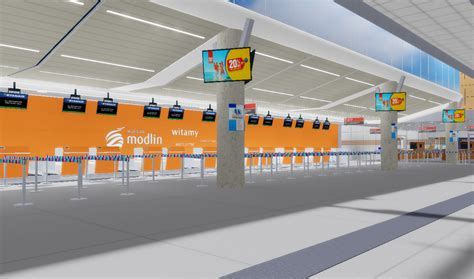
To accommodate the expected surge in operations and passengers, Warsaw-Modlin Airport is committing to comprehensive infrastructure development by September 2027. The expansion blueprint includes:
- Four new passenger check-in desks, increasing the total to eight.
- Four additional aircraft parking stands, bringing the count to twelve.
- Enhanced baggage handling systems, airside logistics, and retail offerings.
These upgrades are tailored to streamline passenger flow, improve turnaround efficiency, and support the operational complexity brought by Ryanair’s enlarged footprint.
Economic Ripple Effects Across the Region
The expansion is forecasted to generate over 600 new jobs, split between direct airline roles and airport operations. Specifically, Ryanair’s growth will result in over 200 new positions for pilots, cabin crew, and engineering staff, while an additional 400 jobs will be created in airport retail, security, and passenger services.
These employment gains are seen as a catalyst for economic development in Mazovia, the region surrounding Warsaw. The airport’s president, Jacek Kowalski, noted that the investment represents a “direct impulse for the local economy,” enhancing regional connectivity and stimulating tourism across Central Poland.
A Decade-Long Partnership Reignited
Though Ryanair has been a fixture at Warsaw-Modlin since its opening in 2012, the relationship between the airline and airport management has been turbulent. In recent years, disputes over operational fees led to reduced schedules and tension. However, this new agreement—described as “multi-year” and “strategic”—appears to signal a turning point.
Ryanair CEO Michael O’Leary expressed confidence in the renewed partnership, stating: “After three years of declining traffic, we are pleased to sign this ambitious agreement with the airport’s new management team. We believe Warsaw-Modlin will again be the fastest-growing airport in Poland.“
Kowalski echoed the optimism: “Thanks to the expected investments and mutual trust, Modlin aspires to become one of the leading regional airports in the country, and to rise into the ‘first league’ of European airports serving low-cost airlines.”
Why Modlin Matters to Ryanair
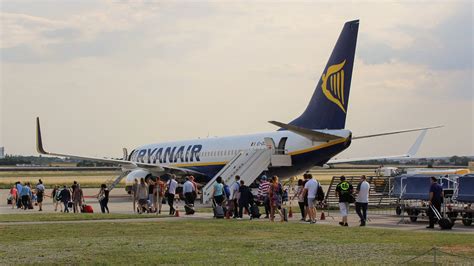
Modlin’s strategic value lies in its location, cost efficiency, and dedicated low-cost infrastructure. As Poland’s seventh-busiest airport, its growth potential contrasts sharply with the congestion and higher charges at Warsaw-Chopin. Ryanair sees Modlin not just as a local node, but as a gateway for low-fare penetration across Central and Eastern Europe.
Moreover, Ryanair’s decision to deepen ties with Modlin is part of a wider strategy to decentralize operations from primary airports—where legacy carriers dominate—and build regional hubs optimized for quick turnarounds and low operational costs.
New Routes, New Horizons
Although the exact destinations for the planned 25 new routes have yet to be disclosed, industry analysts suggest a mix of:
- Seasonal holiday destinations in Southern Europe (Spain, Italy, Greece)
- City-to-city links across the Baltics, Balkans, and Western Europe
- Emerging Eastern European routes, aimed at connecting underserved markets
This expansion would significantly bolster Ryanair’s route map from Poland and feed traffic into its Buzz subsidiary, which operates the bulk of Ryanair’s services in the region.
Ryanair’s Dominance in Poland
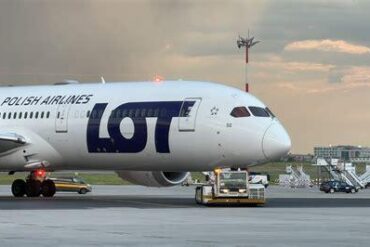
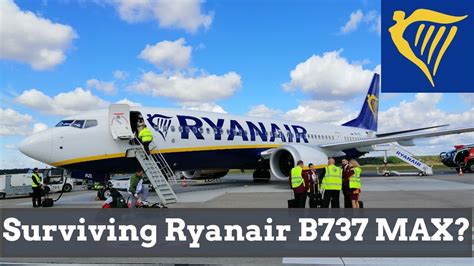
With nearly 17 million passengers carried in Poland in 2024, Ryanair commands more than double the traffic of LOT Polish Airlines, the country’s flag carrier. Its Polish arm, Buzz, operates a fleet of 73 aircraft—including 54 Boeing 737-800s and 19 Boeing 737-8-200 MAX jets.
This formidable fleet gives Ryanair unparalleled flexibility in launching new routes and scaling capacity in response to demand. It also underscores Ryanair’s strategy of treating Poland not just as a market, but as a core operational base within its European network.
Regional Impact and Political Optics
The Modlin deal is likely to reverberate beyond aviation circles. With elections on the horizon and national debates on regional inequality, the Mazovia investment will be seen as a political and economic win. The move enhances Poland’s infrastructure, strengthens European connectivity, and may serve as a model for public-private partnerships in the aviation sector.
More broadly, the expansion reflects growing demand for point-to-point travel and alternative airport development as major hubs reach saturation. Warsaw-Modlin, once seen as a niche facility, is being repositioned as a pillar of Poland’s regional air network.
Looking Ahead to 2030
As construction begins and aircraft repositioning gets underway, all eyes will be on how Warsaw-Modlin executes its ambitious transformation. For Ryanair, success will be measured in load factors, route profitability, and sustained growth.
But for the airport itself, this deal is about much more than flights. It’s a bold attempt to redefine its role on the European stage, attract millions of new travelers, and showcase how regional airports can thrive when aligned with airline strategy.
The countdown to 2030 begins now. With the right infrastructure, commercial resolve, and passenger appetite, Warsaw-Modlin may indeed become the fastest-growing airport in Poland once more—on Ryanair wings.