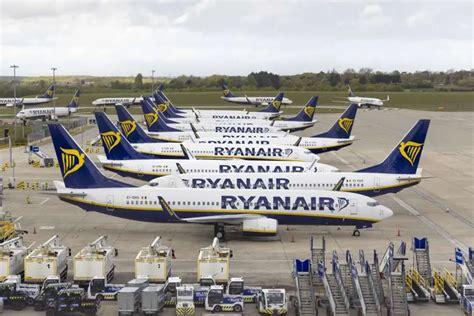
Ryanair has announced the complete withdrawal of its operations in the Azores, effective March 29, 2026, in a move that will eliminate 400,000 annual airline seats to the Portuguese archipelago. This decision, which Ryanair attributes to escalating airport charges and government inaction, marks a serious shift in the low-cost carrier’s European strategy and poses significant economic implications for the remote Atlantic islands.
Airport Fees Make Azores Routes Unsustainable
The carrier cited a 35% increase in airport charges at Ponta Delgada (PDL)—the Azores’ primary international gateway—since the COVID-19 pandemic as a primary reason for its exit. These hikes, imposed by ANA Aeroportos de Portugal, a company majority-owned by VINCI Airports, are described by Ryanair as exploitative due to ANA’s monopoly control over airport operations in the region. According to Ryanair, this monopoly is “allowed to extract monopoly profits without penalty,” making it impossible to maintain its low-cost model.
Further exacerbating the situation are new regulatory expenses, including:
- A €2 per passenger travel tax.
- A reported 120% increase in Air Traffic Control (ATC) fees.
- The application of the EU Emissions Trading System (ETS), despite the region’s remote location.
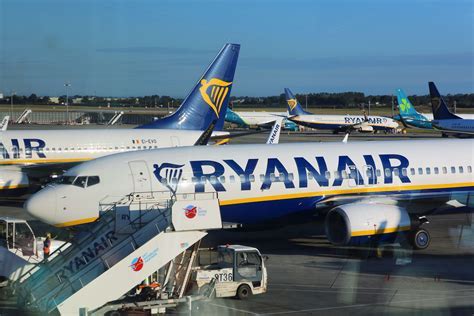
All Four Ryanair Routes To Azores Canceled
Ryanair will be cutting its remaining four routes to and from the Azores. These include flights between Ponta Delgada (PDL) and Terceira Island (TER) to Lisbon and Porto. While this completes the withdrawal, it also finalizes a multi-year decline that has already seen a 35% reduction in capacity—equal to over 200,000 seats—over the past three years.
Previously, Ryanair connected Ponta Delgada with major European cities like London Stansted, Manchester, and Frankfurt Hahn, providing a vital link for both tourists and residents. By 2026, only the Lisbon and Porto connections remained—until now.
In a strongly worded statement, Ryanair’s Chief Commercial Officer Jason McGuinness expressed the airline’s deep frustration:
“We are disappointed that the airport monopoly ANA continues to raise Portuguese airport fees to line its pockets, at the expense of Portuguese tourism and jobs. After 10 years of year-round Ryanair operations, one of Europe’s most remote regions will now lose low-fare flights due to ANA’s high airport fees and Portuguese Government inaction.”
Tourism in the Azores Faces a Severe Setback
The Azores, a mid-Atlantic haven of natural beauty and ecological tourism, heavily relies on affordable and frequent air travel. The exit of Ryanair—a carrier synonymous with budget access—threatens to dramatically shrink visitor numbers. The loss of 400,000 seats annually is not just a capacity issue; it undermines the affordability that made the Azores a reachable destination for many European travelers.
While 22 international and domestic routes will still serve Ponta Delgada in summer 2026, these will be handled by legacy and regional carriers such as Azores Airlines, TAP Air Portugal, British Airways, and United Airlines. These alternatives, while operationally reliable, typically offer higher average fares and less frequent schedules compared to Ryanair.
Ryanair’s Wider Retreat Across Europe
The Azores decision reflects a broader trend in Ryanair’s operations. The airline has been aggressively scaling back its presence across Europe in response to what it perceives as punitive taxation and inflated airport costs. In winter 2025 alone:
- Germany: 800,000 seats and 24 routes cut across 9 airports.
- France: 750,000 seats and 25 routes removed.
- Baltics: 40% capacity reduction at Tallinn, and 20% at Riga, with multiple destinations dropped.
- Spain: 1.2 million seats cut in summer 2026; operations halted at Asturias, Jerez, Valladolid, and Santiago de Compostela.
Ryanair has made clear that it will reallocate this capacity to countries with lower aviation taxes and friendlier regulatory environments, including Poland, Italy, Hungary, and Sweden—nations praised by the airline for their supportive stance on affordable air travel.
What Comes Next for the Azores?
While the loss of Ryanair is undoubtedly a blow, the Azores may not remain underserved for long. The remaining roster of carriers offers considerable geographic coverage, including long-haul links to North America (Newark, Boston, JFK, Toronto, Montreal), and European hubs like Frankfurt, London Heathrow, Paris, and Zurich. However, these connections lack the price competitiveness and frequency that Ryanair provided. Unless other low-cost carriers step in to fill the void—or ANA and the Portuguese government reevaluate their pricing structures—the Azores could face a decline in tourism volumes, particularly among price-sensitive travelers.
The challenge now lies with the regional and national stakeholders: Will they act to stabilize costs and attract low-cost operators, or will the Azores enter a new era of constrained access and higher travel prices? As Ryanair continues to reshuffle its European footprint, the Azores becomes another case study in the fragile balance between infrastructure economics and accessibility, especially for remote regions whose survival hinges on the skies.