Azores Airlines, a prominent player in the aviation industry, is not only a symbol of Portugal’s rich aviation history but also an airline that continues to shape the future of air travel to and from the Azores. This Portuguese airline, with its origins tracing back to 1990, has undergone significant transformations, evolving both in terms of branding and fleet composition. In this detailed overview, we will explore the airline’s history, its operational network, fleet composition, and various milestones that have defined Azores Airlines as a trusted carrier for passengers worldwide.
The Birth and Evolution of Azores Airlines
The roots of Azores Airlines stretch back to OceanAir, which was founded in 1990, with the goal of offering air transport services across the Azores archipelago. Although OceanAir initially struggled in its early years, it was in 1994 that SATA Air Açores (the regional carrier) became the major shareholder and subsequently the sole owner. By 1998, the airline was rebranded as SATA Internacional, marking a new chapter in its journey.
This name change brought with it an increased focus on international flights, particularly from the Azores to Lisbon, Madeira Island, and Porto, thereby positioning the airline as a key player in Portugal’s domestic and international routes. SATA Internacional’s transformation continued when, in 2015, it adopted the Azores Airlines name, solidifying its commitment to enhancing service quality and expanding its route offerings.
As a subsidiary of SATA Air Açores, Azores Airlines operates its international flights from João Paulo II Airport in Ponta Delgada, on the island of São Miguel, one of the nine islands of the Azores archipelago. The airline has become a critical link between the Azores and major global destinations, with routes extending to the United States, Canada, Europe, and even Africa.
Fleet and Aircraft
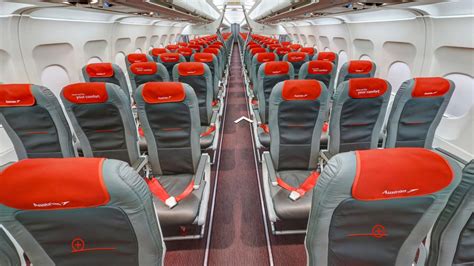
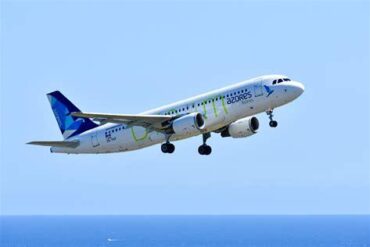
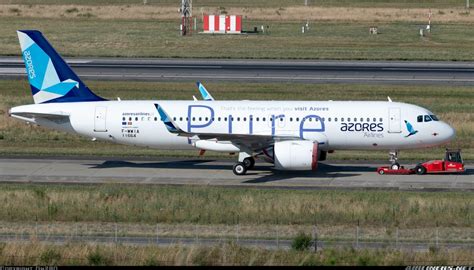
One of the defining features of Azores Airlines is its modern and efficient fleet. The airline currently operates a fully Airbus-based fleet, with a total of 10 aircraft. This fleet includes the Airbus A320-200, the A320neo, and the A321LR, all designed to provide passengers with a comfortable and efficient flying experience.
- Airbus A320-200: A classic workhorse of the airline, these aircraft offer a seating capacity of 168 passengers, ensuring a balance of comfort and operational efficiency.
- Airbus A320neo: These newer models bring improved fuel efficiency and reduced noise emissions, boasting a capacity of 168 passengers.
- Airbus A321LR: The long-range version of the A321, capable of flying longer distances without compromising on comfort, with a seating capacity ranging from 170 to 190 passengers, depending on the specific configuration.
The airline also has two Airbus A321neo and four A321LRs in its fleet, designed to replace older aircraft, such as the Airbus A310 and Boeing 737 models that were retired over time. These newer planes are crucial for long-haul flights, ensuring that Azores Airlines can offer non-stop services to far-flung destinations like Boston, Toronto, and New York.
In addition to these scheduled flights, the airline operates charter services and has also become a preferred carrier for passengers traveling to the Azores for leisure. The fleet’s evolution mirrors the airline’s growth and its ability to meet the needs of the modern air travel industry.
Destinations and Routes
Azores Airlines serves a wide range of destinations across North America, Europe, and Africa. The airline’s hub at João Paulo II Airport in Ponta Delgada is the main launch point for many of its international routes, but the airline also operates flights from Lisbon.
In addition to its domestic flights within Portugal, the airline’s international network includes key destinations such as Boston, New York, Toronto, Madeira, Madrid, and Paris. The airline’s ability to connect the Azores with such a diverse range of locations makes it a vital carrier for both tourism and business travelers.
For travelers seeking seamless connections, Azores Airlines also maintains codeshare agreements with airlines like TAP Air Portugal, Air France, and WestJet, ensuring that passengers can easily connect to flights beyond the Azores, whether traveling within Europe or internationally.
Branding and Livery
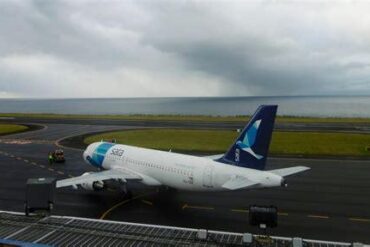
Over the years, Azores Airlines has undergone several brand evolutions, reflecting its growing global presence and changing market dynamics. In 2009, SATA Internacional rebranded, adopting a new logo and aircraft livery featuring blue tones and a stylized bird symbol. This branding would remain in place until 2015, when the airline adopted the name Azores Airlines.
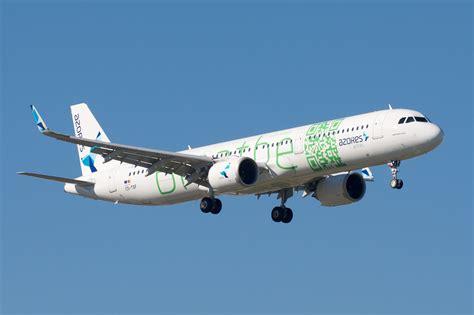
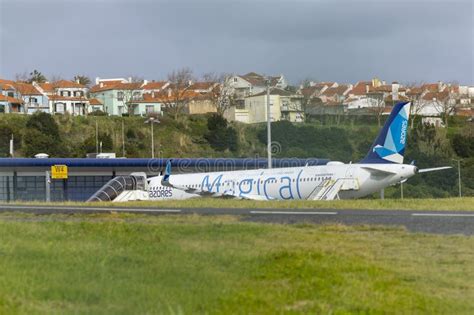
The rebranding in 2015 was accompanied by a fresh new livery, with green tones replacing the previous blue. The new logo featured a whale tail symbol, representing the Azores archipelago’s strong connection to nature, the sea, and the island’s unique maritime heritage. The whale tail was designed using nine geometrical shapes, symbolizing the nine islands of the Azores, a nod to the natural beauty of the archipelago.
As part of the branding overhaul, the airline also modified its slogan to reflect the beauty of the Azores. Aircraft now display the words “Breathe”, “Magical”, and other such evocative terms, accompanied by the tagline, “That’s the feeling when you visit Azores”, placed prominently on the fuselage.
Strategic Milestones and Achievements
Azores Airlines’ commitment to growth and innovation has led to a series of strategic milestones. In 2015, as part of an effort to reduce debt, the airline outlined plans to streamline its operations, including reducing its fleet size and workforce. By focusing on cost-efficiency, Azores Airlines aimed to reduce its debt from €179 million to just €40 million by 2020. This initiative was part of a broader plan that also involved the introduction of the Airbus A330 aircraft and the cancellation of a second A330 in favor of the Airbus A321LR.
In 2021, the airline achieved a significant milestone when it operated the longest commercial A321LR flight in terms of duration, from Lisbon to Bogotá. The flight lasted an impressive 9 hours and 49 minutes, surpassing previous records set by other carriers. This record further underscores the airline’s commitment to long-haul operations and its ability to provide non-stop flights on modern, efficient aircraft.
Safety and Incident History
Like all airlines, Azores Airlines has experienced a few challenges related to safety incidents. One notable event occurred in 2009 when an Airbus A320 operated by SATA Internacional experienced a hard landing after bouncing off the runway at Ponta Delgada. The incident caused damage to the landing gear, and an investigation revealed that the ground spoilers had deployed incorrectly during the bounce. The aviation investigation later attributed the event to the pilot’s failure to execute a go-around and an insufficient flare during landing. Thankfully, no passengers were injured, but the incident highlighted the importance of continuous training and equipment maintenance in ensuring passenger safety.
Azores Airlines: A Trusted Carrier for Global Travelers
Today, Azores Airlines stands as a symbol of reliability, growth, and connection in Portugal’s aviation landscape. From its humble beginnings as OceanAir to its transformation into a globally recognized carrier, Azores Airlines has continually adapted to meet the evolving needs of the airline industry. With a fleet of modern, fuel-efficient aircraft, a diverse range of international destinations, and a commitment to offering quality service, Azores Airlines is undoubtedly one of the premier carriers connecting the Azores to the rest of the world.
Whether you are flying from the Azores to North America, Europe, or any of the airline’s other destinations, Azores Airlines promises a safe, comfortable, and memorable journey every time. As the airline continues to innovate and grow, travelers can expect even more exciting developments from this proud Portuguese carrier.