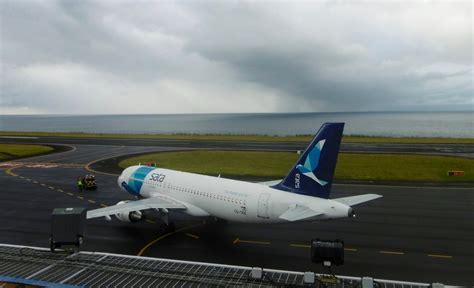
Founded in 1941, SATA Air Açores has long served as the aerial backbone of the Azorean archipelago, connecting its nine isolated islands with each other and, via its subsidiary, with mainland Portugal and beyond. As a regional airline headquartered in Ponta Delgada, it occupies a strategic role in maintaining economic, social, and logistical cohesion across the mid-Atlantic. Over the decades, the airline has evolved from a modest local operation into a crucial infrastructure provider, fully integrated with the region’s development.
The airline’s journey began with the establishment of Sociedade Açoreana de Estudos Aéreos on August 21, 1941. Backed by influential Azorean investors and commercial entities such as Bensaude & Co. Lda., the company was initially focused on studying aviation feasibility within the archipelago. By June 15, 1947, that vision materialized when Captain Marciano Veiga piloted the first inter-island flight in a twin-engine Beechcraft aircraft named “Açor”, carrying seven passengers from Santa Maria Airport.
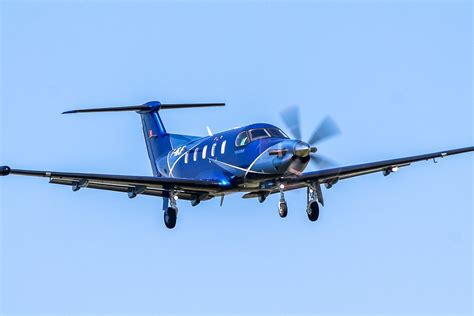
In 1948, SATA expanded its capabilities with two de Havilland DH.104 Doves, enabling broader regional operations. However, tragedy struck on August 5 of the same year, when a Beechcraft crashed on takeoff, claiming all lives onboard and pausing operations. Resuming service in May 1949 with new DH.104s, the airline continued to strengthen its fleet, eventually acquiring a Douglas DC-3 Dakota in 1964, with room for 26 passengers, a significant step toward larger capacity routes.
The opening of Nordela Airport in 1969, later renamed João Paulo II International Airport, marked a turning point. As the airline’s primary base, it supported growth and modernization efforts. By 1971, with the inauguration of Horta Airport and TAP Air Portugal’s Lisbon-Ponta Delgada service, SATA found itself embedded in a more extensive national network. Fleet modernization followed, including the adoption of Hawker Siddeley HS 748 turboprops in 1972, which enabled reliable service to all nine islands by 1983.
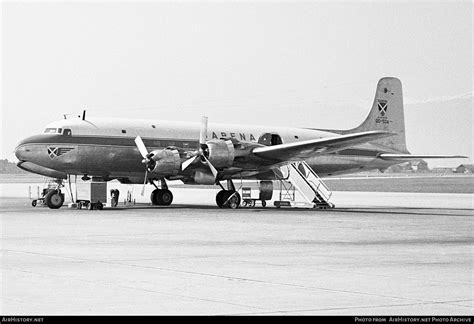
During a 1976 TAP strike, SATA acquired two Douglas DC-6 aircraft from the Portuguese Air Force, offering long-range capability to Lisbon and effectively increasing its reach. This period also saw a surge in traffic, culminating in the transport of one million passengers by April 14, 1977—a milestone that underscored the airline’s regional dominance.
Originally a 50% private venture, SATA transitioned into a state-owned enterprise (SOE) on October 17, 1980, jointly managed by the Regional Government of the Azores and TAP. This strategic move formalized its public role and opened new collaborative opportunities, including SATA’s integration into the European Regions Airline Association (ERA) and the International Air Transport Association (IATA).
With an eye on continuous renewal, SATA initiated a major fleet transition between 1989 and 1991. The aging HS 748s were replaced by more efficient BAe ATP turboprops, each aircraft named after one of the Azorean islands—a symbolic gesture tying each plane to a specific geographic identity. The airline also introduced a Dornier 228‑212 to serve Corvo, the smallest and most remote island in the chain, replacing military-operated CASA aircraft and further expanding SATA’s civil aviation footprint.
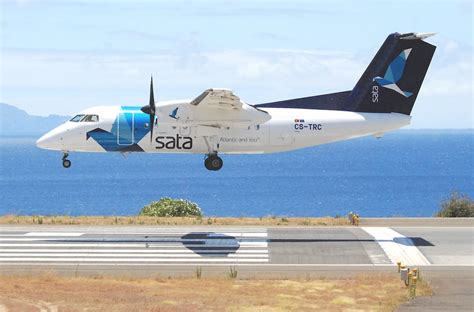
By the late 2000s, the airline again confronted the challenges of modernization. A fleet renewal program was launched to improve performance and reduce costs. After evaluating options from ATR and Bombardier, SATA chose the Bombardier NextGen series for its technological and operational fit with short-haul, high-frequency island hops. The first two Q200 aircraft began service in July 2009, offering seating for 37 passengers. These were followed by four Q400 models between January and March 2010, which could transport 80 passengers over distances up to 2,500 kilometers at cruising speeds of 667 km/h.

Alongside the fleet overhaul, SATA introduced a striking new visual identity. Designed by Ivity-Corp, the “Blue Island Açor” logo symbolizes unity among the Azorean islands. Composed of nine geometric shapes, each representing an island, the design serves both as a map and a metaphor for regional interdependence. It was launched with the arrival of the first Bombardier Q200 and has since become an iconic part of SATA’s brand.
Today, SATA Air Açores operates a fleet of seven aircraft as of August 2023:
- 2 Bombardier Dash 8-Q200 (37 seats)
- 5 Bombardier Dash 8-Q400 (80 seats)
This compact but efficient fleet is perfectly tailored to the geographical and logistical requirements of the archipelago, providing high-frequency, short-haul service between islands while maintaining reliable connections to the broader Azores Airlines network.
Historically, the airline has operated a wide range of aircraft suited to evolving regional demands, including:
- BAe ATP
- British Aerospace 146
- Douglas DC-3
- Douglas DC-6
- Dornier 228
- Hawker Siddeley HS 748
- de Havilland DH.104 Dove
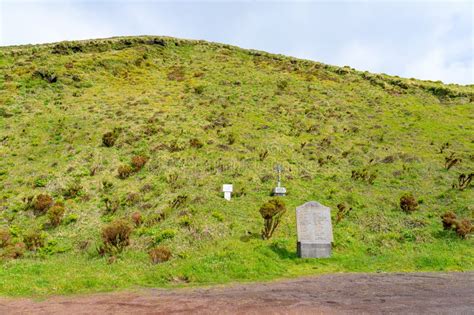
Despite its success, SATA has not been without hardship. One of its darkest moments occurred on December 11, 1999, when Flight 530M, a British Aerospace ATP, crashed during descent into São Jorge Island. Flying in severe weather, the crew failed to activate onboard weather radar and did not maintain minimum safe altitude. The aircraft struck Pico da Esperança, killing all 35 people on board. The tragedy underscored the risks inherent to regional aviation in rugged, weather-prone environments and triggered significant procedural revisions.
Over the decades, SATA Air Açores has proven itself as more than just an airline. It is a vital connector of people, goods, and opportunities across one of the most geographically isolated regions of Europe. From its pioneering days of propeller-driven Doves to the advanced Bombardier turboprops that now grace the skies, SATA embodies resilience, innovation, and deep regional commitment. Its evolution reflects not just aviation history, but the modern economic and social fabric of the Azores themselves. As it charts its future in alignment with its long-term 15–20 year development plan, SATA continues to serve as the lifeline of the Azores skies, ever adapting while rooted in the identity of the islands it was built to unite.