Hi Fly (legally Springjet, S.A.) has steadily risen to prominence as one of Europe’s most innovative charter airlines, with a specialized focus on ACMI (Aircraft, Crew, Maintenance, and Insurance) and leasing services. Founded in 2005 and headquartered in Lisbon, Hi Fly operates a versatile fleet with no scheduled routes, instead tailoring its services to meet the operational needs of governments, commercial carriers, tour operators, corporations, sports teams, and VIP individuals across the globe.
Founded by Paulo Mirpuri, with Antonios Efthymiou serving as CEO, the company embodies a progressive model of flexible air transport solutions. Operating primarily out of Beja Airport, with a significant extension through its Maltese subsidiary, Hi Fly Malta, the airline has built a business model on adaptability, sustainability, and premium service.
Foundation and Early Growth (2005–2013)
Hi Fly was incorporated in October 2005 and achieved operational clearance in April 2006 through Portugal’s civil aviation authority, ANAC. Shortly thereafter, it received key European certifications, including EU-OPS and EASA approvals, cementing its ability to operate safely across EU jurisdictions. In September 2011, Hi Fly obtained the IOSA (IATA Operational Safety Audit) certification, a major milestone indicating adherence to global safety standards.
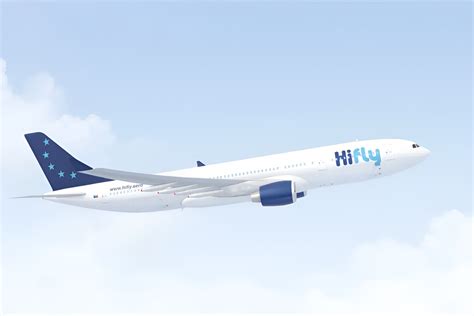
The carrier’s first aircraft was an Airbus A330-300, formerly operated by Air Luxor—a company once owned by the same Mirpuri family. This aircraft was leased to the Belgian Armed Forces and served until 2013. By 2008, Hi Fly expanded with two Airbus A310-300s, leased to Oman Air to serve its newly inaugurated long-haul routes to London Heathrow and Bangkok.
Fleet growth continued into 2008 and 2009, when Hi Fly acquired an A330-200 and two A340-500s directly from Airbus. These long-range jets were prominently utilized by Arik Air of Nigeria on its Lagos–New York JFK route. Flying in full Arik livery, these aircraft were a clear demonstration of Hi Fly’s ACMI model at work. Following a five-year operation, the A340-500s were repossessed in spring 2015.
In 2013, four more wide-body aircraft were added, followed in 2014 by Hi Fly’s first narrow-body jet, an Airbus A321-200, which replaced the earlier A330 in service with the Belgian military.
Also in March 2013, Hi Fly established its Maltese subsidiary, Hi Fly Malta, initially deploying A340-600s, but now operating A340-300s to continue fulfilling long-haul charter needs across multiple continents.
Operational Turning Points and Innovations (2015–2020)
A significant operational controversy occurred in May 2015, when Saudi Arabian airline Saudia abruptly ended its lease of two A330s from Hi Fly. The decision followed the appearance of a Saudia-branded A330 at Israel’s Ben Gurion Airport for routine maintenance. Despite the aircraft not being in commercial service at the time, Saudia cited a breach of contract, as Saudi Arabia maintains no diplomatic relations with Israel. In response, Hi Fly returned the aircraft to its lessor and swiftly transitioned its fleet assets.
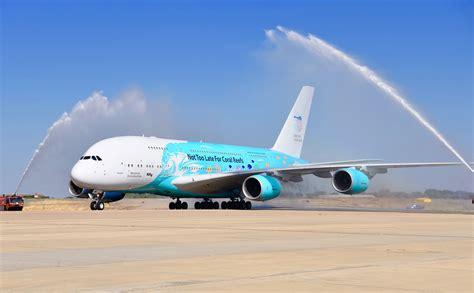
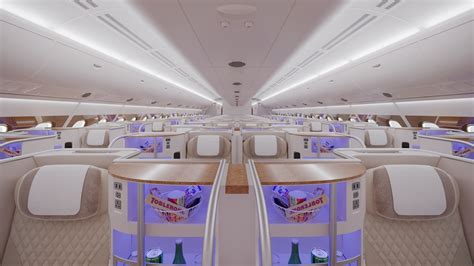
Hi Fly achieved a historic milestone in mid-2018 by becoming the first airline to operate a secondhand Airbus A380 for commercial wet leasing. Acquired from Singapore Airlines, the aircraft featured Rolls-Royce Trent 900 engines and accommodated 471 passengers across three classes—399 in economy on the lower deck, and 60 in business plus 12 in first class on the upper deck.
Pioneering aviation sustainability, Hi Fly conducted a series of 16 test flights in December 2018, replacing all single-use plastic items with compostable alternatives. Cutlery was made from bamboo, while cups, trays, and containers were derived from recycled or biodegradable materials. Over these test flights, 1,500 kilograms of plastic waste were eliminated, reflecting Hi Fly’s firm commitment to environmental stewardship.
Breaking Barriers and Extreme Missions (2019–2025)
Hi Fly faced technical turbulence on 29 June 2019, when a returning A340 was forced to dump fuel across 84% of Orlando Airport’s runway due to a hydraulic issue. While no injuries were reported, the incident drew attention to the complexities of emergency procedures involving older long-range aircraft.
On 2 November 2021, Hi Fly accomplished an unprecedented feat by landing the first Airbus A340 on Antarctic blue glacial ice. Flight 801, piloted by Captain Carlos Mirpuri, flew from Cape Town to Wolf’s Fang Runway, traversing 2,500 nautical miles each way. This mission not only highlighted the aircraft’s endurance but underscored Hi Fly’s capability to operate under extreme geographic and climatic conditions. The operation has since been repeated in 2022 and 2023, further proving the viability of long-haul logistics to Antarctica.

Also in 2021, Hi Fly was contracted by the UK government for controversial asylum seeker deportation flights, placing it at the center of human rights debates surrounding EU and UK immigration policies.
In May 2025, Hi Fly operated an A380 charter flight from Glasgow to New York JFK, on behalf of British startup Global Airlines. This marked a critical entry point for Global Airlines into transatlantic markets and served as another example of Hi Fly’s role in supporting emerging carriers with high-capacity aircraft on key launch routes.
Corporate Infrastructure and Strategic Oversight
Hi Fly’s headquarters in Lisbon’s city center houses every core operational department, including flight operations, engineering, ground services, safety, finance, commercial strategy, and crew training. It is also home to simulation and training classrooms for cabin and flight crews.
Adjacent to Lisbon Airport, the company operates a dedicated maintenance hangar through its subsidiary MESA, ensuring in-house aircraft servicing and strict adherence to airworthiness standards. This infrastructure allows Hi Fly to support its global fleet operations without relying heavily on third-party maintenance providers.
Market Position: Charter and ACMI Specialist
Hi Fly does not serve scheduled commercial routes, instead focusing entirely on bespoke airlift solutions through ACMI leasing and full charter services. Its clientele ranges from national governments to corporate clients and sports organizations, demanding customized aircraft deployment often at short notice.
This approach gives Hi Fly a competitive advantage in markets where flexibility, scalability, and reliability are more important than brand recognition or frequency. Its ability to quickly deploy wide-body aircraft in response to global crises, repatriation efforts, or strategic inaugurations sets it apart in a crowded air services landscape.
Current Fleet Composition (as of May 2024)
Hi Fly operates a fleet of 14 aircraft, including:
- 1 Airbus A321-200 – 220 seats (all economy)
- 5 Airbus A330-200s – 268 seats (18 first, 36 business, 214 economy)
- 2 Airbus A330-300s – 249 seats (46 first, 203 economy)
- 6 Airbus A340-300s – 267 seats (12 first, 42 business, 213 economy); two are cargo-converted
The airline’s ability to configure aircraft per client needs further strengthens its position in the flexible charter and leasing domain.
Legacy Fleet and Strategic Transitions
Over the years, Hi Fly has operated numerous aircraft types to meet client-specific needs. Former aircraft include:
- Airbus A310-300s, used from 2009–2015
- Airbus A319-100, briefly used in 2019
- Airbus A320-200s, part of early operations (2005–2006)
- A330-900, transferred to Sunclass Airlines in 2022
- A340-500s, key for ultra-long-haul missions until 2018
These transitions reflect Hi Fly’s strategic movement towards wide-body and long-range aircraft, better suited to its core charter and ACMI clientele.
Conclusion
Hi Fly’s two-decade evolution illustrates a unique trajectory within modern aviation—rooted in charter adaptability, defined by technological progress, and driven by a vision of sustainability and operational excellence. From deploying the first A340 on Antarctic ice to pioneering single-use plastic-free flights, the airline continues to push boundaries in global aviation services. As market demand for scalable airlift capacity increases, Hi Fly remains positioned as a leader in premium ACMI and charter aviation, with a fleet and philosophy built for 21st-century challenges.