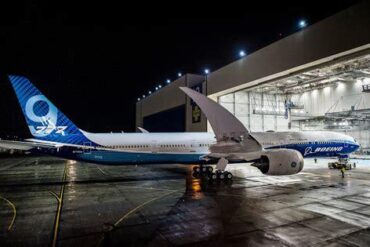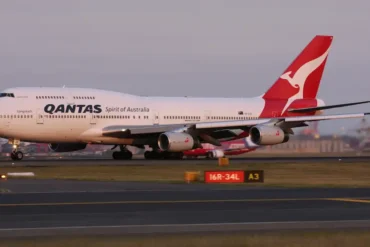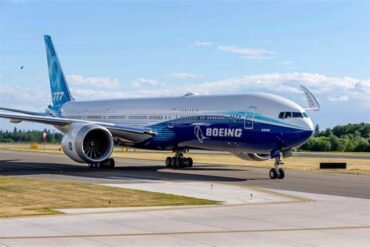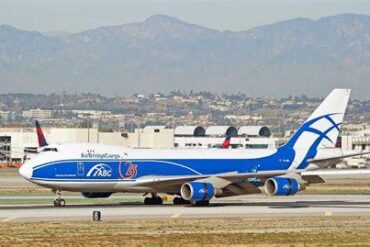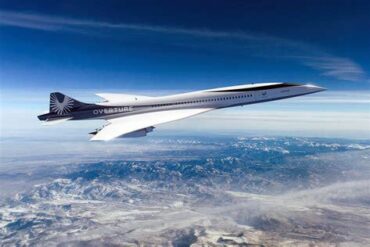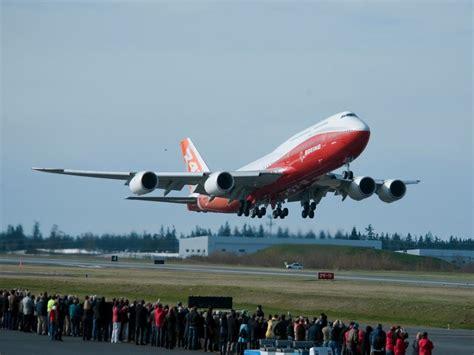
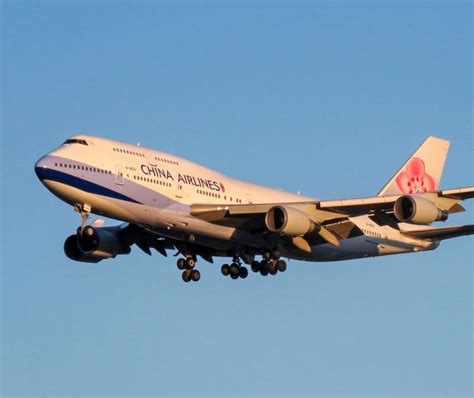
The Boeing 747-400, once the undisputed queen of the skies, is nearing the twilight of its career. With over five decades of service behind it, this iconic jumbo jet is slowly disappearing from global airline fleets. It revolutionized long-haul travel with its unmatched size, range, and passenger capacity. Yet, the aviation landscape has changed dramatically. Airlines now seek fuel efficiency, cost-effectiveness, and flexibility — characteristics the aging 747-400 can no longer provide competitively. As a result, the industry has turned its eyes toward the Boeing 777X, a cutting-edge widebody aircraft engineered to inherit the 747’s long-haul legacy, albeit in a more sustainable and economically viable form.
Why Airlines Are Retiring the 747-400
The retirement of the 747-400 is not just a consequence of age; it’s a strategic evolution. Airlines worldwide are pivoting away from large, four-engine aircraft due to skyrocketing fuel costs, increased environmental regulations, and the shift toward point-to-point connectivity over traditional hub-and-spoke models. The COVID-19 pandemic accelerated this transformation, forcing carriers to re-evaluate their fleet strategies.
The 747, with its four engines and massive size, demands immense resources to operate. It was designed for an era when volume trumped versatility. Today, twin-engine widebodies like the 787 Dreamliner and Airbus A350 offer similar — or greater — range and comfort with much lower fuel consumption and emissions.
The Boeing 777X: A Modern Powerhouse
Boeing’s response to this seismic shift is the 777X family, specifically the 777-8X and 777-9X variants. Designed to marry the range and capacity of the 747-400 with the economics of a twinjet, the 777X represents a new frontier in large aircraft design. Boeing claims the 777X delivers 10% lower fuel burn and emissions compared to its nearest competitor, translating into 20% lower fuel consumption than the previous-generation 777 models.
The 777X program aims to replace not just the 747-400 but also aging fleets of Airbus A340s and early 777-200/300s. Boeing designed the aircraft with commonality in mind, ensuring it integrates seamlessly into fleets that already operate the 787 Dreamliner. The synergy offers airlines cost savings in maintenance, pilot training, and operations.
Technical Brilliance: 777X Specifications
The 777X’s capabilities are split between two variants:
- 777-8X: 395 seats, 8,745 nautical miles (16,190 km) range
- 777-9X: 426 seats, 7,285 nautical miles (13,500 km) range
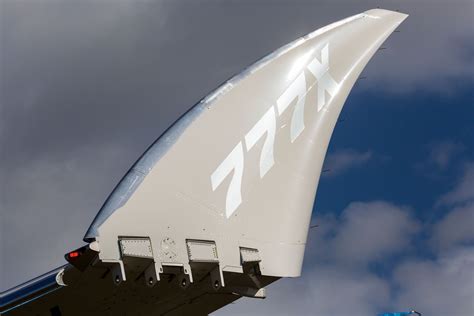
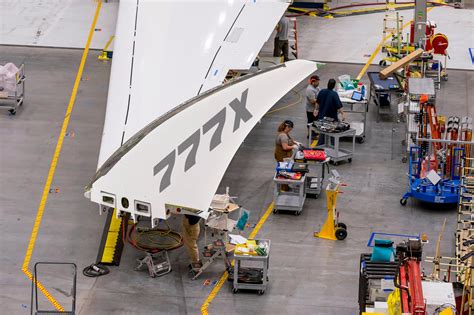
At 251 feet and 9 inches, the 777-9X is the longest commercial airliner ever built. Its wingspan stretches a colossal 235 feet (71.8 meters) with tips extended — so large, in fact, that Boeing installed folding wingtips to allow it to fit into standard airport gates.
The 777-8F, the freighter version, further showcases Boeing’s intent to dominate multiple market segments. Capable of hauling 118 tonnes over 4,410 nautical miles, the 777-8F delivers 112 tonnes of revenue-generating cargo per trip — numbers that place it firmly in the top tier of modern cargo aircraft.
The GE9X Engine: Power Meets Efficiency
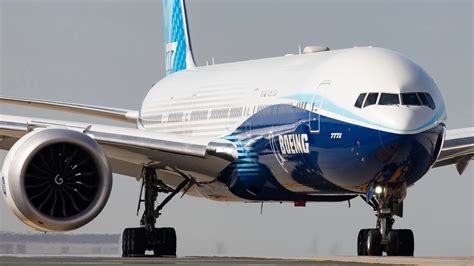
Fueling the 777X’s superior performance is the GE9X, a revolutionary turbofan engine built by General Electric. The engine sets multiple records, not least of which is its sheer size — 161 inches in diameter, making it wider than the fuselage of a Boeing 737.
The GE9X generates a massive 110,000 pounds of thrust, but it’s more than raw power. It employs composite fan blades, ceramic matrix composites, and high bypass ratios to achieve peak efficiency and lower emissions. Remarkably, it uses six fewer blades than the GE90, its predecessor, achieving better aerodynamic efficiency and lower weight.
This next-generation engine not only reduces fuel consumption but also aligns with increasingly strict environmental standards, making the 777X a more future-proof aircraft.
Who’s Buying the 777X?
Despite delivery delays, airline confidence remains high. The 777X has secured strong commitments from top-tier carriers around the globe. Emirates leads the pack with a staggering 205 orders, followed by Qatar Airways with 94. Other notable customers include Lufthansa, Singapore Airlines, Etihad, and British Airways’ parent group, IAG.
However, Emirates’ patience has been tested. Delays have forced the airline to retrofit its A380s to bridge the capacity gap until the 777Xs arrive. Emirates President Sir Tim Clark has been vocal about Boeing’s shortcomings, labeling the setbacks as “highly expensive” for the carrier.
Cargo operators have also lined up, including Cargolux, which is replacing its aging 747-400Fs with 777-8Fs. These airlines are drawn to the aircraft’s reduced environmental footprint — up to 60% smaller noise impact, according to Boeing.
The Elephant in the Hangar: Delivery Delays
Originally slated for delivery in 2018 or 2019, the 777X program has been plagued by delays. One of the most publicized setbacks occurred in September 2019, when a test fuselage ruptured during a high-stress test at 99% of its maximum load capacity. While Boeing emphasized that safety protocols were followed, the incident raised red flags.
Subsequent delays were caused by a combination of FAA certification hurdles, supply chain disruptions, and redesigns. Emirates now expects delivery by the end of 2026, but doubts linger among customers.
The risk for Boeing is that the extended timeline may erode customer trust and open the door wider for competitors — primarily Airbus.
Airbus A350: The Primary Challenger
The Airbus A350, particularly the A350-1000, presents a formidable challenge to Boeing’s ambitions. Already in service with major airlines like Qatar Airways, Cathay Pacific, and British Airways, the A350 is built primarily from carbon-fiber composites, making it both lightweight and fuel-efficient.
More than 650 A350s have already been delivered. It’s proven to be a favorite among carriers who prioritize long-range efficiency and environmental performance. Airlines like STARLUX have committed to the A350 over the 777X, largely due to Airbus’ consistent delivery record and the aircraft’s compelling performance data.
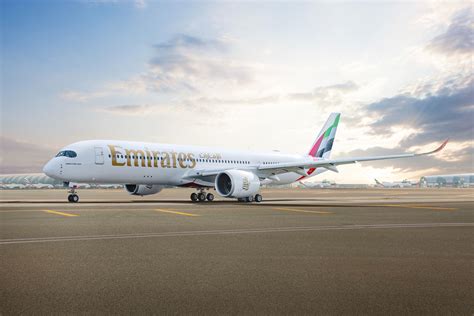
While the A350 doesn’t match the 777-9X in seating capacity, its lower operating cost and earlier availability have given it a competitive edge in a market still uncertain about Boeing’s timelines.
What’s Next for the 747-400?
Though retired from passenger service in many regions, the 747-400 lives on in freight operations. Of the 1,574 747s produced during its lifetime, just 348 remain active, and many are now flying in cargo configurations. Airlines like UPS, Atlas Air, and Kalitta Air continue to extract value from the platform.
Nevertheless, even in the cargo realm, the transition to newer models like the 777-8F is underway. The 747-400’s future is fading, but it’s doing so gracefully, with a legacy unmatched in civil aviation history.
Conclusion: A Legacy Handed Over
The Boeing 777X, despite its rocky start, is poised to become the spiritual and operational successor to the Boeing 747-400. It offers everything modern airlines demand: range, capacity, fuel savings, environmental compliance, and cargo versatility. However, its success hinges on Boeing’s ability to meet delivery expectations, restore customer confidence, and fend off Airbus’ relentless A350 momentum.
The story of the 747-400 is one of revolution. The 777X hopes to continue that tradition — only this time, in a world where efficiency reigns supreme over size and spectacle.